Michelangelo's Sistine Chapel Ceiling

A sculptor drafted into painting
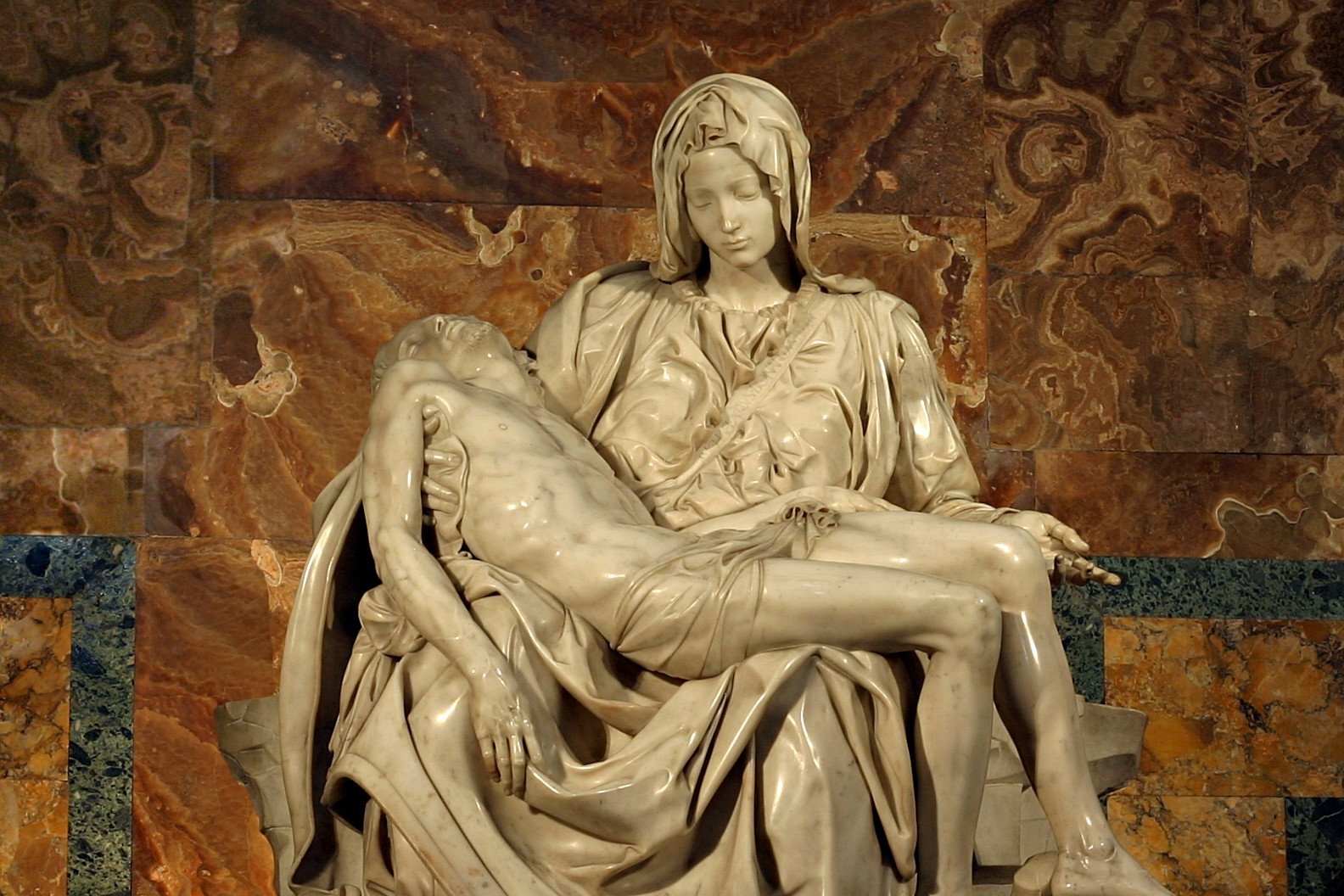
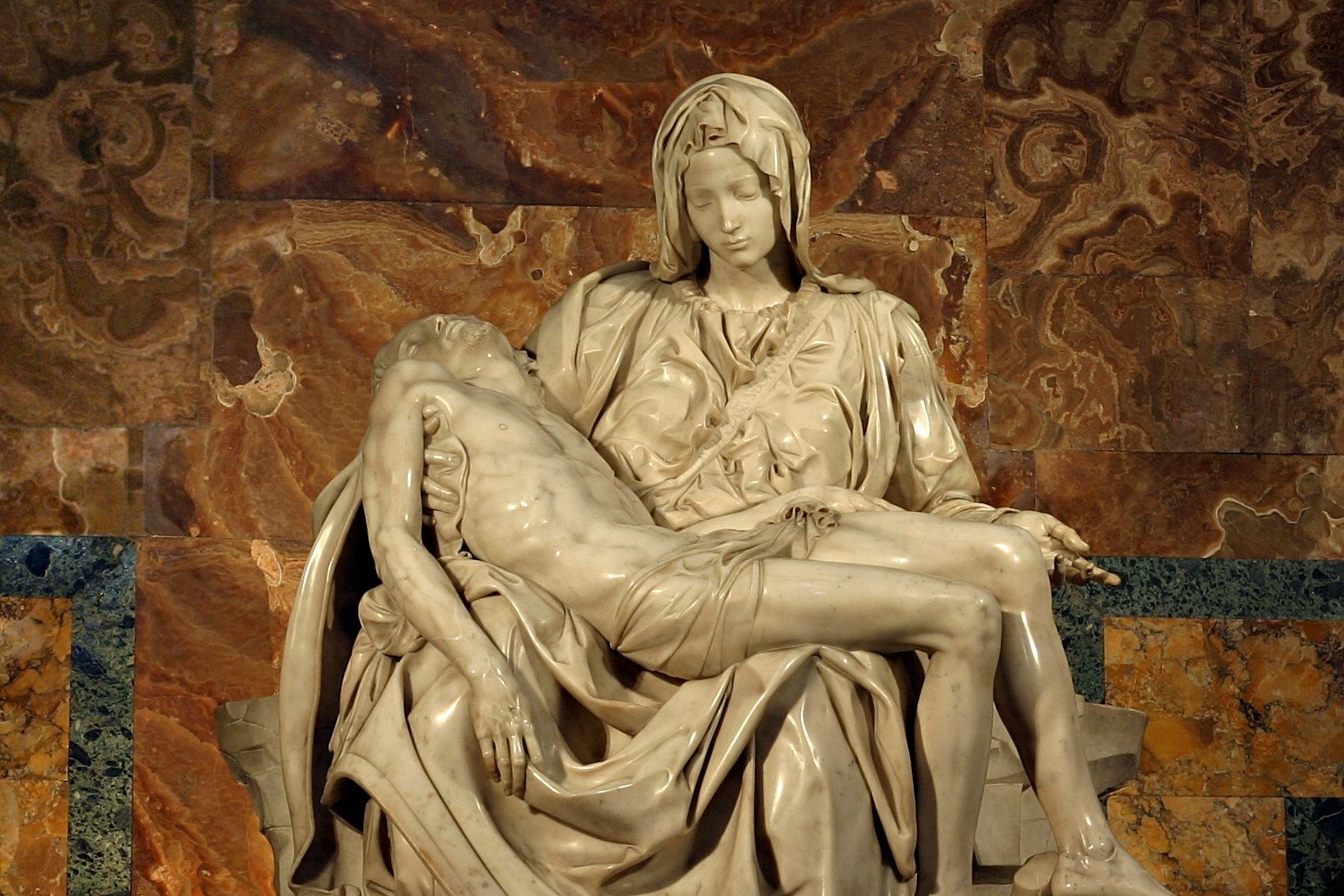
When Pope Julius II summoned Michelangelo in 1508 to paint the ceiling of the Sistine Chapel, the artist was already a celebrated sculptor, having completed the Pietà roughly a decade earlier and, by this point, well into work on Julius's own ambitious tomb project. Fresco painting on this scale was not his trade, and according to Giorgio Vasari's account in Lives of the Artists, Michelangelo suspected the commission had been engineered by rivals, particularly the architect Donato Bramante, who hoped an unfamiliar medium and an impossibly demanding surface would expose the sculptor's limits. Michelangelo tried, unsuccessfully, to redirect the commission elsewhere before accepting it under continued pressure from the notoriously forceful pope. What followed instead established him as one of history's greatest painters, a title he reportedly never fully accepted for himself.
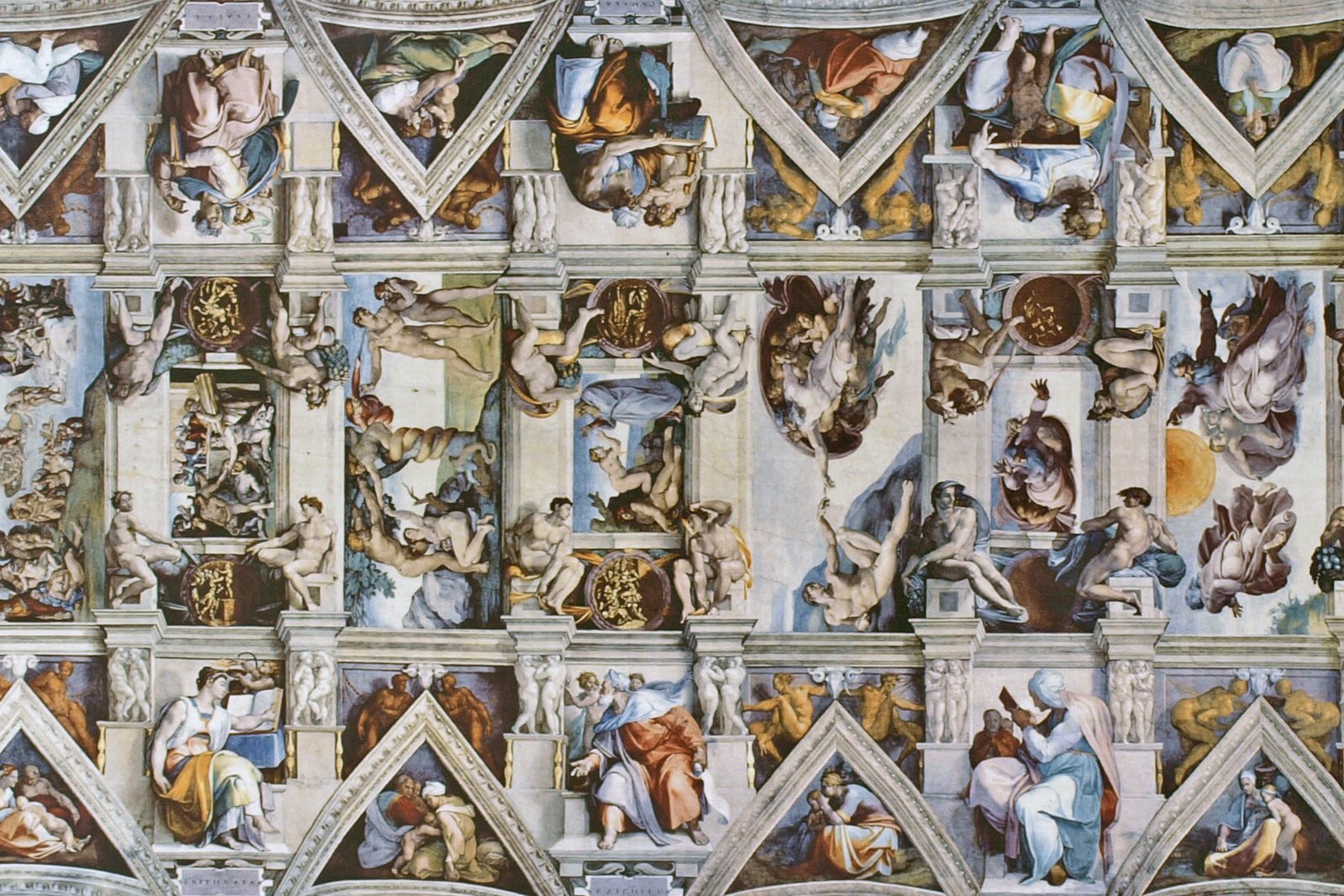
Michelangelo, Sistine Chapel ceiling, 1508-1512, Vatican City. Photo by Antoine Taveneaux, CC BY-SA 3.0, via Wikimedia Commons.
Nine scenes, one continuous story
The ceiling's structure organizes an enormous amount of theological content with remarkable clarity. Running down the center of the vault in nine framed panels, alternating between larger and smaller compositions, Michelangelo laid out the opening chapters of Genesis in narrative sequence: the Separation of Light from Darkness, the Creation of the Sun, Moon, and Plants, the Separation of Land from Water, the Creation of Adam, the Creation of Eve, the Fall of Man and Expulsion from the Garden of Eden, the Sacrifice of Noah, the Great Flood, and finally the Drunkenness of Noah. Read from the altar end toward the entrance, the sequence moves backward through time in the order Michelangelo actually painted it — he began near the entrance with the later Noah scenes and worked his way toward the altar, arriving at the Creation of Light last, his technique visibly loosening and growing more confident as the project progressed.
The image everyone already knows
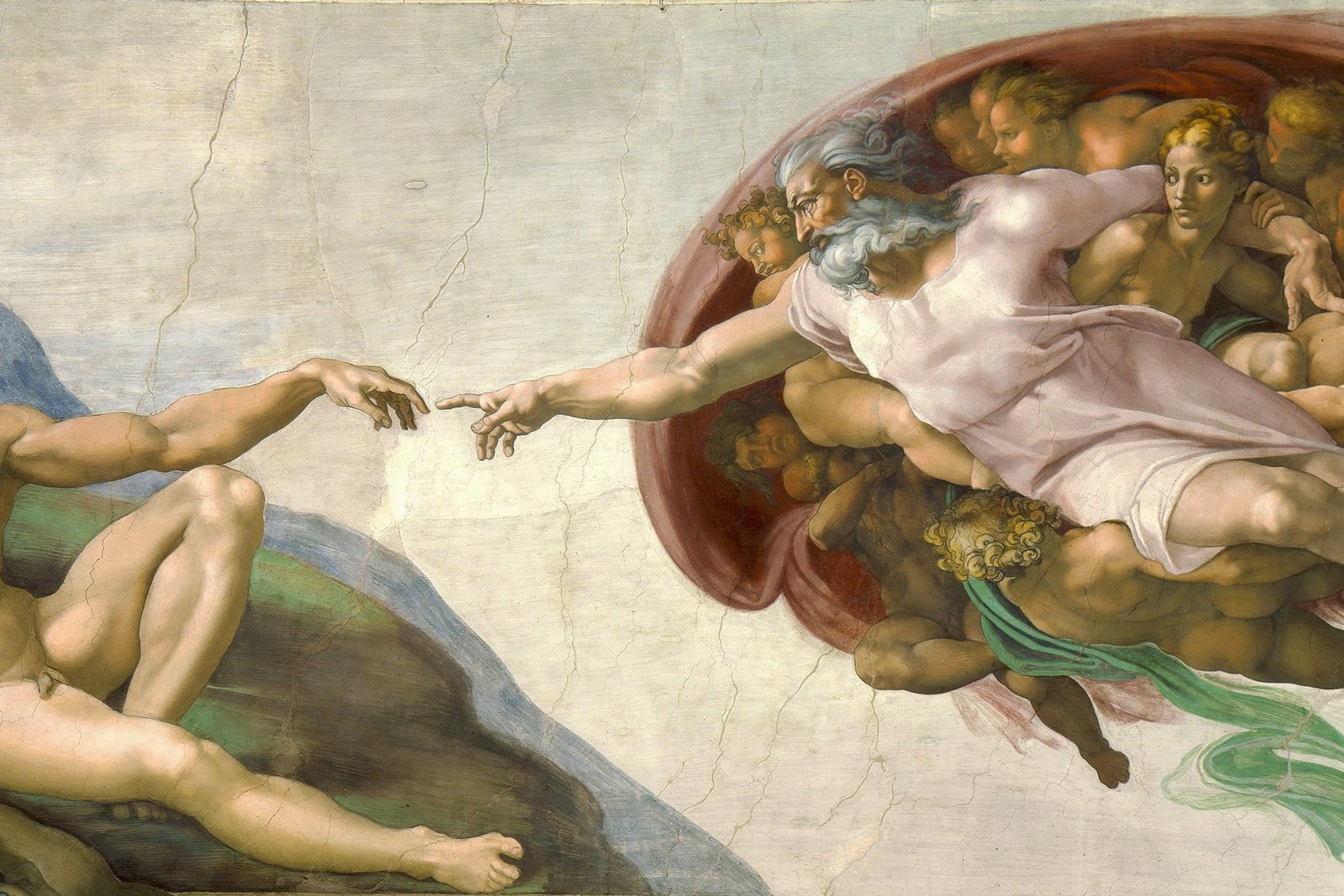
Of the nine panels, the Creation of Adam has become so widely reproduced that it's easy to forget it's one scene within a much larger program rather than the ceiling's sole subject. The composition's near-touching hands — Adam's outstretched, still slightly limp with the unanimated weight of unformed clay; God's, taut with active, reaching purpose — condense an entire theological claim into a single gesture: creation as an act of nearly completed contact, a spark not quite yet crossed. Art historians have long noted how unusual this composition was for its era, dispensing with any narrative setting or supporting detail in favor of two monumental figures suspended against open sky, letting the gesture itself carry all the meaning.
More than Genesis: prophets, sibyls, and ancestors
The nine Genesis scenes anchor the ceiling but represent only part of a much denser overall program. Surrounding them, Michelangelo painted a rotating sequence of Old Testament prophets — Jeremiah, Isaiah, Ezekiel, Daniel, Jonah among them — alternated with pagan sibyls, prophetic female oracles from classical antiquity such as the Delphic and Libyan Sibyls, reflecting a Renaissance theological conviction that pre-Christian pagan wisdom had, in its own partial way, anticipated Christian revelation. Around the ceiling's edges and in triangular spandrels, further figures depict the ancestors of Christ drawn from Matthew's genealogy, while painted architectural elements — fictive cornices, medallions, and nude figures called ignudi — tie the whole composition together into a coherent, if staggeringly complex, visual architecture layered on top of the chapel's real, physical vault.
The physical toll of four years overhead
Contrary to the popular image of Michelangelo lying flat on his back, he actually worked standing on a specially constructed wooden scaffold of his own design, leaning backward with his head craned upward toward the ceiling for hours at a stretch — a posture that still exacted a severe physical cost. Michelangelo himself complained, in a wry sonnet written partway through the project, of a goiter-like swelling in his throat, paint constantly dripping into his eyes, and a spine bent permanently out of its natural curve, joking that his body had taken on the shape of a Syrian bow. Modern scholars studying his surviving letters and the poem itself generally treat the complaints as genuine, if exaggerated for effect — four years of overhead painting on this scale left lasting physical marks that outlasted the project itself.
Not the Last Judgment, and not painted alone in memory
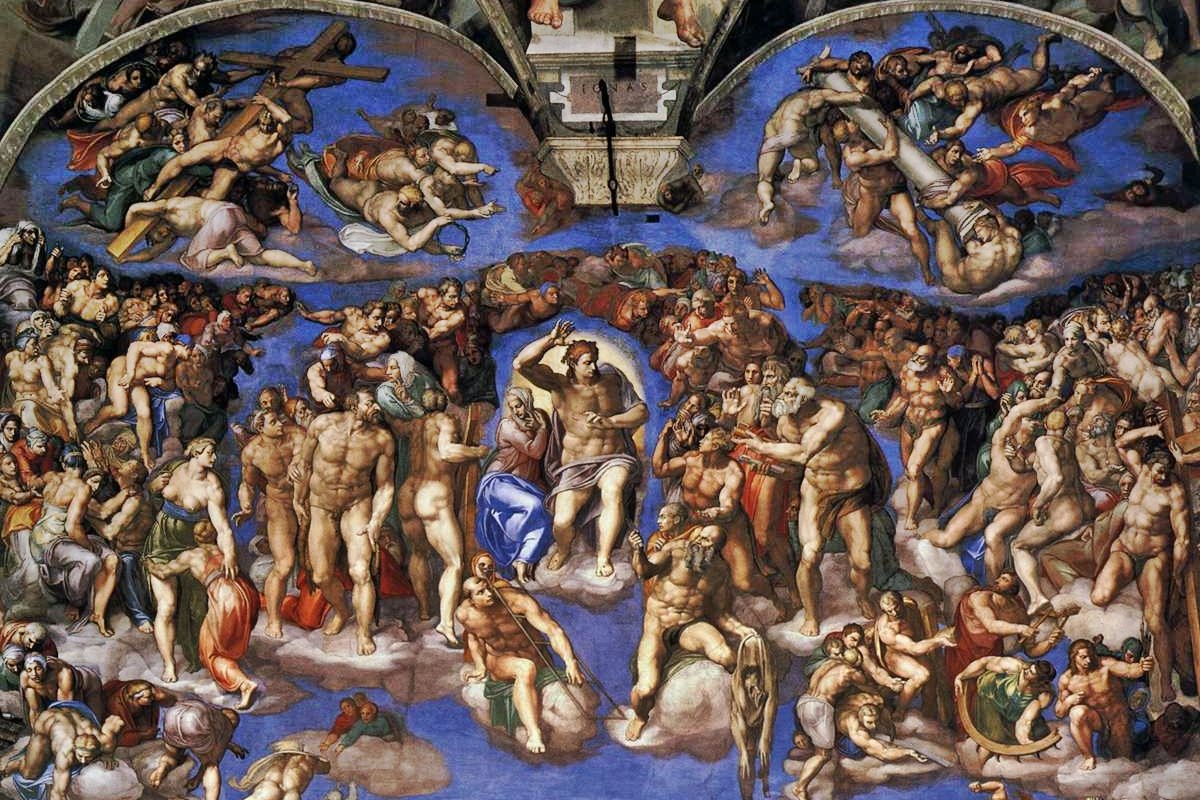
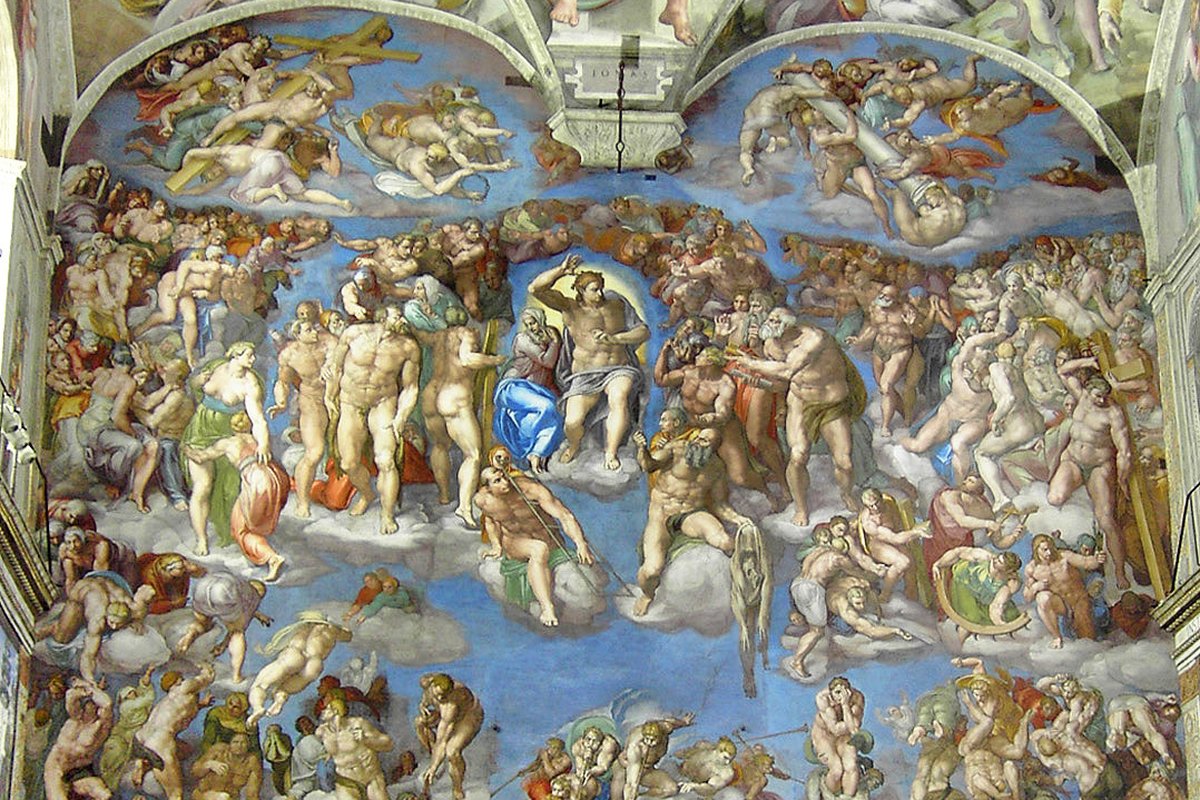
It's worth being precise about what the ceiling is and isn't. It is not the same work as the Last Judgment, the dramatic fresco covering the chapel's altar wall, which Michelangelo painted decades later, between 1536 and 1541, under a different pope, Paul III — a common point of confusion given both works share the same chapel and the same artist. And while Michelangelo worked with a team of assistants handling practical tasks like plaster preparation and pigment grinding, the overwhelming majority of the actual painting, unusually for a commission this size, is attributed directly to Michelangelo's own hand — part of why the ceiling is often discussed less as a workshop production and more as the sustained vision of a single, extraordinarily demanding artist.
A ceiling that redefined what a ceiling could hold
Unveiled in 1512, the Sistine Chapel ceiling didn't just complete a commission — it reset expectations for what a painted architectural surface could carry, theologically and formally. Later generations of artists, including Michelangelo himself decades later on the same chapel's altar wall, would spend careers responding to its example: figures rendered with sculptural weight, complex multi-figure compositions organized with total clarity across an enormous surface, and an ambition that treated the ceiling of a chapel not as decoration but as one continuous, unfolding argument about the origin and destiny of humanity.
Trivia
Did Michelangelo want to paint the Sistine Chapel ceiling?
What are the nine central scenes on the Sistine Chapel ceiling?
How long did it take Michelangelo to paint the ceiling?
Did Michelangelo paint the ceiling lying on his back?
Is the Sistine Chapel ceiling the same as the Last Judgment?
Related Reading