Saint Monica — Tears for Augustine


A marriage transformed by patience rather than confrontation
Monica's own marriage offered an early preview of the persistence that would define her life. Her husband, Patricius, was a pagan reputed for a violent temper and an immoral lifestyle — hardly a promising match for a devout Christian woman. Yet Monica's own virtues and her consistent prayer are credited with gradually softening him, leading eventually to his conversion and baptism around 370. It was a preview, on a smaller scale, of the far longer campaign of patience she would soon direct at her own son.
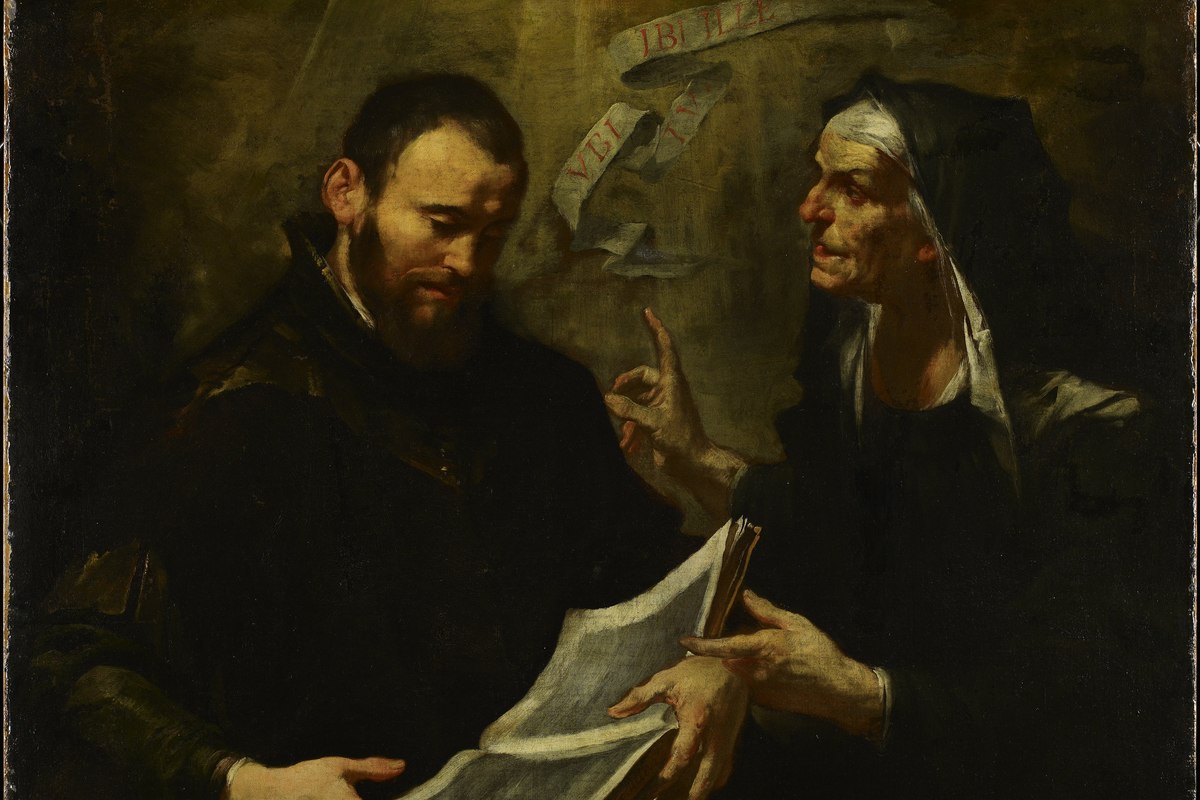
Gioacchino Assereto, "Saint Augustine and Saint Monica," 17th century — public domain.
Watching a son drift toward a faith she couldn't accept
That son, Augustine, caused Monica far greater and longer-lasting grief. In Carthage, he was drawn to the teachings of Mani, becoming a Manichaean — a religious path Monica considered false, and one that placed real distance between her own faith and her son's chosen beliefs. When Augustine later moved to Milan, Monica followed him there rather than let the distance settle the matter, continuing to hope for a change she had no way of forcing.
Seventeen years of tears, and one bishop's reassurance
Popular tradition holds that Monica wept nightly over her son for roughly seventeen years, praying without any clear evidence her prayers were being answered. At some point during that long stretch, she consulted an unnamed bishop, who offered her words that would become inseparable from her story: that a child cried over with so many tears could not possibly be lost. It's a small, quiet moment of comfort in a story otherwise defined by prolonged uncertainty — a stranger's reassurance offered with no proof behind it beyond conviction.
A prayer answered, and a life that ended just after
Around 387, at thirty-three, Augustine finally converted to Christianity and was baptized by Bishop Ambrose in Milan — the outcome Monica had prayed and wept toward for nearly two decades, now arrived at last. She lived to see it happen. Soon afterward, as she and Augustine prepared to return home together to Thagaste, Monica fell ill and died in Ostia, just outside Rome — her life's most defining prayer answered only shortly before its own end.
What we know because her son wrote it down
Almost everything historians can say with confidence about Monica comes from a single source: Augustine's own Confessions, written roughly a decade after her death. This matters for how the story should be read. Records show that Augustine describes her Berber-North-African upbringing in Thagaste (in present-day Algeria), her early marriage to Patricius, and — in one of the book's most quietly striking passages — a conversation the two of them shared at a window in Ostia shortly before she died, in which they spoke together of what eternal life might be like. Because the Confessions is a work of theological reflection as much as memoir, scholars are careful to distinguish what Augustine records as direct memory from the meaning he layers onto it in hindsight — but the core biographical facts of Monica's life are about as well-attested as anything from a private North African family in the fourth century can be.
Iconography: how artists have painted her
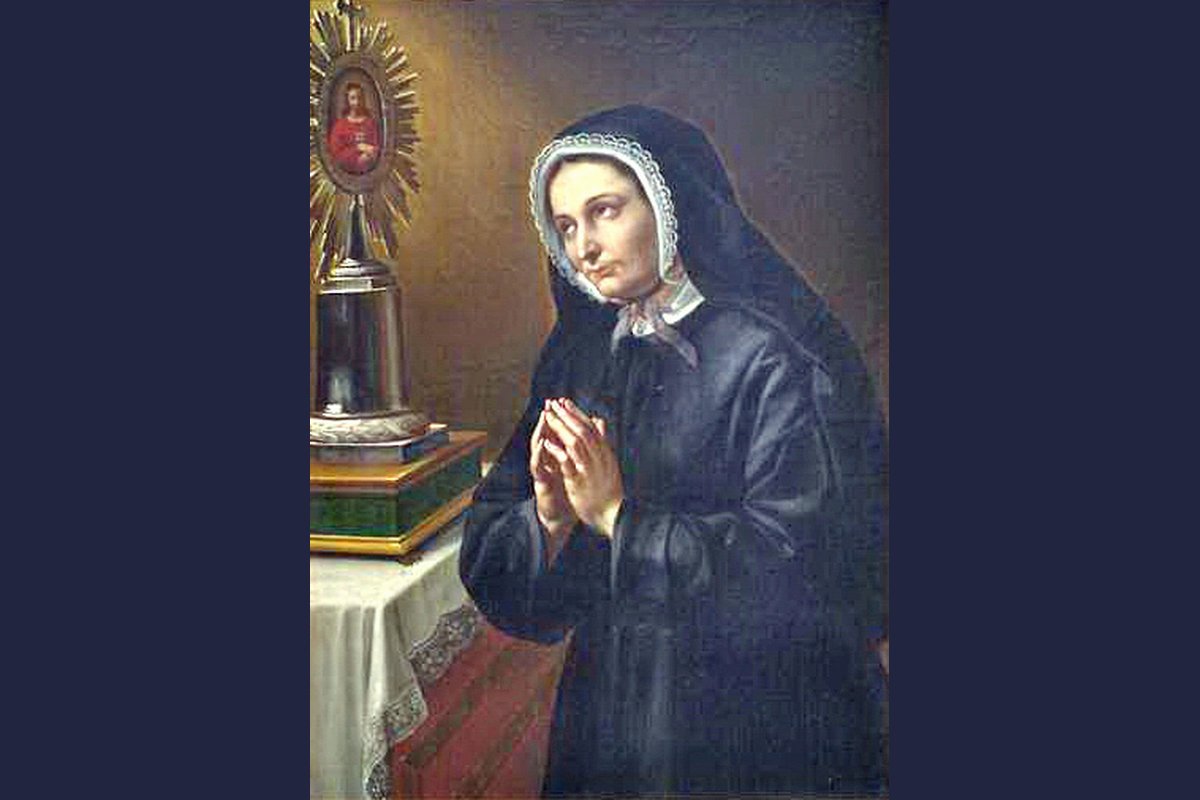
Monica is rarely painted alone; she nearly always appears alongside Augustine, which is itself a kind of visual theology — her identity, in Christian art, is inseparable from her role as his mother. She is typically shown as an older woman in a dark, modest widow's habit, sometimes with a black veil, reflecting the Augustinian nuns and Augustinian Hermits who later adopted her as their own. A handkerchief or cloth for wiping tears is a recurring attribute, a direct visual reference to her seventeen years of weeping. Some depictions place a girdle or belt in her hands, tied to a later legend that she wore a leather belt as a sign of mourning and humility after Patricius's death — a tradition, not a documented fact, but one influential enough that the Augustinian order's confraternities took up the belt as their own symbol. The Assereto painting used as this article's hero image shows the two in conversation, book in hand — a fair visual summary of a relationship built as much on argument as on affection.
From Ostia to the whole Church: the spread of her cult
Monica was buried in Ostia, and for centuries her tomb there drew relatively little attention outside local devotion. That changed in 1430, when her relics were translated to Rome and placed in the church of Sant'Agostino, a move that coincided with — and likely helped fuel — growing devotion to her among the Augustinian religious orders, who looked to her as a model of persistent, hopeful prayer for wayward family members. Her feast, set on August 27, deliberately falls the day before Augustine's own feast on August 28, letting the liturgical calendar echo the relationship the Confessions describes: the mother just ahead of the son, as she was throughout his life. Devotion to her spread further still through Augustinian missionary work, and her name today marks parishes, schools, and towns — including Santa Monica, California — far from the North African world she actually lived in.
Trivia
What kind of marriage did Monica have?
Why did Monica cry for so many years over Augustine?
What did a bishop tell Monica during her years of praying for Augustine?
Did Monica live to see Augustine's conversion?
What is Saint Monica the patron saint of, and when is her feast day?
Related Reading