Saint Madeleine Sophie Barat, Founder of the Sacred Heart Sisters

A childhood spent in a locked room
Sophie Barat was born in 1779 in Joigny, a small town in Burgundy, the daughter of a modest wine-cooper. Nothing about her family's circumstances suggested she would one day run an international network of schools. What set her apart, from a very early age, was her older brother Louis — twenty-one years her senior, already ordained as a priest, and utterly convinced that his younger sister had an unusual capacity for learning.
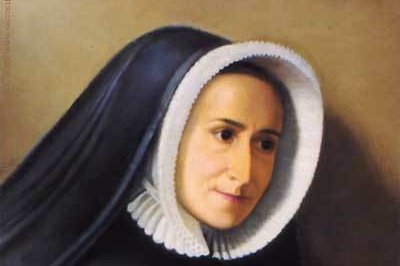
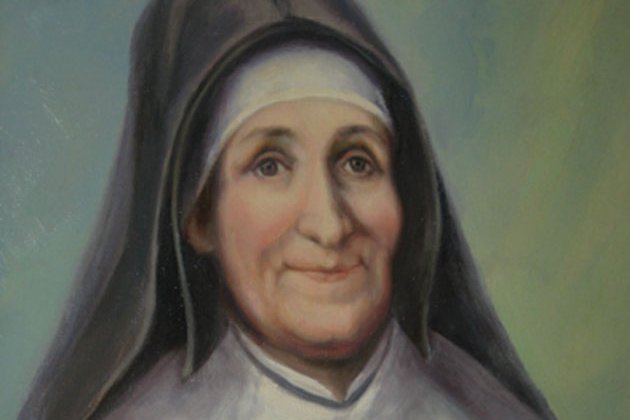
Savinien Petit, portrait of Madeleine Sophie Barat, 19th century — public domain (Wikimedia Commons)
Louis Barat's method of educating Sophie was, by any modern standard, extreme. He kept her at lessons for hours on end, sometimes reportedly locking the door so she could not leave until she had mastered the material — Latin, Greek, history, physics, and Scripture, subjects rarely taught to girls of any class in eighteenth-century France, let alone a tradesman's daughter. Sophie herself, later in life, spoke about this period with striking honesty: she credited the education with equipping her for everything that followed, while acknowledging that the method itself had been harsh, even frightening, for a child. It is a detail her own order has never tried to soften into something purely admirable — a reminder that even future saints sometimes emerge from difficult, complicated beginnings rather than tidy ones.
A new order for a shattered church
The French Revolution had devastated the Catholic Church in France by the time Sophie reached adulthood — religious orders were suppressed, priests were exiled or executed, and an entire generation of French Catholics had grown up with almost no access to formal Catholic education. Into this vacuum stepped Father Joseph Varin, a priest working to rebuild religious life in the country's ruins, who in 1800 invited Sophie Barat, then just twenty-one, and three other young women to found a new congregation.
The group settled on two commitments that would define the new order for the rest of its history: education, specifically the education of girls, at a time when that was still widely considered unnecessary or even improper; and devotion to the Sacred Heart of Jesus, a devotion that had grown enormously in France following the visions of Saint Margaret Mary Alacoque more than a century earlier and that carried, in the aftermath of the Revolution, a particular resonance as a symbol of divine love answering a wounded and traumatized nation. The Society of the Sacred Heart of Jesus was formally established, and in 1801, Sophie Barat was elected its superior general — a role she would hold, through constant travel and expansion, until her death sixty-four years later.
From one house to a worldwide network
What followed was a lifetime of near-constant institution-building. Sophie Barat crossed France repeatedly by carriage, often in poor health, to establish new schools and communities, insisting on a consistent and rigorous curriculum across every house — she wanted Sacred Heart schools to be recognizably excellent wherever a student encountered one, not simply well-intentioned. Her order's reach soon extended beyond France's borders: convents and schools opened across Europe, then in North Africa, and, notably, in the United States, where Sophie Barat's collaborator Rose Philippine Duchesne carried the mission to the American frontier, eventually establishing the first free school for Native American girls west of the Mississippi River.
By the time Sophie Barat died in Paris in 1865, the tiny founding community of four had grown into a congregation of roughly 3,500 women religious operating more than a hundred schools spread across Europe, the Americas, and North Africa — an expansion achieved almost entirely within a single founder's lifetime, a rare pace of growth for a religious order of that era.
She managed most of this sprawling network the only way possible before telephones or rapid travel existed: through letters. Thousands of them survive, written by hand to superiors of individual houses scattered across three continents, covering everything from curriculum decisions to disputes between sisters to the fine points of the order's spiritual formation. That correspondence, more than any single school she personally founded, is how a woman who could physically visit only a fraction of her order's houses managed to keep them recognizably unified in practice and purpose for sixty-four years.
A legacy still visible on school gates
Unlike some founders whose institutions faded or fractured after their death, Sophie Barat's order has remained continuously active for more than two centuries, and Sacred Heart schools — recognizable today by their consistent name and educational philosophy — still operate on nearly every populated continent. Pope Pius XI canonized her in 1925, sixty years after her death, formally recognizing what her order's own rapid growth during her lifetime had already suggested: that an intensely, even harshly educated shopkeeper's daughter from Burgundy had built one of the most durable educational networks in the history of the Catholic Church.
Her story offers a useful corrective to any picture of sainthood as effortless or serene. Sophie Barat's own childhood was marked by an education she herself called excessive, and her adult life was one of relentless travel, administrative labor, and physical strain rather than quiet contemplation. What her life suggests, instead, is that sanctity can run directly through difficult formation and demanding, unglamorous institutional work — not around it.
Trivia
Who was Saint Madeleine Sophie Barat and when did she live?
How did Sophie Barat receive her early education?
Why did she found the Society of the Sacred Heart?
How large did the Society of the Sacred Heart become during her lifetime?
What is Saint Madeleine Sophie Barat the patron saint of?
You May Also Like
Related Reading