Saint Julie Billiart, Founder of Notre Dame de Namur

A farm girl's sudden paralysis
Julie Billiart was born in 1751 in Cuvilly, a farming village in Picardy in northern France, the daughter of a small shopkeeper and farmer. By all early accounts she was an unusually bright and pious child — she reportedly taught catechism to other village children from the age of about seven and had a reputation locally for both intelligence and devotion well before anything unusual happened to her.
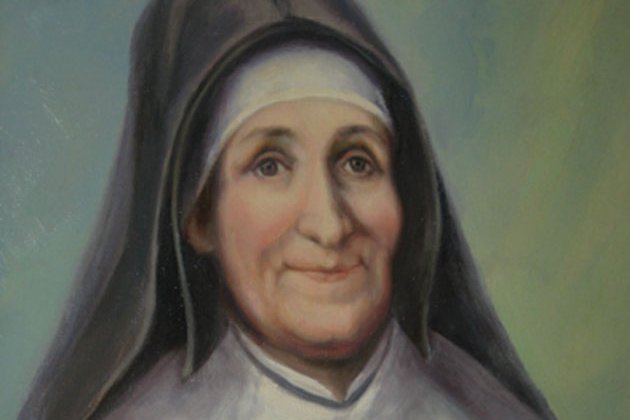
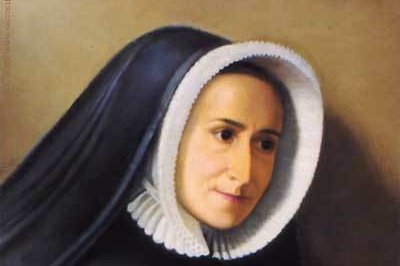
Unknown artist, portrait of St. Julie Billiart, circa 1830 — public domain (Wikimedia Commons)
The event that changed the course of her life happened when she was around thirty. According to her own testimony and that of people close to her, she witnessed an unidentified assailant fire a gun at her father through a window of the family home — he survived, but the shock of the event triggered in Julie a progressive physical paralysis that doctors of the period, working with the limited understanding of nervous conditions available in the eighteenth century, could neither explain nor treat. She spent the next twenty-two years largely confined to bed, unable to walk without severe difficulty, through the final decades of the Ancien Régime and the full upheaval of the French Revolution — a period during which practicing Catholics faced serious danger, and Julie, bedridden and vulnerable, reportedly hid fleeing priests in her own home and organized clandestine religious instruction for children from her sickroom, an act that carried real legal risk for everyone involved.
Twenty-two years, and then a novena
By 1804, Julie had come under the spiritual direction of a priest named Father Jean-Baptiste Enfantin, who, along with a laywoman and eventual co-founder, Françoise Blin de Bourdon, encouraged her toward a nine-day novena of prayer to the Sacred Heart of Jesus specifically for her healing. On the ninth day of that novena, Julie found herself able to stand and walk without assistance for the first time in over two decades.
The Church has never treated this kind of account casually or uncritically — physical healings connected to prayer are examined carefully, where they arise in canonization processes, against available medical testimony from the period, and Julie's case was documented by people who had known her condition intimately for years, not encountered it only after the fact. Whatever the precise medical explanation, the healing's effect on the direction of her life was immediate and total: within months, she and Françoise Blin de Bourdon formally founded a new religious congregation, and Julie, now approaching her mid-fifties after more than two decades as an invalid, began the most physically demanding period of her entire life.
Founding schools across a shattered country
The Congregation of the Sisters of Notre Dame de Namur, founded in Amiens in 1804, took as its central purpose the education of poor children, especially girls, at a moment when France's Catholic school network had been largely dismantled by the Revolution and had not yet been rebuilt. Julie threw herself into establishing new houses and schools across northern France and, later, Belgium, traveling constantly under conditions that would have been demanding for anyone, let alone a woman in her mid-fifties who had spent the previous twenty-two years unable to walk.
Her path as a founder was not smooth even after her recovery. A serious internal dispute arose within the young congregation over questions of governance and direction, complicated by conflict with the local bishop of Amiens, and Julie was at one point removed from active leadership of the very order she had founded — a painful episode she is recorded as having accepted without public bitterness, continuing her work quietly until the dispute resolved and her leadership was restored. The congregation eventually relocated its base to Namur, in present-day Belgium, which remains the motherhouse of the Sisters of Notre Dame de Namur today.
A life measured against its own second half
Julie Billiart died in Namur in 1816, having spent the twelve years following her healing establishing, by most accounts, around fifteen religious communities and schools across France and Belgium — a pace of institution-building that would be considered demanding for a healthy person working with the transportation of her era, let alone someone recently recovered from more than two decades of paralysis. Pope Paul VI canonized her in 1969, and her congregation has since grown into an international teaching order still active on multiple continents, including in the United States, where Trinity Washington University traces its founding to sisters of her congregation.
Her story is often told, understandably, around the drama of the healing itself. What deserves equal attention is what she did immediately afterward: rather than treating her recovery as an occasion for quiet gratitude, she used it as the starting point for twelve years of some of the hardest institutional work of her life, as though the twenty-two years she had lost were still, in her own mind, a debt to be actively repaid rather than simply mourned.
Trivia
Who was Saint Julie Billiart and when did she live?
What caused her twenty-two years of paralysis?
How was she healed?
Why did she found a religious order specifically for education?
How difficult was her work as a founder, even after her healing?
You May Also Like

Related Reading