Saint Walatta Petros of Ethiopia

A noblewoman who chose exile over compliance
Walatta Petros was born around 1592 into the highest circles of Ethiopian society — her father held rank at the royal court, and she herself would marry Malkeya Krestos, a powerful military commander and adviser close to Emperor Susenyos I. By any conventional measure of her era, she had achieved the most secure and comfortable life a woman of her time and place could hope for.
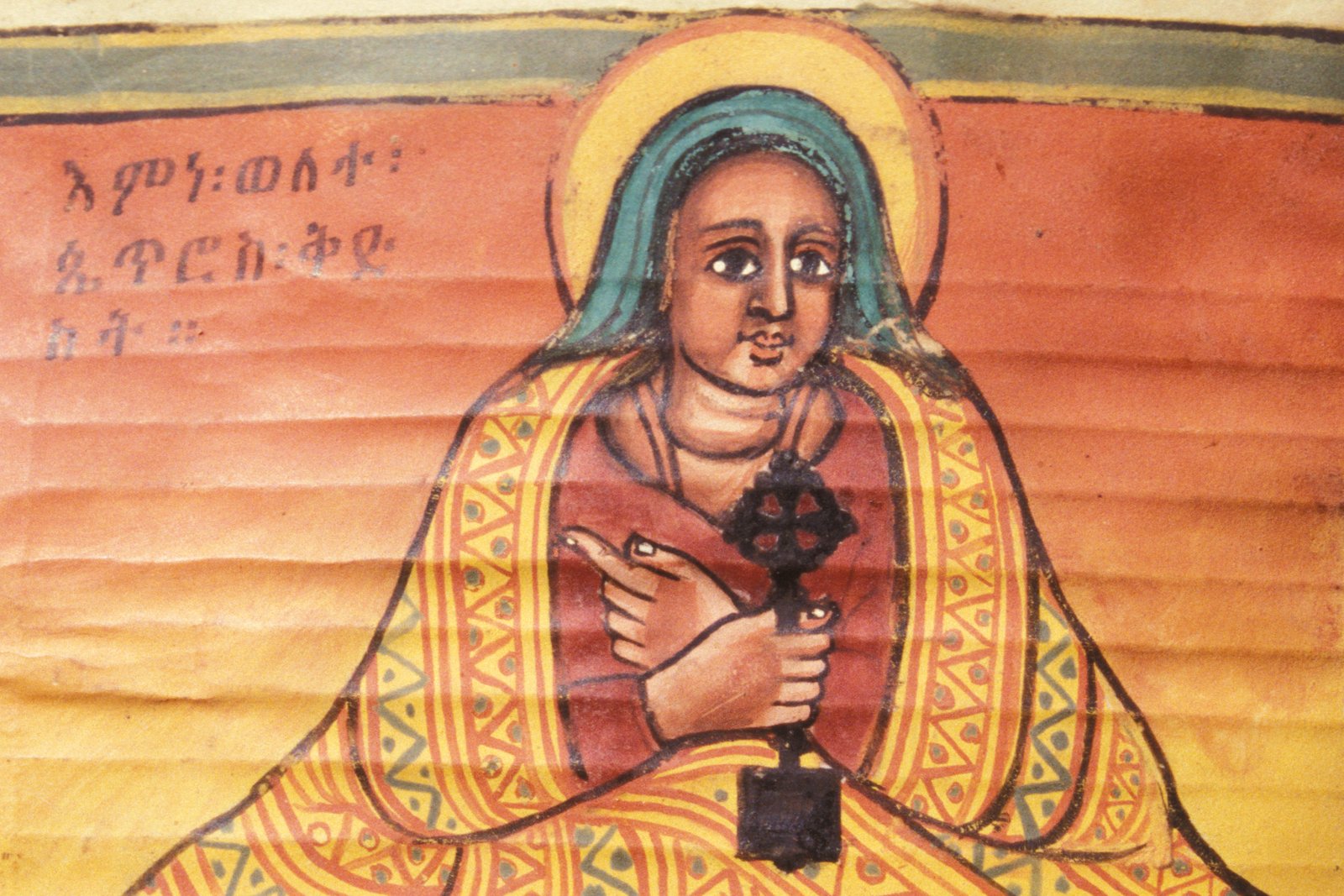
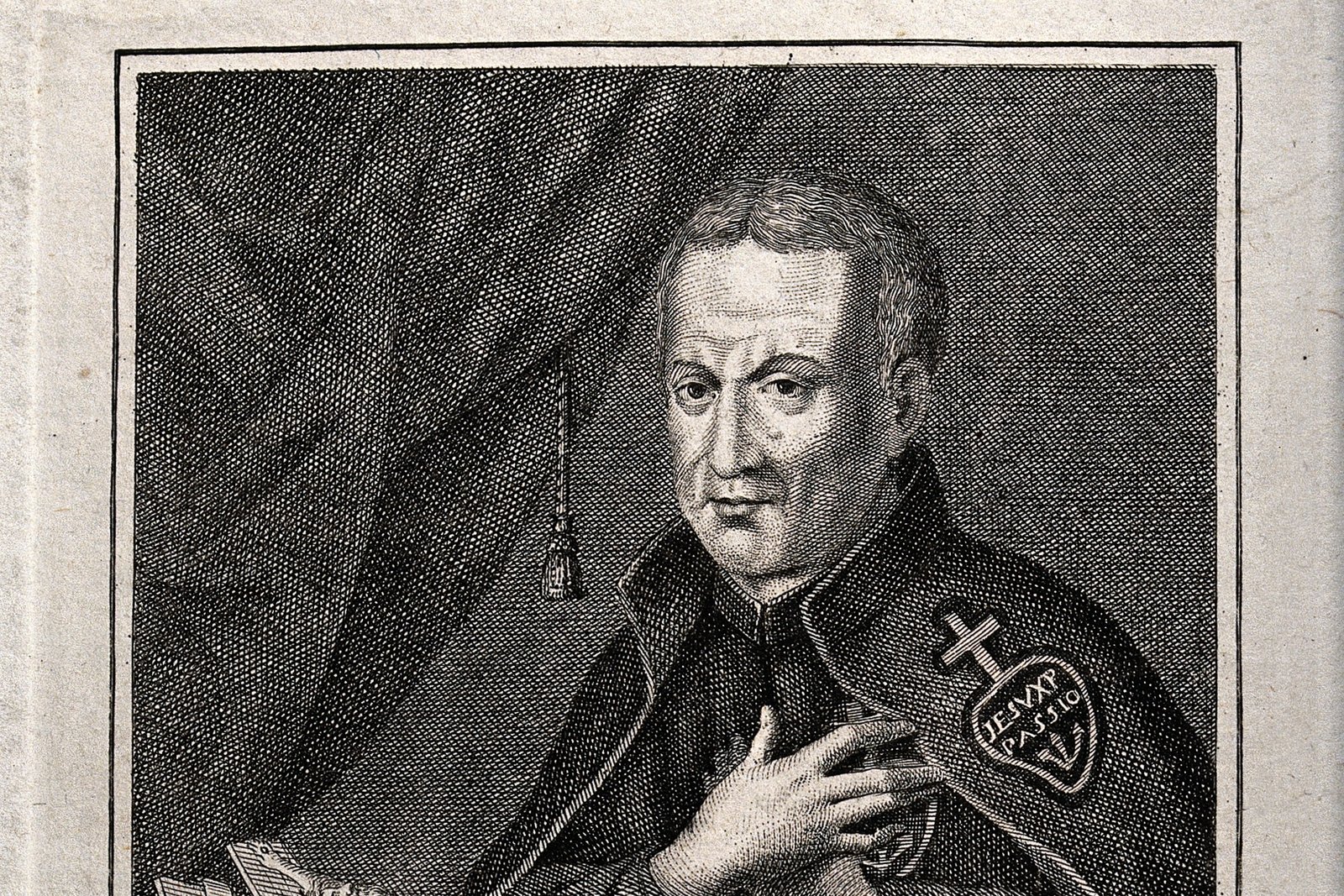
Unknown Ethiopian artist, portrait of Walatta Petros from an illuminated gadl (hagiography) manuscript, 1721 — public domain (Wikimedia Commons)
That security collapsed by choice, not circumstance. In the 1620s, Emperor Susenyos, under sustained influence from Portuguese Jesuit missionaries who had been working at the Ethiopian court for years, formally converted to Roman Catholicism and in 1626 declared it the religion of the state, ordering the Ethiopian church to conform to Roman liturgical practice and papal authority. For a country whose Christian roots stretched back to the fourth century — Ethiopia had its own ancient, independent Christian tradition administered from Alexandria, older by centuries than most of the Christianity practiced anywhere in Western Europe — the emperor's decree landed as a direct assault on national and religious identity, not merely a theological adjustment.
Walatta Petros's own husband was one of the officials tasked with enforcing the new order, including, tradition holds, participating in the persecution of clergy who refused to comply. She left him. It was an extraordinary act for a woman of her rank in her era, and it set the direction for the rest of her life.
A decade on the move
What followed was not a quiet retreat into private devotion but roughly ten years of active, organized resistance. Walatta Petros traveled from region to region across the Ethiopian highlands and into Sudan, gathering communities of clergy and laypeople who shared her refusal to accept the imposed Catholic reforms, encouraging them to hold to the traditional Ethiopian liturgy and practice, and evading capture by imperial authorities who by her biographer's account arrested her more than once. Her hagiography credits her with a rare kind of practical leadership — organizing supply, shelter, and continuity for scattered religious communities under real political danger, not simply preaching from safety.
The conflict resolved in 1632, when Emperor Susenyos, facing widespread unrest and rebellion across the kingdom that the religious reform had helped provoke, reversed the policy, restored the traditional Ethiopian church, and abdicated in favor of his son Fasilides, who expelled the Jesuit missionaries from the country entirely. It was, by the standards of religious conflicts in this period of history, a rare case where the resistance movement outlasted the policy it opposed.
Founding a lasting community
With the crisis resolved, Walatta Petros turned to building rather than resisting. She founded a series of religious communities over the following decade, moving through several locations before establishing her final and most historically significant monastery at Zage, on the shore of Lake Tana — Ethiopia's largest lake and, to this day, home to a cluster of historic monasteries considered among the country's most important religious sites. The community she founded there endured for centuries after her death in 1642, and her tomb at Zage remains a pilgrimage destination within Ethiopian Orthodox tradition.
Her leadership style, as her biography describes it, combined severe personal asceticism with unusually direct pastoral authority over both women and men in her communities — an authority her hagiographer takes care to defend explicitly, suggesting it was notable, even controversial, in her own context.
The remarkable document that preserves her story
Much of what modern readers know about Walatta Petros comes from an unusually early and detailed source: the Gadla Walatta Petros, a hagiography — a formal genre of Ethiopian Christian biography documenting a holy person's "life-struggles" — composed in 1672, just thirty years after her death, by a monk named Galawdewos who wrote at the direct request of the monastic community she had founded. Scholars who study early African women's history have noted how unusual this is: a detailed, contemporaneously sourced life story of a specific named African woman, preserved almost completely intact from the seventeenth century, is a genuine rarity in the historical record of that era, on any continent.
It is important to be clear about where Walatta Petros stands within the broader Christian world. She is venerated as a saint within the Ethiopian Orthodox Tewahedo Church, one of the Oriental Orthodox communions that has remained institutionally separate from both Rome and the Eastern Orthodox churches since a theological dispute at the Council of Chalcedon in the year 451 — centuries before the later, better-known split between Rome and Constantinople. Her life's defining struggle was specifically against Rome's influence over her homeland's church, which makes her veneration a matter of Ethiopian and Oriental Orthodox tradition rather than the Roman Catholic calendar. Her story is worth knowing on its own historical terms all the same: a striking account of a woman who gave up rank and comfort for what she understood as the integrity of her ancestral faith, and who built something durable out of a decade spent in hiding.
Trivia
Who was Saint Walatta Petros and when did she live?
Why did Walatta Petros leave her husband and household?
What did Walatta Petros actually do during the religious conflict?
How do we know so much about her life in such detail?
Is Saint Walatta Petros recognized by the Roman Catholic Church?
You May Also Like
Related Reading