Saint Josephine Vannini

Orphaned young in 19th-century Rome
Giuseppina Vannini was born on July 7, 1859, in Rome, and by the age of ten had lost both her parents and, according to her biographers, most of her siblings as well to illness — a level of loss that left her, effectively, without immediate family. She was placed in an institution run by the Daughters of Charity of Saint Vincent de Paul in Rome, a well-established congregation with a long tradition of running orphanages, schools, and charitable institutions across Europe, and she was raised and educated within that community's care through her childhood and adolescence.
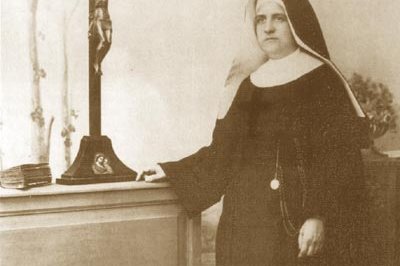
Photographer unknown, early 20th century — public domain.
Given this upbringing, it was a natural next step for Giuseppina to seek to formally join the Daughters of Charity herself as a young woman. She was accepted as a novice and began formation with the community, but her health proved unequal to the physical demands of the congregation's active religious life, and after a period of formation she was ultimately dismissed — not through any failure of vocation or character on her part, but on the specific grounds of insufficient physical stamina for the work the order required of its members. It was, by any account, a painful setback for a young woman who had spent essentially her whole life within that community's walls.
A partnership with Father Luigi Tezza
Rather than abandon her sense of religious calling, Giuseppina continued seeking a way to live it out, and in the early 1890s she came into contact with Father Luigi Tezza, an Italian priest belonging to the Camillian order — formally the Ministers of the Infirm, a religious order for men founded in the 16th century by Saint Camillus de Lellis specifically to provide dedicated nursing care to the sick and dying, at a time when hospital conditions across much of Europe were frequently neglectful or outright dangerous to patients.
Father Tezza had come to believe there was a genuine need for a parallel congregation of women religious carrying the same Camillian charism of nursing care, and Giuseppina, with her own strong sense of vocation and her formation experience already behind her, proved to be exactly the collaborator he needed. Together, they founded the Daughters of St. Camillus in Rome in 1892, with Giuseppina — who took the religious name Josephine (Giuseppina) Vannini — becoming the new congregation's first superior general.
Building a nursing order from nothing
The Daughters of St. Camillus began with very limited resources, a small number of members, and the practical challenges inherent in establishing any brand-new religious congregation from the ground up, including securing formal Church approval, developing a rule of life, and training members in both religious formation and the practical skills of nursing. Mother Vannini led this effort through the 1890s and into the early 1900s, overseeing the congregation's gradual growth and the establishment of its first houses and hospital ministries, work grounded specifically in Camillus de Lellis's original emphasis on nursing the sick with particular tenderness and personal attentiveness, distinct from more purely administrative approaches to institutional care common at the time.
The congregation received formal papal approval of its constitutions in 1909, a significant institutional milestone that came near the end of Mother Vannini's own life, confirming the community she and Father Tezza had built as a permanent, recognized part of the Church's religious life.
Death and the congregation's growth
Josephine Vannini died on February 23, 1911, in Rome. In the decades following her death, the Daughters of St. Camillus continued to grow well beyond its Italian origins, eventually establishing missions and hospital ministries across a significant number of countries on multiple continents, carrying forward the specific charism of nursing care for the sick and dying that had brought Vannini and Tezza together in the first place.
A distinctive fourth vow
The Camillian tradition Mother Vannini adopted for her new congregation carried an unusual and demanding element that set it apart from most other nursing orders of the period: alongside the standard religious vows of poverty, chastity, and obedience, members professed a specific fourth vow committing them to serve the sick even at risk to their own lives, including during epidemics and contagious outbreaks that other caregivers might reasonably avoid. This vow traced directly back to the practice of Camillus de Lellis himself, who had built his original male congregation's reputation in the sixteenth century partly on its members' willingness to remain at the bedsides of plague victims when other clergy and caregivers fled. Extending that same fourth-vow commitment to a congregation of women religious in the 1890s was, in its own quieter way, as distinctive a step as founding the congregation itself, and it shaped the practical, hands-on character of the Daughters of St. Camillus from their earliest years — a community formed explicitly to be present at exactly the bedsides that institutional medicine of the era was most inclined to neglect.
Leadership through personal hardship
Mother Vannini's two decades leading the Daughters of St. Camillus were not a smooth institutional success story free of setbacks. She contended with chronic ill health of her own throughout her years as superior general — the same fragility that had led to her earlier dismissal from the Daughters of Charity continued to affect her, even as she bore full responsibility for building a congregation's rule, finances, and growing houses essentially from scratch. Those who worked with her during this period, according to testimony later gathered for her canonization cause, described a leader who combined this persistent physical weakness with an unusually calm, methodical administrative discipline, insisting on formal structures, written rules, and careful practical planning rather than relying on charismatic improvisation alone — qualities that help explain why the congregation she left behind in 1911 proved durable and continued expanding steadily for more than a century afterward, long past what her own frail health might have suggested one woman could set in motion.
Canonization
Josephine Vannini was beatified by Pope John Paul II in 1994 and canonized by Pope Francis on October 13, 2019, in the same ceremony that canonized Saint Dulce Pontes of Brazil. Her co-founder, Father Luigi Tezza, had himself been beatified in 2001, meaning the founding partnership behind the Daughters of St. Camillus is now formally recognized by the Church on both sides.
Feast day
Her feast is celebrated on February 23, the anniversary of her death.
Related reading
Vannini's work in founding a congregation dedicated to nursing care connects naturally to other saints known for institutional charitable healthcare — readers may also want to read about Saint Camillus de Lellis, the founder of the men's Camillian order whose charism she extended to women religious, or Saint Marianne Cope, another founder-nurse who built lasting healthcare institutions for patients others were reluctant to treat.
Trivia
Who was Saint Josephine Vannini?
Why couldn't Josephine Vannini join the Daughters of Charity, the order that raised her?
What is the charism of the Daughters of St. Camillus, the order Vannini founded?
Who was Father Luigi Tezza, and what was his role in the founding?
When is Saint Josephine Vannini's feast day?
You May Also Like

Related Reading