Our Lady of Sorrows


A prophecy spoken over an infant
The origin of this devotion lies in a single moment recorded in the Gospel of Luke. When Mary and Joseph presented the infant Jesus at the Temple, the elderly Simeon blessed them, then turned to Mary directly with a warning: "Behold, this child is destined for the fall and rise of many in Israel, and to be a sign that will be contradicted (and you yourself a sword will pierce) so that the thoughts of many hearts may be revealed" (Luke 2:34-35, NABRE). It's a strange thing to say to a new mother — and it became the foundation for centuries of reflection on Mary's own suffering.
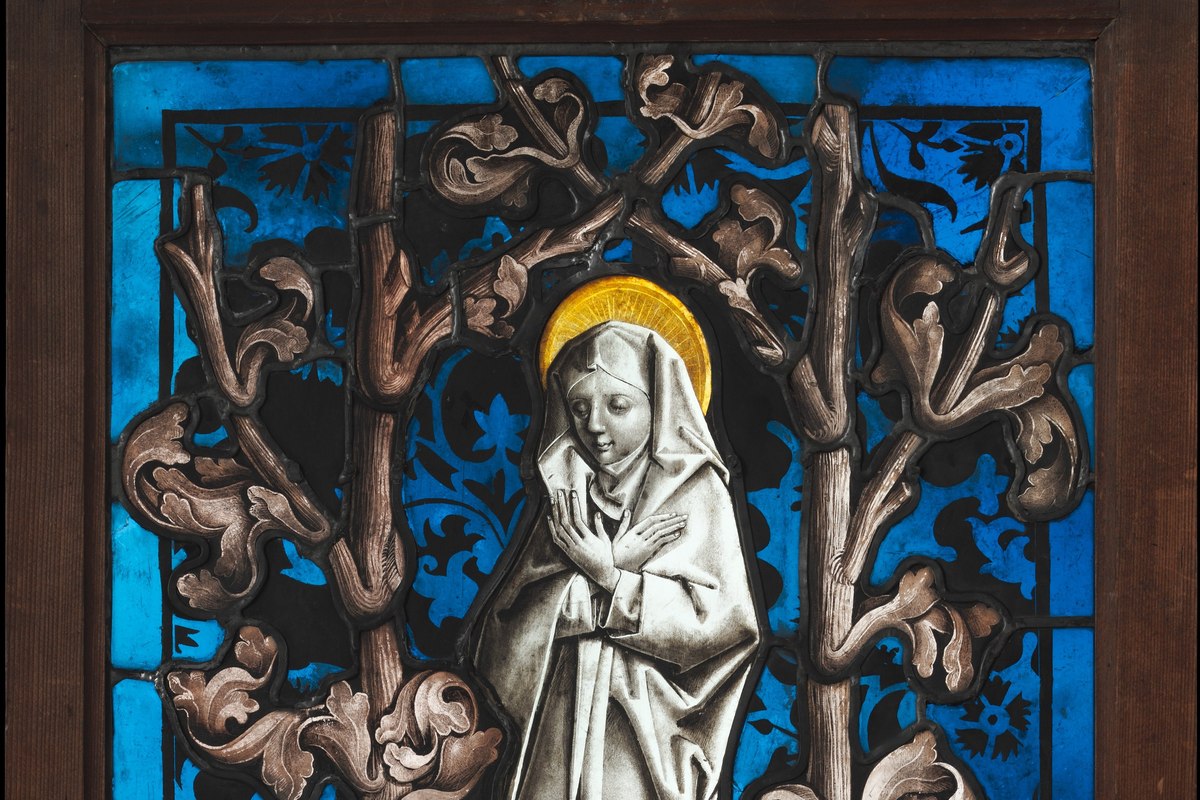
Traditional depiction of the Mater Dolorosa, public domain.
Simeon's words came during what Scripture presents as an otherwise joyful moment — the Presentation of Jesus at the Temple, the ritual offering of a firstborn son required under Jewish law. That juxtaposition, a blessing shadowed immediately by a warning of future grief, is part of what later devotional writers found so striking about the passage: Mary's sorrow, in this reading, was foretold to her before her son had spoken a single public word, long before anyone could have guessed how his life would end.
Seven moments, one grief
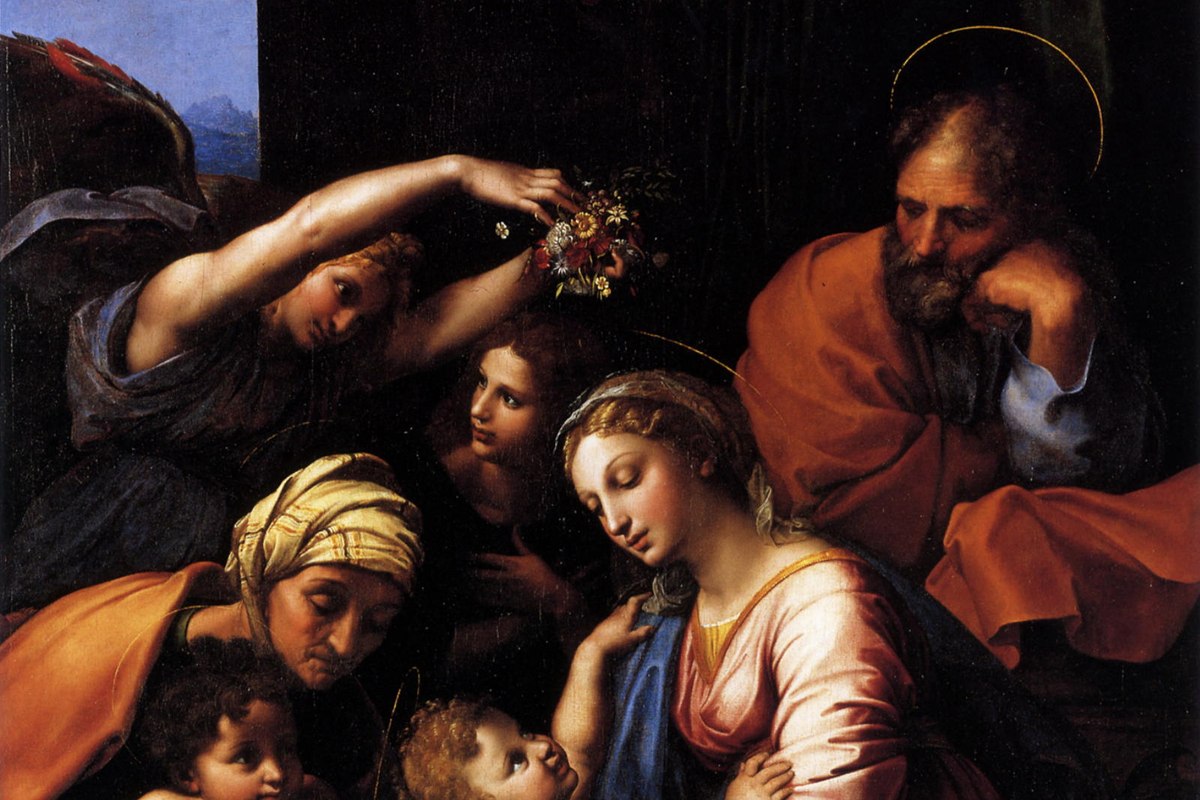
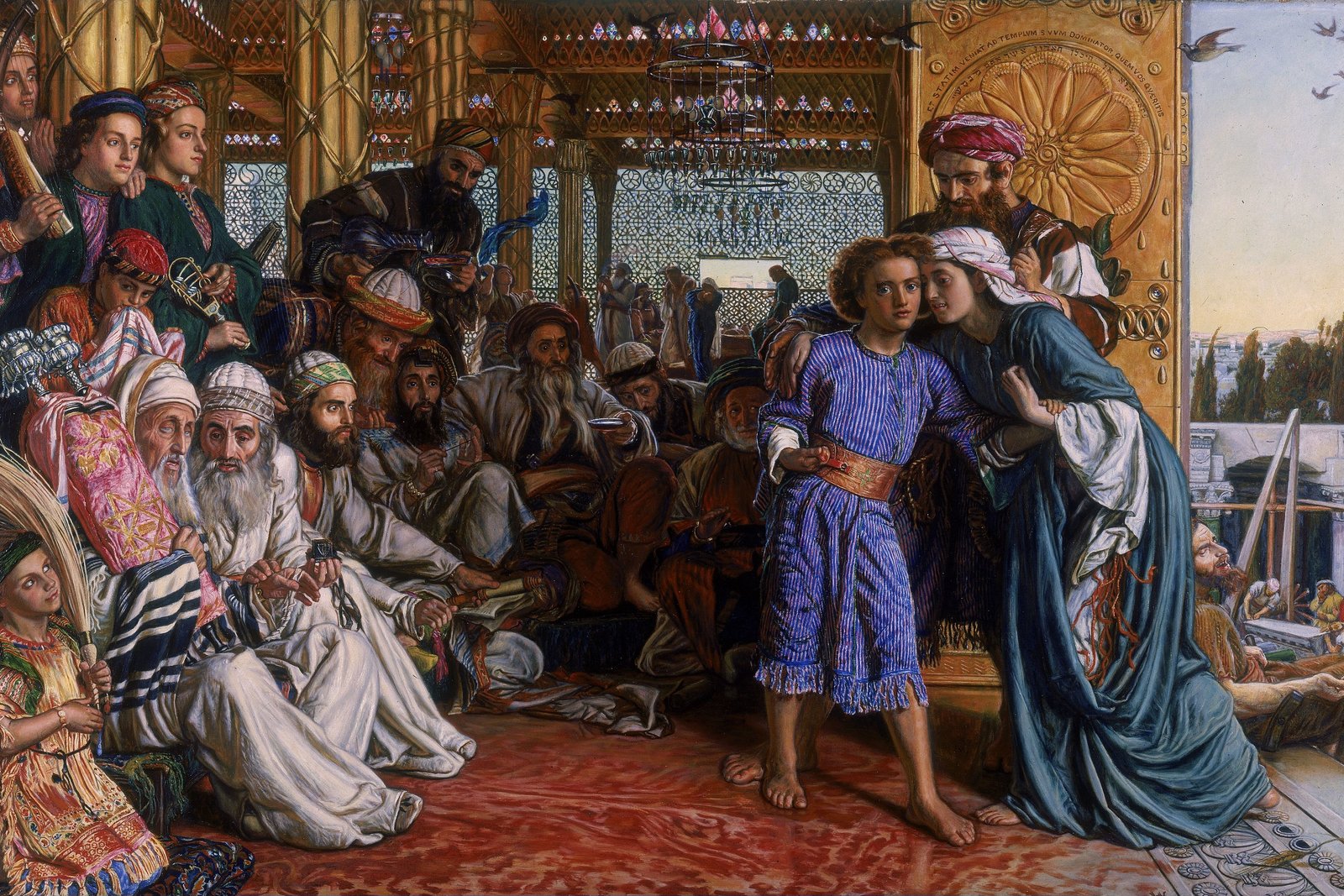
Over time, that single prophecy expanded into a devotional tradition built around seven specific sorrows, each one meditated on individually in prayer. The first is the Prophecy of Simeon itself. The second is the Flight into Egypt, when Joseph, warned in a dream of Herod's plan to kill the infant Jesus, took his young family into exile in a foreign land overnight. The third is the loss of the twelve-year-old Jesus in the Temple, when his parents searched for three anguished days before finding him among the teachers there. The fourth is Mary meeting her son on the road to Calvary as he carried the cross to his execution. The fifth is standing at the foot of the cross during the Crucifixion itself. The sixth is receiving her son's body at the Descent from the Cross, a moment most famously captured in art by the Pietà tradition — sculptures and paintings showing Mary cradling the dead body of Christ. The seventh and final sorrow is the Burial of Jesus, watching the tomb sealed with no certainty, in that moment, of what would follow. Devotional art traditionally represents her with seven swords piercing her heart — a direct visual echo of Simeon's words, multiplied across a lifetime of grief — and this image gives the devotion its other common Latin name, the Mater Dolorosa, the "Mother of Sorrows."
A devotion carried forward by the Servite Order
The Catholic devotion to Our Lady of Sorrows began developing around the end of the eleventh century, particularly in areas around the Mediterranean. In 1233, seven young men in Tuscany founded what became known as the Servite Order, the Order of the Servants of Mary; by 1239, they had taken up Mary's sorrows at the foot of the Cross as their order's principal devotion, carrying it forward through practices like the Chaplet of the Seven Sorrows — a set of prayers, similar in structure to the rosary, arranged around meditation on each of the seven moments — and the Stabat Mater, a medieval Latin hymn whose opening words, "Stabat Mater dolorosa" ("The sorrowful mother was standing"), describe Mary standing at the foot of the cross. The hymn's authorship is uncertain, most often attributed to the thirteenth-century Franciscan friar Jacopone da Todi, though the attribution isn't settled among scholars. It became one of the most frequently set texts in the history of sacred music, composed by figures ranging from Palestrina and Vivaldi to Rossini and Dvořák, a testament to how deeply the image of a grieving mother at the cross resonated across very different musical eras.
A feast with a fixed place on the calendar
In 1814, Pope Pius VII formally added the feast to the General Roman Calendar. It is celebrated each year on September 15, immediately following the Feast of the Holy Cross — a deliberate pairing that links Mary's grief directly to her son's crucifixion the day before. The devotion's purpose, across all its forms, has remained consistent: uniting the faithful with Christ's own suffering through union with the particular sorrow his mother bore as a direct consequence of being his mother.
Why the Church distinguishes devotion from doctrine
It's worth being clear about what kind of claim this devotion makes. The seven sorrows themselves — their specific list and number — are a product of centuries of pious tradition and devotional practice rather than a formal doctrine spelled out in the Catechism of the Catholic Church; different eras and regions of the Church have, at times, counted or grouped Mary's sorrows differently before the sevenfold version became standard. What is doctrinally significant, and rooted directly in Scripture, is simply that Mary suffered profoundly in witnessing her son's suffering — a point the Church has always affirmed as central to understanding her unique role. The Seven Sorrows devotion is best understood as one traditional, richly developed way of meditating on that scriptural truth, not as a separate revelation alongside it. For many who observe the practice, sorrow and hope stay close together throughout: the same devotional tradition that dwells on Mary's grief also insists that grief was never the last word, any more than the Crucifixion was the end of the story it belongs to.
Trivia
What does the title 'Our Lady of Sorrows' refer to?
Where does this devotion originate in Scripture?
What are the Seven Sorrows traditionally listed?
When did the devotion become a formal feast?
Related Reading