The Rainbow Covenant with Noah

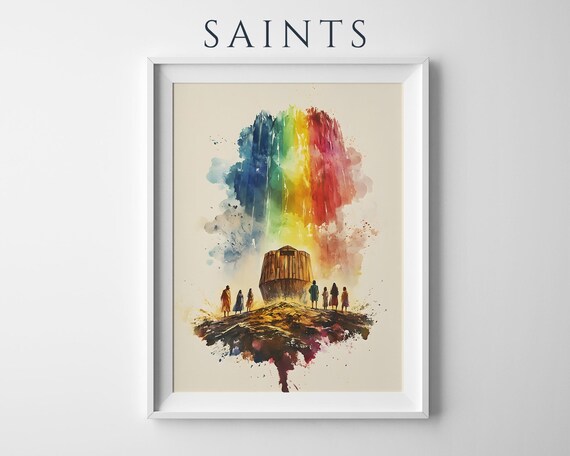
An altar built before a house
Before God speaks a word about the future, Genesis records something Noah does first: he builds an altar and offers a sacrifice, "Then Noah built an altar to the Lord, and choosing from every clean animal and every clean bird, he offered burnt offerings on the altar." (Genesis 8:20, RSV-CE), the moment his feet are back on dry ground. It's an act of gratitude offered before any practical concerns — before rebuilding a home, replanting a field, or figuring out how to feed his family and the animals now scattered across a mud-caked earth. Only after that sacrifice does God respond, and the response is where the covenant begins.
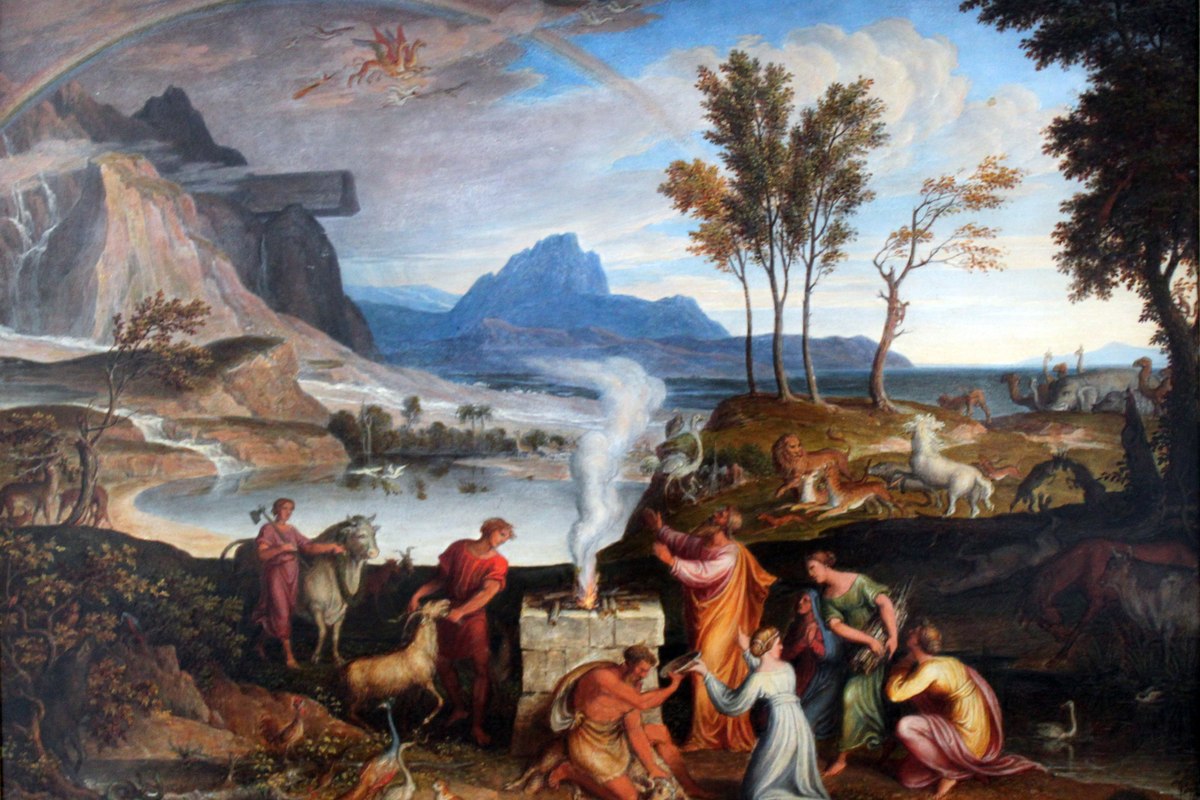
Joseph Anton Koch, "Noah's Thanksgiving Offering," 1803 — public domain.
A promise before any instructions
Noah's first recorded experience after leaving the ark isn't a set of practical instructions for starting over. It's a covenant. God tells him plainly: "God said: This is the sign of the covenant that I am making between me and you and every living creature with you for all ages to come:" (Genesis 9:12, RSV-CE). Before anything else is asked of Noah, something enormous is first promised to him — a striking order of priorities for a man who has just watched the entire world destroyed around him.
It's also the first time Scripture uses the word "covenant" to describe God's relationship with humanity in this formal, structured way — a pattern that will recur again and again through the Old Testament, from the covenant made with Abraham to the one given through Moses at Sinai. Unlike those later covenants, though, this one comes with no conditions attached: nothing is asked of Noah or his descendants in return. It's a promise God makes unilaterally, binding on God alone, regardless of how humanity behaves afterward.
A sign placed where no one could lose it
The sign accompanying that promise is notable for where it's located: "I set my bow in the clouds to serve as a sign of the covenant between me and the earth." (Genesis 9:13, RSV-CE). Unlike a physical object Noah might have been asked to build or preserve, the rainbow exists entirely outside human control or maintenance — visible to everyone, requiring nothing from Noah or his descendants to keep it intact. The sign of the promise, in other words, was designed to outlast anything people themselves might do.
The text is also careful about who the sign is ultimately for. God says "When I bring clouds over the earth, and the bow appears in the clouds," (Genesis 9:14, NABRE) — phrasing that places the act of remembering with God, not with Noah's descendants. Readers have long noticed the humility, even tenderness, in that detail: the sign isn't primarily a reminder aimed at forgetful human beings, but something God commits to noticing every time it appears, as a kind of self-binding pledge written across the sky rather than on a scroll or a stone tablet.
A promise wider than anyone standing there
The scope of the covenant is deliberately expansive: "When I bring clouds over the earth, and the bow appears in the clouds, I will remember my covenant between me and you and every living creature—every mortal being—so that the waters will never again become a flood to destroy every mortal being" (Genesis 9:14-15, NABRE). It isn't a private arrangement between God and one family. It extends to "every living creature," reaching every generation that would come after, whether or not they had any memory of the flood that made the promise necessary in the first place.
A weapon set aside in the sky
One detail adds an unexpected layer to the image: the Hebrew word used for "rainbow" in this passage is the same word used elsewhere in Scripture for a bow of war. Many readers have taken this as a deliberate double meaning — God's bow, the instrument of the judgment that had just devastated the earth, now hung deliberately in the sky, pointed away from the earth rather than toward it. Read that way, the rainbow isn't simply a pretty afterthought to the flood story. It's a weapon visibly retired, left permanently on display as proof it would not be picked up again.
A covenant that includes the animals
One detail is easy to skim past: the covenant explicitly names "every living creature" alongside Noah and his family, repeating the phrase several times across just a few verses. This isn't a covenant with humanity alone but with the whole of creation that survived the flood — birds, livestock, and every wild animal that had shared the ark with Noah for those long months. Many Christian commentators have pointed to this detail as evidence that Scripture regards the natural world itself, not just human beings, as a party genuinely included in God's promises and God's care — a theme that echoes back to the creation of light and the wider Genesis account of a world God repeatedly calls good before humanity even enters the picture.
Rembrandt, Chagall, and a symbol beyond the Bible
The rainbow after the flood has become one of the most universally recognized images to come out of Genesis, painted and referenced far beyond explicitly religious contexts — Marc Chagall returned to Noah and his rainbow repeatedly across his career, and countless children's Bibles use it as their cover image precisely because it compresses the entire story, destruction and mercy both, into a single picture. That popularity can obscure the theological weight underneath it: this isn't a symbol of general good feeling, but a specific, remembered promise tied to a specific, catastrophic event, standing as reassurance that judgment, however severe, was not going to be God's final word.
Trivia
What exactly did God promise Noah after the flood?
What sign did God give as proof of this covenant?
Who exactly was this covenant made with?
Why is the rainbow sometimes described as connected to a 'war bow'?
Related Reading