The Twelve Tribes of Israel Explained

A family tree that became a nation
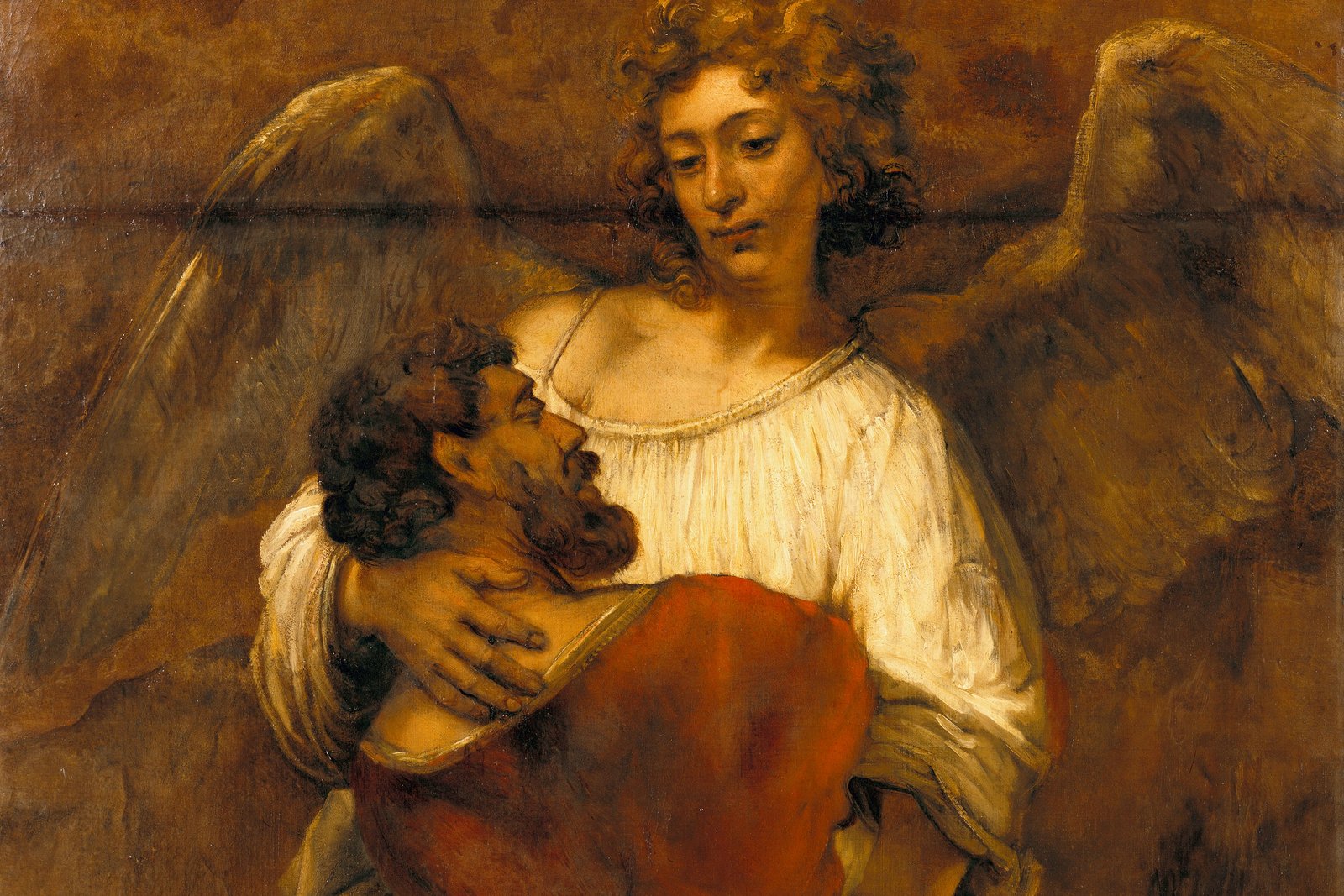
The twelve tribes of Israel begin, improbably, as an ordinary — if deeply strained — family. Jacob, whose own story of wrestling with an angel and receiving the name "Israel" is told elsewhere in Genesis, fathered twelve sons and at least one daughter by two wives, Leah and Rachel, and their two maidservants, Bilhah and Zilpah, a domestic arrangement common to the patriarchal culture of the ancient Near East but hardly a formula for peace among the resulting children. Genesis doesn't soften the tension: favoritism, jealousy, and open hostility run through the family narrative long before any of it becomes national history.
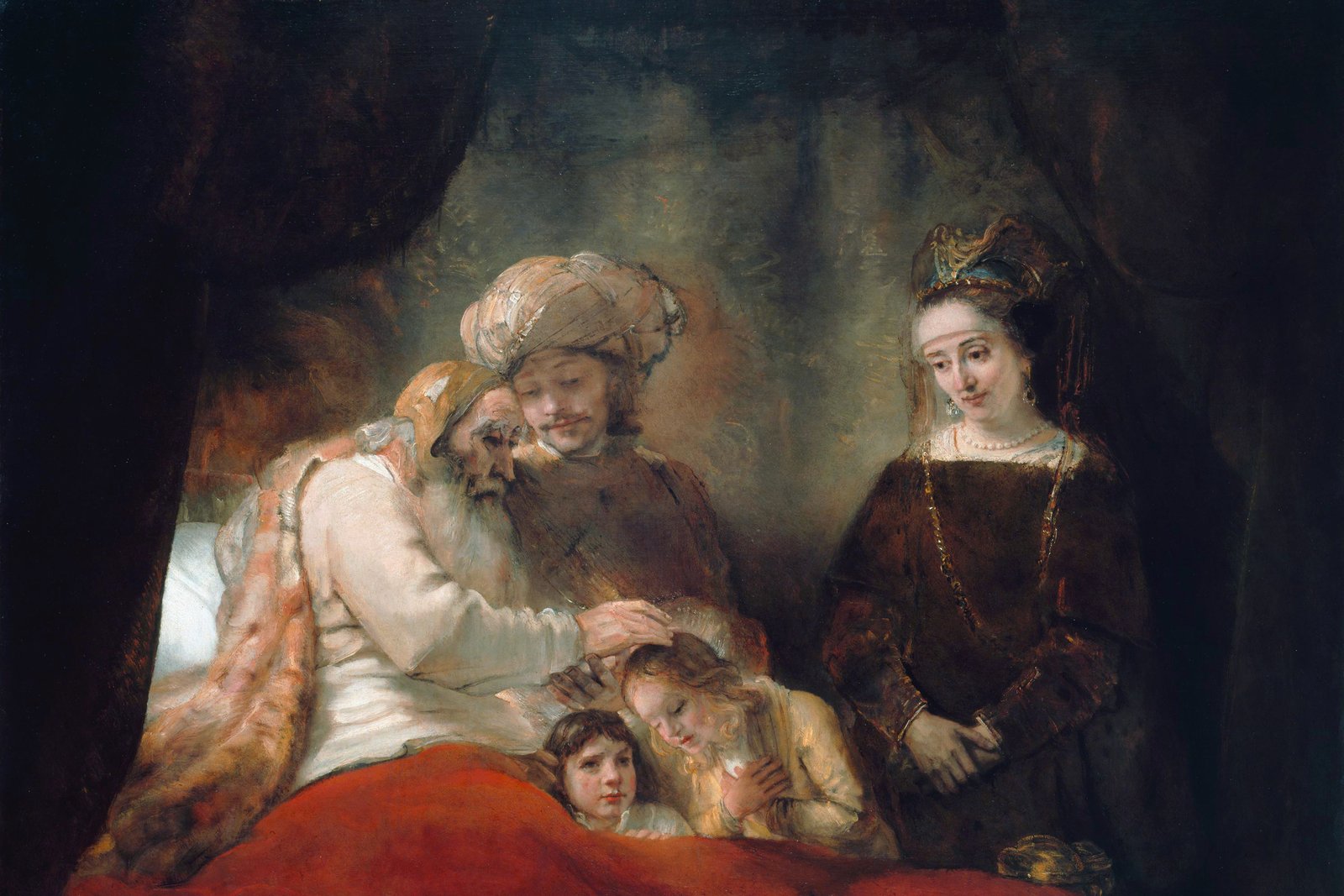
Rembrandt van Rijn, Jacob Blessing the Children of Joseph, 1656, Gemäldegalerie Alte Meister, Kassel — public domain.
Jacob himself was the grandson of Abraham, whose own call out of Ur is covered in The Call of Abraham — the starting point of the whole patriarchal narrative that Genesis builds toward the emergence of a people named for Jacob's second name, Israel.
The twelve sons, in order
Genesis lists the sons roughly in the order of their birth. Leah, the less-favored but more fertile wife, bore Reuben, Simeon, Levi, and Judah first, before her maidservant Zilpah added Gad and Asher to the count, and Leah herself later bore two more sons, Issachar and Zebulun, along with a daughter, Dinah. Rachel's maidservant Bilhah bore Dan and Naphtali during Rachel's own period of infertility, before Rachel finally conceived and bore Joseph, and years later died giving birth to the twelfth and final son, Benjamin.
Each son's name in the Genesis narrative carries a play on words tied to the circumstances of his birth — Reuben's name is connected to Leah's cry that "the Lord has seen my affliction," while Judah's name plays on the Hebrew for "praise." These weren't neutral labels; Genesis presents each name as commentary on the family drama unfolding around it, and those same twelve names would go on to identify entire tribal populations for the rest of the Old Testament.
Joseph sold into slavery — and the family fractures
The sharpest turn in the story belongs to Joseph, Jacob's favorite, whose brothers' resentment boiled over into an act that nearly ended in murder before it settled for something almost as cruel: selling their own brother into slavery. Joseph Sold into Slavery tells that story in full — how the favored son in the ornate coat ended up trafficked to Egypt, and how, in one of the Bible's great reversals, Joseph's eventual rise to power there would later save the very brothers who betrayed him, and with them the whole family, from famine.
That rescue is why the family relocated to Egypt in the first place — the same migration that set up centuries later for the Exodus, when Jacob's descendants, grown by then into a genuinely large population, needed deliverance from Egyptian slavery under Moses. By the time that generation reached the plains of Moab, on the edge of the Promised Land, they were no longer a single household but twelve distinct tribes, each carrying the name of one of Jacob's sons — or in one important case, two names in place of one.
Why Joseph's tribe splits into two — and Levi drops out
Genesis and later books complicate the tidy number twelve in a specific, deliberate way. Joseph, rather than having a single tribe named for him, has his two sons, Ephraim and Manasseh, each receive their own tribal territory when the Promised Land was divided — a doubling that tradition connects to Jacob's own blessing over his grandsons late in life, when he crossed his hands to bless the younger Ephraim ahead of the older Manasseh, over Joseph's objection.
That doubling is balanced out by the tribe of Levi, which received no territorial allotment at all. The Levites were set apart as a priestly tribe, supported by tithes, offerings, and a scattering of dedicated cities throughout the other tribes' land rather than a single contiguous territory — a structural decision that keeps the count of landed tribes at twelve even after Joseph's split, while the religious tribe of Levi stands, in a sense, both inside and outside the twelve-tribe system at once.
A kingdom, then a fracture
Centuries after the conquest of Canaan, the twelve tribes came together — imperfectly and briefly — under a single monarchy. That story, including how the tribes were governed before, during, and after the reigns of Israel's first kings, is covered in The Kings of Israel: Saul, David, and Solomon. After Solomon's death, the united kingdom split in two: ten tribes formed the northern kingdom of Israel, while Judah and Benjamin formed the southern kingdom of Judah, centered on Jerusalem.
The northern kingdom's tribes were largely dispersed after the Assyrian conquest of 722 BC, becoming the so-called Ten Lost Tribes of later legend and speculation. Judah endured longer, surviving until the Babylonian conquest and exile more than a century afterward — and it is specifically from the tribe of Judah, through the royal line of David, that the New Testament traces the ancestry of Jesus, fulfilling Jacob's own deathbed blessing that "the scepter shall never depart from Judah" (Genesis 49:10, NABRE).
Twelve as a number that outlives the tribes themselves
Long after the tribes themselves had been scattered, conquered, or absorbed, the number twelve kept its symbolic weight. Jesus's selection of twelve apostles is widely read by biblical scholars and the Catholic tradition alike as a deliberate echo of the twelve tribes — a signal that he was reconstituting and fulfilling the identity of the people of God around himself. The Book of Revelation pushes the symbolism further still, describing a vision of 144,000 sealed "out of every tribe of the children of Israel," with exactly twelve thousand named from each of the twelve tribes in turn (Revelation 7:4-8, NABRE). The Catechism describes the Church itself as prepared for "in a remarkable way in the Old Covenant" through Israel's own calling as God's chosen people (CCC 62) — a lineage of meaning that runs, unbroken in symbol if not always in bloodline, from Jacob's twelve quarreling sons all the way to the final book of the New Testament.
Trivia
Who were the twelve sons of Jacob?
Why are there thirteen tribal territories if there were only twelve sons?
Which tribe did Jesus belong to?
What happened to the ten northern tribes of Israel?
Why does the number twelve keep appearing in the New Testament?
Related Reading