The Basilica of Our Lady of the Pillar, Zaragoza

The oldest Marian apparition tradition
Among the many Marian apparitions venerated across the Catholic world, the tradition associated with Zaragoza occupies a singular place: it is dated, according to tradition, to the year 40 A.D. — while Mary, by most traditional chronologies, was still living her earthly life in or near Jerusalem. Every other widely venerated apparition, from Guadalupe to Lourdes to Fátima, is described as occurring after Mary's death and assumption into heaven. The Pillar tradition instead describes an instance of bilocation: Mary appearing physically at Zaragoza while her body remained, by tradition, in the Holy Land, a phenomenon Catholic tradition has occasionally attributed to other saints and mystics as well, though never with the same institutional prominence as at the Pillar.
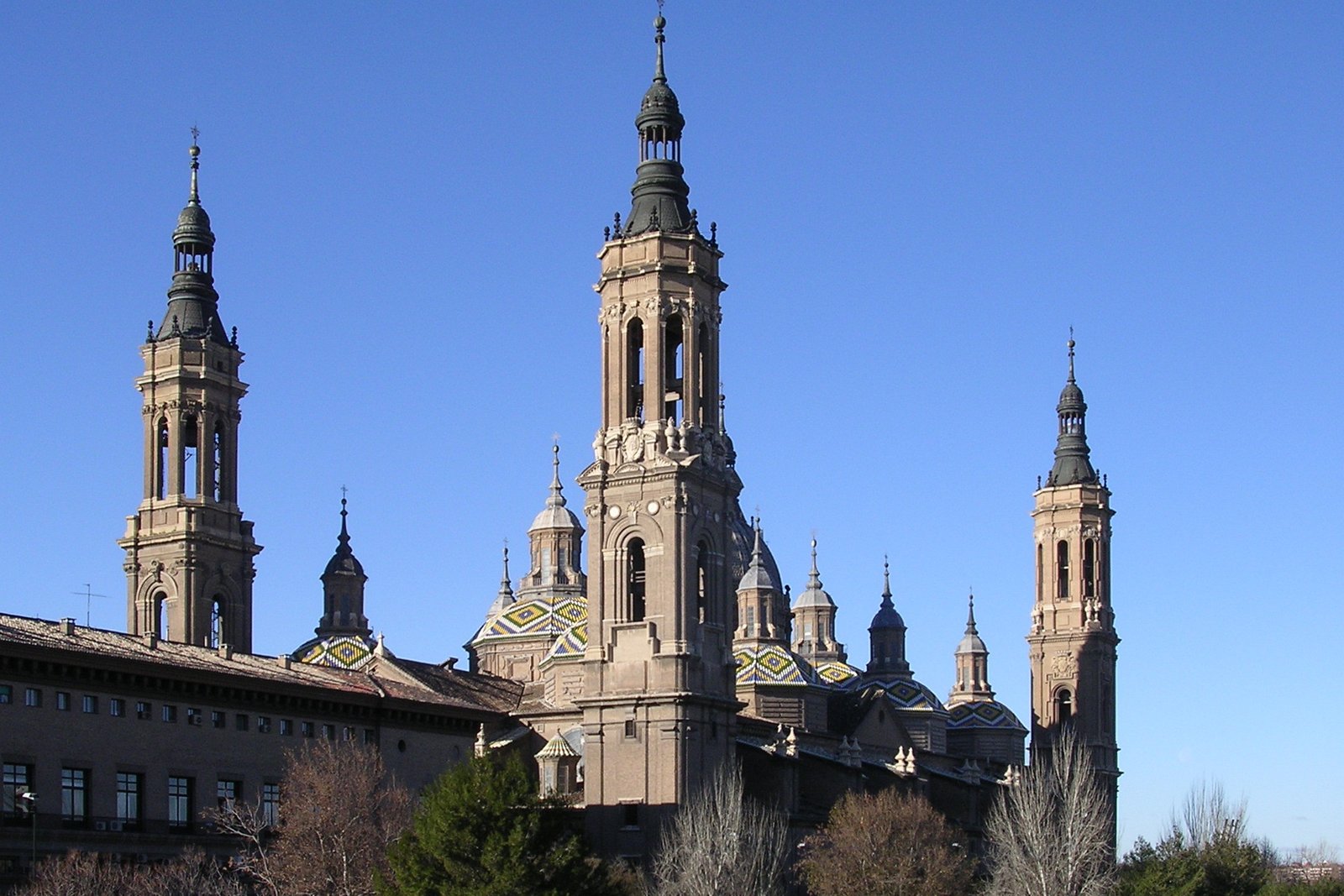
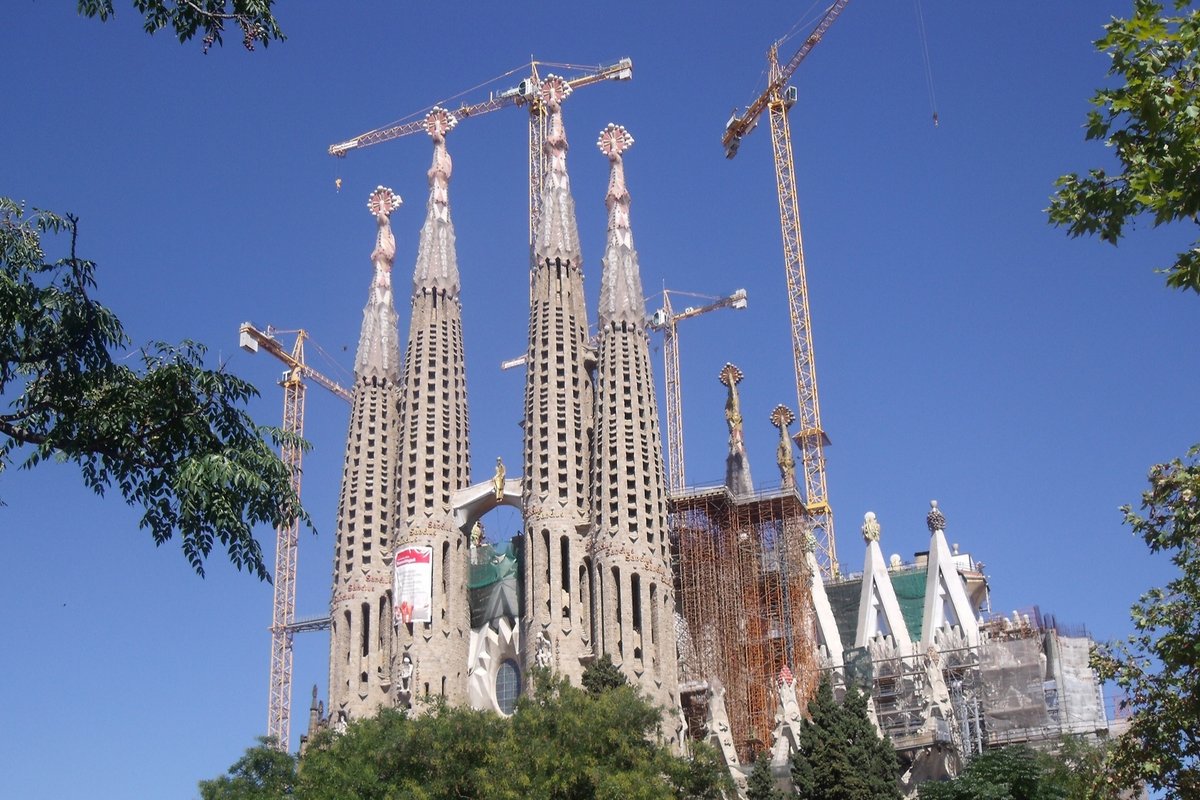
Photograph by Willtron, Basilica del Pilar, Zaragoza, Aragon — CC BY-SA 3.0, Wikimedia Commons.
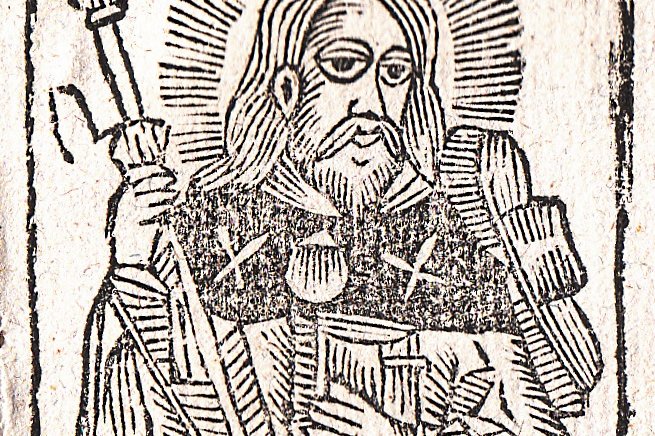
The tradition holds that Saint James the Greater, one of the Twelve Apostles sent to evangelize the Roman province of Hispania, had found his mission there discouraging, with few converts to show for his efforts. Praying beside the Ebro River near the Roman town of Caesaraugusta — the settlement that would become modern Zaragoza — James is said to have received a vision of Mary, who appeared atop a pillar of jasper stone accompanied by angels, offering him encouragement and instructing him to build a chapel on the spot in her honor. James complied, and the small chapel he is said to have raised became the seed from which nearly two thousand years of continuous Marian devotion at Zaragoza would eventually grow.
From simple chapel to Baroque basilica
The building that stands at Zaragoza today bears little resemblance to whatever modest structure James may have built in the first century; what survives from antiquity, according to the tradition maintained by the basilica, is specifically the pillar itself — a short marble column now enclosed within an ornate chapel at the heart of the church, accessible to pilgrims through a small opening where, for centuries, visitors have reached in to touch or kiss the stone. Successive churches replaced one another on the site across the medieval centuries as devotion grew, but the current basilica is substantially a product of the 17th and 18th centuries, when a major Baroque rebuilding campaign gave the church its present form: a vast rectangular hall crowned by multiple domes, the largest at the center rising over the high altar, with twin bell towers eventually added to complete the exterior by the early 20th century.
The scale of the rebuilding reflects Zaragoza's importance as one of Spain's most significant pilgrimage sites through the early modern period, drawing continuous royal and ecclesiastical patronage. Francisco de Goya, the celebrated Spanish painter, contributed frescoes to the basilica's ceiling in the late 18th century, among them a depiction of the Adoration of the Name of God — a reminder that the building functioned not just as a devotional site but as a major commission for the leading artists of its era.
Survival through war
The basilica's history includes a striking, well-documented episode from the 20th century: during the Spanish Civil War, in 1936, three aerial bombs were dropped on the basilica by Republican forces but reportedly failed to detonate, an event local tradition has long treated as a sign of divine protection. Two of the unexploded bombs remain on public display within the basilica today, mounted near the Chapel of the Pillar, presented by the church as evidence of the site's continued providential protection — a claim, like the apparition tradition itself, that rests on faith and local devotion rather than a matter the Church has formally adjudicated.
A living pilgrimage site today
The Basilica of Our Lady of the Pillar remains one of the most visited Marian shrines in the Spanish-speaking Catholic world, drawing especially large crowds each October for the Fiestas del Pilar, Zaragoza's major civic and religious festival honoring the basilica's patroness. Pope John Paul II, among other popes, made a point of visiting the shrine during trips to Spain, and the basilica has been designated a minor basilica by the Holy See in recognition of its historical and devotional significance. The Church, characteristically, treats the underlying apparition tradition itself as a matter of pious belief rather than defined dogma, permitting and encouraging the devotion without requiring the faithful to accept its historical details as an article of faith — a distinction that has not diminished the depth or scale of devotion Zaragoza has drawn for close to two thousand years.
The basilica's ten baroque domes, painted in part by Francisco de Goya early in his career, dominate the Zaragoza skyline along the Ebro River, and the building's sheer physical scale — the largest baroque church in Spain — makes it visible from well outside the city long before a visitor reaches its doors, a fitting scale for a shrine whose devotion has, according to its own tradition, been continuous since the earliest days of the Church in Spain.
Trivia
What makes the Zaragoza apparition tradition different from other Marian apparitions?
What is the pillar, and can visitors still see it today?
Why is the basilica connected to Saint James the Greater?
How old is the current basilica building?
Is the Pillar apparition an official Catholic dogma?
You May Also Like
Related Reading