Seville Cathedral

From Mosque to Cathedral
Seville spent more than five centuries under Muslim rule, from the early 8th century until its conquest by King Ferdinand III of Castile in 1248, and the city's Great Mosque, built primarily under the Almohad dynasty in the 12th century, stood as one of the most significant religious buildings in Islamic Iberia. After the conquest, the mosque was consecrated as a Christian cathedral and used largely in its original form for over a century — a common practice across newly conquered territory, since converting an existing structure was faster and cheaper than starting fresh.
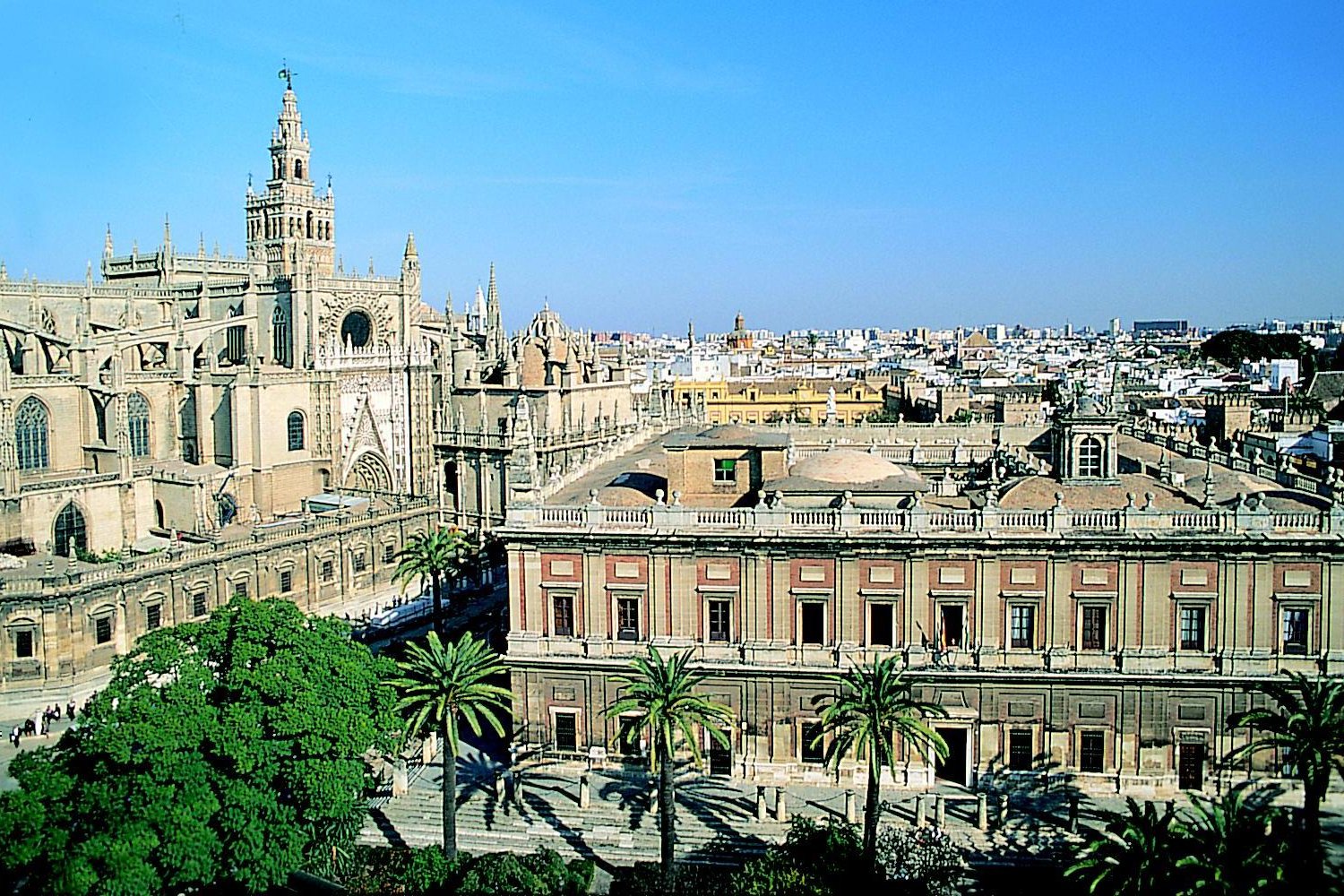
Seville Tourism Bureau, Seville Cathedral and the Archivo de Indias — public domain.
By the start of the 15th century, however, the old mosque-turned-cathedral had deteriorated significantly, and the cathedral chapter made a dramatic decision: rather than repair the aging building, they would demolish nearly all of it and construct an entirely new cathedral on a scale meant to rival, and arguably surpass, anything else built in Christian Europe. Construction began in 1401 and the main body of the new Gothic cathedral was largely complete by 1506, an unusually fast timeline for a building of its size, achieved by pouring enormous civic and ecclesiastical resources into the project during Seville's rise as a major trading and, later, colonial power.
Wealth From an Empire
That timing was not incidental. Seville's cathedral rose during precisely the decades when the city was becoming the primary Spanish port for trade with the Americas following Columbus's voyages, and the wealth flowing into the city helped fund a building program of extraordinary ambition. The cathedral's main altarpiece, the Retablo Mayor, is itself a testament to that wealth: it took roughly eighty years to complete, spans the full width of the central nave, and is generally considered the largest and one of the most richly gilded altarpieces in the world, carved with 45 scenes from the life of Christ and covered in gold leaf.
The Giralda: A Minaret Made Christian
While most of the old Great Mosque was torn down to make way for the new cathedral, its minaret was too well built, and too visually striking, to destroy. Constructed between 1184 and 1198 under the Almohad caliph Abu Yusuf Ya'qub al-Mansur, the tower originally served to call the faithful to prayer in the Islamic style, its brickwork patterned in the geometric Almohad tradition. Christian builders incorporated it directly into the new cathedral complex rather than replacing it, and in the 1560s architect Hernán Ruiz added a Renaissance belfry to its top, crowned by a bronze statue symbolizing Faith that doubles as a weathervane — giving the tower its name, La Giralda, from the Spanish girar, "to turn."
The result is one of the clearest surviving examples anywhere in Spain of a building physically layered with both Islamic and Christian history in a single structure, rather than one erasing the other — a fusion UNESCO specifically cited when it added the cathedral complex to its World Heritage List in 1987.
Columbus's Tomb
Inside the cathedral stands one of its most visited monuments: a grand 19th-century tomb attributed to Christopher Columbus, its casket borne aloft by four large bronze figures representing the medieval kingdoms of Castile, León, Aragón, and Navarre. Columbus's actual burial history is notoriously tangled — he died in Valladolid in 1506, and his remains were subsequently moved to Seville, then to Santo Domingo in the Caribbean, then to Havana, and finally back to Seville in 1898 after Spain lost control of Cuba. For decades, historians debated whether the Seville tomb held Columbus's actual remains or those of a different family member, but DNA analysis published in the 21st century has supported the Seville remains as authentically his, though some questions about the full chain of custody remain a matter of ongoing historical discussion rather than settled certainty.
The Largest Gothic Cathedral on Earth
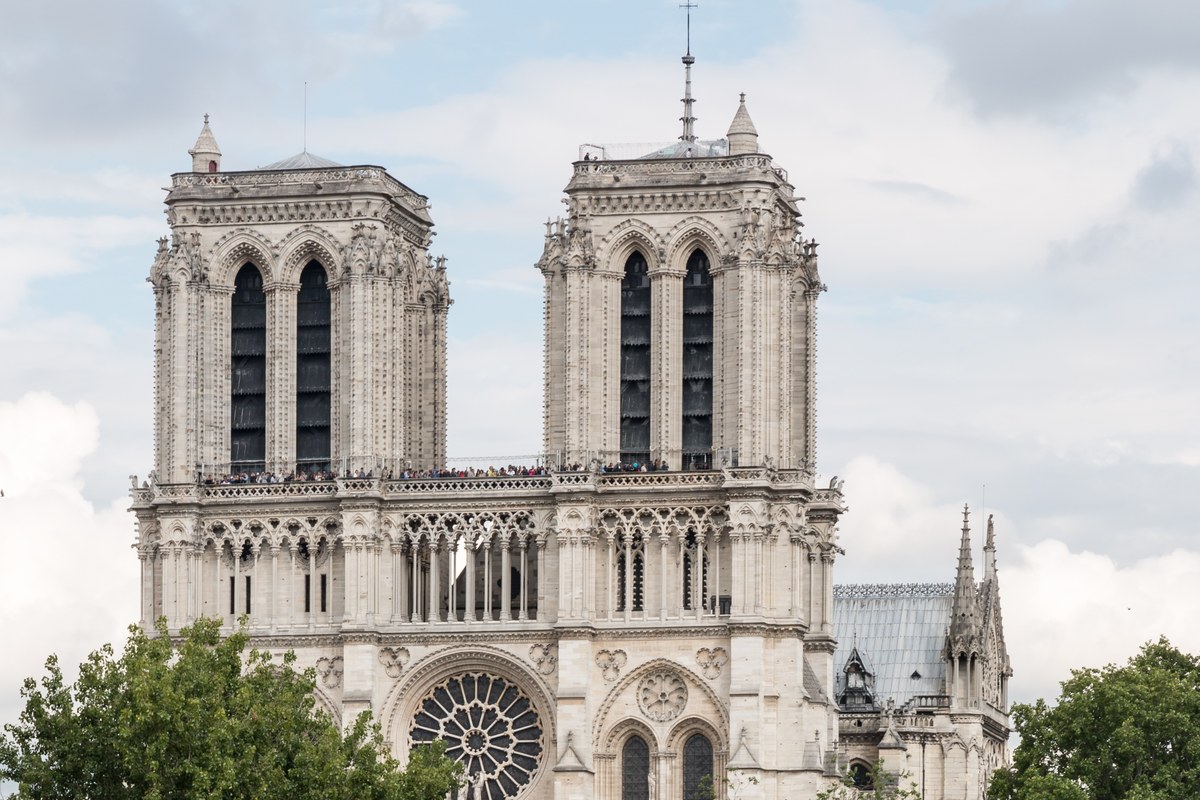
By enclosed volume, Seville Cathedral holds the distinction of being the largest Gothic cathedral in the world, and among all church buildings of any style, only St. Peter's Basilica in Rome exceeds it in scale. Its central nave rises to roughly 138 feet, supported by soaring ribbed vaults typical of the mature Gothic style, while five broad aisles give the interior an unusually wide, spacious footprint rather than the long, narrow naves typical of French Gothic cathedrals like Chartres or Notre-Dame.
The Patio de los Naranjos
Attached to the cathedral's north side is the Patio de los Naranjos, the Courtyard of the Orange Trees — another surviving fragment of the original mosque complex, once used for ritual washing before prayer in an ablutions fountain that still stands at its center. The courtyard's orderly rows of orange trees and its horseshoe-arched gateway are among the clearest remaining traces of the mosque's original layout, since the main prayer hall itself was entirely replaced by the Gothic cathedral. Pilgrims and visitors still enter the cathedral complex through this courtyard today, passing through the same transitional space that once separated the everyday street from the mosque's sacred precinct, and now performs much the same function for the cathedral that succeeded it.
A UNESCO Ensemble
When UNESCO recognized Seville Cathedral as a World Heritage Site in 1987, it did not designate the building in isolation but as part of a larger ensemble alongside the neighboring Real Alcázar, a royal palace whose own architecture blends Islamic Mudéjar craftsmanship with later Christian additions, and the General Archive of the Indies, which holds the historic documentary record of Spain's American empire. Together, the three buildings — cathedral, palace, and archive — form a single UNESCO listing specifically because of how clearly they demonstrate the layered, centuries-long cultural exchange between Islamic and Christian Spain, with the cathedral standing as the largest and most visited of the three.
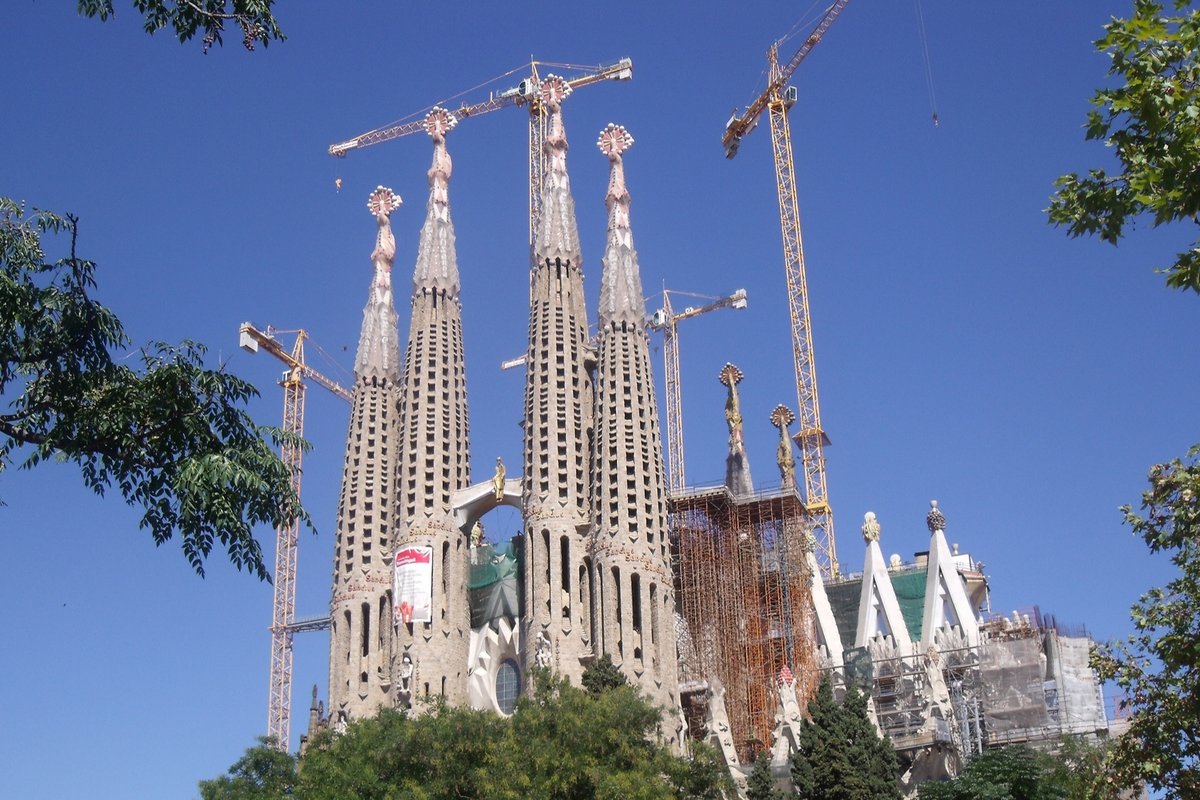
For other cathedrals built over or alongside sites of earlier religious significance, see Church of the Holy Sepulchre and Sagrada Família, Barcelona, another vast Spanish church defined by an extraordinarily long building timeline.
Trivia
Why was Seville Cathedral built on top of a mosque?
What is the Giralda tower?
Is Christopher Columbus really buried in Seville Cathedral?
How big is Seville Cathedral compared to other cathedrals?
Is Seville Cathedral a UNESCO World Heritage Site?
Related Reading