Burgos Cathedral: Spain's Filigree Gothic Masterpiece

A French Gothic import, transformed
Burgos Cathedral began in 1221 as a deliberate architectural import: Bishop Mauricio, who had studied in Paris, commissioned a Gothic design directly inspired by the great French cathedrals then rising at Reims, Bourges, and elsewhere, at a time when Spanish church architecture still leaned heavily on older Romanesque forms. The result was one of the first fully Gothic cathedrals built in Spain, with the pointed arches, ribbed vaulting, and flying buttresses characteristic of the French style transplanted almost wholesale onto Castilian soil.
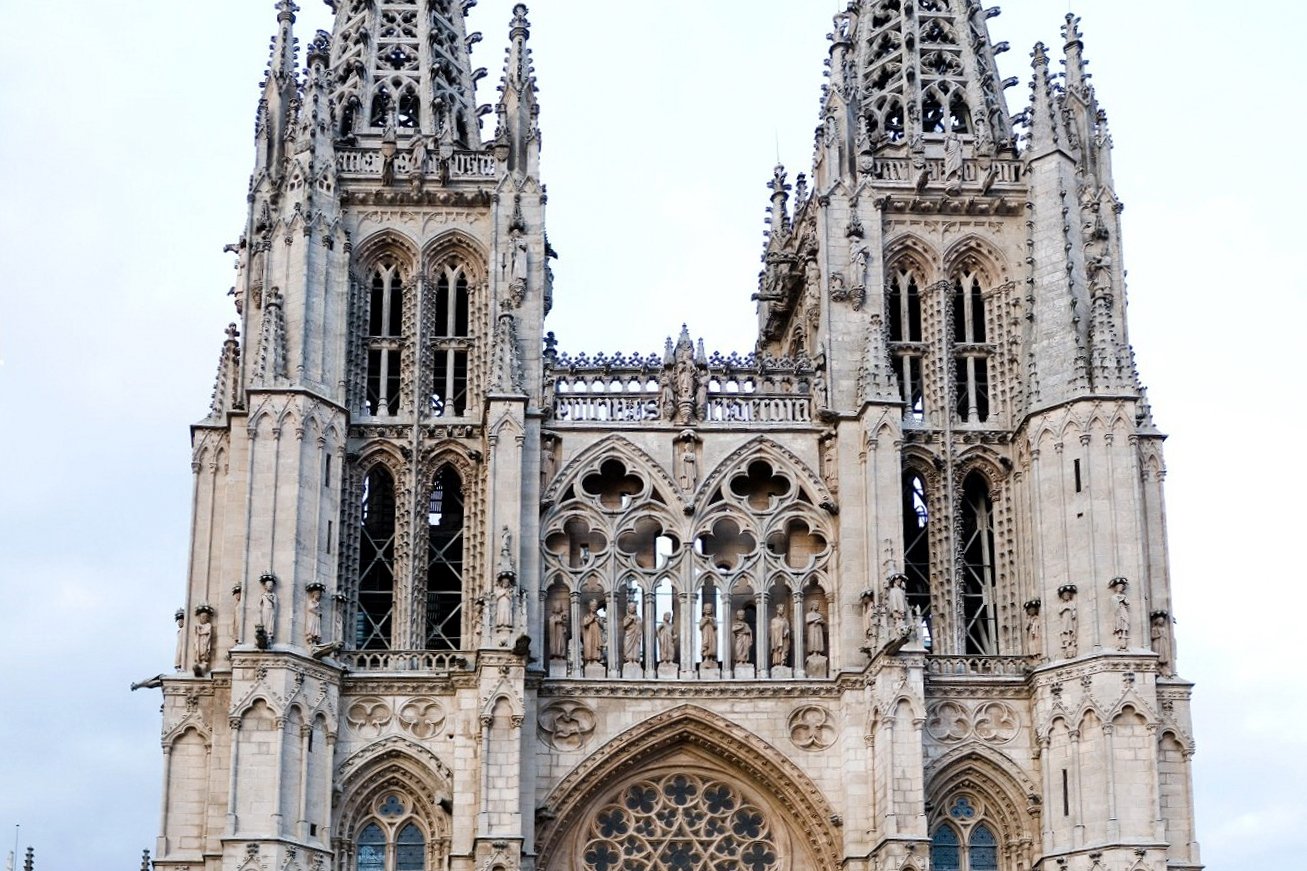
Photograph by Loco085, Burgos Cathedral, Spain — CC BY 2.0, Wikimedia Commons.
What sets Burgos apart from a simple copy of its French models is what happened over the following three centuries, as generations of architects and patrons layered increasingly elaborate additions onto the original structure. The cathedral's construction history reads less like a single unified building campaign and more like an accumulating architectural biography of Spanish Gothic and Renaissance taste — new chapels, towers, and decorative schemes added by different hands across the 14th, 15th, and 16th centuries, each pushing the level of ornamental ambition further than the last.
The spires that changed everything
The single most transformative addition came in the mid-15th century, when the German-born architect Juan de Colonia — his name a Spanish rendering of Hans of Cologne — arrived at Burgos and introduced a style of intricate openwork tracery drawn from the Central European late Gothic tradition then flourishing in Germany. His two spires atop the cathedral's west towers, completed around 1458, are carved with such delicate, perforated stonework that from a distance they resemble lace or ironwork rather than solid masonry — an achievement that transformed Burgos' skyline and remains, to this day, one of the most photographed silhouettes in Spanish Gothic architecture. Juan de Colonia's son, Simón de Colonia, and later his grandson, Francisco de Colonia, continued the family's work on the cathedral for two more generations, adding the extraordinary octagonal Constable's Chapel behind the main altar — a structure so richly decorated with heraldic carving and an open star-vaulted ceiling that it functions almost as a cathedral within the cathedral.
The resting place of El Cid
At the crossing of the cathedral, directly beneath the great central dome, a simple stone slab marks the final resting place of Rodrigo Díaz de Vivar, the 11th-century Castilian nobleman and military leader known to history and legend alike as El Cid. His life — as a warrior who served, fell out with, and was exiled by King Alfonso VI of Castile before carving out his own domain by conquering Muslim-held Valencia — became the basis for the Cantar de mio Cid, one of the foundational epic poems of Spanish literature, and later for countless ballads, plays, and modern retellings, including the 1961 film starring Charlton Heston.
El Cid died in 1099, and his remains were moved repeatedly over the following centuries — first buried at the monastery of San Pedro de Cardeña near Burgos, later disturbed during the Napoleonic Wars, and shuttled between several resting places — before finally being installed at Burgos Cathedral in 1921, a fitting homecoming to the city most closely associated with his legend. The relatively understated marker belies the historical and cultural weight of what lies beneath it: one of medieval Spain's most enduring folk heroes, laid to rest in one of its greatest Gothic buildings.
A cathedral still very much alive
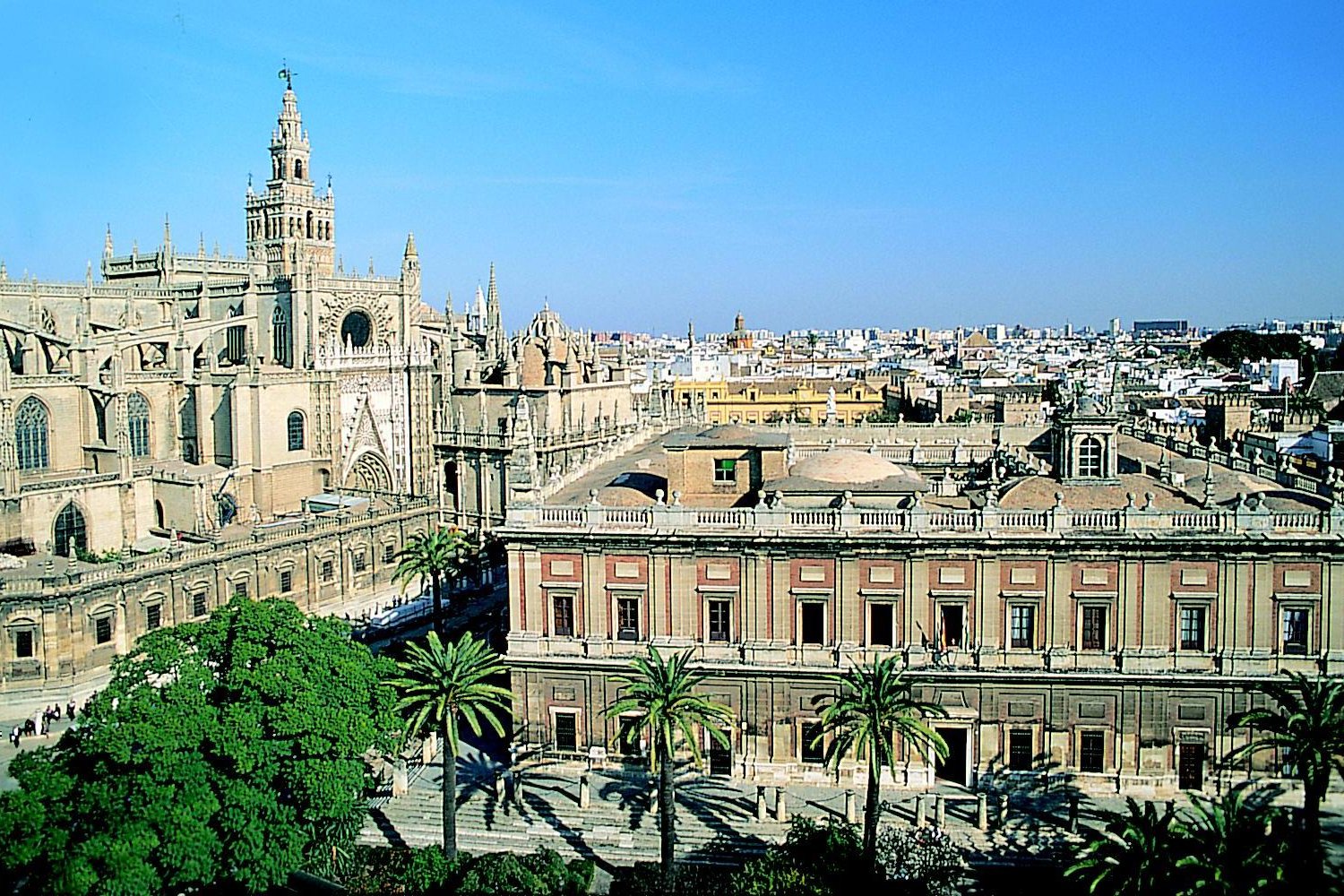
Burgos Cathedral was named a UNESCO World Heritage Site in 1984, recognized independently rather than as part of a larger group listing — a distinction reflecting the exceptional artistic unity and richness accumulated across its long construction history. Beyond the tomb of El Cid and the openwork spires, the cathedral holds an extensive collection of Gothic and Renaissance tombs, altarpieces, and choir stalls, along with the beloved mechanical figure known as the Papamoscas, or "flycatcher," which opens its mouth to strike the hour on the cathedral clock, delighting visitors much as it has since the 16th century. Like Toledo Cathedral and Seville Cathedral, Burgos remains an active seat of a Catholic archdiocese and a working cathedral, its Gothic spires still the defining feature of the Burgos skyline nearly eight centuries after construction began.
The cathedral also sits directly along the Camino de Santiago's Camino Francés route, the most heavily walked path to Santiago de Compostela, meaning generations of pilgrims on their way west have paused beneath its spires long before reaching their final destination. That position has shaped the building's daily rhythm as much as its architecture: alongside the steady flow of tourists drawn by El Cid's tomb and Juan de Colonia's lacework spires, a quieter stream of walkers still passes through simply because the Camino runs straight past the cathedral's doors, often stopping only long enough to have a pilgrim credential stamped before continuing westward toward Santiago.
Trivia
Why is Burgos Cathedral a UNESCO World Heritage Site?
Is El Cid really buried at Burgos Cathedral?
How long did it take to build Burgos Cathedral?
Who designed Burgos Cathedral's distinctive openwork spires?
What is the Papamoscas, and why do visitors watch for it?
Related Reading