Toledo Cathedral, Spain

A Site Layered With History
Toledo's cathedral occupies ground with an unusually deep religious history even by the standards of Spain's ancient cities. Before the Muslim conquest of the Iberian Peninsula in 711, Toledo served as the capital of the Visigothic kingdom, and a Christian church — likely built in the 6th or 7th century — stood on or near the cathedral's current site, serving a see whose bishops already carried significant ecclesiastical authority across Visigothic Spain. Several important Church councils, the Councils of Toledo, were held in the city during this period, cementing its importance in the early Spanish Church.
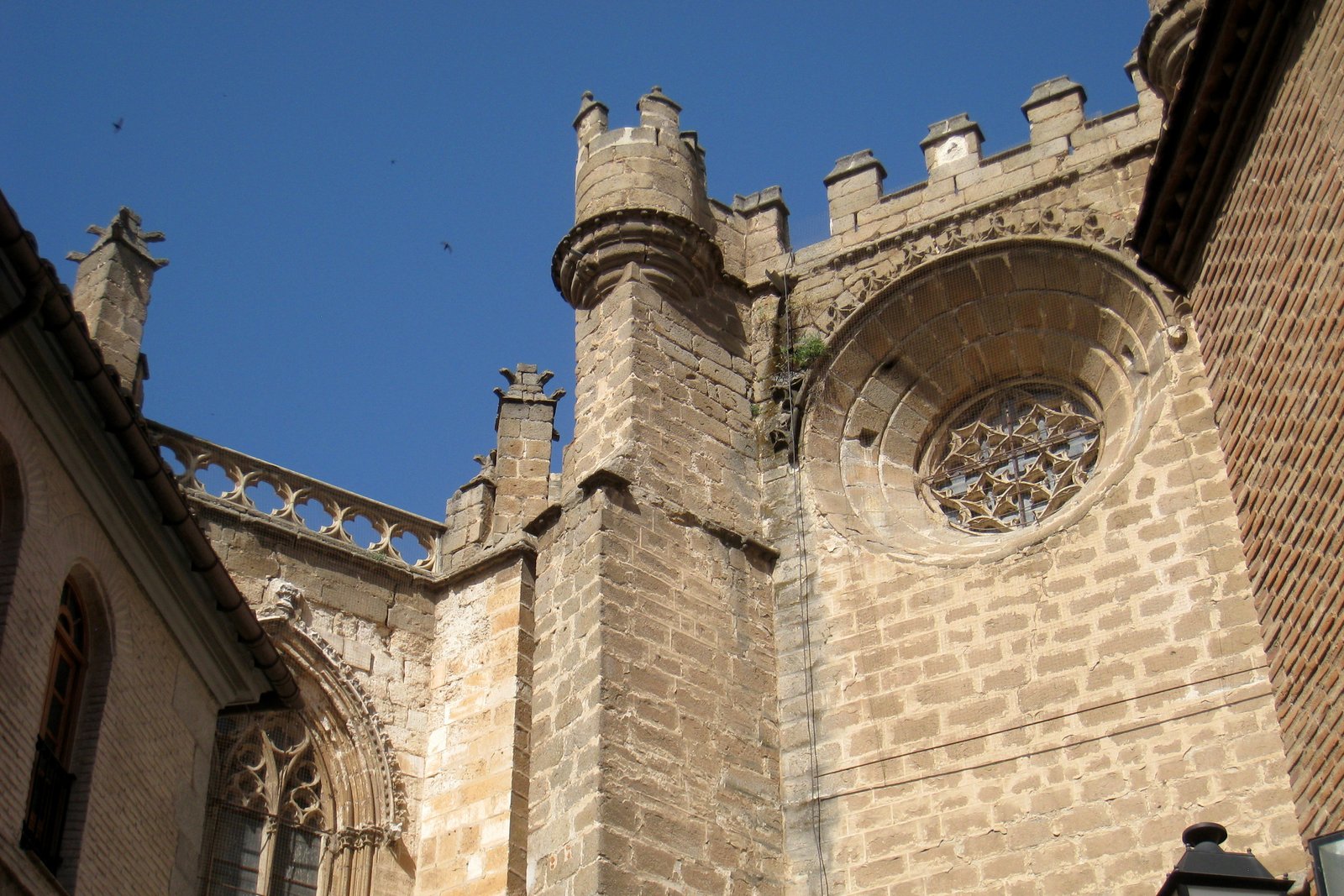
Daderot, Cathedral of Toledo, Spain, 2009 — public domain.
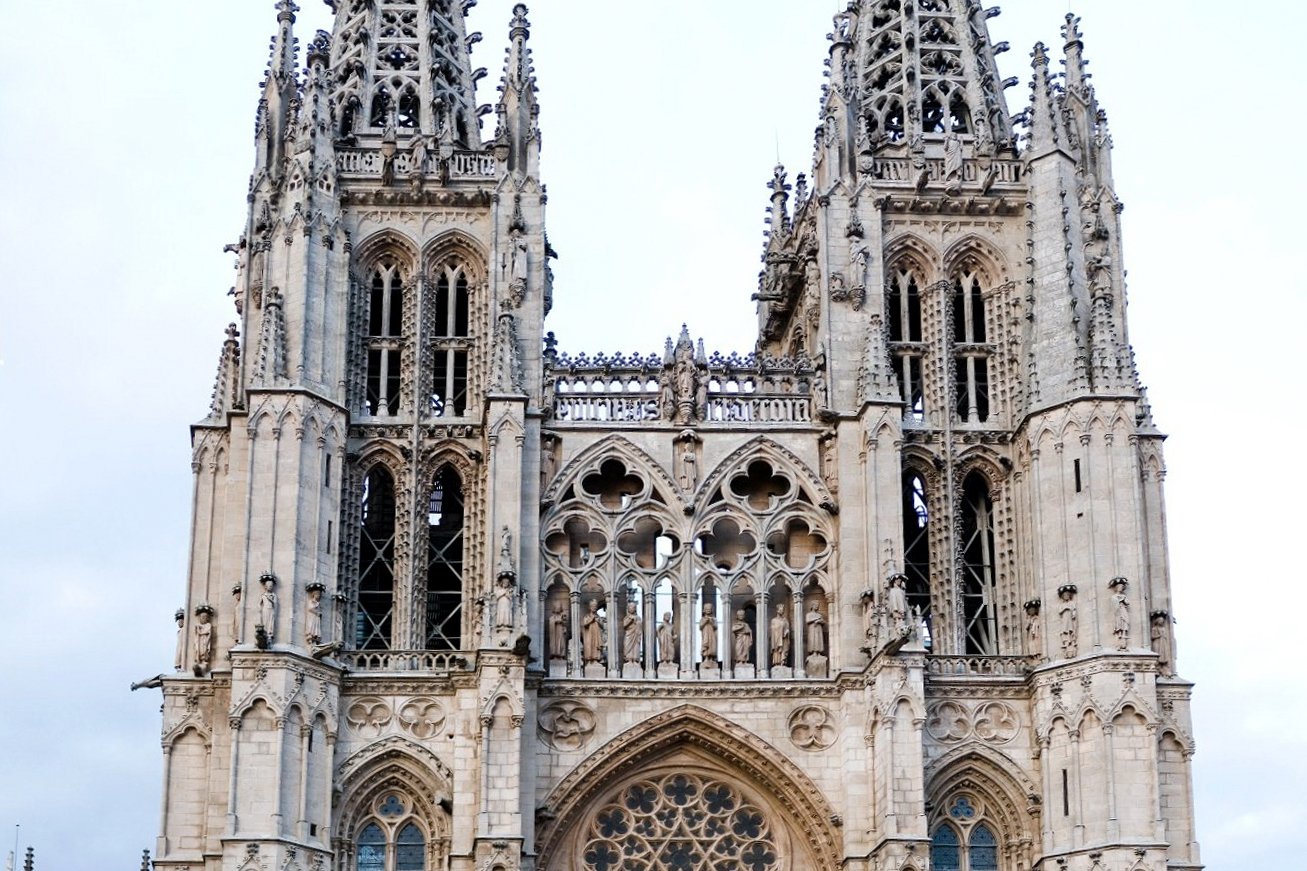
After 711, the church was converted into Toledo's main mosque, which stood for over three and a half centuries as the city passed through Muslim rule. When Alfonso VI of Castile captured Toledo in 1085 — one of the earliest major victories of the long Reconquista — the mosque was initially converted back into a cathedral with relatively modest changes, much as happened in Seville and Córdoba. That arrangement lasted until 1226, when King Ferdinand III and Archbishop Rodrigo Jiménez de Rada decided the old building no longer matched the city's status, and construction began on an entirely new Gothic cathedral, styled explicitly on the great French cathedrals of the period, particularly Bourges.
Primate of Spain
The title "Primate of Spain" attached to Toledo's archbishop is a matter of historic honor rather than an office with direct authority over every other Spanish diocese today. The claim traces back to Toledo's status as the political and ecclesiastical center of Visigothic Spain, reinforced over subsequent centuries by a series of papal grants and royal privileges that recognized Toledo's bishop as holding a certain pre-eminence among Spain's sees. Other Spanish archdioceses, including Santiago de Compostela, have at times contested aspects of this primacy, and in modern Church governance each metropolitan archbishop retains full authority within his own province — but the title has remained attached to Toledo continuously enough that it is still used today, a living link to the city's Visigothic past.
Nearly Three Centuries to Build
Construction of the current Gothic cathedral proceeded, as with most medieval cathedrals, across many generations rather than a single unified building campaign. Work began in 1226 and the main vaults were not completed until around 1493, a span of roughly 265 years that saw the building pass through the full evolution of Gothic architectural style, from the earlier, French-influenced forms of the 13th century to the more elaborate, distinctly Spanish flourishes of the 15th. The cathedral's five broad naves, its extensive cycle of stained glass — over 750 individual windows survive — and its intricately carved choir stalls all reflect contributions added across these centuries by different generations of master builders and artists.
Long after the structure itself was complete, later centuries continued adding to the building in dramatically different styles. The most striking example is the Transparente, an elaborate Baroque altarpiece and skylight completed in 1732 by the sculptor Narciso Tomé, who cut an opening directly through the Gothic ambulatory vault to allow a shaft of natural light to illuminate the high altar's tabernacle from above — a theatrical, almost operatic addition that sits in deliberate visual contrast with the sober Gothic stonework surrounding it.
El Greco's Toledo
Few artists are as closely associated with a single city as El Greco is with Toledo, where the Crete-born, Venice- and Rome-trained painter settled around 1577 and remained for the rest of his life, producing the bulk of the intensely spiritual, elongated, dramatically lit religious paintings for which he is remembered. Toledo Cathedral commissioned direct work from him almost immediately after his arrival: his painting El Espolio (The Disrobing of Christ), completed around 1579 for the cathedral's sacristy, remains one of his most celebrated works and still hangs in the room it was created for.
Over the following decades, the cathedral's collection grew to include roughly eighteen paintings by El Greco, gathered in its sacristy alongside works by other major Spanish and European masters including Goya, Velázquez, Titian, and Caravaggio — making the cathedral's art collection, quite apart from its architecture, one of the most significant in Spain outside the Prado.
The Mozarabic Chapel
Among the cathedral's more unusual features is the Mozarabic Chapel, established in the early 16th century by Cardinal Cisneros to preserve the ancient Hispanic liturgical rite — the form of Christian worship used in Spain before the Roman rite was formally adopted across the peninsula in the 11th century. Toledo's Christian community had continued practicing this older rite even during the centuries of Muslim rule, when Christians living under Islamic governance were known as Mozarabs, and Cisneros's foundation ensured the ancient liturgy would continue to be celebrated daily rather than disappearing entirely as it had almost everywhere else in Spain. Mass in the Mozarabic rite is still celebrated in the chapel today, making it one of the very few places in the world where this liturgical tradition, older than the standard Roman rite used across most of the Latin Church, survives in continuous practice.
The Custodia and Corpus Christi
Among the cathedral's treasury holdings is the Custodia de Arfe, an enormous processional monstrance made of silver and gold, created in the 16th century by the goldsmith Enrique de Arfe using, according to tradition, some of the first gold brought back from the Americas. Each year on the feast of Corpus Christi, the monstrance is carried in a major public procession through the streets of Toledo, a tradition dating back centuries that remains one of the city's most significant annual religious and civic events, drawing crowds that fill the historic center to watch the elaborate silver structure pass by, carried by teams of bearers along a route lined with tapestries and awnings erected specifically for the occasion.
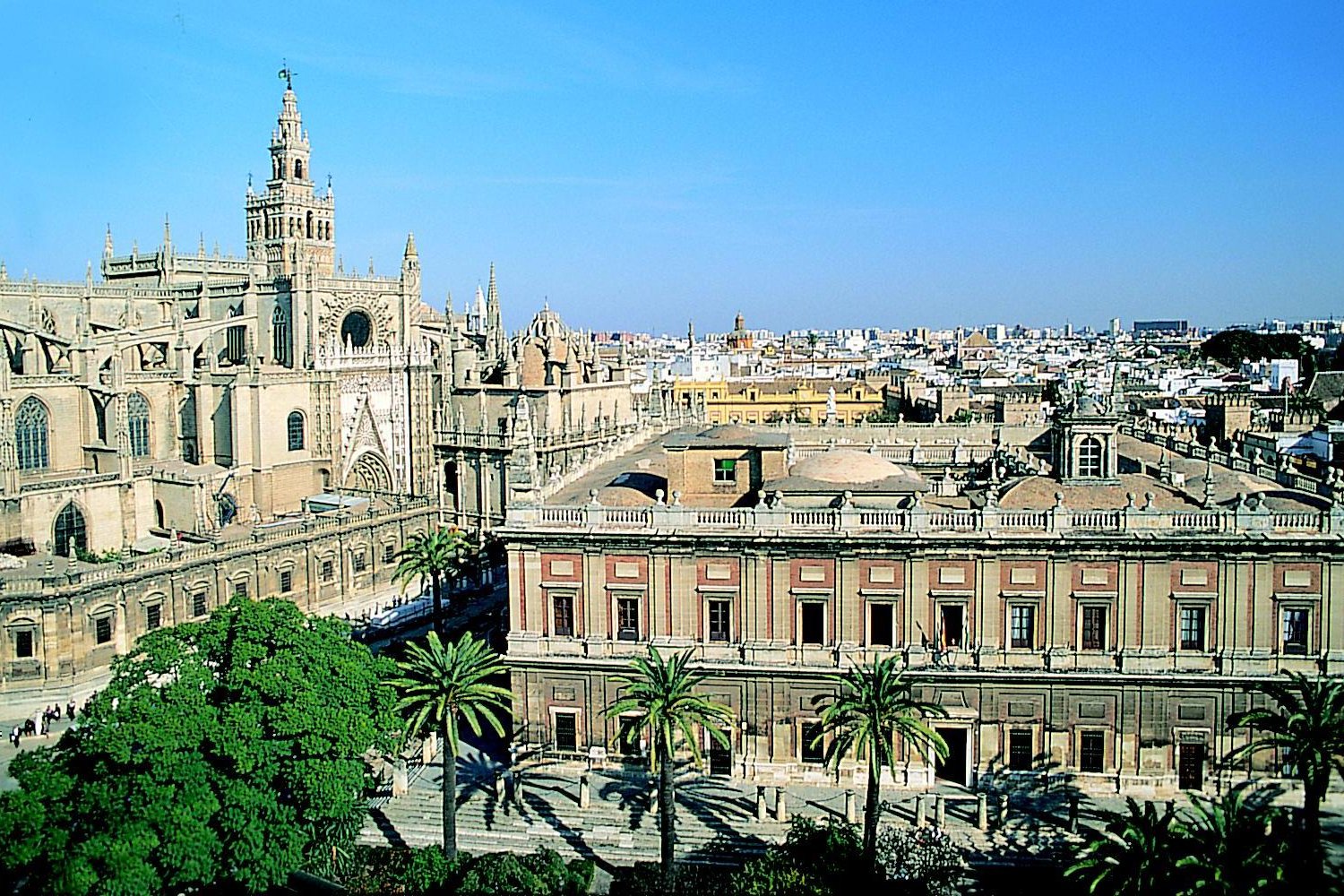
For other cathedrals built over earlier mosques following Spain's Reconquista, see Seville Cathedral; for another major pilgrimage cathedral central to Spanish Catholic identity, see Santiago de Compostela Cathedral.
Trivia
Why is the Archbishop of Toledo called Primate of Spain?
What stood on the site of Toledo Cathedral before it was built?
How many El Greco paintings are in Toledo Cathedral?
What is the Transparente in Toledo Cathedral?
How long did Toledo Cathedral take to build?
Related Reading