Emmaus: Where the Risen Christ Was Recognized

A walk taken in grief
Luke's Gospel places the story on the very day of the Resurrection, though the two disciples walking the road to Emmaus don't yet know that anything has changed. They are leaving Jerusalem, heading away from the city where their teacher had just been executed, discussing everything that had happened — the arrest, the crucifixion, and now, confusingly, reports from some of the women that his tomb had been found empty. A stranger falls into step beside them and asks what they're discussing, and one of them, named Cleopas, responds with something close to disbelief that anyone in the region could be unaware of the events of the past few days.
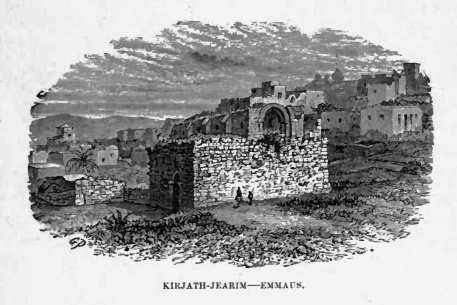
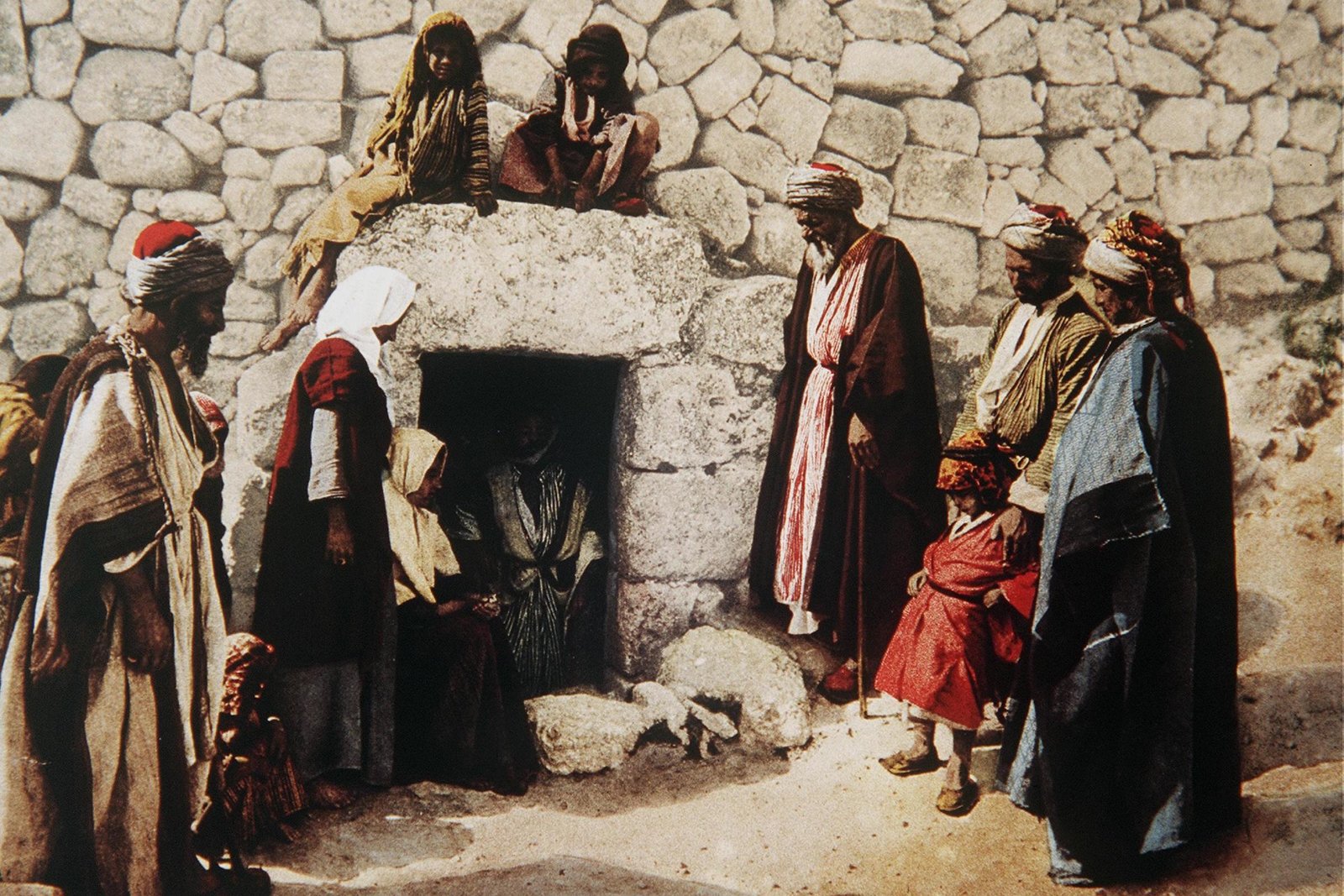
Illustration from Frank S. De Hass, 'Emmaus,' 1887 — Public Domain, Wikimedia Commons.
What neither disciple realizes is that the stranger walking with them is Jesus himself. Luke's text is explicit about why: "but their eyes were prevented from recognizing him." (Luke 24:16), a detail that has drawn centuries of theological reflection about the nature of the risen body and the way faith, rather than mere sight, ultimately makes Christ known.
Scripture opened, and bread broken
As they walk, Jesus — still unidentified to them — responds to their confusion not with a direct revelation of who he is, but by walking them back through the Hebrew Scriptures, explaining, as Luke summarizes it, "what referred to him in all the scriptures," beginning with Moses and continuing through the prophets (Luke 24:27). It's a striking scene: the risen Christ's first recorded act after the Resurrection, in this account, is not a dramatic self-revelation but a patient act of biblical teaching.
The recognition finally comes at the table. The disciples press the stranger to stay with them as evening falls, and Luke describes what happens next with quiet precision: "And it happened that, while he was with them at table, he took bread, said the blessing, broke it, and gave it to them. With that their eyes were opened and they recognized him, but he vanished from their sight" (RSV-CE, Luke 24:30-31). Immediately afterward, the two disciples reflect on the encounter: "Were not our hearts burning [within us] while he spoke to us on the way and opened the scriptures to us?" (Luke 24:32). This is the episode remembered as the Road to Emmaus, one of the Gospels' most theologically rich resurrection accounts, and Christian tradition has long read the specific phrase "in the breaking of the bread" as an early scriptural anticipation of the Eucharist — the moment believers, like the disciples, come to recognize Christ's presence.
An honest geographical puzzle
Here the story runs into a genuine historical uncertainty that is worth stating plainly rather than glossing over: nobody knows for certain where the biblical village of Emmaus actually was. Luke's Gospel gives a distance — sixty stadia from Jerusalem, roughly seven miles — but even this detail is complicated by the fact that some ancient manuscripts of Luke's Gospel instead read 160 stadia, a significantly greater distance, leaving even the textual basis for locating the village somewhat unsettled.
Over the centuries, several different sites have been proposed as the "true" Emmaus, each with some degree of historical, archaeological, or textual support: Emmaus Nicopolis, a well-documented ancient town roughly matching the longer manuscript distance; El-Qubeibeh, favored by some medieval Crusader tradition and matching the shorter distance more closely; Motza, a candidate based on some ancient Jewish textual references to a place of similar name; and Abu Ghosh, a village along an old Roman road roughly the right distance from Jerusalem, which developed its own strong pilgrimage tradition beginning in the Crusader period. No single candidate has achieved anything close to scholarly consensus, and it's entirely possible the original site has simply been lost to history, its exact identity unrecoverable with the evidence available today.
Abu Ghosh: a site of long devotion, honestly held
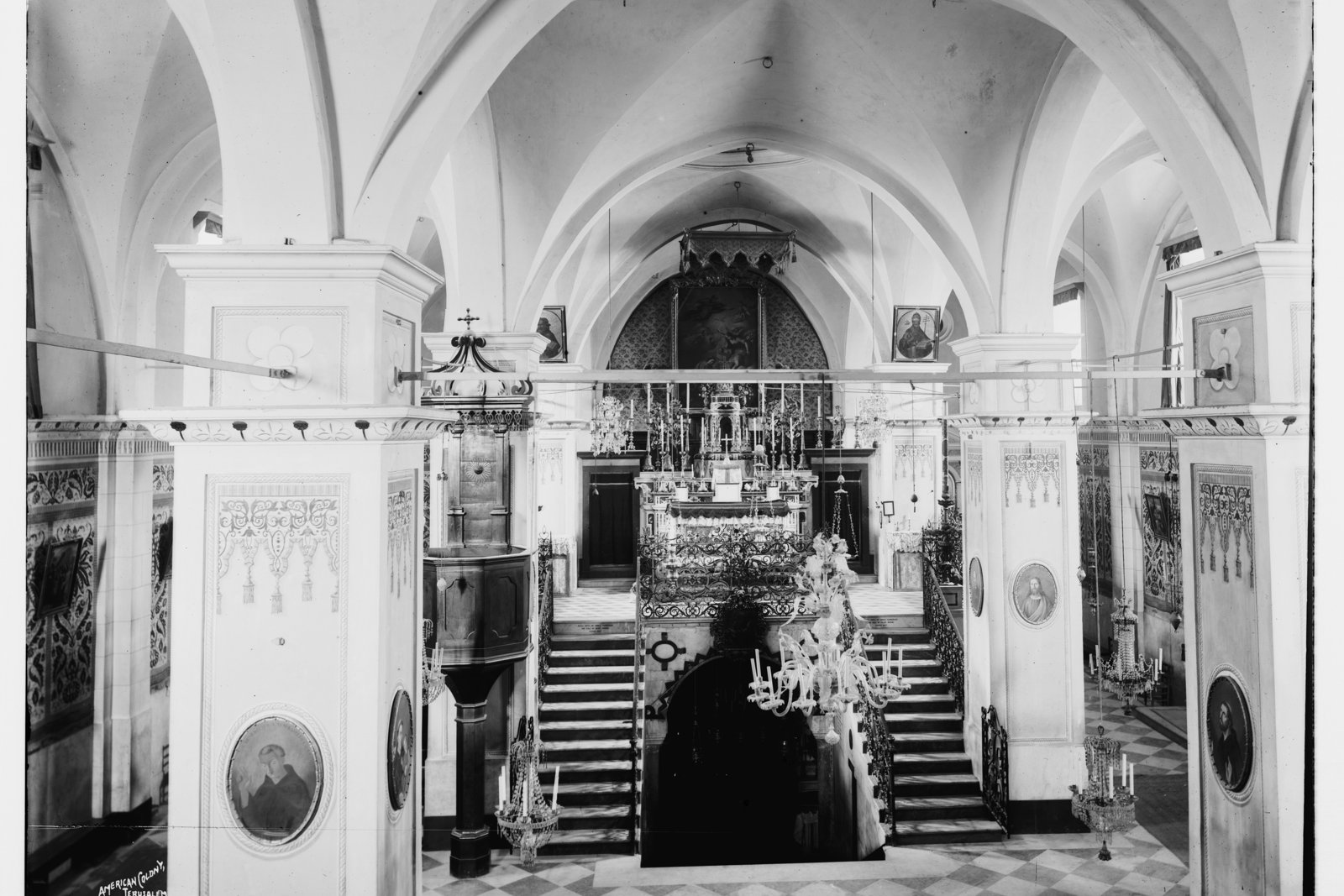
Among these candidates, Abu Ghosh has become the most visited by pilgrims today, largely because of an exceptionally well-preserved Crusader-era church built there in the twelfth century over the site of an earlier Roman garrison and spring. The church, now cared for by a Benedictine monastic community, retains striking, atmospheric interior frescoes from its Crusader period and is often cited by guidebooks and pilgrimage itineraries as "Emmaus" — though it is important, and consistent with the honest scholarly picture, to describe that identification as traditional and probable at best, not established fact. Visiting Abu Ghosh today offers something valuable regardless of the precise geography: a tangible, atmospheric sense of a very old church built specifically to commemorate this Gospel story, in a landscape of hills and old stone that plausibly resembles the setting Luke describes, even if the exact footsteps cannot be traced with certainty.
A story that outgrew its geography
In a sense, the enduring uncertainty about Emmaus's precise location has never diminished the story's spiritual weight — if anything, it has become almost fitting. The disciples on the road did not recognize Christ by sight or by place; they recognized him in an act of shared hospitality and the breaking of bread. Wherever the actual village stood, the story of Emmaus has continued to shape Christian reflection on how faith recognizes what plain sight alone cannot — a theme that travels well beyond any single stretch of road outside Jerusalem.
Trivia
What happened on the road to Emmaus?
Where is the biblical village of Emmaus actually located?
Why does the breaking of the bread matter in the Emmaus story?
What did Jesus say to the disciples on the road?
Is there a church at Emmaus today?
Related Reading