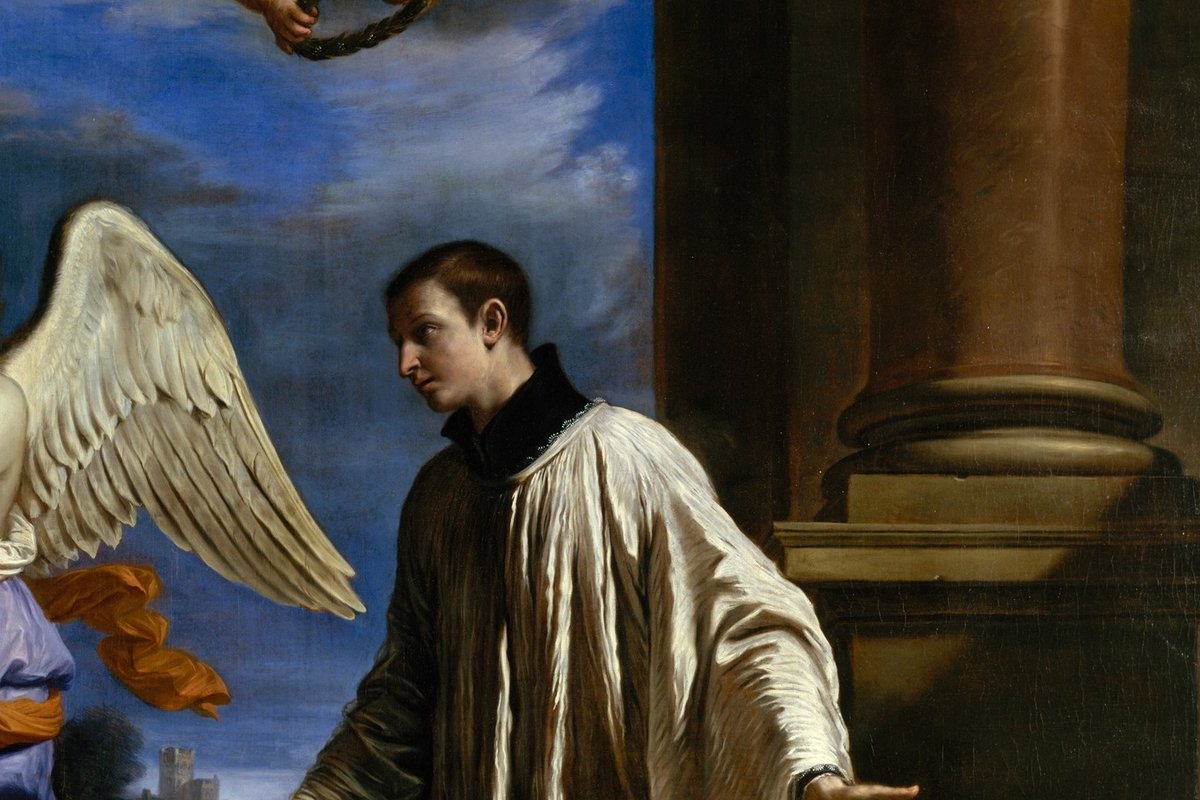
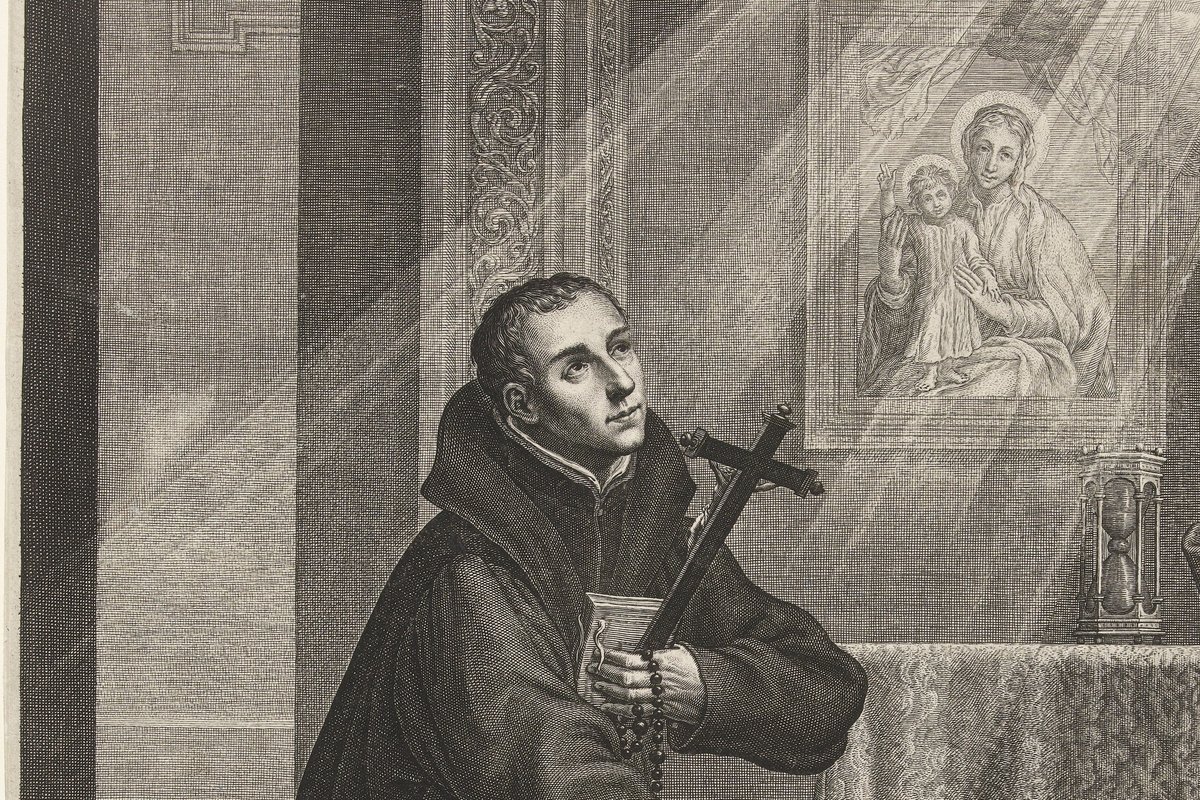
Saint Rene Goupil

A surgeon turned away from the priesthood
Rene Goupil was born in 1608 near Angers in western France. As a young man he entered the Jesuit novitiate, drawn to religious life in the same order that had, only a generation earlier, begun sending missionaries deep into the unfamiliar and often dangerous territory of New France, the French colonial holdings in what is now eastern Canada. His novitiate did not lead to ordination — Jesuit superiors at the time judged a hearing impairment he had developed incompatible with the demands of the order's ministry, and he was dismissed before completing formation.
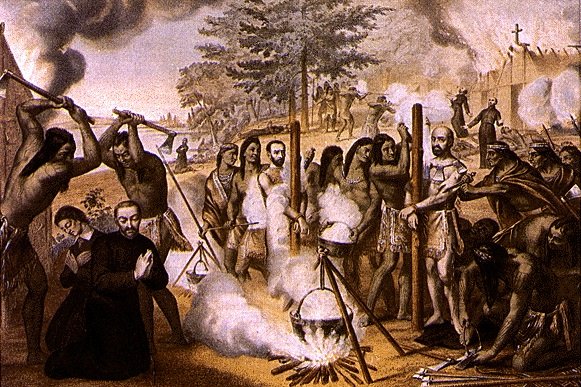
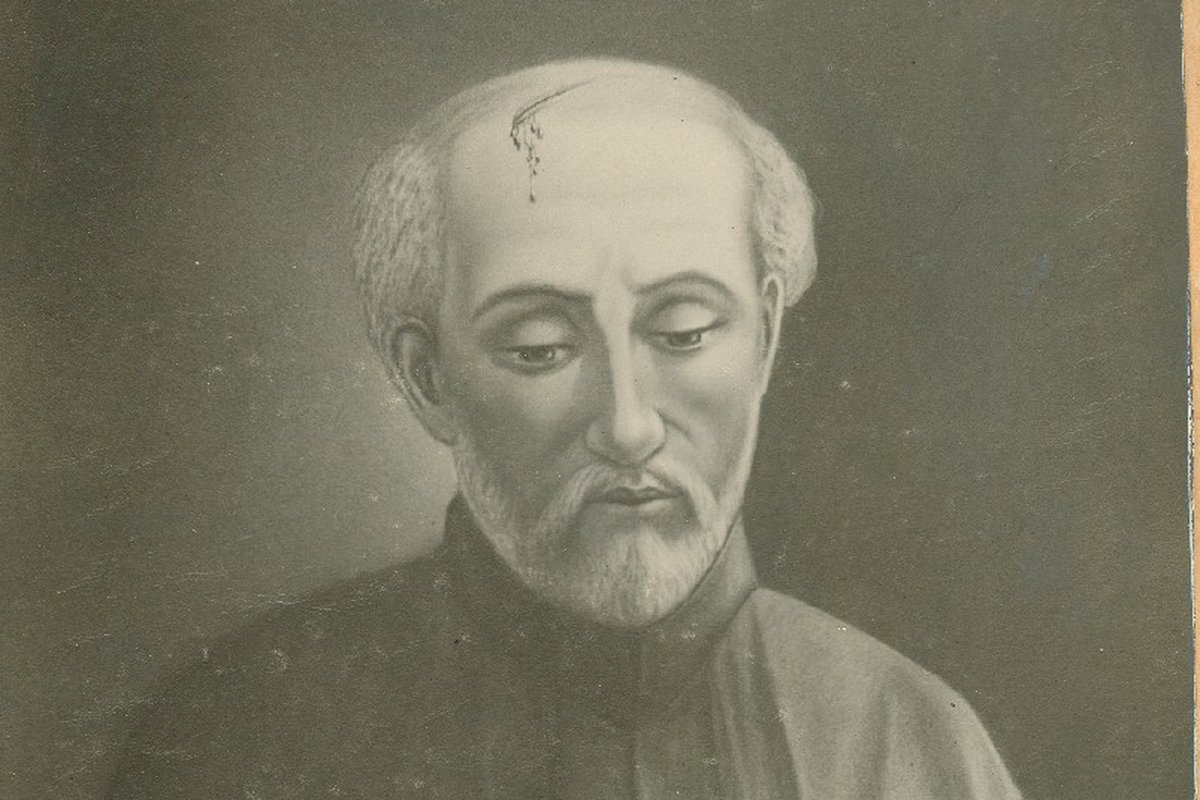
Les martyrs canadiens (the Canadian martyrs), devotional illustration published by the Jesuit Fathers of Quebec, early 20th century, Wikimedia Commons — public domain.
Rather than treating that dismissal as the end of any connection to the Jesuit mission, Goupil trained instead as a surgeon, a skill that turned out to open a different, still genuinely valuable path into the same work he had originally hoped to join as a priest. In 1638 he crossed the Atlantic to New France and offered his medical services to the Jesuit mission there entirely without pay, serving as an unofficial lay auxiliary — a role the Jesuits called a "donne," a layman who formally donated his labor and skills to the mission in place of religious vows he was not permitted, or in his case not able, to take.
Life and work in the mission field
Goupil's medical training made him immediately useful to a mission operating in genuinely difficult conditions, tending to the health needs of both the French missionaries and the Indigenous communities among whom they worked, at a time when European-introduced diseases were causing devastating losses within those communities and basic medical care of any kind was in constant short supply. He worked closely with the Jesuit missionaries stationed in the region, including Isaac Jogues, one of the mission's most active priests, whose own path would soon converge directly with Goupil's in circumstances neither man could have controlled.
In August 1642, Goupil was traveling with Jogues and a group of Huron converts on the St. Lawrence River when their party was ambushed by a Mohawk raiding party — the Mohawk being one of the nations of the Iroquois Confederacy, then engaged in an escalating and often brutal conflict with the French and their Huron allies over trade routes and territorial control. Goupil and Jogues were captured, along with several of their Huron companions, and marched to a Mohawk village, where they were subjected to ritualized torture common to Iroquois treatment of war captives at the time, before being kept on as prisoners within the village rather than killed outright.
Killed for the sign of the cross
Goupil's death, roughly six weeks after his capture, came in circumstances that Jogues himself later documented in detail, having witnessed it directly. According to Jogues's own account, Goupil made the sign of the cross over the forehead of a young child at the request of the child's grandmother — a simple devotional gesture, not remotely intended as any kind of threat. Some members of the village, however, reportedly interpreted the unfamiliar gesture with suspicion, associating it with sorcery or a curse, amid wider anxieties within the community about disease and misfortune that Europeans and their unfamiliar customs were increasingly being blamed for.
On September 29, 1642, a Mohawk warrior struck Goupil down with a tomahawk as he and Jogues were walking and praying together outside the village. Jogues, who survived the attack that killed his companion and would himself be martyred in the same mission field four years later, recognized immediately what he had witnessed — recording Goupil's death as a genuine martyrdom, killed specifically because of an act of Christian devotion, even though Goupil himself had never been ordained and held no formal religious title within the Church.
The first of the North American Martyrs
Goupil's death in 1642 makes him, chronologically, the first of the group of eight Jesuit missionaries and lay companions who ministered in the same New France mission field during this turbulent period and were later canonized together as the North American Martyrs — a group that includes Isaac Jogues himself, along with John de Brebeuf, whose own martyrdom five years later in Huron territory is likewise remembered as part of this shared story of the mission's earliest, most dangerous years.
Pope Pius XI canonized the group together in 1930, formally recognizing what Jogues had already recorded as fact at the time: that Rene Goupil, despite never having been ordained a priest or permitted to take full religious vows, had died a genuine Christian martyr, killed for an act of simple, unhesitating devotion. His feast is kept, alongside the other North American Martyrs, on October 19 in the United States and September 26 in Canada, and he remains a particular reminder that sanctity in the Church's own understanding has never been limited to the ordained — Goupil's path to canonization ran, in the end, through exactly the lay medical service the Jesuits had once told him he could offer instead of the priesthood.
Trivia
Who was Saint Rene Goupil?
Why wasn't Rene Goupil an ordained Jesuit priest?
How did Rene Goupil die?
What is the significance of Rene Goupil being the first of the North American Martyrs?
When was Rene Goupil canonized?
You May Also Like
Related Reading