Nevers and the Shrine of Saint Bernadette

Leaving Lourdes behind
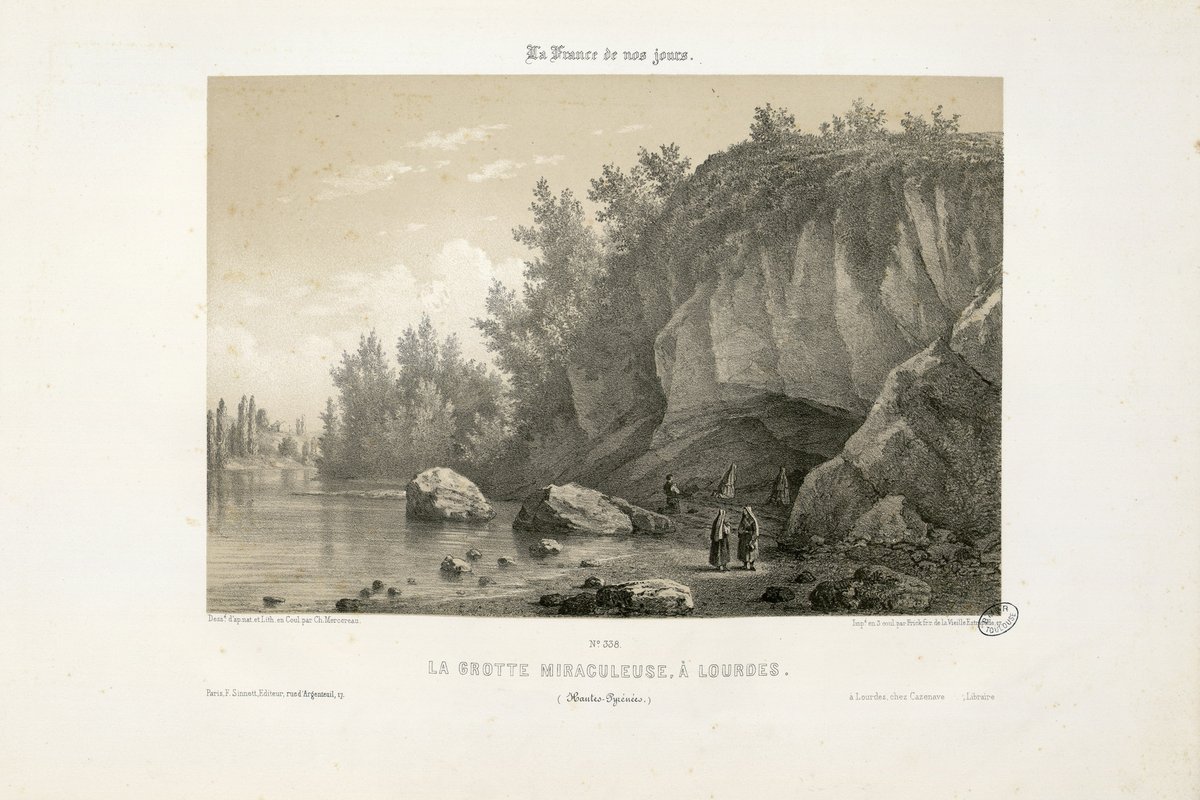
Bernadette Soubirous was fourteen years old in 1858 when she experienced a series of apparitions of the Virgin Mary at a grotto near her hometown of Lourdes, in the foothills of the Pyrenees — an event that would eventually transform the town into one of the largest Catholic pilgrimage sites in the world. Read the full account of those apparitions and Bernadette's early life in our article on Saint Bernadette Soubirous. But fame sat badly with Bernadette herself. She was interrogated repeatedly by civil and religious authorities, gawked at by pilgrims who traveled specifically hoping to see or touch her, and treated, in her own words, less like a person than a curiosity.
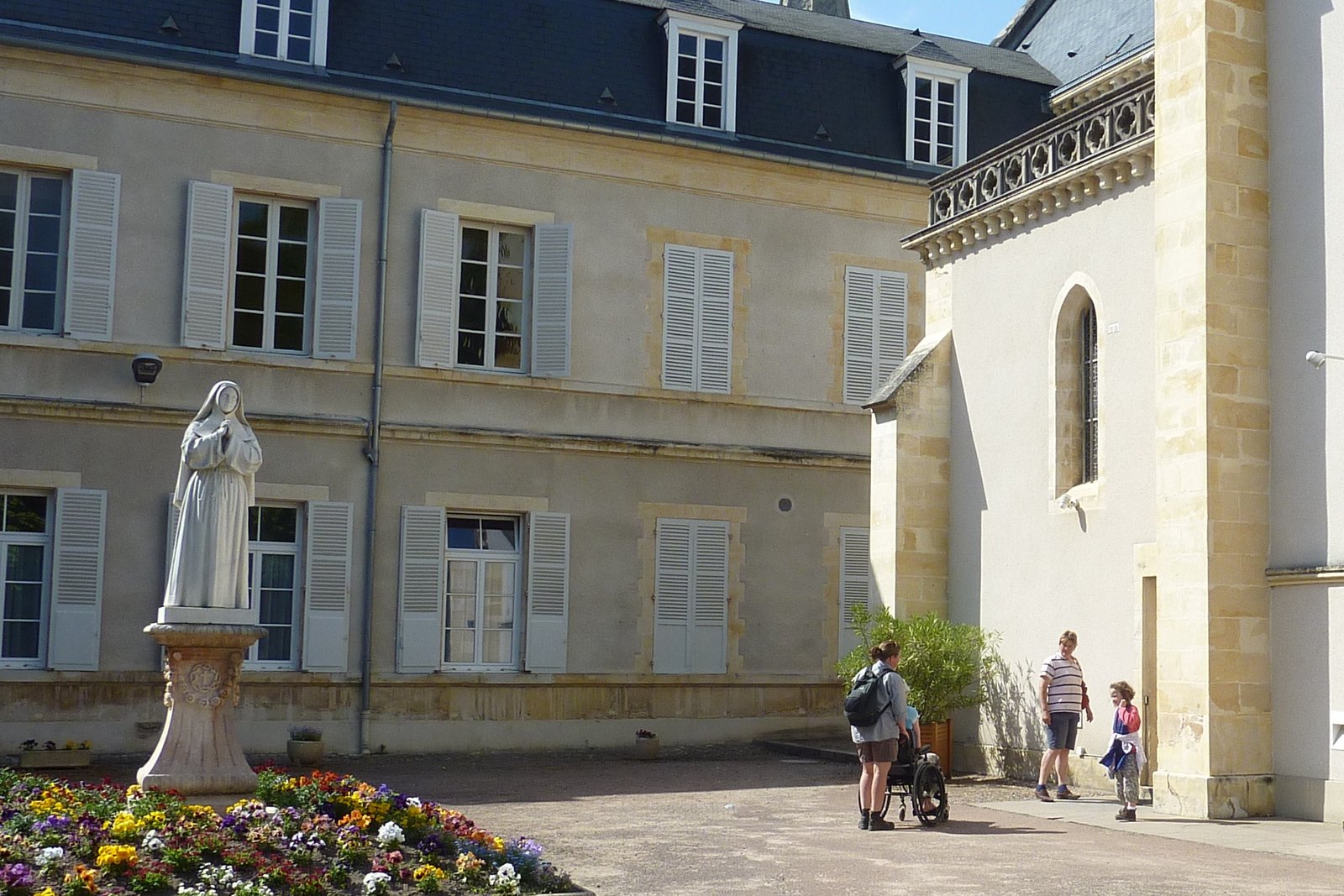
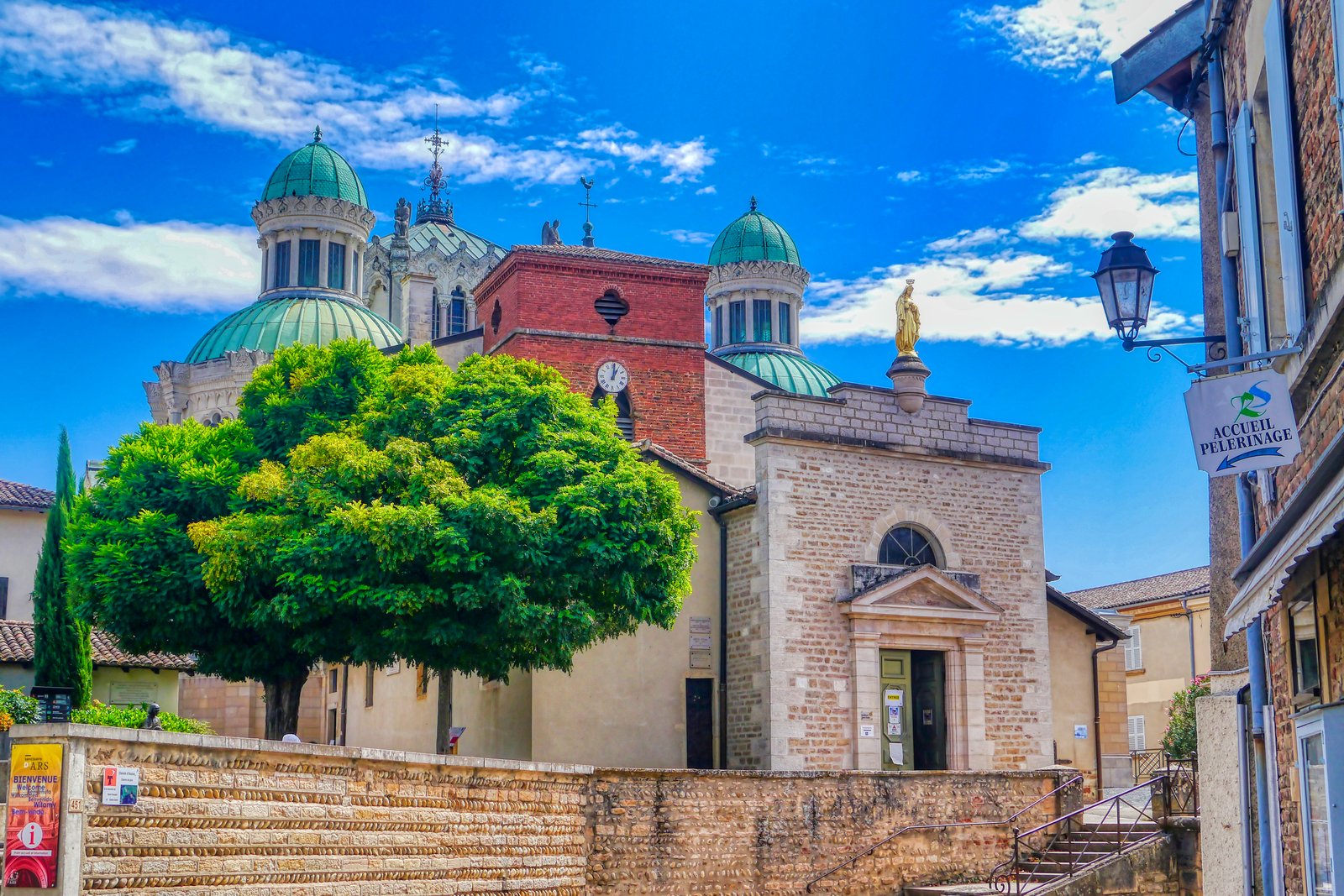
Photograph by Moreau.henri, Nevers Chapelle du couvent Saint-Gildard où mourut Bernadette Soubirous — CC BY-SA 3.0, Wikimedia Commons.
By her early twenties, Bernadette had decided her future lay in religious life, and specifically in a community far enough from Lourdes to let her live out of the public eye. In 1866, at age twenty-two, she entered the Sisters of Charity of Nevers, joining their motherhouse — the Convent of Saint-Gildard, in the town of Nevers in central France, roughly 250 miles northeast of Lourdes. It was a deliberate choice: distance, obscurity, and the discipline of ordinary convent life, in place of the shrine that had grown up around her own adolescence.
An ordinary, difficult religious life
Bernadette's years at Nevers were shaped less by mysticism than by chronic illness and hard, unglamorous work. She had suffered from asthma since childhood and developed tuberculosis of the bone during her time at the convent, conditions that caused her near-constant pain and confined her to the infirmary for extended periods. Despite this, she took on convent duties including work in the infirmary caring for other ailing sisters and service as a sacristan, tasks she performed as fully as her health allowed rather than being treated as a special case because of her past.
She resisted any attempt within the community to treat her as an object of veneration during her lifetime, reportedly growing uncomfortable whenever visitors or even fellow sisters brought up Lourdes, and preferring to be known simply as a member of the community rather than as the visionary of the apparitions. She died at Saint-Gildard on April 16, 1879, at just thirty-five years old, worn down by years of illness, having spent the last thirteen years of her life almost entirely within the convent's walls.
Exhumation and an unusual discovery
The process toward Bernadette's eventual canonization began formally in the early twentieth century, and as part of the standard procedure for causes of sainthood at the time, her body was exhumed for examination — first in 1909, thirty years after her death. Witnesses and the medical examiners present reported that her body showed strikingly little of the decomposition that would ordinarily be expected after three decades in the ground, a discovery repeated at two further exhumations in 1919 and 1925 as the cause progressed.
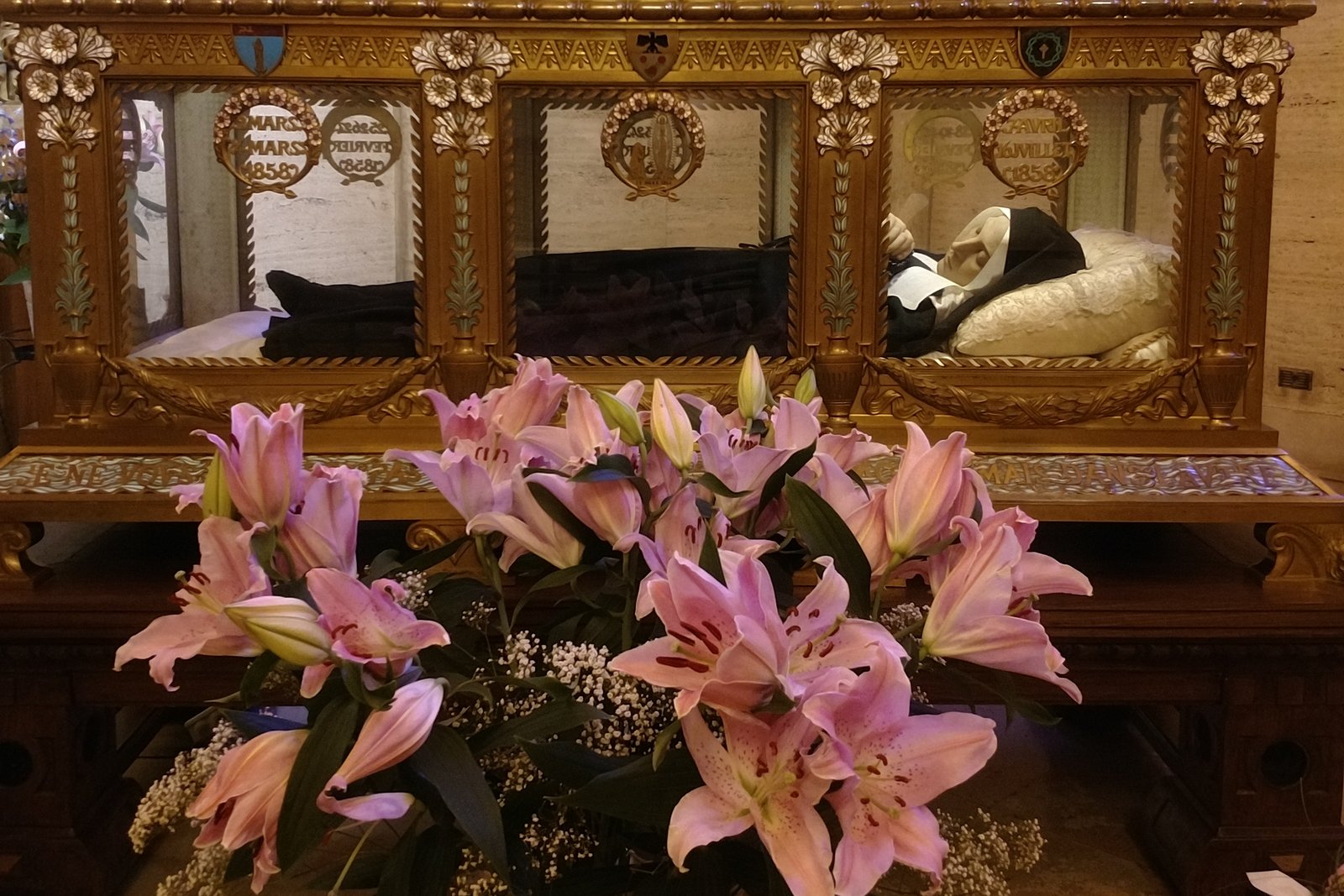
By the third exhumation, a decision was made to prepare her body for permanent public display ahead of her beatification, which took place in 1925 (she was canonized a saint in 1933). A thin wax mask was applied over her face and hands — a common conservation practice for such relics at the time, intended to protect the skin's actual appearance from further exposure and darkening rather than to disguise decomposition, according to the Sisters of Charity's own accounts of the process. The Church has never required belief in physical incorruption as an article of faith, treating such phenomena as a matter of pious tradition and historical report rather than defined doctrine.
A working convent that has become a pilgrimage site
The Convent of Saint-Gildard remains an active religious community of the Sisters of Charity of Nevers, and it is within this working convent — not a separate museum building — that Bernadette's body has remained on permanent display since 1925, resting in a glass and gilded reliquary in the convent's chapel. Pilgrims visiting Nevers today can view her directly, dressed in the habit of her order, in a setting that has changed comparatively little over the intervening century.
Nevers today functions as a secondary pilgrimage destination connected to Lourdes itself — many pilgrims making the journey to the famous shrine in the Pyrenees also travel the considerable additional distance to Nevers specifically to see where Bernadette spent her adult life and where her body remains, a pairing that reflects the fuller arc of her story: not only the fourteen-year-old girl who saw apparitions at a grotto, but the woman who spent the following two decades trying, quietly and with only partial success, to live an ordinary religious life in their shadow.
Bernadette herself reportedly asked, before her death, to be remembered not for the apparitions but for her ordinary religious life as a Sister of Charity — a wish the convent at Saint-Gildard has honored in its own quiet way, presenting her tomb less as a monument to Lourdes than as the resting place of a working nun who happened, once, as a child, to see something no one else around her could.
Trivia
Why did Bernadette Soubirous move to Nevers?
How long did Bernadette live at the Convent of Saint-Gildard?
Is Bernadette's body really incorrupt?
Can visitors see Bernadette's body today?
Related Reading