The Hagia Sophia Mosaics: Gold Ceilings Above Empires in Flux

A cathedral built to overwhelm
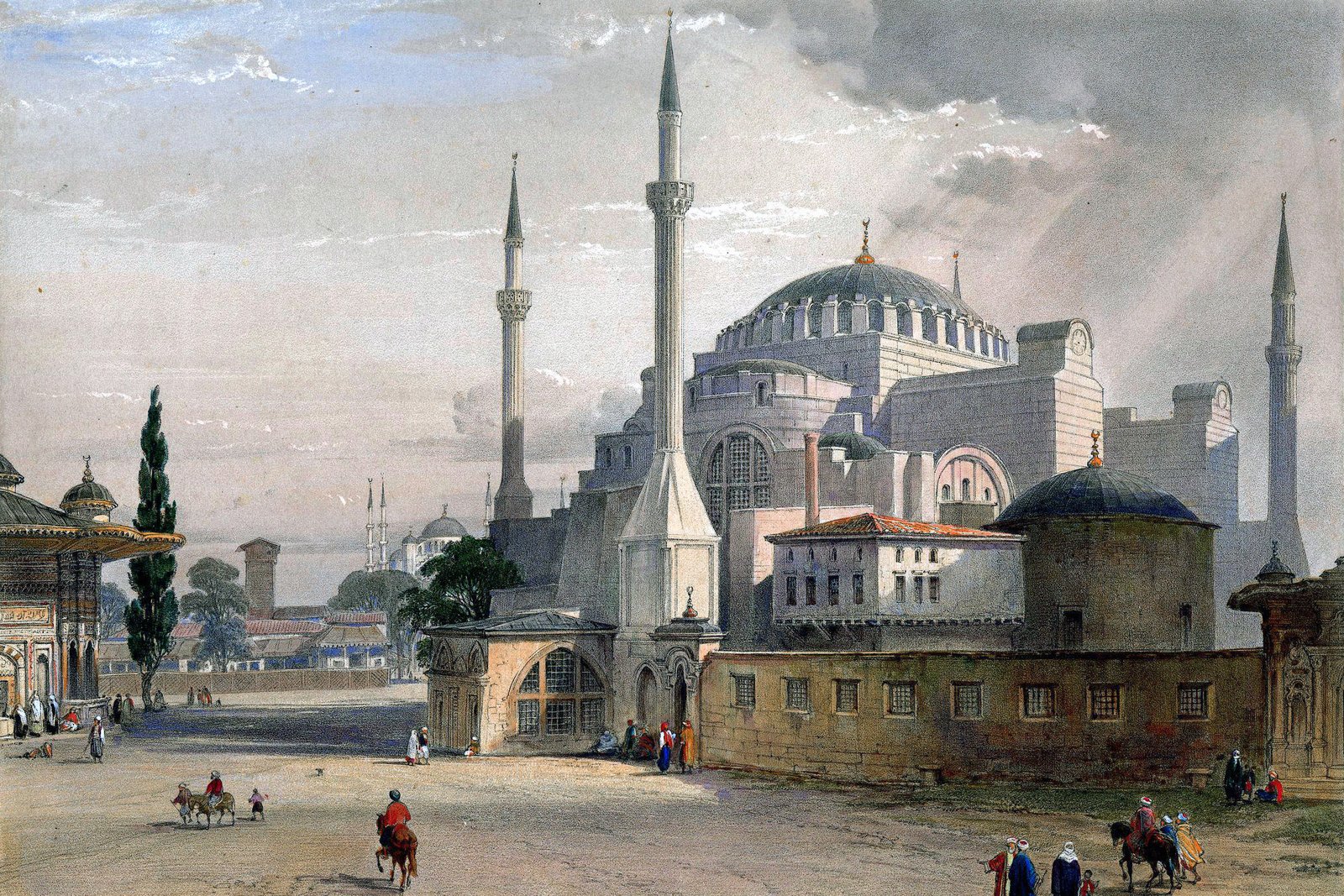
Hagia Sophia was completed in 537 AD under the Byzantine emperor Justinian I, following an ambitious construction campaign undertaken after an earlier basilica on the site was destroyed during civil unrest. Its massive central dome, an extraordinary engineering achievement for its period, seemed to contemporary observers to float almost weightlessly above the vast interior space below, an effect enhanced by a ring of windows at its base that filled the dome with light. Into this dramatic architectural setting, generations of Byzantine emperors commissioned elaborate mosaic decoration across multiple centuries, using small pieces of colored glass and gold-backed glass tesserae set at carefully calculated angles to catch and reflect the church's interior light, creating a shimmering, seemingly weightless quality that became one of the defining characteristics of Byzantine sacred art.
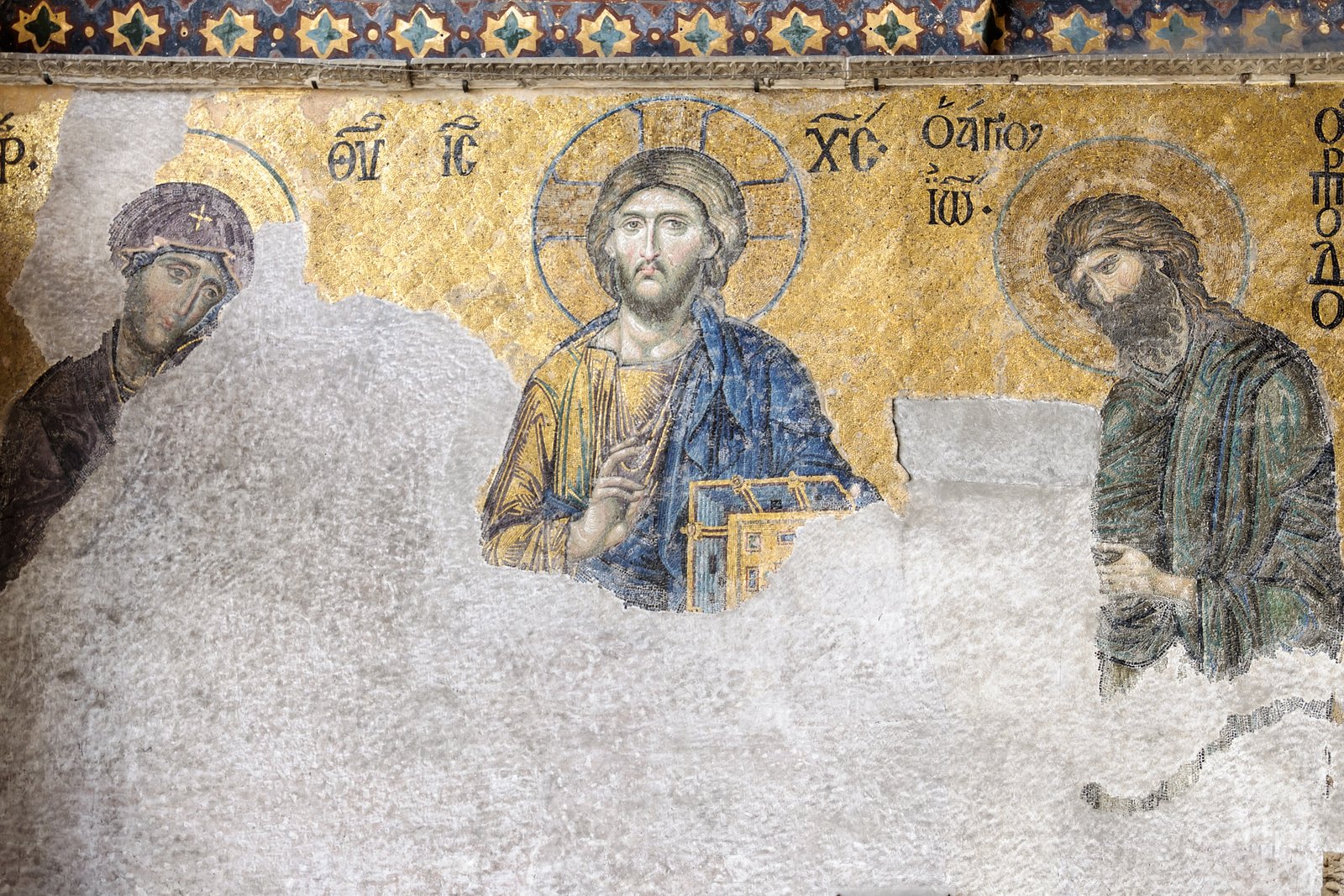
Deesis mosaic, Hagia Sophia, Istanbul, c. 1261 AD. Photo by Myrabella — public domain (Wikimedia Commons).
Interruption and iconoclasm
The mosaic program at Hagia Sophia did not develop in a single continuous campaign. Byzantine religious art endured a major internal crisis during the Iconoclastic Controversy, roughly spanning the 8th and 9th centuries, when religious authorities and emperors debated, and at times violently enforced, prohibitions against figural religious imagery, resulting in the destruction of significant quantities of earlier Byzantine religious art across the empire, including likely some of Hagia Sophia's own early mosaic decoration. Following the restoration of icon veneration in 843, an event still commemorated within Orthodox Christianity as the Triumph of Orthodoxy, mosaic decoration at Hagia Sophia resumed and continued to develop across the following centuries, producing some of the building's most celebrated surviving works, including images of enthroned emperors and empresses alongside sacred figures, reflecting the close intertwining of imperial and religious authority characteristic of Byzantine political theology.
The Deesis: a peak of Byzantine artistry
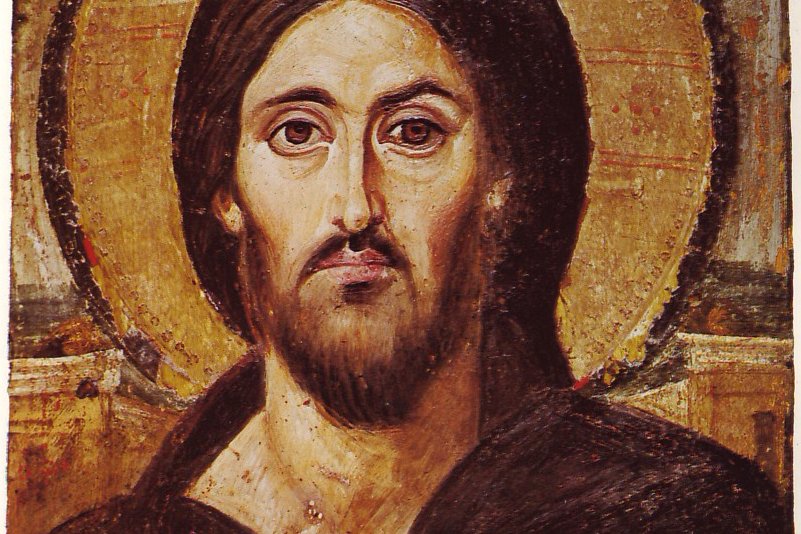
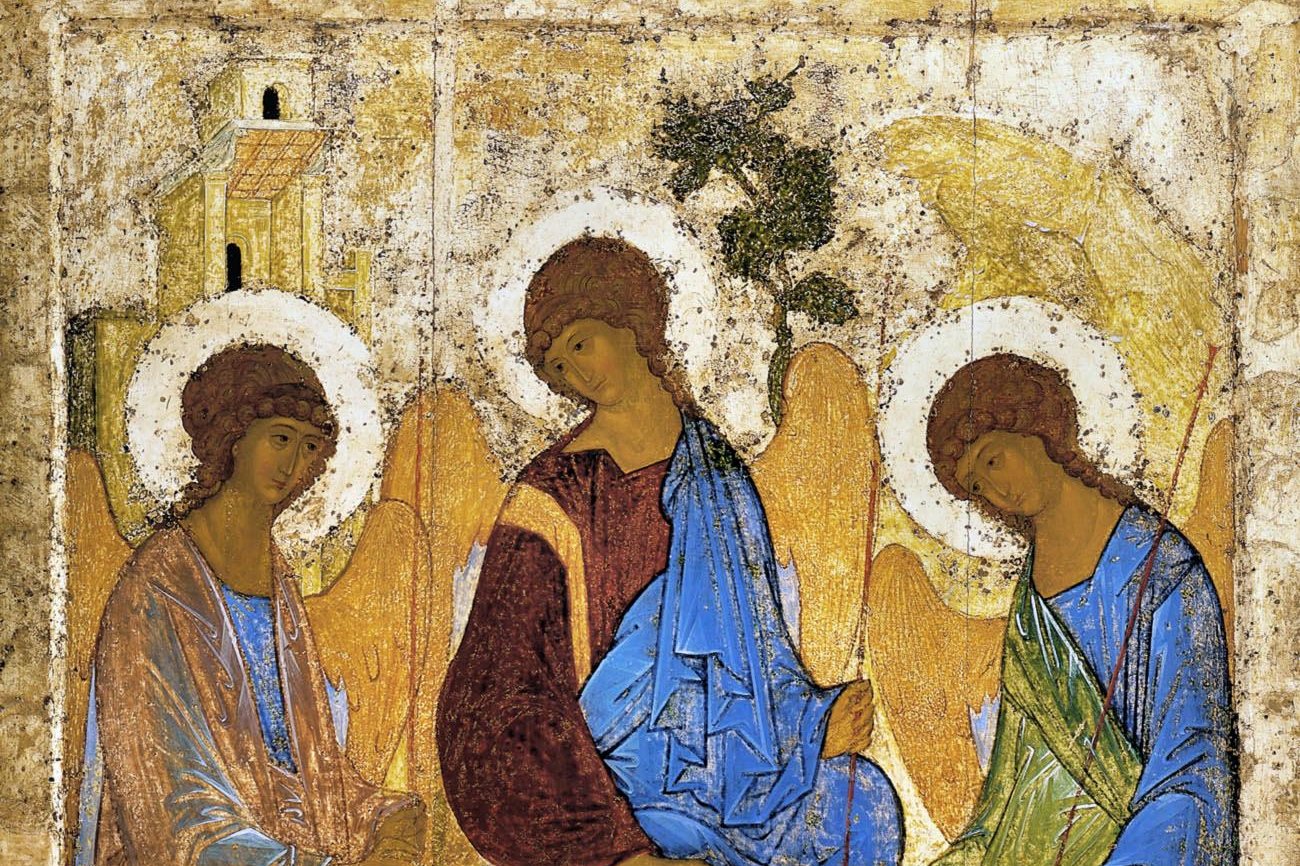
Among all the mosaics that survive at Hagia Sophia, the Deesis mosaic, generally dated to around 1261, is widely singled out by art historians as representing a high point of Byzantine figural mosaic art. It depicts Christ Pantocrator, meaning "ruler of all," at the center, flanked by the Virgin Mary and John the Baptist, both shown in postures of intercession, pleading on behalf of humanity before Christ. What distinguishes the Deesis from earlier, more formally stylized Byzantine mosaic work is its unusually sensitive, almost naturalistic modeling of the faces, achieved through subtle gradations of tesserae color and tone that convey a genuine sense of individualized expression and emotional depth, marking a significant artistic development within the later Byzantine mosaic tradition. Readers interested in how other traditions handled comparably solemn depictions of Christ enthroned may also enjoy our piece on Andrei Rublev's Trinity icon, a masterwork of the closely related Orthodox iconographic tradition.
Preserved by plaster, not destroyed by conquest
When Ottoman forces under Sultan Mehmed II captured Constantinople in 1453, Hagia Sophia was converted from a Christian cathedral into a mosque, a transformation that might easily have resulted in the outright destruction of its extensive Christian figural mosaics. Instead, in keeping with Islamic religious tradition generally discouraging figural imagery within active places of worship, most of the mosaics were covered over with plaster or whitewash rather than physically destroyed, an act of covering that, however unintentionally from a preservationist standpoint, protected many of the mosaics from centuries of exposure, pollution, and physical damage, leaving them in remarkably good condition when later uncovered.
Rediscovery across two centuries
Significant rediscovery work began in the 19th century, when the Ottoman sultan Abdülmecid I commissioned the Swiss-Italian architect brothers Gaspare and Giuseppe Fossati to undertake major restoration work at Hagia Sophia, during which portions of the mosaics were briefly uncovered, documented, and then largely reconcealed. Far more extensive and lasting conservation work followed in the 20th century, particularly after Hagia Sophia was secularized and converted into a museum in 1934 under the Turkish Republic, a status change that allowed systematic scholarly study and restoration of the mosaics on a scale not previously possible, revealing much of what visitors and scholars can study today.
A monument still evolving
Hagia Sophia's status has continued to shift even in recent years, reconverted to a functioning mosque in 2020 after decades as a secular museum, a change that has again altered how and when its mosaics remain visible to the public. Whatever administrative and religious changes the building undergoes, the mosaics themselves stand as an extraordinary physical record of nearly a millennium of Byzantine artistic achievement, having survived imperial upheaval, religious controversy, conquest, and centuries buried beneath plaster, only to re-emerge, gold tesserae still catching the light, as some of the finest surviving examples of sacred art from the entire Byzantine world.
For art historians, that survival is more than a happy accident of preservation history. It offers a rare, largely unbroken material link to the visual culture of an empire that shaped Christian art across Eastern Europe, the Balkans, and Russia for centuries, long after Constantinople itself had fallen. The techniques, compositional formulas, and theological visual language worked out by the mosaicists of Hagia Sophia echoed forward through Orthodox icon painting and church decoration for generations, making these gold-ground faces, however many times they have been covered and uncovered, a living root of a much wider artistic tradition rather than a sealed, static relic of a vanished world.
Trivia
What is Hagia Sophia?
What is the Deesis mosaic?
What happened to the mosaics after Constantinople became Ottoman?
When were the mosaics rediscovered?
Can the mosaics still be seen today?
Related Reading