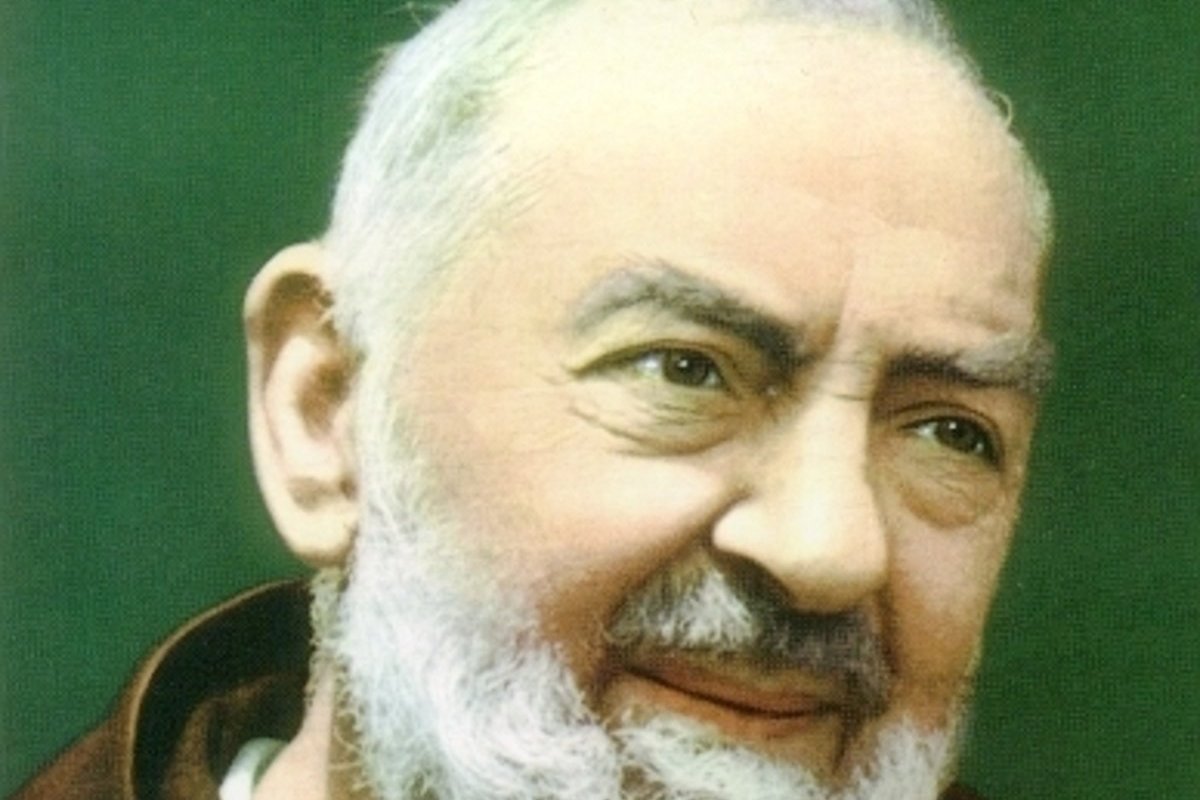
Padre Pio's Stigmata Relics: The Gloves and Bandages That Caught His Blood

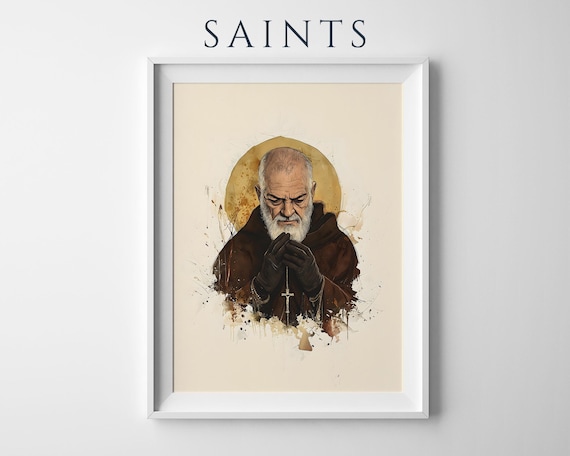
A friar who had to be bandaged daily
Readers of this blog may already know the outline of Padre Pio's life from our article on Saint Pius of Pietrelcina — the shepherd's son from Pietrelcina who became a Capuchin friar, spent fifty years at the remote mountain friary of San Giovanni Rotondo, and was canonized in 2002 under Pope John Paul II. This article sets that biography aside and looks narrowly at one specific category of object connected to him: the cloth he wore, day after day, to manage wounds that would not heal for almost half a century, and what became of that cloth after his death.
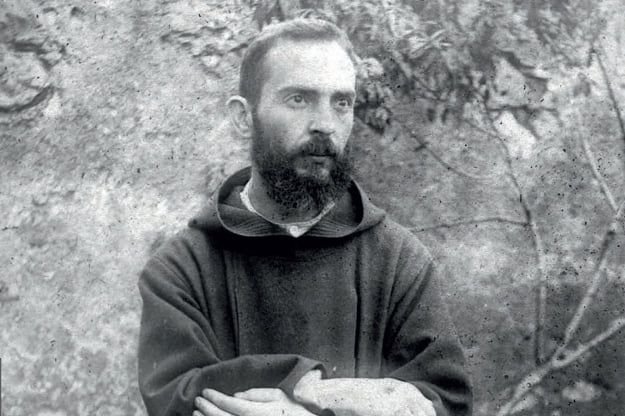
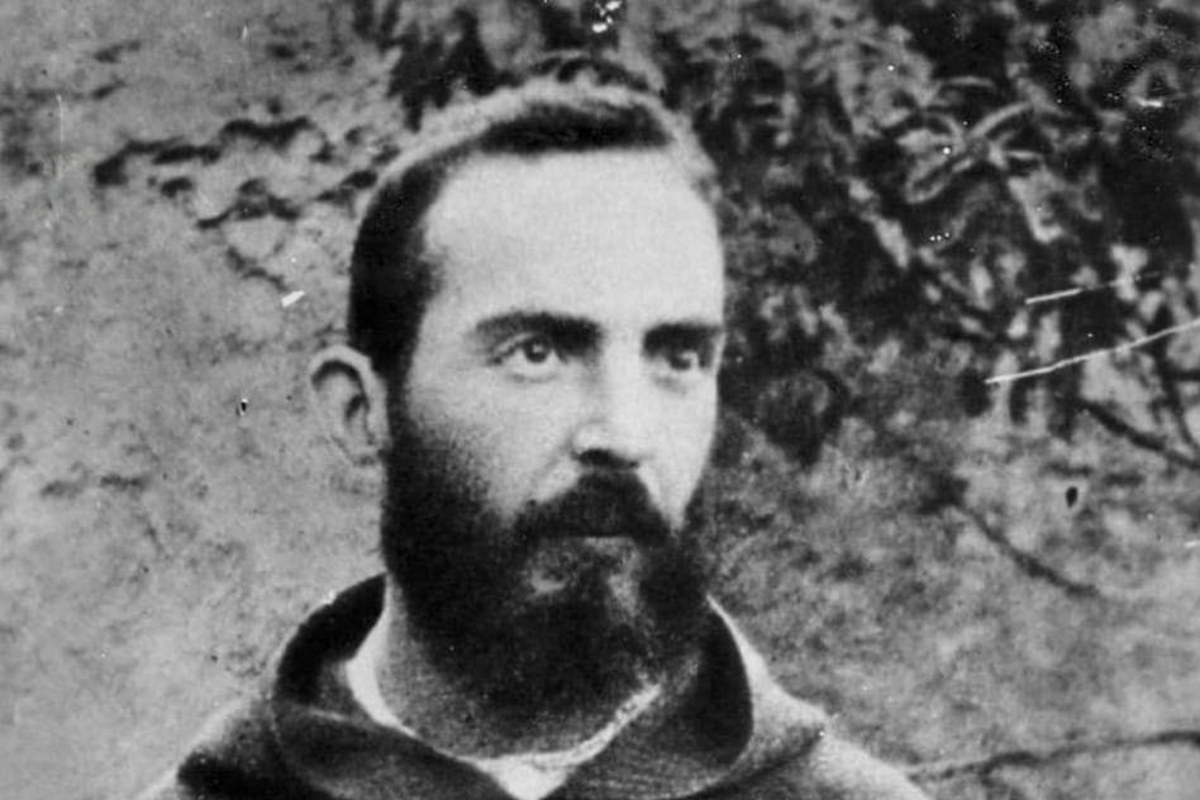
Photograph by Placido Bux, taken 19 August 1919 — public domain, via Wikimedia Commons.
Padre Pio, born Francesco Forgione in 1887, reportedly emerged from private prayer on September 20, 1918, with visible wounds on his hands, feet, and side, corresponding to the wounds traditionally associated with Christ's crucifixion — a phenomenon the Church calls the stigmata. What set his case apart from most other reported instances across Christian history wasn't only the wounds' appearance but their persistence: by the testimony of fellow friars, visiting physicians, and eventually hundreds of thousands of pilgrims, the wounds continued bleeding, on and off, for roughly fifty years, fading only in the weeks before his death in 1968.
A wound that bleeds for decades creates a very practical problem that rarely comes up in devotional retellings: what do you do about the blood. Padre Pio's answer, maintained for most of his adult life, was to wear fingerless mittens — typically brown or black wool — over the wounds on his hands, changed regularly, along with gauze bandages and cotton wadding over the wounds on his feet and side, tucked beneath his habit and sandals. These were not symbolic garments. They were the ordinary, unglamorous medical accommodation of a man who had to say Mass, hear confessions for up to fifteen hours some days, and move through an active religious community while his body kept bleeding.
What survived, and where it is kept
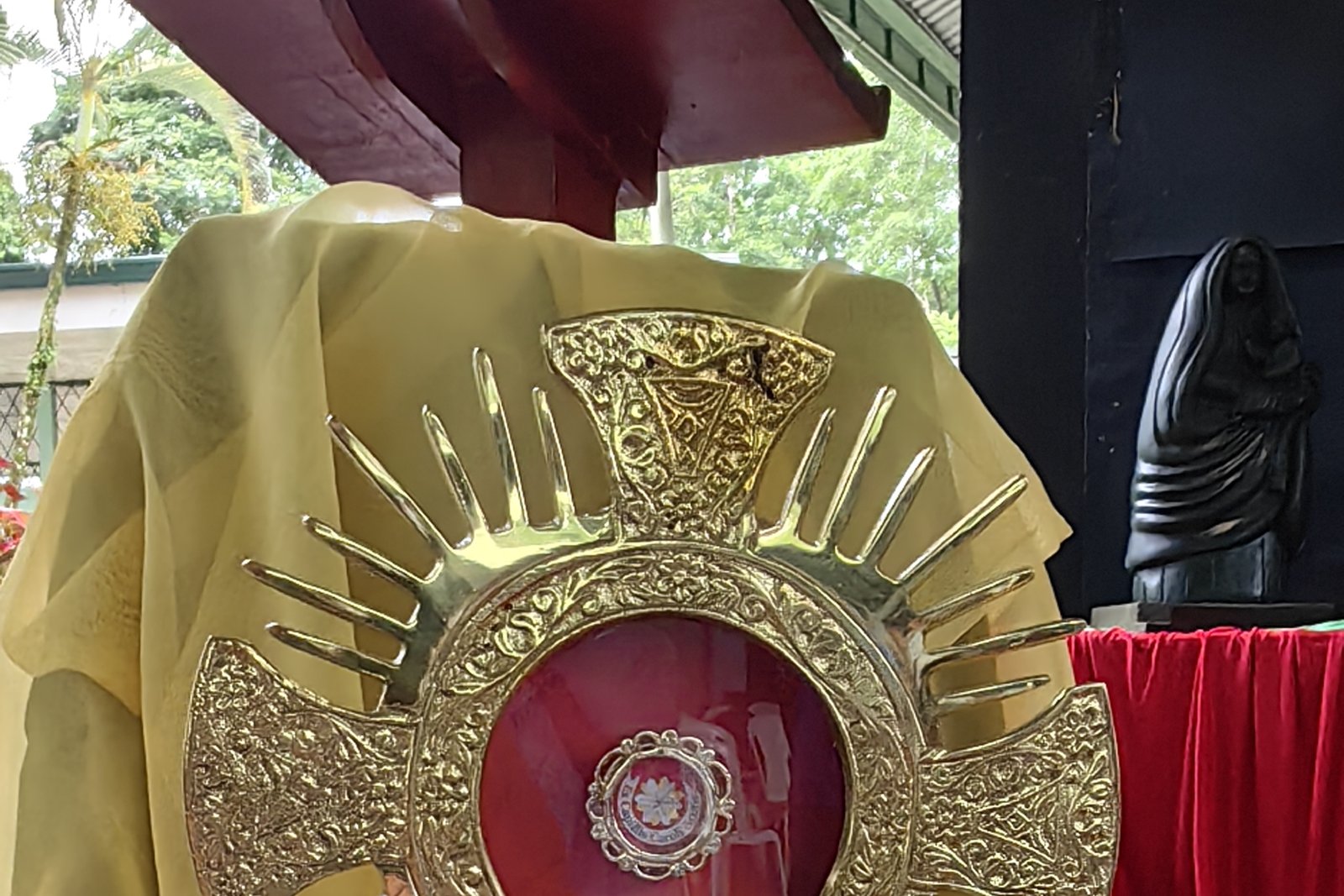
Because Padre Pio lived among a religious community that recognized, well before his death, that it was in the presence of something extraordinary, those gloves and bandages were not simply discarded. Friars and close associates preserved pieces of the cloth that had touched his wounds, and over the decades since his 1968 death — and especially since his 1999 beatification and 2002 canonization accelerated interest in his life — a number of these items have been formally authenticated as first-class relics: objects that had direct physical contact with the saint's body.
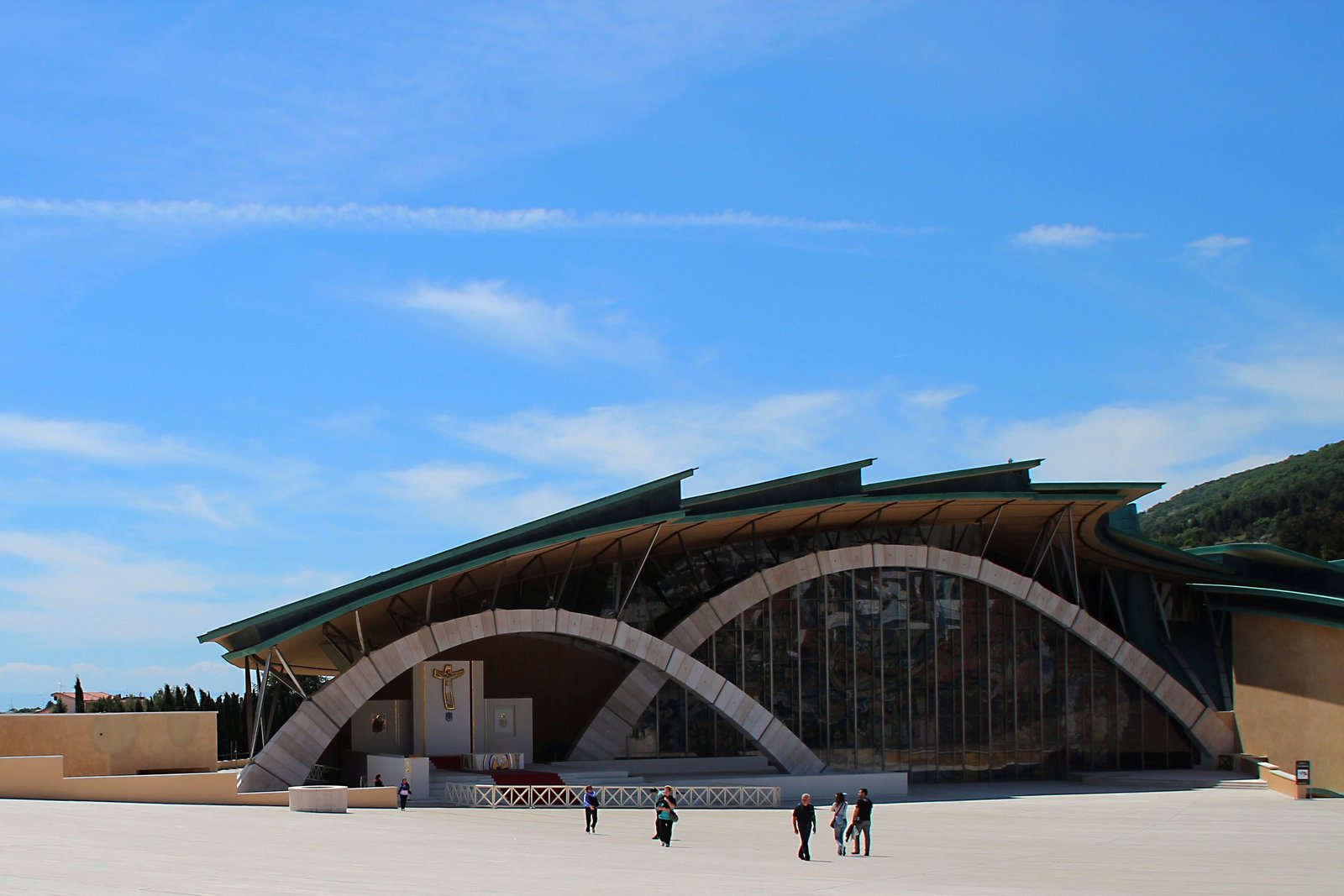
Some of the best-documented pieces are held at the shrine and friary complex at San Giovanni Rotondo itself, alongside other personal effects — a cloak, a lock of hair, handkerchiefs used to dry tears and blood — displayed in the museum and cultural spaces built up around his tomb. Others have been distributed, through official Capuchin channels, to churches and dedicated collections elsewhere. The National Centre for Padre Pio in Barto, Pennsylvania, maintains what it describes as the largest collection of authenticated Padre Pio relics outside Italy, and its items — including gloves, bloodstained cloth, and crusts said to have come from the wounds themselves — travel periodically to parishes and cathedrals across the United States for public veneration, often drawing lines of pilgrims that recall, in miniature, the crowds that once waited days just to make their confession to him in person.
These relic expositions follow a long-standing Catholic devotional pattern, one this blog has covered elsewhere with relics as varied as Saint John Vianney's incorrupt heart: a physical object connected to a holy life, brought within reach of the faithful, understood by the Church's own theology (see the Catechism, no. 1674) as honoring the person it touched rather than functioning as a magical object in its own right.
Doctors who tried, and failed, to explain it away
Padre Pio's growing reputation drew medical scrutiny almost immediately, much of it initiated or encouraged by Church authorities themselves, who had every institutional incentive to rule out fraud before any cult of devotion got out of hand. Physicians examined him repeatedly between 1919 and the early 1920s. According to the surviving accounts of these examinations, the wounds showed no sign of infection despite remaining open for years, and none of the scarring or callus formation an ordinary, repeatedly reopened wound would normally develop. In at least one documented attempt to rule out self-infliction, an examining physician applied sealed, personally signed bandages over the wounds for several days; the bleeding continued beneath the seal, which showed no sign of tampering when removed.
None of the examining doctors produced a settled natural explanation for what they observed, and skeptical theories proposed over the following decades — self-infliction with caustic chemicals, psychosomatic mechanisms, and others — have never been conclusively substantiated either. It's worth being precise, in the spirit of this blog's usual caution around unverified claims, about what that actually proves: an absence of a confirmed natural explanation is not, on its own, proof of a supernatural one. The Church itself has consistently treated it that way. Padre Pio's 2002 canonization rested on the ordinary canonical requirements common to every cause — a documented record of heroic virtue, verified under formal investigation, and miracles attributed to his intercession after death — not on any official declaration pronouncing the stigmata themselves authentically miraculous. Stigmata, in his case as in the handful of other reported cases across Church history, remain a matter the faithful are free to accept with devotion, never something anyone is doctrinally required to believe.
The body, the mask, and an honest caveat
Padre Pio's remains were exhumed in 2008, forty years after his death, as part of preparations to move and display them more prominently within the shrine complex at San Giovanni Rotondo. As reported at the time by outlets including the Irish Times and NPR, decades underground had altered his features considerably — enough that shrine officials commissioned a specialist London firm, experienced in waxwork and silicone figure work, to produce a lifelike silicone covering for the face and hands before the body went on permanent public display in a glass case in 2008.
This is the same kind of honest disclosure this blog has made about other preserved saints' remains — Saint Bernadette's wax-covered face at Nevers is the closest parallel — and it's worth stating plainly here rather than leaving it implied: what pilgrims see through the glass at San Giovanni Rotondo is not Padre Pio's bare, untouched skin forty years after death, but his actual remains beneath a silicone restoration designed to present a recognizable, dignified likeness. Shrine authorities have not hidden this fact, and the Church's own theology of relics never required an unaltered body as a condition of veneration in the first place — the glove relics and bandage fragments discussed above make exactly that point in miniature, since nobody has ever claimed those scraps of wool and gauze look, today, the way they looked in 1930.
A devotion that keeps growing
More than half a century after his death, Padre Pio remains one of the most popular saints in the Catholic world, arguably rivaled only by figures like Our Lady of Lourdes or Saint Thérèse of Lisieux in the sheer volume of devotion directed his way across Italy and well beyond it. San Giovanni Rotondo now ranks among the most visited pilgrimage sites on earth, and relic tours built around his gloves and bandages consistently draw crowds large enough to require crowd-control planning at parishes that might otherwise see a fraction of that turnout on an ordinary Sunday.
Part of what keeps that devotion so durable is precisely the plainness of the objects involved. A splinter of the True Cross or a martyr's bone from the early centuries of the Church asks pilgrims to trust records many centuries removed from the event. A stained wool mitten worn by a twentieth-century friar, by contrast, sits inside living memory — photographed, documented, authenticated by people who could still describe, firsthand, watching him put it on. That nearness, more than any unresolved medical mystery, may be the real reason the gloves and bandages of Padre Pio continue to draw lines of pilgrims wherever they travel.
Trivia
Why did Padre Pio wear gloves, and are those gloves preserved as relics?
What exactly are the stigmata, and when did Padre Pio's appear?
Did doctors ever examine Padre Pio's wounds, and what did they conclude?
Is Padre Pio's body on display, and is it his real, unaltered face?
Did the Church require belief in the stigmata for Padre Pio's canonization?
Related Reading