The Relics of Saint Francis of Assisi: Tunic, Tomb, and Stigmata


The man behind the basilica
Giovanni di Pietro Bernardone — known to history as Francis — was born in Assisi around 1181, the son of a prosperous cloth merchant. After a youth spent in the ordinary pursuits of a wealthy Italian town, a period of illness and imprisonment during a local war unsettled him, and a now-famous encounter at the ruined chapel of San Damiano reoriented the rest of his life. That story, including the painted crucifix tradition holds spoke to him there, is told in full in this site's article on the San Damiano Cross — this article picks up where that one leaves off, following Francis's body and personal belongings rather than his conversion.
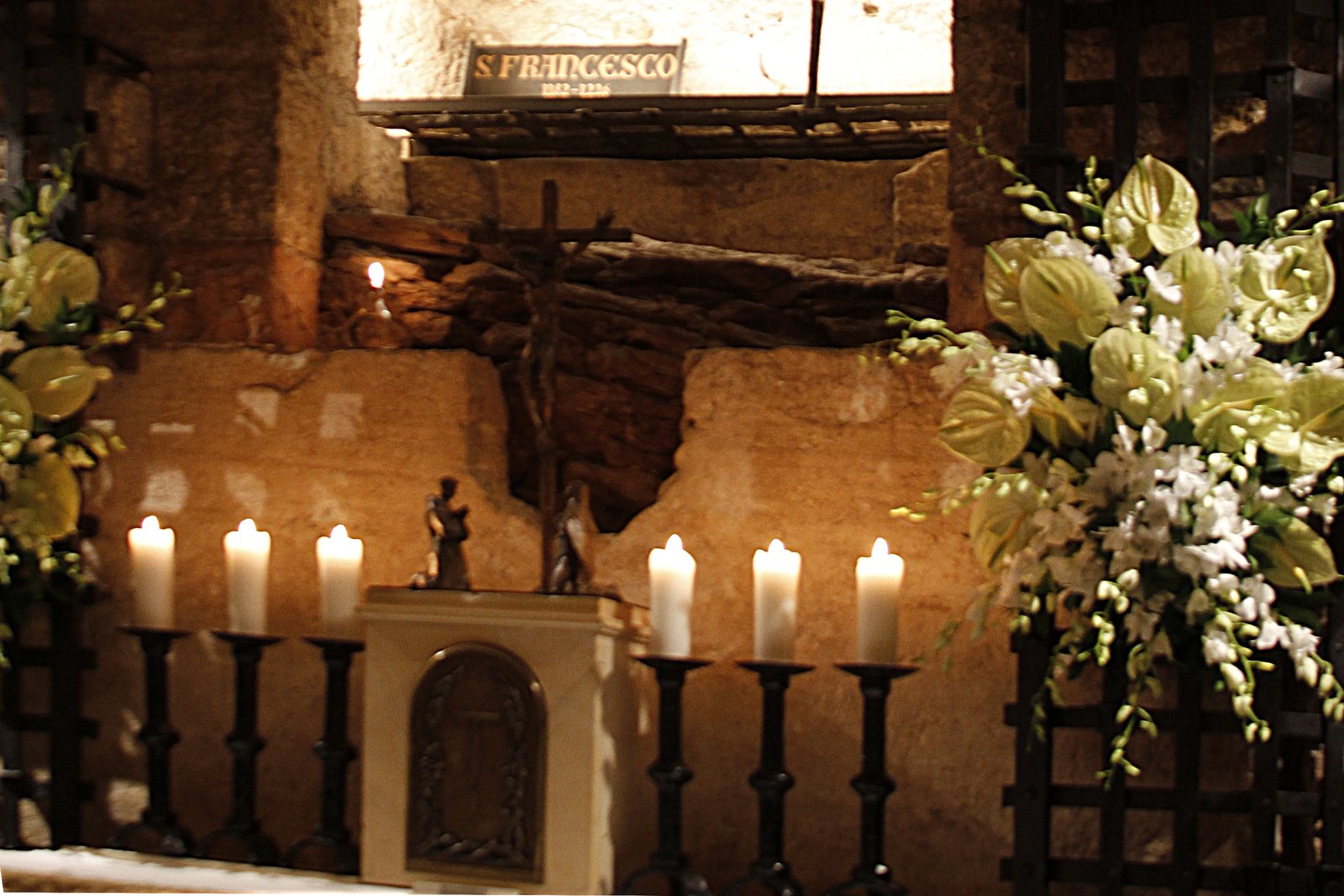
José Luiz, Tomb of Saint Francis, Basilica di San Francesco, Assisi, 2016. CC BY-SA 4.0, via Wikimedia Commons.
Francis founded the religious movement that became the Franciscan order, built on vows of poverty and a plain, itinerant style of preaching that stood in sharp contrast to much of the wealth-conscious Church culture of his era. In his final years, biographers close to him reported that he bore wound marks on his hands, feet, and side resembling the crucifixion wounds of Christ, following a mystical experience during a retreat at Mount La Verna in 1224. Francis died in Assisi on October 3, 1226, and was canonized remarkably quickly — within two years, in 1228, by Pope Gregory IX, a close friend of the order during Francis's lifetime.
A tomb hidden on purpose
What happened to Francis's body after his death is, on its own, a small drama. Construction of a basilica in his honor began almost immediately after his canonization, and his remains were transferred there in 1230. But according to long-standing tradition, the friars who carried out that transfer deliberately concealed the exact location of the burial inside the new church. The fear was concrete and well-founded for the period: other towns and private relic hunters were known to steal the bodies of famous saints outright, since possessing such remains brought immense prestige, pilgrim traffic, and income to whichever community held them. Assisi's friars apparently decided the safest way to protect their founder's body was to make sure almost no one, eventually, could say for certain where it was.
The strategy worked for nearly six centuries. It wasn't until Pope Pius VII formally authorized an excavation that the tomb was found again, in a dramatic dig in 1818. Workers spent weeks cutting through solid rock beneath the basilica before uncovering the stone sarcophagus, confirming at last that Francis's body had never left the church built to honor him. In the following decades, a dedicated crypt was constructed directly beneath the high altar of the Lower Church specifically so that pilgrims could finally approach the tomb itself — the stone coffin, visible today behind an iron grille, that holds Francis's remains.
What the treasury still keeps
Beyond the tomb itself, the Basilica of San Francesco's treasury preserves a small group of personal items associated with Francis's life, kept and displayed with the kind of careful, documented custody the Church expects for relics of this importance. Among them is a rough wool tunic traditionally identified as one Francis wore, along with a knotted cord belt of the kind the earliest Franciscans used instead of a conventional leather one — a detail that matches exactly the vow of radical poverty Francis built his whole movement around. A cloth connected to the stigmata wounds he reportedly bore in his final two years is also preserved among the basilica's relics, venerated as a direct physical trace of that tradition rather than treated as scientifically verified evidence of it.
These are what the Church classifies as relics "of use" or "of touch" — items the saint actually wore, carried, or that came into contact with his body — a different category from the bodily relics housed in the crypt below, but venerated with the same basic logic described in the Catechism's treatment of popular piety: the honor paid to the object ultimately points past the object itself, toward the life and holiness it recalls.
Assisi as a living pilgrimage site
Assisi has never stopped functioning as a working pilgrimage destination built around these relics. Pilgrims arrive year-round to descend into the crypt, visit the treasury, and walk the hill town's steep streets between the double basilica and the other Franciscan sites scattered through it — including San Damiano itself, a short walk below the town walls. The connection runs deeper than tourism: Assisi has also become an internationally recognized symbol of interfaith peacemaking, most visibly through the gatherings of representatives from the world's major religions that several popes, beginning with John Paul II in 1986, have convened there specifically because of its association with Francis's own reputation for peace and reconciliation across lines of difference.
How the Church frames the stigmata claim
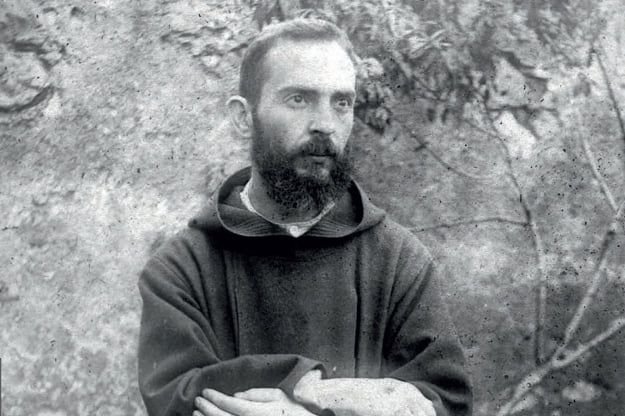
It's worth being precise about what is settled and what remains tradition. The Church has never required belief in the stigmata as dogma — no Catholic is bound to accept it as a condition of faith the way, for instance, the Resurrection is. What the Church does recognize is that the tradition rests on unusually strong and early testimony: biographers who personally knew Francis, writing within years of his death, independently described the wound marks, and Francis's own close companions reported having seen them directly. That combination — early, multiple, eyewitness-adjacent testimony about a genuinely singular claim — is why the Church treats the stigmata as a tradition worthy of belief, in the same careful, non-dogmatic register this site uses for other reported stigmata, including the twentieth-century case covered in the article on Padre Pio's stigmata relics.
What makes Francis's relics distinctive, in the end, is how closely the surviving objects match the life they commemorate. There is no gold reliquary built to overwhelm a visitor, no jewel-encrusted shrine competing with the splendor of the man's own actual poverty. A plain tunic, a knotted cord, a stone coffin cut from the rock beneath the altar — the relics of Saint Francis look, appropriately, like the relics of a man who owned almost nothing and asked to be remembered that way.
Trivia
Where is the body of Saint Francis of Assisi?
Why was Saint Francis's tomb hidden for so long?
When was Saint Francis's tomb rediscovered?
What personal relics of Saint Francis survive today?
Does the Catholic Church teach that Saint Francis's stigmata are a confirmed fact?
Related Reading