Saint Pius of Pietrelcina, Priest

From a shepherd's family to the Capuchins
Francesco Forgione was born in 1887 in Pietrelcina, a small town in the Campania region of southern Italy, into a family of modest farmers who, by later accounts, were marked by unusually deep and consistent religious devotion even by the standards of rural Italian Catholicism of the period. From childhood, Francesco reportedly experienced visions and other unusual spiritual phenomena, experiences that, while not unheard of in the hagiographic tradition surrounding future saints, set him apart within his own community from an early age.
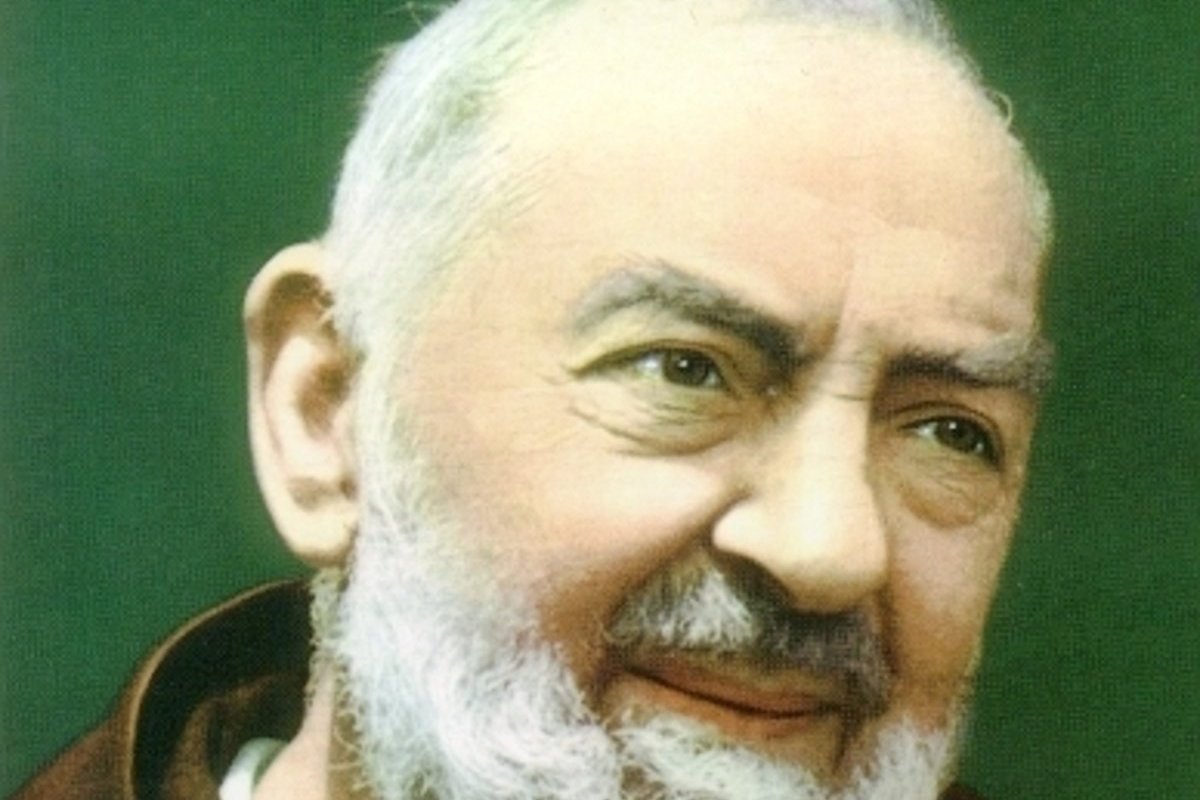
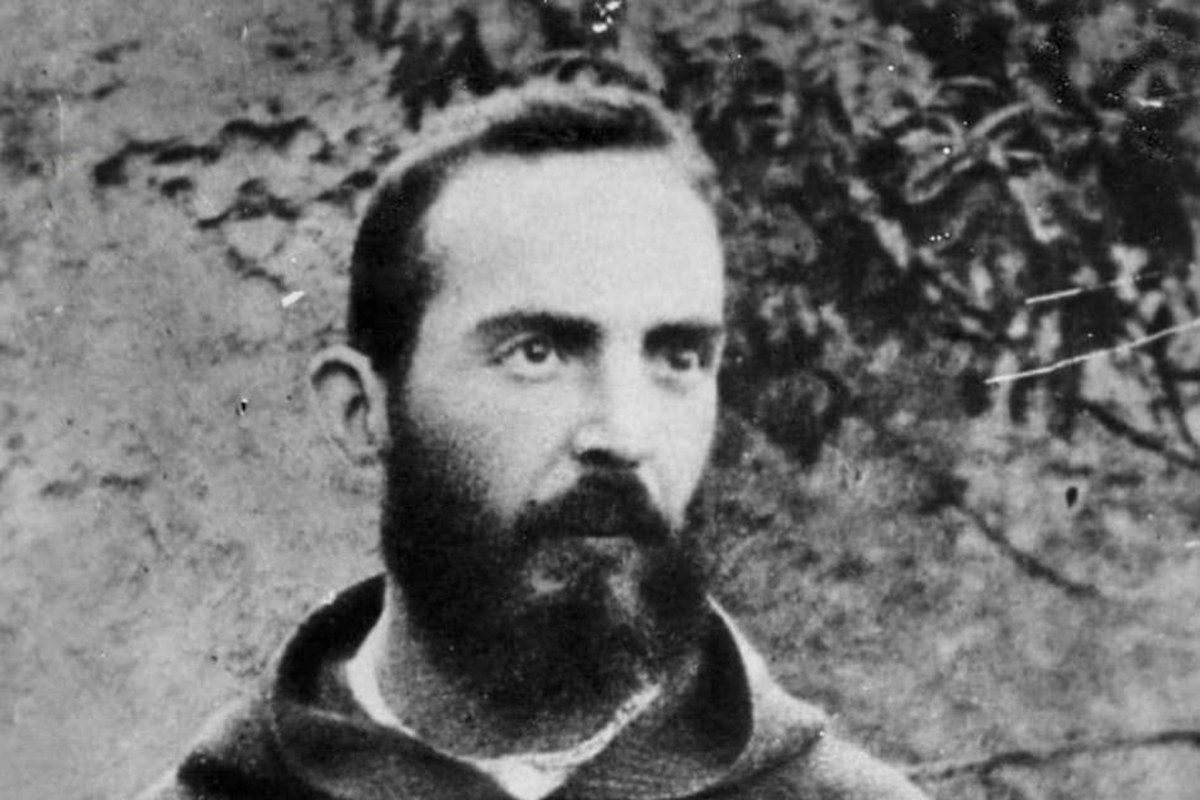
Anonymous photograph of Padre Pio, c. 1950s–1960s — public domain.
He entered the Capuchin Franciscan order as a novice in 1903, taking the religious name Pio, and was ordained a priest in 1910. His health, however, proved persistently fragile throughout his early years in religious life, forcing him to spend considerable time recovering at his family home in Pietrelcina rather than in community with his fellow friars, a pattern of chronic illness that continued until he was more permanently assigned, in 1916, to the Capuchin friary of Our Lady of Grace in San Giovanni Rotondo, a small, remote town in the mountainous Gargano region of Puglia, where he would spend the rest of his life.
The wounds that would not heal
On September 20, 1918, following a period of prayer, Padre Pio reportedly emerged with visible wounds on his hands, feet, and side, corresponding to the wounds Christ suffered in the crucifixion, a phenomenon known in Catholic tradition as the stigmata. Unlike some other reported cases of stigmata across Church history, which have sometimes appeared only briefly or intermittently, Padre Pio's wounds persisted for approximately the next fifty years, reportedly bleeding periodically and examined repeatedly, over the following decades, by numerous physicians, some skeptical and some sympathetic, called in by both Church authorities and secular observers seeking a natural medical explanation.
No conclusive natural explanation for the wounds' persistence, their resistance to infection despite decades of exposure, or their disappearance shortly before his death was ever firmly established by these examinations, though skeptics have proposed various theories over the years, including the possibility of self-infliction using chemical agents, a claim contested by supporters pointing to the extended duration and consistency of the phenomenon across so many independent medical observations. The Church itself has never required belief in the supernatural origin of the stigmata as a matter of binding doctrine even in canonizing Padre Pio, treating it, like other reported private mystical phenomena, as a matter for individual belief rather than defined dogma.
Decades of Vatican scrutiny
Padre Pio's growing public fame, drawing increasing numbers of pilgrims to the remote friary at San Giovanni Rotondo, brought with it sustained and often difficult scrutiny from Church authorities over several decades. At various points, particularly during the 1920s and again in the early 1930s, Vatican officials placed restrictions on his public ministry, including limits on his celebration of Mass and his hearing of confessions, reflecting genuine institutional caution about unverified mystical claims and, by some historical accounts, internal disagreements and rivalries among clergy connected to his case as much as settled theological objections.
These restrictions were eased and later lifted as further investigation failed to substantiate accusations of fraud, and by the later decades of his life, Padre Pio's ministry had been largely restored and his reputation, both locally and increasingly internationally, had grown enormously, with pilgrims traveling from across Italy and eventually from around the world specifically to attend his Masses or seek him out in confession. The long, uneven history of Vatican caution followed by eventual vindication is itself one of the more historically significant aspects of his story, illustrating how carefully and, at times, how slowly the institutional Church has historically approached claims of extraordinary mystical phenomena even in cases that eventually led to canonization.
Confessions that could last all day
Padre Pio became particularly renowned for his ministry as a confessor, reportedly spending as many as ten to fifteen hours a day hearing confessions during the peak years of pilgrim traffic to San Giovanni Rotondo, a punishing schedule sustained for decades despite his ongoing health difficulties. Numerous pilgrims across many years reported that he seemed to possess unusual insight into their lives and sins, in some accounts naming specific unconfessed sins before the penitent had spoken them, claims that, whatever their precise historical reliability in each individual case, contributed enormously to his reputation and to the sheer volume of pilgrims the remote mountain town increasingly attracted.
Beyond his sacramental ministry, Padre Pio was also the driving force behind the construction of the Casa Sollievo della Sofferenza, "Home for the Relief of Suffering," a major modern hospital built near the friary and opened in 1956, envisioned by Padre Pio not as an afterthought to his spiritual ministry but as an integral extension of it, combining advanced medical care with the same underlying charitable impulse that had shaped so much of Christian religious life across the centuries. The hospital continues to operate as a significant medical center in the region today.
Canonization and enduring devotion
Padre Pio died in 1968, and his reported stigmata, according to witnesses present, had faded and largely disappeared in the period shortly before his death. His cause for canonization proceeded relatively quickly by modern standards, and Pope John Paul II canonized him in 2002 under the name Saint Pius of Pietrelcina, a canonization that drew one of the largest crowds in the history of such ceremonies in Rome, reflecting the enormous and continuing popular devotion he had already inspired well before his formal recognition as a saint. His feast is celebrated on September 23, and San Giovanni Rotondo, once a remote and little-known mountain town, remains today one of the most visited pilgrimage sites in Italy.
Trivia
Who was Padre Pio, and what is his canonized name?
What are the stigmata, and when did Padre Pio receive them?
Did the Vatican investigate Padre Pio's stigmata and other reported phenomena?
What was distinctive about Padre Pio's ministry as a confessor?
When is the feast of Saint Pius of Pietrelcina, and what did he found?
You May Also Like
Related Reading