Saint Rita's Incorrupt Body: The Reliquary at Cascia

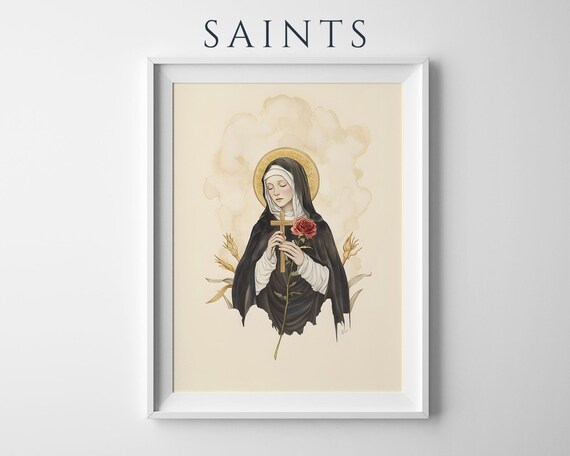
A body that has never gone into the ground
Most relics on this blog are fragments of a larger story — a splinter of wood, a strip of cloth, a bent nail standing in for an event too large to otherwise hold onto. Rita of Cascia's body is a different kind of relic: the whole of her, kept above ground continuously since 1457, moved between resting places over the centuries, and finally sealed behind glass in a basilica built expressly to house her. This blog has already told her life story in Saint Rita of Cascia and described the building itself in The Basilica of Saint Rita, Cascia. This article narrows in on the relic alone — what the documented examinations of her body actually describe, what her famous forehead wound was said to be, and how a January legend about a rose became a springtime devotion still practiced today.
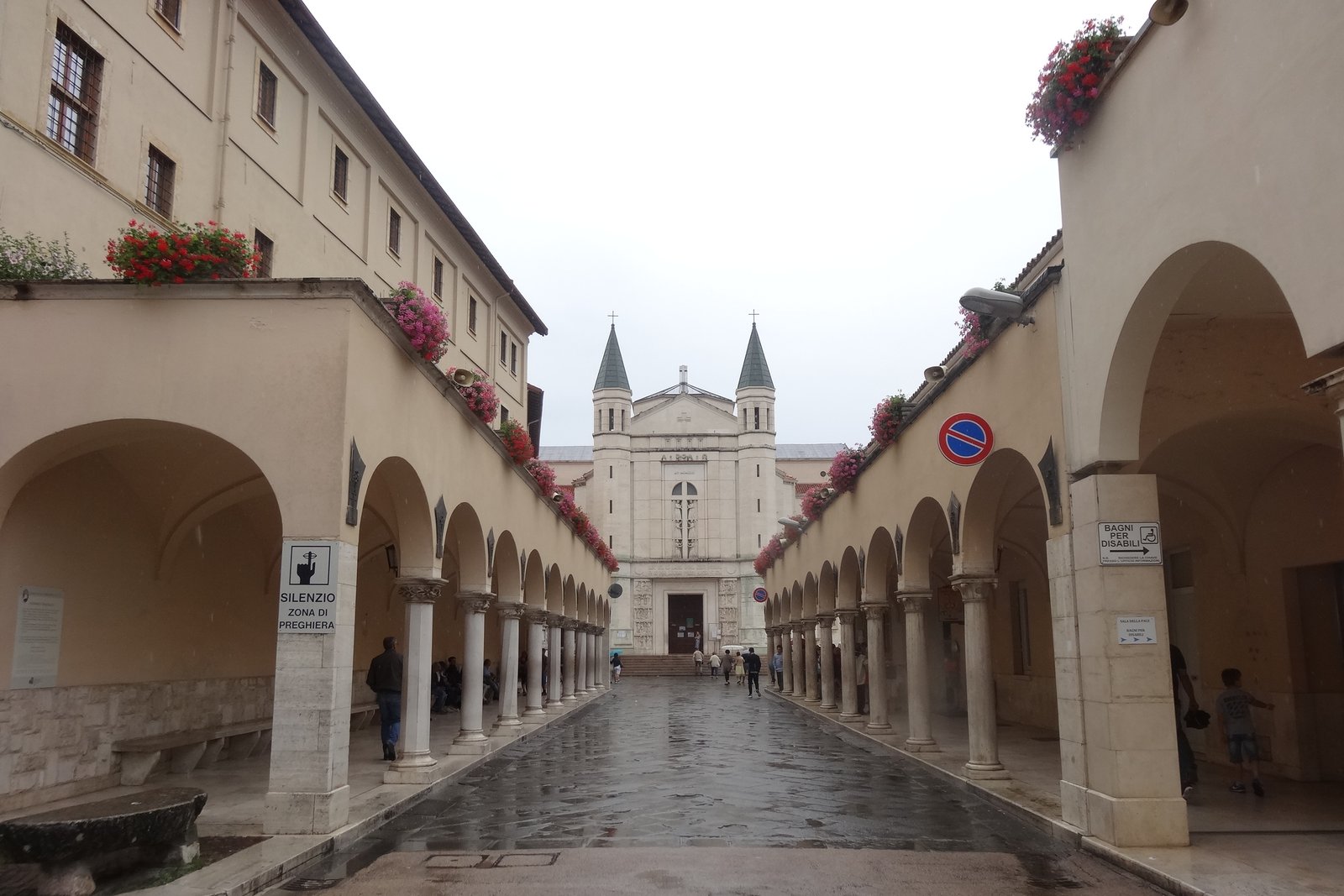
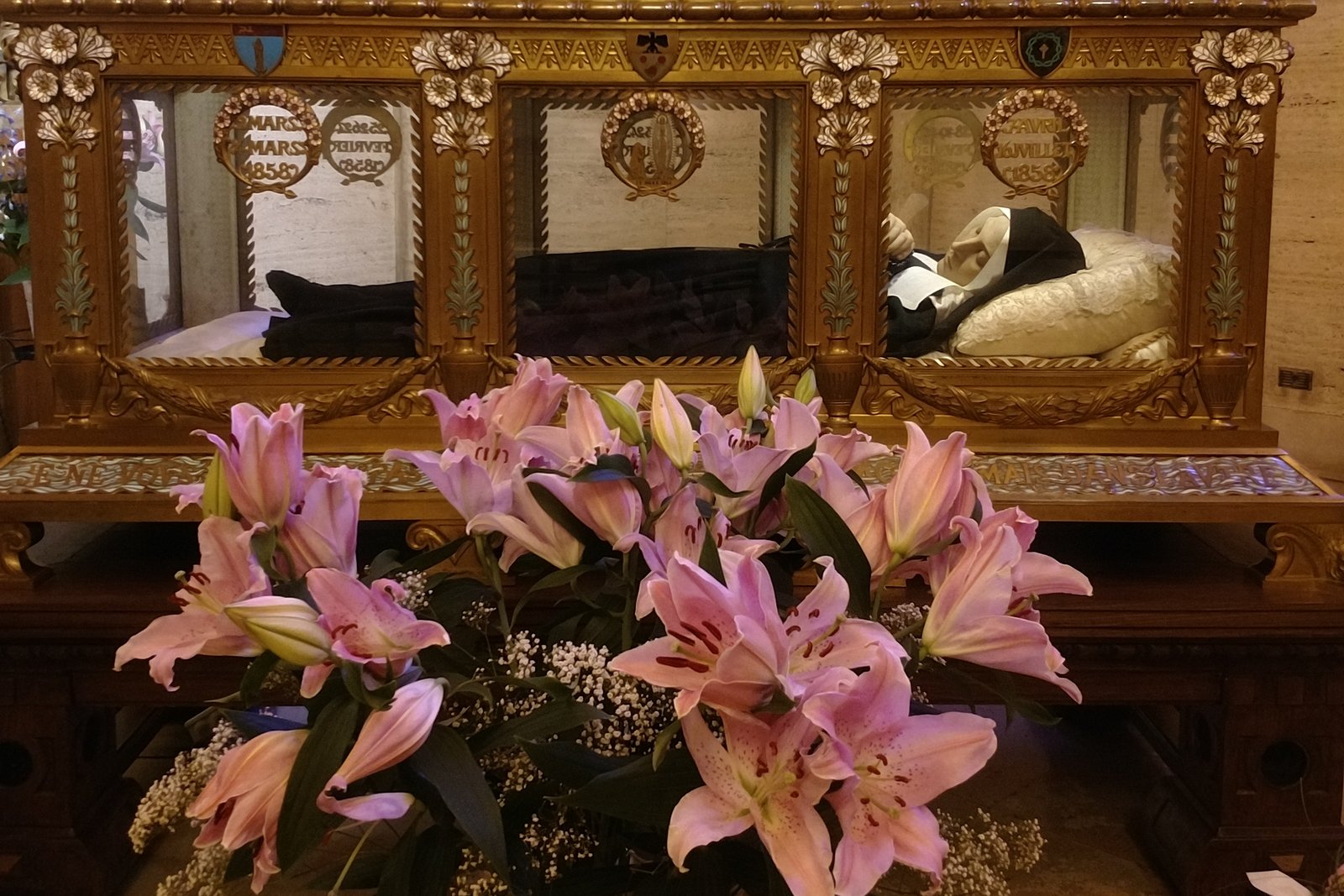
Photograph by Jordiferrer, Santuario di Santa Rita (Cascia), 2016 — CC BY-SA 4.0, via Wikimedia Commons.
A short reminder of who she was: Margherita "Rita" Lotti was born around 1381 near Cascia, in the mountainous Umbrian region of central Italy. An arranged marriage to a volatile husband ended in his murder; both of her sons then died of illness before they could seek revenge, leaving her a childless widow. She was eventually admitted to the Augustinian convent of Santa Maria Maddalena in Cascia, lived there for roughly four decades, and died on May 22, 1457. Pope Leo XIII canonized her in 1900, naming her patroness of impossible causes — a title drawn directly from a life that kept finding a way through losses that looked, at each turn, final.
What the examinations actually found
Tradition holds that Rita's body was formally examined by Church authorities roughly 150 years after her death, ahead of her beatification by Pope Urban VIII in 1627, and found, according to the popular account recorded by Joan Carroll Cruz in her widely cited study The Incorruptibles, to be "as perfect as it had been on the day of her death, with the flesh still of a natural color." That her remains held up at all is notable for a more basic reason than any claim of miraculous preservation: she was never placed in a sealed tomb. Her body simply lay exposed in the church built around her cult, under ordinary conditions, for centuries.
What makes this account worth taking seriously as more than hagiographic flourish is that it does not stop at a single triumphant description. The same tradition, by Cruz's own telling, records specific, later changes to the body — not sudden decay, but gradual, documented alteration consistent with a body that has simply existed in the open air for a very long time. "St. Rita's body, as viewed by countless pilgrims, appears only slightly discolored," Cruz wrote, "and is perfect in all its members" — with one notable exception: an eyebrow that shifted position around the year 1650, and a cheekbone that became dislodged, both repaired with wax and thread, a repair confirmed at medical examinations conducted in 1743 and in 1892. Those two dated examinations are the closest thing this case has to Bernadette Soubirous's three formally documented 20th-century exhumations — fewer in number and less clinically detailed in the sources available today, but pointing to the same underlying pattern: a body preserved far beyond ordinary expectation, while still subject to small, real, recorded changes over time, rather than a body frozen outside the reach of time altogether.
As with every claim of incorruption discussed on this blog, it's worth repeating what the Catholic Church does and does not say about cases like this. Incorruption has never been a requirement for sainthood, nor is it treated as proof of holiness on its own; Rita's 1900 canonization rested on a documented history of heroic virtue and on miracles attributed to her intercession, evaluated through the Church's ordinary process, not on the condition of her remains. The veneration her body receives sits within the broader practice the Catechism describes around relics and the communion of saints (nos. 957, 1674, 2300) — an honoring of a life recognized as holy, not a forensic claim about tissue.
The wound that marked her final fifteen years
Rita's body carries one further, more striking feature: a small wound on her forehead, which tradition dates to around 1442, when she was approximately sixty years old. According to the accounts handed down about her life, she was praying before an image of Christ crucified when the wound suddenly appeared, as though a single thorn from his crown had come loose and pierced her own flesh. It is often described as a partial stigma — a visible echo of Christ's own wounds, distinct from the full stigmata associated with saints like Padre Pio in the 20th century.
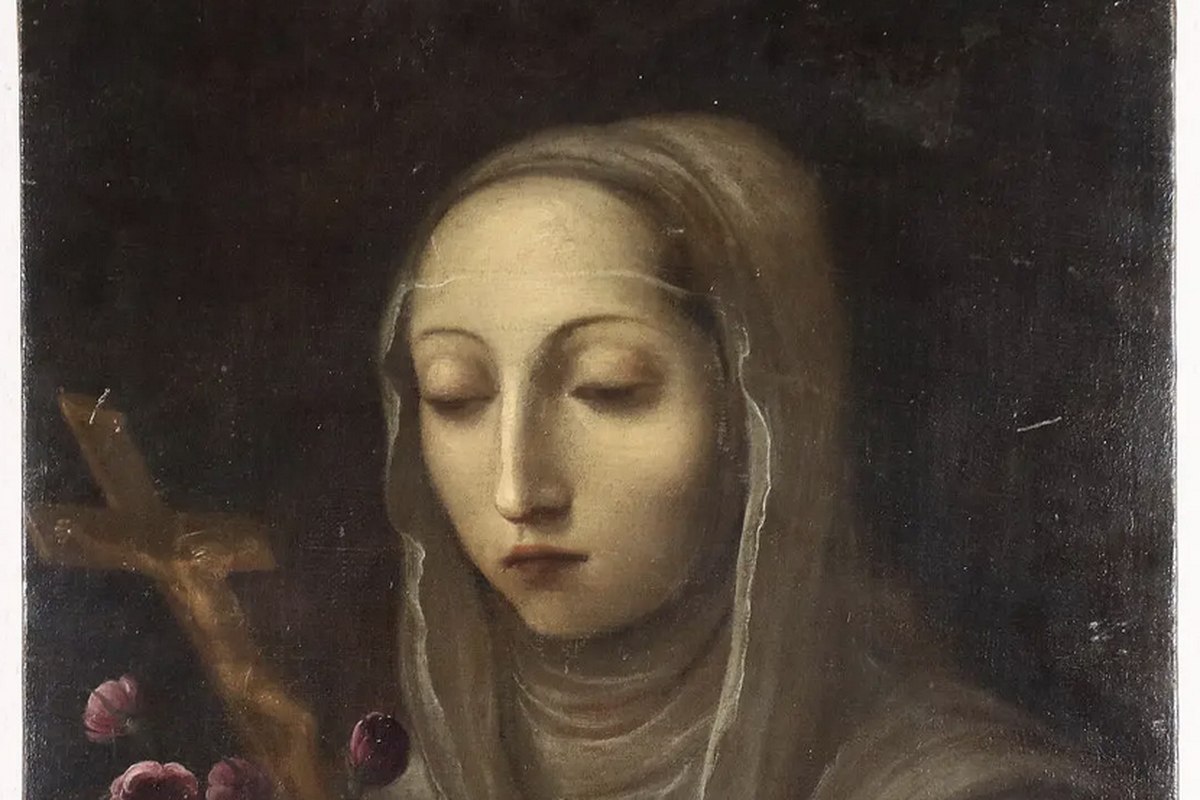
By every account, the wound was no quiet symbol. It reportedly oozed and gave off a foul smell severe enough that her fellow nuns at times kept her apart from the rest of the community, and it remained open for roughly fifteen years, healing only at her death on May 22, 1457. That wound is visible on her preserved body today and appears in nearly every painted or sculpted image of her made since — the detail that, more than any other, lets viewers recognize her instantly across five centuries of art. The Church has never required belief in its precise supernatural origin as a matter of doctrine; it is treated as part of the pious tradition surrounding her life, inseparable from her popular devotion even though it has never been formally defined teaching.
A rose in the dead of winter
The second story tied to Rita's final days is gentler, and it is the direct source of a devotion still practiced in parishes today. As she lay dying in her cell in January 1457 — months before her actual death in May — tradition holds that Rita asked a relative to bring her a rose from the garden of her old family home in Roccaporena. It was the dead of winter, when nothing in that garden should have been blooming. According to the story, the relative went anyway and found a single rose in flower despite the season; some versions of the tale add a fig as well, from the same garden.
The Church treats this, like the forehead wound, as part of pious tradition rather than documented history — there is no formal investigation or declaration attached to it, as there is for no analogous miracle candidate in her later canonization process. But the story took root. It became the basis for the Blessing of the Roses, now held at the end of Mass in many parishes on May 22, Rita's feast day (the anniversary of her death rather than of the winter rose story itself), when the faithful bring roses to be blessed and sprinkled with holy water, in a prayer asking that the flowers bring comfort in sickness and consolation in suffering — a fitting devotion for a saint whose own title, patroness of impossible causes, was built entirely on the idea that nothing, not even a rose in January, is beyond hope.
Cascia today
The Basilica of Santa Rita, where her reliquary now stands, was built specifically to house her cult after the surge of devotion that followed her 1900 canonization; construction ran from 1937 to 1947, replacing the smaller medieval convent church where she had actually lived and died. It remains one of Umbria's most visited pilgrimage sites, drawing travelers from across Italy and abroad, many of whom come carrying the same kind of situation that gave Rita her title in the first place — a grave illness, a broken marriage, a family estrangement that looks, from where they stand, impossible to mend.
What they find behind the glass is not a body preserved outside of time, and the record the Augustinian community itself keeps has never pretended otherwise. It is a body that has resisted the ordinary course of decay for nearly six hundred years while still, in small and carefully documented ways, continuing to change — which is, in the end, a more honest kind of wonder than a flawless one would be.
Trivia
Is Saint Rita of Cascia's body really incorrupt?
What was the wound on Saint Rita's forehead?
Why are roses blessed on Saint Rita's feast day?
Where is Saint Rita's body kept today, and can pilgrims visit?
Related Reading