The Relics of Saint Kateri Tekakwitha


A relic story that begins at the deathbed itself
Most sacred relics on this blog became relics only after the saint was already gone — a splinter of bone, a strip of cloth, a lock of hair collected sometime after death. Kateri Tekakwitha's relics begin with something that reportedly happened at the very moment of her death, witnessed by the two men who would go on to write her earliest biographies. That makes her case worth treating on its own, separately from the fuller account of her life and conversion already covered in Saint Kateri Tekakwitha on this blog.
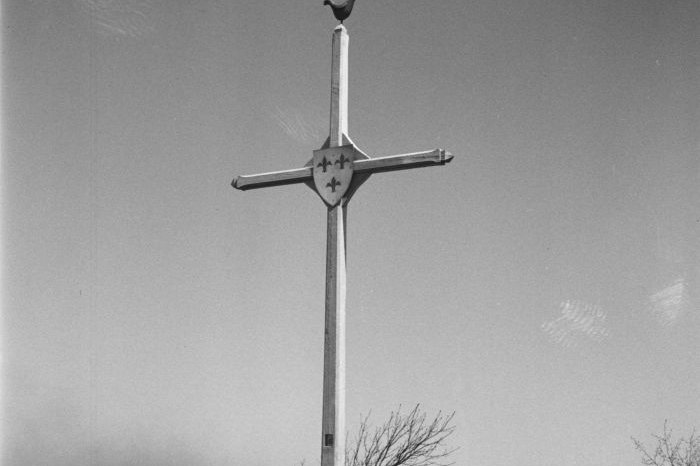
Photograph by Conrad Poirier, 1947, "Kateri's Tomb" — Public domain, via Wikimedia Commons / Bibliothèque et Archives nationales du Québec.
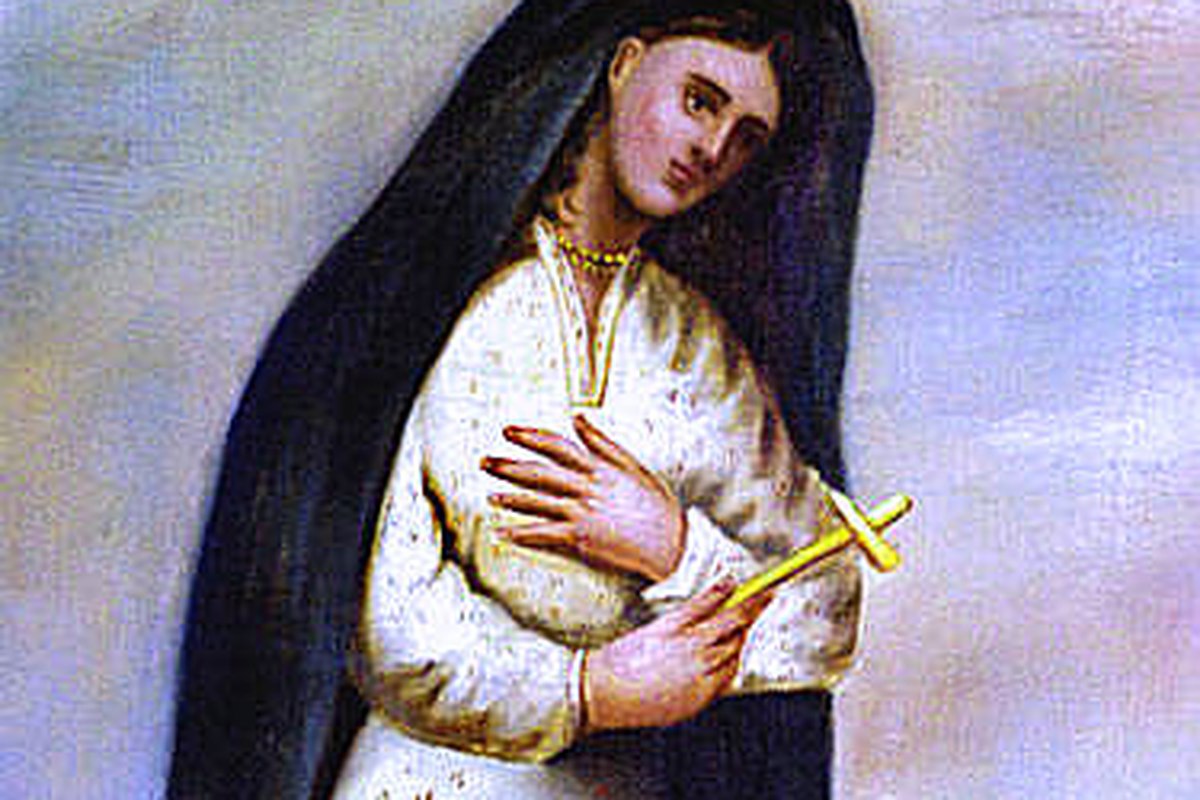
Kateri was born around 1656 in the Mohawk village of Ossernenon, in what is now New York state, to a Mohawk father and a Christian Algonquin mother. Smallpox swept through her family when she was about four, killing her parents and baby brother and leaving her own face permanently scarred and her eyesight damaged. She was baptized at twenty, fled roughly two hundred miles to the Jesuit mission of St. Francis Xavier at Kahnawake to practice her new faith in peace, and died there on April 17, 1680, at only twenty-three or twenty-four.
What the Jesuits at her bedside recorded
Two French Jesuit missionaries, Claude Chauchetière and Pierre Cholenec, had both lived at the Kahnawake mission alongside Kateri and were present at her death. Each went on to write a biography of her — Chauchetière's in 1695, Cholenec's the following year — and both recorded the same striking detail about her final moments. Cholenec's own account, describing what he says he witnessed roughly fifteen minutes after she died, reads: "This face, so marked and swarthy, suddenly changed about a quarter of an hour after her death and became in a moment so beautiful and so white that I observed it immediately."
That is a specific, named, eyewitness claim — not an anonymous legend accumulated generations later — which is part of why it circulated so quickly among both Native converts and French settlers at Kahnawake. It is important to be precise about what kind of claim it is, though: the Catholic Church has never formally investigated or defined this account as a miracle in the technical sense used for canonization. It is preserved as pious testimony from two named witnesses, not as settled Church teaching, and this blog repeats it on exactly those terms.
From gravesite to chapel to marble tomb
Kateri was buried near the mission at Kahnawake, and devotion to her took hold almost immediately. Chauchetière had a chapel built near her grave, and by 1684 — just four years after her death — pilgrims were already visiting the site. Mohawk and French settlers alike began treating objects connected to her as relics in the most literal sense: people reportedly collected earth from her gravesite and wore it in small pouches, crediting it with healings from illness, and fragments of her coffin and bones were kept and distributed for veneration among the Jesuit missions of New France.
Her remains stayed near that original gravesite for nearly three centuries. In 1972, with her cause for canonization well underway, they were formally moved into a marble tomb inside the St. Francis Xavier Mission church itself, in the right transept of the building. The tomb carries a simple inscription in Mohawk: "Kaiatanoron Kateri Tekakwitha" — "Precious Kateri Tekakwitha." That church, in the Mohawk territory of Kahnawake on the south shore of the St. Lawrence River near Montreal, is maintained today as the National Shrine of Saint Kateri Tekakwitha, and it remains the primary place where pilgrims come to venerate her directly.
The miracle that completed her canonization
A saint's cause requires more than a venerated tomb — it requires a documented, medically unexplained healing attributed specifically to that person's intercession after death, examined by the Vatican's own doctors and theologians. Kateri's path there took more than three centuries: Pope Pius XII declared her Venerable in 1943, and Pope John Paul II beatified her in 1980, each step requiring its own standard of evidence, well short of canonization itself.
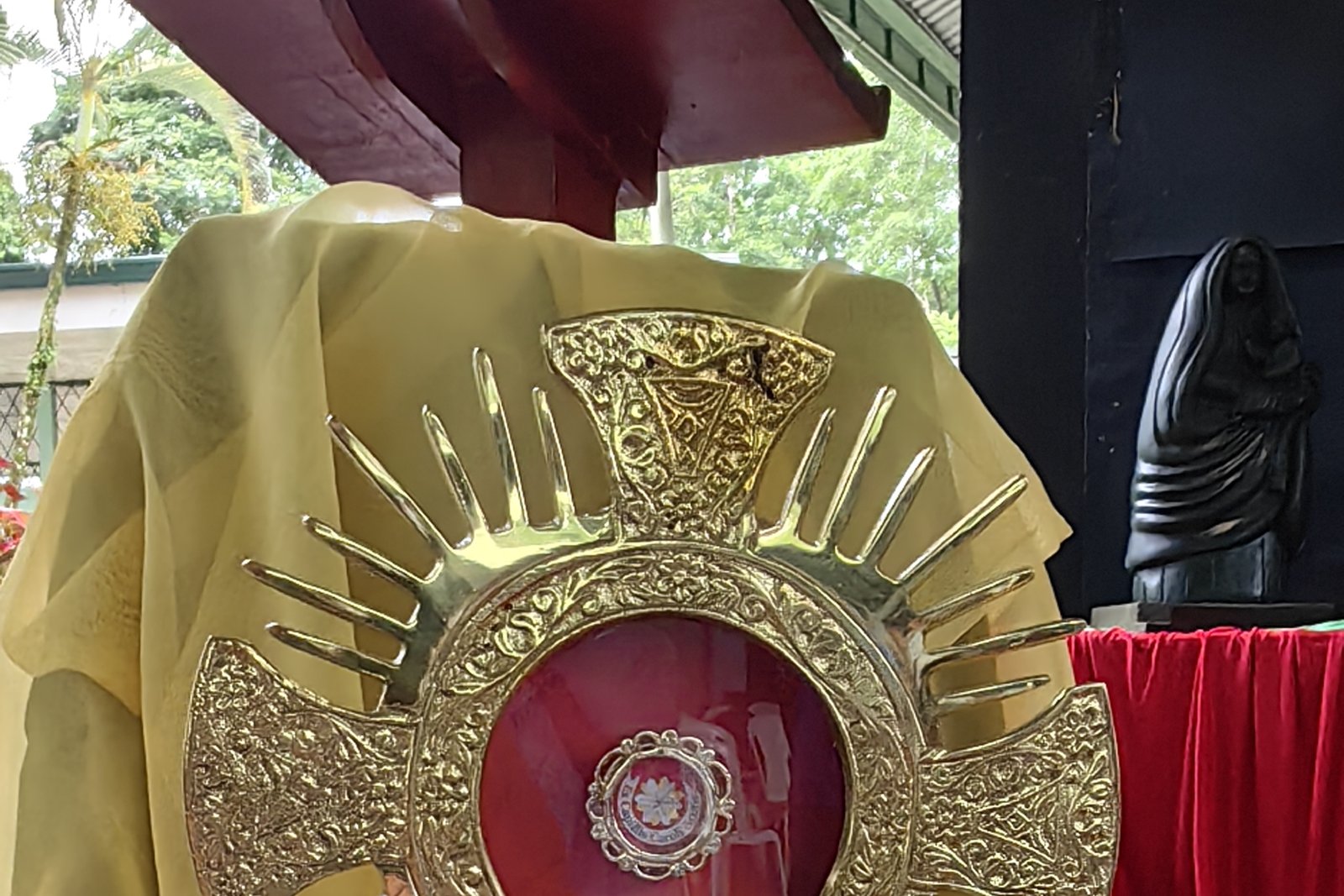
The case that finally closed the process came from Washington state in 2006. Jake Finkbonner, a six-year-old boy of Lummi descent, had contracted a flesh-eating bacterial infection so severe that doctors told his parents surgery could not stop it and expected him to die. Sister Kateri Mitchell, a member of the Sisters of St. Anne, brought a relic of Kateri Tekakwitha — a bone fragment — to the boy's bedside and placed it against his body while his family, his community, and an extended network of prayer reached through his classmates asked for Kateri's intercession. According to the family's account, the infection's advance stopped the following day, and the boy made a full recovery doctors could not explain medically. In December 2011, the Vatican's Congregation for the Causes of Saints certified the healing as the required miracle, and Pope Benedict XVI canonized Kateri Tekakwitha at St. Peter's Basilica on October 21, 2012 — the first Indigenous woman of North America raised to sainthood.
It's worth noting directly what makes this case unusual even among canonization miracles: the healing is attributed to intercessory prayer offered through contact with an actual physical relic of Kateri's body, not simply prayer in her name. That detail ties her canonization back, quite directly, to the same practice of venerating fragments of her remains that began at her Kahnawake gravesite in the 1680s.
A living shrine, not a museum piece
What distinguishes Kateri's relics from many other canonized saints' is that their custody has never left the community she died among. The Mohawk people of Kahnawake have maintained continuous devotion to her — collecting earth and relics within years of her death, building her first chapel, and still gathering today at the marble tomb inside St. Francis Xavier Mission church. Her canonization in 2012 drew Indigenous pilgrims from dozens of tribes and nations across the United States and Canada, many in traditional dress, continuing a line of veneration that has run unbroken from that first gravesite chapel in 1684 to the shrine that stands at Kahnawake now. Smaller relics of hers — individual bone fragments entrusted for veneration, like the one brought to Jake Finkbonner's bedside — have also traveled to other shrines dedicated to her across North America, extending that same tradition well beyond the banks of the St. Lawrence River where her story began.
Trivia
What happened to Saint Kateri Tekakwitha's body after she died?
Is it true her smallpox scars disappeared after she died?
Where can you see Saint Kateri Tekakwitha's relics today?
What miracle was officially credited to Saint Kateri Tekakwitha's intercession?
Related Reading