The Relics of Saint Nicholas of Bari and the Mystery of the Manna

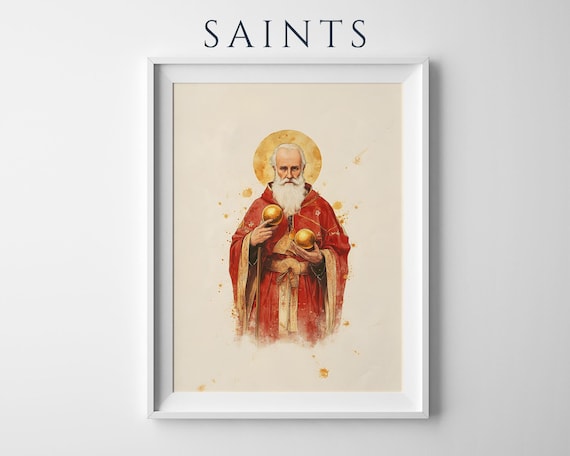
The bishop who became Santa Claus
Few saints have traveled further from their original historical identity than Nicholas of Myra. The modern figure of Santa Claus — jolly, fur-trimmed, riding through the sky — is the end product of centuries of folklore layered onto a real 4th-century Christian bishop, and the gap between the two can make it easy to forget that Nicholas's actual bones still exist, still receive annual pilgrimage, and are still the focus of one of the stranger ongoing physical phenomena connected to any Christian relic.
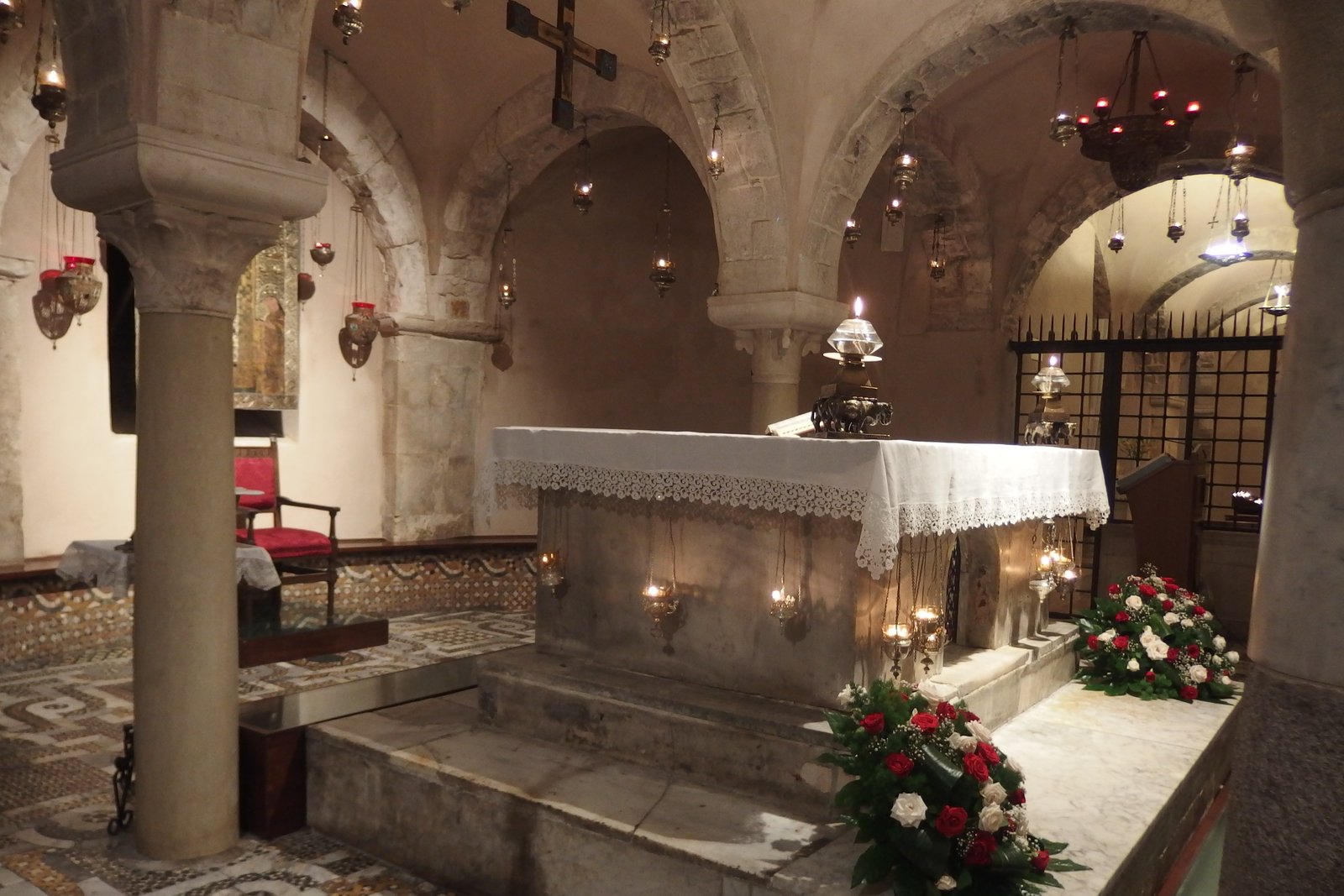
Palickap, tomb of Saint Nicholas, Basilica di San Nicola, Bari (2016). CC BY-SA 4.0, via Wikimedia Commons.
Who Nicholas actually was
Nicholas served as bishop of Myra, a city on the southern coast of Asia Minor in what is now Turkey, during the first half of the 4th century, a turbulent and formative period for the early Church that included the Council of Nicaea in 325, at which some traditions place him among the attending bishops. Little about his life survives in strictly contemporary documentation; most of what is known comes from later hagiographical accounts written well after his death. The best-known legend credits him with secretly providing dowries to three impoverished sisters in his city, saving them from being sold into servitude or forced into destitution — an act of anonymous, practical generosity that became the seed of centuries of later gift-giving folklore, eventually migrating through Dutch Sinterklaas traditions into the English-speaking world's Santa Claus.
A theft dressed up as a rescue
The relics' arrival in Italy is where Nicholas's story turns from folklore into a documented, and fairly blunt, piece of medieval history. By the late 11th century, Myra had declined and fallen under the control of the Seljuk Turks, and its famous resident relics sat in a city increasingly vulnerable and remote from Byzantine protection. In 1087, a group of sailors and merchants from Bari, a port city on Italy's Adriatic coast, traveled to Myra and removed Nicholas's bones from his tomb there, carrying them home by sea.
Medieval Venetian and Barese chronicles dress the episode up in the language of pious rescue — saving the relics from neglect or from falling into the hands of non-Christian rulers — but modern historians describe the act with more straightforward language: this was a theft, carried out by sailors acting on their city's behalf, following a well-documented medieval pattern in which Italian maritime cities competed fiercely for the prestige, pilgrim traffic, and trade benefits that came with possessing a famous saint's body. Venice would do something broadly similar with the relics of Saint Mark the Evangelist decades earlier, smuggling them out of Alexandria under layers of pork to avoid inspection by Muslim customs officials. Bari's acquisition of Nicholas followed the same civic logic, even if its specific methods were less colorful.
A basilica built to hold a reputation
Bari's city authorities moved quickly once the relics arrived, constructing the Basilica of San Nicola specifically to house them, with the crypt completed and the relics enshrined there by 1089. The building became one of the most influential examples of Apulian Romanesque architecture in southern Italy, and the relics it housed made Bari, almost overnight, a significant pilgrimage destination in its own right — exactly the outcome the original theft had been designed to produce.
A smaller portion of Nicholas's relics ended up elsewhere through a separate, later episode: Venetian sailors during the First Crusade era claimed to recover additional bone fragments left behind in Myra, which are now venerated at the Church of San Nicolò al Lido in Venice. The presence of these two Italian claims to Nicholas's remains has never been fully reconciled by competing documentation, which is typical of how medieval relic traditions frequently developed in parallel, each city defending its own claim with its own chronicle tradition.
The manna: a liquid nobody fully explains
The strangest ongoing feature of the Bari shrine is a physical phenomenon rather than a historical claim. A clear liquid, known as the manna (or myrrh) of Saint Nicholas, is observed collecting at the bottom of his tomb in the basilica's crypt. Each year on his feast day, May 9th on the Eastern calendar used for this particular celebration in Bari, Dominican friars who custody the basilica ceremonially extract the liquid through an opening in the tomb and distribute small vials of it to pilgrims, who have historically attributed healing properties to it.
The Catholic Church's posture toward the manna is characteristically restrained: it permits and even facilitates the devotion surrounding the liquid without issuing any formal declaration that the phenomenon is supernatural. Researchers who have studied the tomb's structure have proposed a natural scientific explanation — that the liquid could result from groundwater seepage or condensation interacting with the porous marble of the crypt, which sits below ground level in a city close to sea level and groundwater tables. This remains a genuine scientific hypothesis rather than a confirmed finding; no definitive study has conclusively settled whether seepage fully accounts for the liquid's quantity, consistency, or long-documented history, and the question remains open in the way the Church, true to its usual pattern with unexplained relic phenomena, has been content to leave it.
A rare point of shared devotion
What makes Bari's shrine unusually significant within the wider landscape of Christian relics is its ecumenical standing. Nicholas served as bishop centuries before the Great Schism of 1054 split Western and Eastern Christianity into the Catholic and Orthodox traditions that persist today, which means he belongs, without controversy, to the shared heritage of both. Orthodox and Catholic pilgrims travel to Bari in significant numbers, often side by side, to venerate the same bones — a genuinely rare occurrence given how much of the rest of each tradition's relic landscape developed separately after the schism.
That shared devotion has outlasted empires, conquests, and the long slow secularization of much of Europe. Whatever one makes of the manna, the theft, or the layers of folklore now wrapped around Nicholas's name, the crypt in Bari remains one of the few places in Christendom where East and West still kneel, without dispute, at exactly the same tomb.
Trivia
Who was Saint Nicholas, and why is he linked to Santa Claus?
How did Saint Nicholas's relics end up in Bari, Italy?
What is the 'manna of Saint Nicholas'?
Is there a scientific explanation for the manna?
Why do both Catholics and Orthodox Christians venerate these relics?
Related Reading