The San Damiano Cross: The Icon That Spoke to Saint Francis

A ruined chapel outside the city walls
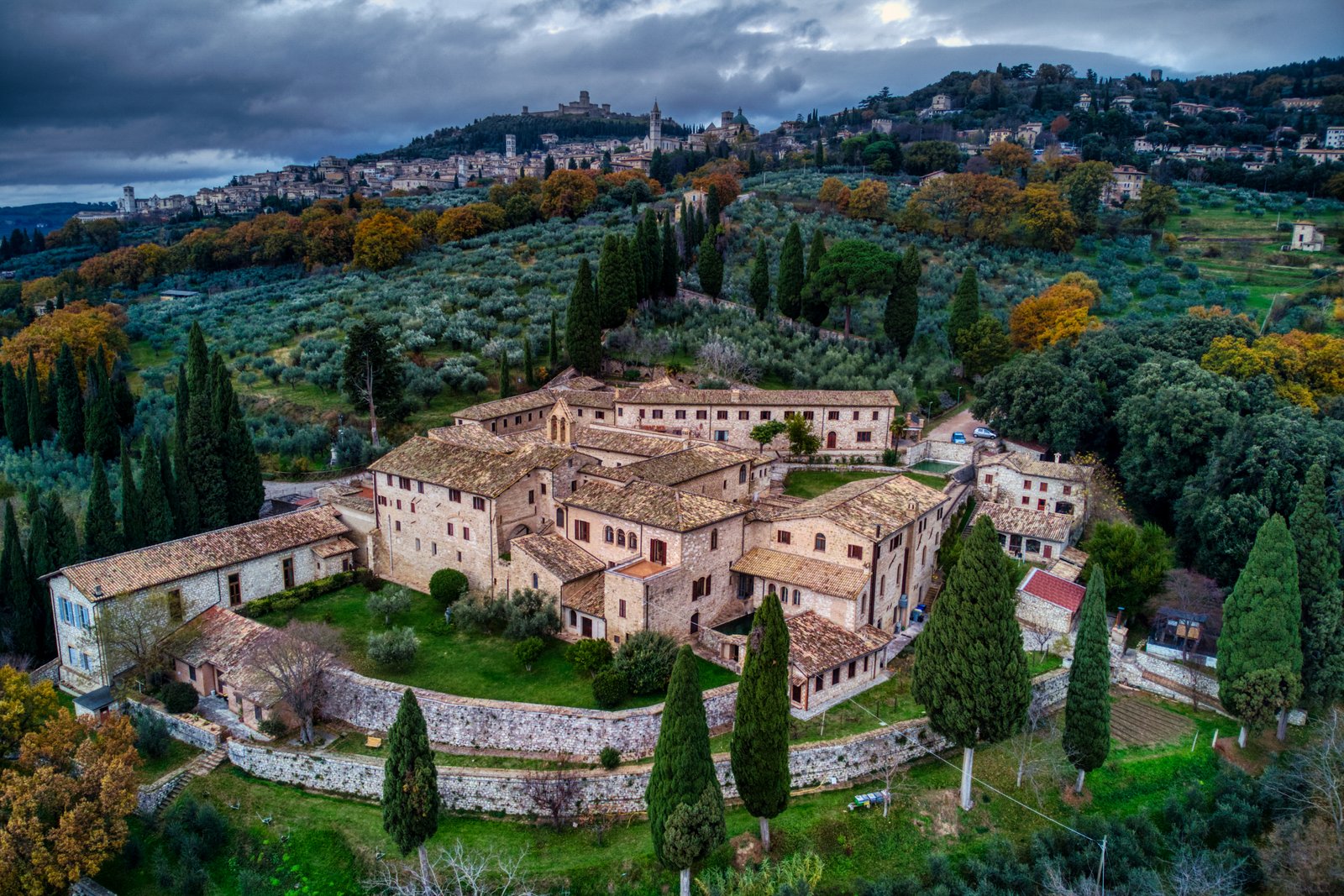
By the time Francis of Assisi found his way to San Damiano, the chapel had been abandoned long enough to fall into real disrepair — no resident priest, no regular congregation, just an old stone building slowly losing its roof on the outskirts of Assisi. Francis was in the middle of the restless, searching period of his life that came after a bout of serious illness and a stint as a prisoner of war, before the dramatic public break with his father that tradition remembers so vividly. He had taken to wandering into half-forgotten churches to pray, and San Damiano became one of his regular stops.
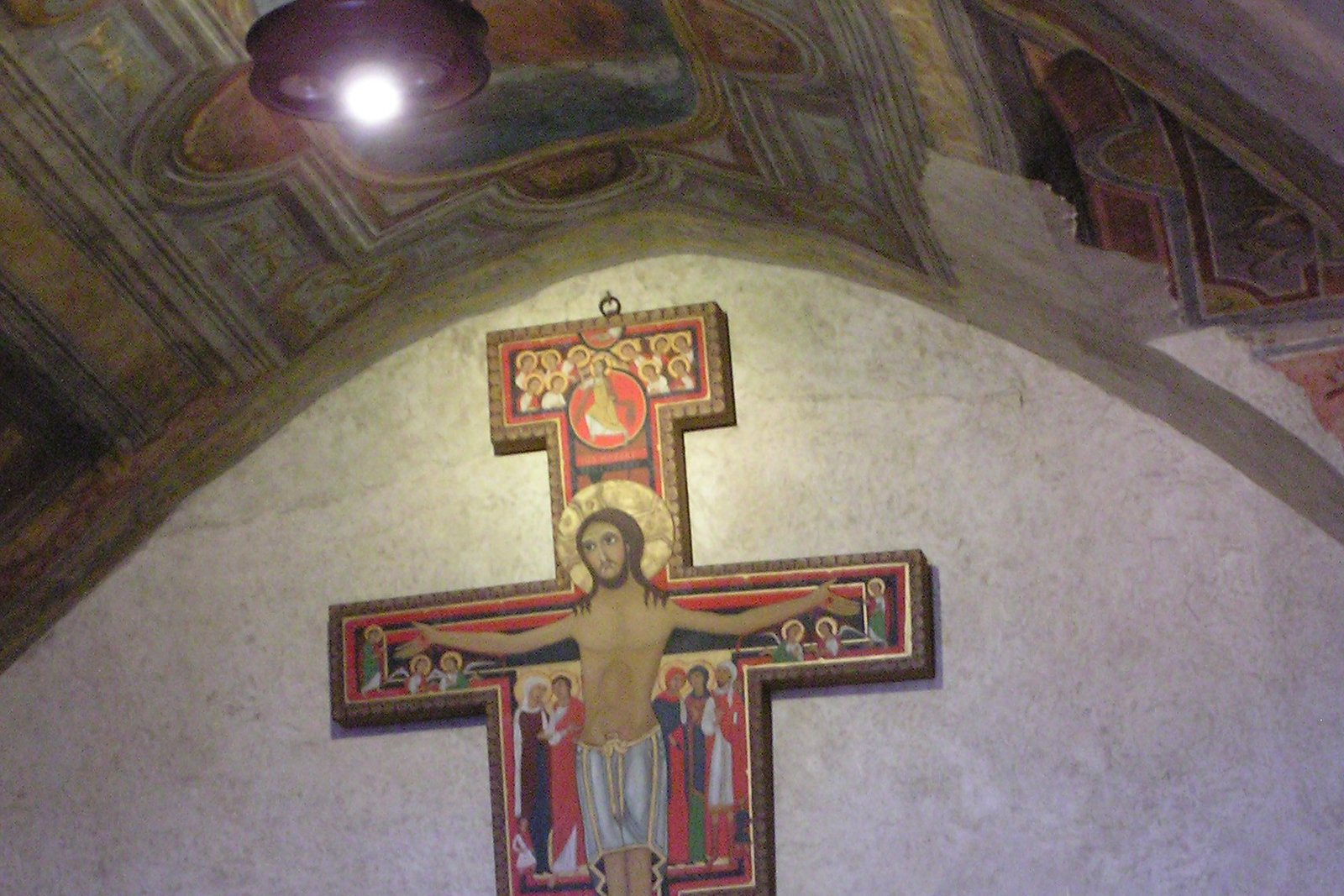
The San Damiano Cross, Umbrian school, c. 1100, Basilica of Saint Clare, Assisi. Public domain, via Wikimedia Commons.
It was there, according to Franciscan tradition, that something happened that neither the chapel's crumbling walls nor Francis's own family could have predicted. Praying before the painted crucifix above the altar, Francis reported that the figure of Christ spoke to him — an instruction, rendered in slightly different English wordings across Franciscan sources but consistent in substance, to rebuild or repair "my house," which was falling into ruin. Francis took the words literally at first. He sold cloth from his father's shop to buy stone and mortar, setting off the very public falling-out with his father that led to Francis renouncing his inheritance in the town square of Assisi — a scene told in full on this site's own biography of Saint Francis. Only with time did Francis and the brothers who gathered around him come to read the words more broadly: not one chapel in need of masonry work, but the whole Church, which his new way of life would help renew from within. The chapel and its grounds are covered in more depth in this site's piece on San Damiano, Assisi itself.
A crucifix that doesn't look like later ones
What makes the San Damiano Cross worth studying on its own terms — separate from the story of Francis — is how differently it portrays the crucifixion compared to the crucifixes most Western Christians grew up with. It was painted around the year 1100 by an artist whose name has not survived, working in the Romanesque style common to Umbria at the time, itself shaped by painted icon crosses that had migrated into Italy from the Byzantine East.
Rather than showing Christ slumped in visible agony — the "Christus patiens," or suffering Christ, style that became the Western standard once artists like Cimabue and Giotto began working in the following century — the San Damiano Cross shows what art historians sometimes call the "Christus triumphans," the triumphant Christ. His body is painted upright, luminous, and still; his eyes are open rather than closed in death. The image is meant to hold both halves of the crucifixion at once: the real death on the cross, and the resurrection that the Church teaches followed it, compressed into a single picture rather than told as two separate scenes.
That double meaning is built directly into the composition. Above Christ's head runs the familiar Latin inscription identifying him as King of the Jews. Flanking his outstretched arms are five larger figures, each haloed as a saint and labeled by name beneath their image: the Virgin Mary and Saint John the Evangelist on one side, Mary Magdalene and Mary the mother of James on the other, along with the Roman centurion whose request for healing is recorded in Matthew's Gospel — with the small figure of his sick servant tucked near his shoulder. Two smaller figures crouch in the lower corners: Longinus, traditionally named as the soldier who pierced Christ's side with a lance, and Stephaton, who offered the sponge soaked in vinegar. Six angels cluster at the ends of the crossbar, gesturing toward the scene as if inviting the viewer to marvel at it alongside them. Near the base, a cluster of patron saints of the Umbria region appears — a detail that would have mattered enormously to the chapel's original medieval congregation, even if it means little to most visitors today. At the very top, above a small image of Christ already clothed in triumph and climbing from the tomb amid a crowd of welcoming angels, is a simple hand with two fingers extended: the Father's blessing over the whole event.
It's a crowded, carefully organized composition, built less to evoke raw emotion — which is exactly what the later suffering-Christ crucifixes were designed to do — and more to teach. An illiterate medieval worshipper standing in front of this cross could, in principle, read the whole Gospel account of the Passion and its aftermath straight off the wood, figure by labeled figure.
From a crumbling chapel to a Roman-style basilica
The cross stayed at San Damiano for more than a century and a half after it was painted, including through whatever years Francis himself prayed before it. Its next major move came after Francis's own death in 1226, tied to the community his close friend and spiritual companion Clare of Assisi had built at that same rebuilt chapel — the Poor Clares, the women's religious order Clare led there for decades, as told in more detail in the article on San Damiano, Assisi.
In 1257, the Poor Clares left San Damiano for a newly constructed basilica inside the city walls of Assisi, built in Clare's honor following her death in 1253 — the Basilica of Saint Clare (Basilica di Santa Chiara). When they relocated, they carried the San Damiano Cross with them, and the community has kept watch over it ever since. Today it hangs in the basilica's Chapel of the Crucifix, a space built where the older church of San Giorgio once stood before it was absorbed into the new basilica's construction. The chapel it left behind, San Damiano, still stands and still welcomes pilgrims, but the crucifix above its altar today is a careful replica rather than the original — the real cross hasn't hung in its original setting for close to eight centuries.
Why it still matters to so many people today
Few relics of medieval Italian art have found their way into quite as many homes, prayer cards, parish bulletins, and devotional posters as the San Damiano Cross. Reproductions of it are now arguably more familiar to ordinary Catholics worldwide than the original hanging quietly in its Assisi chapel — a reversal that would probably have struck the anonymous twelfth-century painter as strange, since the original image was built for one specific room, not mass reproduction.
Its popularity owes something to its connection with Francis, whose own appeal has only grown over the centuries among Catholics and non-Catholics alike, and something to the image itself: a crucifix that manages to depict suffering and triumph in the same breath has an obvious resonance for anyone trying to hold both halves of the Christian story together. Franciscan communities in particular have leaned into the cross as a kind of emblem of their founder's calling — a visual shorthand for the idea that renewal, whether of a crumbling building or a struggling institution, tends to start with someone willing to kneel down and actually look.
That is, in the end, the core of the story worth remembering: not a miracle performed at a distance, but a young man paying close attention to an old painted image in an empty chapel, and letting what he saw there rearrange the rest of his life.
Trivia
What is the San Damiano Cross?
What did Christ reportedly say to Francis at San Damiano?
Why does the Christ figure on the San Damiano Cross look alive, not suffering?
Who are the small figures painted around Christ on the cross?
Is the original San Damiano Cross still at the San Damiano chapel?
Related Reading