San Damiano, Assisi

A ruined chapel outside the city walls
San Damiano sits a short walk from the historic center of Assisi, in the Umbrian countryside of central Italy, and by the early thirteenth century it had fallen into serious disrepair — a small, largely abandoned church with a resident priest too poor to maintain it properly. It was to this crumbling building, sometime around 1205, that a young Francis Bernardone came to pray, still in the midst of the personal crisis and spiritual searching that would soon lead him to abandon his father's cloth trade and his own comfortable prospects entirely. The fuller account of that transformation and the order Francis went on to found is told in our article on Saint Francis of Assisi.
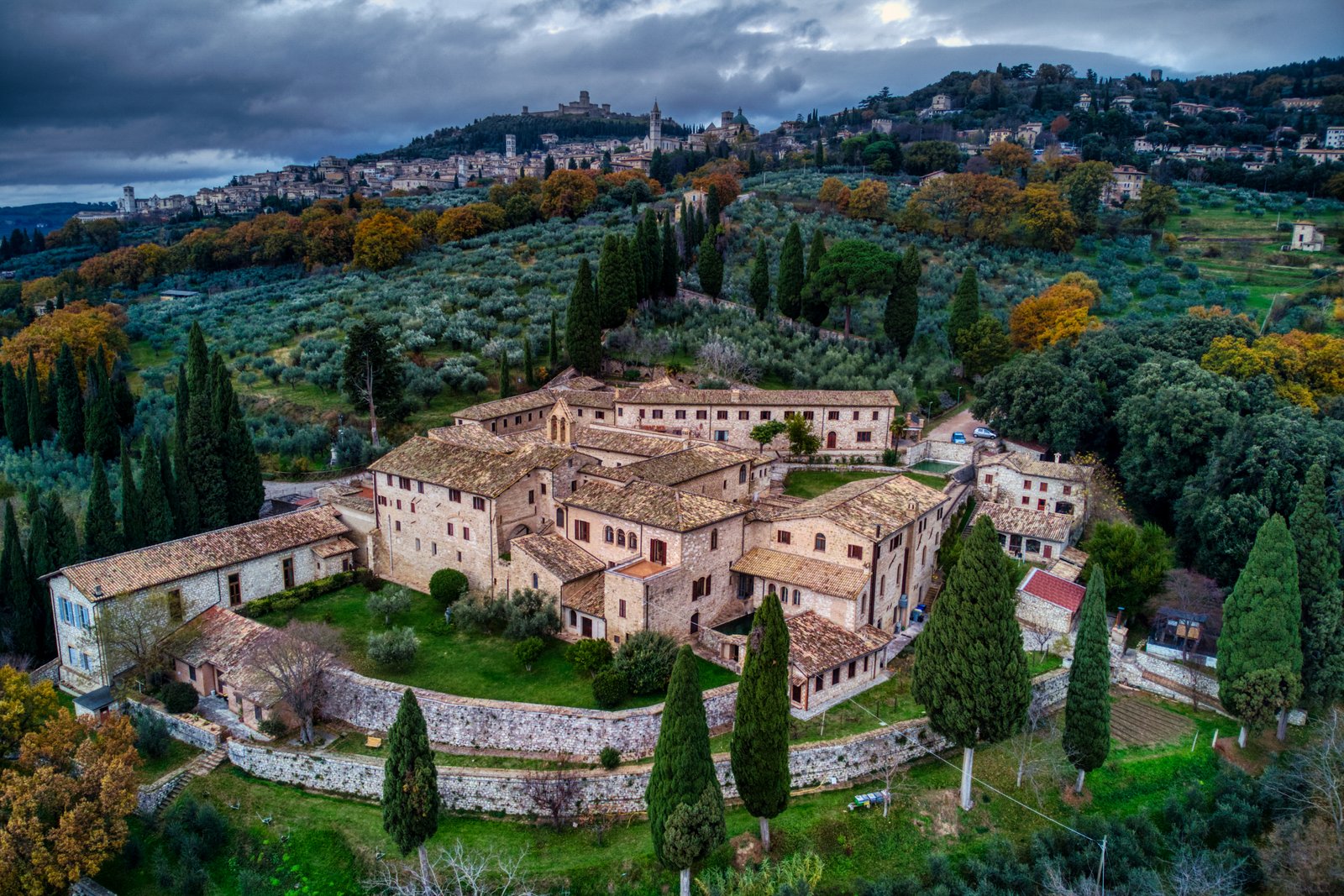
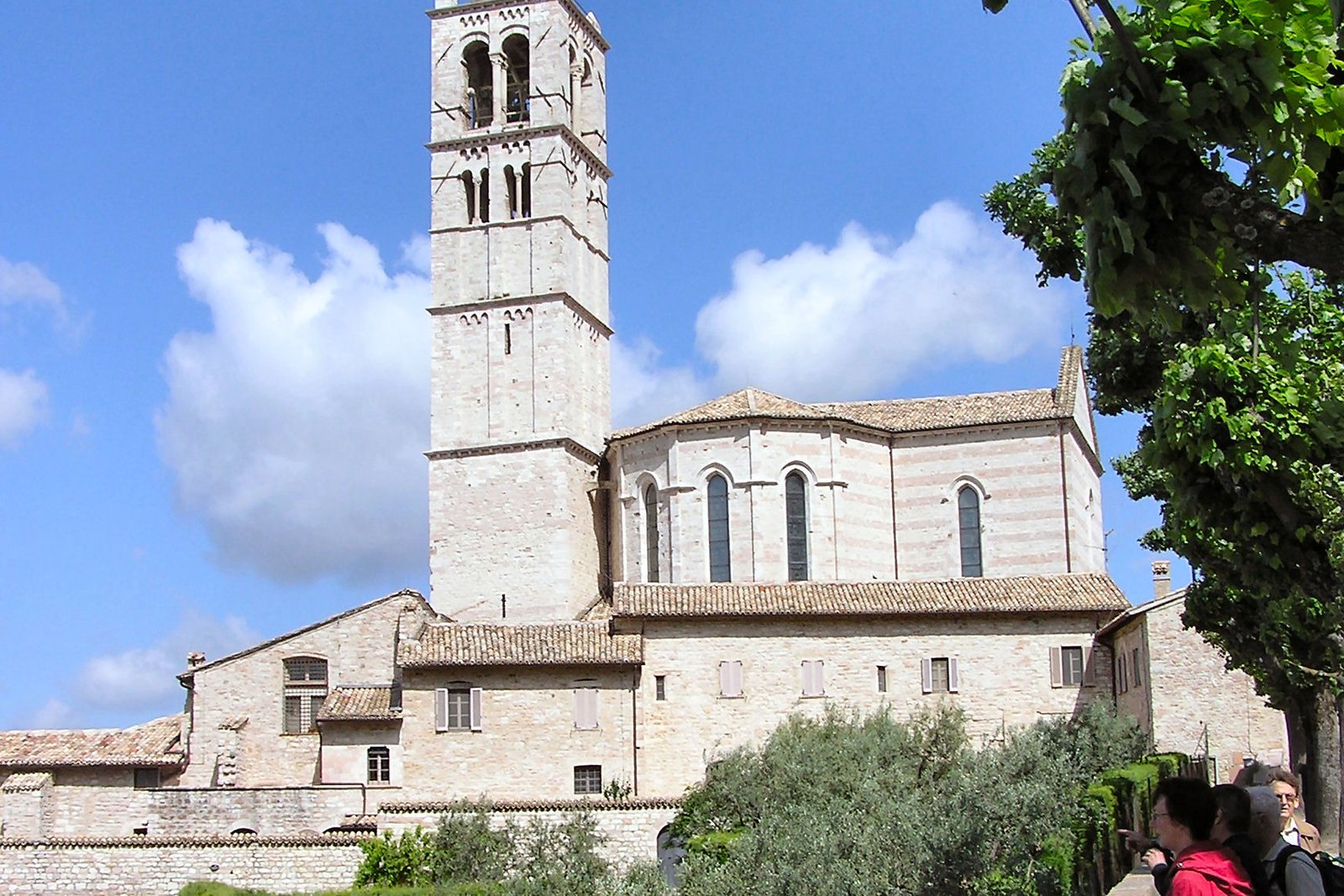
Photograph by Hagai Agmon-Snir, SanDamianoAssisiDec132023 — CC BY-SA 4.0, Wikimedia Commons.
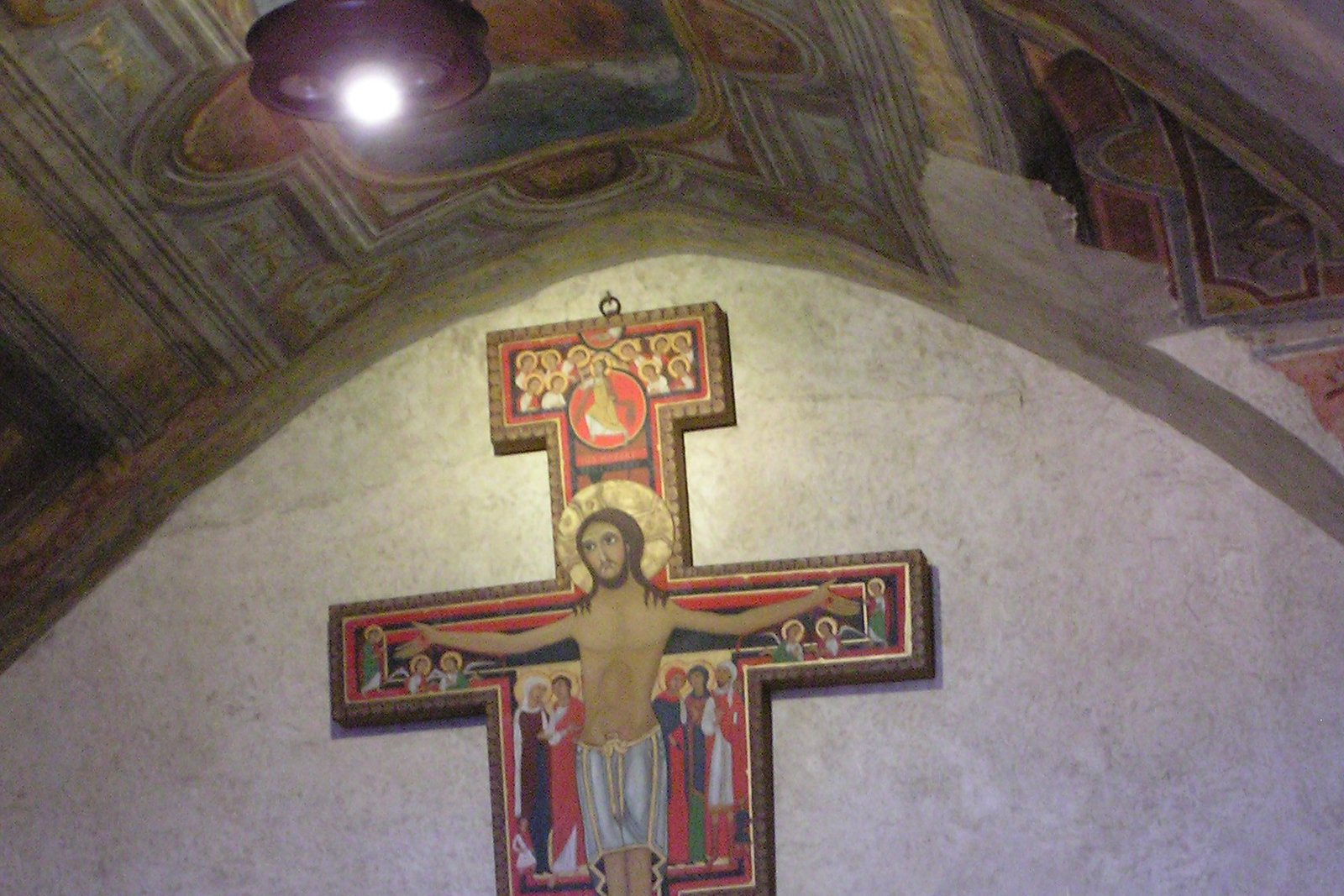
According to Franciscan tradition recorded by his earliest biographers, Francis was praying before a large painted crucifix in the Byzantine style — a cross depicting not merely Christ's suffering but his eyes open, seemingly alive and attentive — when he heard the figure address him directly, instructing him three times to "go and repair my house, which, as you see, is falling into ruin." Francis, still early in his conversion and not yet grasping any larger symbolic meaning, took the instruction literally: he sold cloth from his father's shop to fund the project (a decision that provoked a serious and public rupture with his father) and personally undertook the physical restoration of San Damiano's crumbling walls, carrying stones himself alongside whatever help he could recruit.
From literal repair to a wider mission
Only with time did Francis and those around him come to understand the vision's fuller significance — not simply a call to repair one small building, but an instruction that would eventually apply to the broader renewal of religious life Francis's movement went on to inspire, at a moment when the medieval Church faced real questions about corruption, wealth, and institutional decay. Francis went on to repair at least two further chapels in the area using the same literal, hands-on approach before founding the movement that became the Franciscan order, drawing early companions who were likewise drawn to his radical embrace of poverty and simplicity.
San Damiano itself, restored through Francis's own physical labor, remained closely connected to him throughout the following years, and it was here that he composed significant portions of the "Canticle of the Creatures" — one of the earliest known works of Italian vernacular literature and a foundational text of Franciscan spirituality — reportedly during a period of illness and near-blindness he endured toward the end of his life, while staying in a small hut adjoining the church.
Clare's monastery among the ruins Francis rebuilt
In 1212, a young noblewoman from Assisi named Clare, deeply moved by Francis's preaching and way of life, secretly left her family's home to join his movement, in an act that provoked considerable family resistance given the social expectations placed on a woman of her class. Francis, recognizing that Clare needed a stable community suited to a woman's religious life rather than the itinerant preaching lifestyle of his own male friars, settled her and the small number of companions who soon joined her at San Damiano — the very church he had rebuilt with his own hands years before. Clare and Francis's shared spiritual vision, and her own role in shaping it, are covered further in our article on Saint Clare of Assisi.
Clare remained at San Damiano for the rest of her life — more than forty years — leading what became known as the Order of Poor Ladies, or the Poor Clares, a community defined by the same radical embrace of poverty central to Francis's own movement, formalized eventually in a Rule of Life that Clare herself wrote, becoming the first woman in Church history known to have authored a religious rule later formally approved by the papacy, just two days before her death in 1253.
San Damiano today
The church and adjoining monastery buildings at San Damiano remain remarkably well preserved, offering visitors a strong sense of the simple, ascetic conditions in which Clare and her early companions lived, including the dormitory, refectory, and garden associated with their community life. The original painted crucifix connected to the tradition of Francis's vision was relocated in the seventeenth century to the Basilica of Saint Clare within Assisi's city walls, where it remains today as one of the most venerated images in Franciscan spirituality; San Damiano itself now displays a faithful reproduction in its place.
The site remains under Franciscan care and continues to receive pilgrims and visitors as part of the wider constellation of Franciscan holy places in and around Assisi, alongside the Basilica of Saint Francis and the Basilica of Saint Clare within the city itself. Of all these sites, San Damiano retains perhaps the most direct physical connection to the earliest, most formative moments of the Franciscan movement — a building Francis quite literally rebuilt with his own hands, which later became, through Clare, the birthplace of an entirely new form of women's religious life within the Church.
Trivia
What happened to Francis of Assisi at San Damiano?
Why did Clare of Assisi choose San Damiano for her community?
Is the original 'San Damiano Cross' still at the church?
Is San Damiano still an active religious site today?
Related Reading