The Water of Lourdes: What the Spring Is and Isn't

A spring that wasn't there the day before
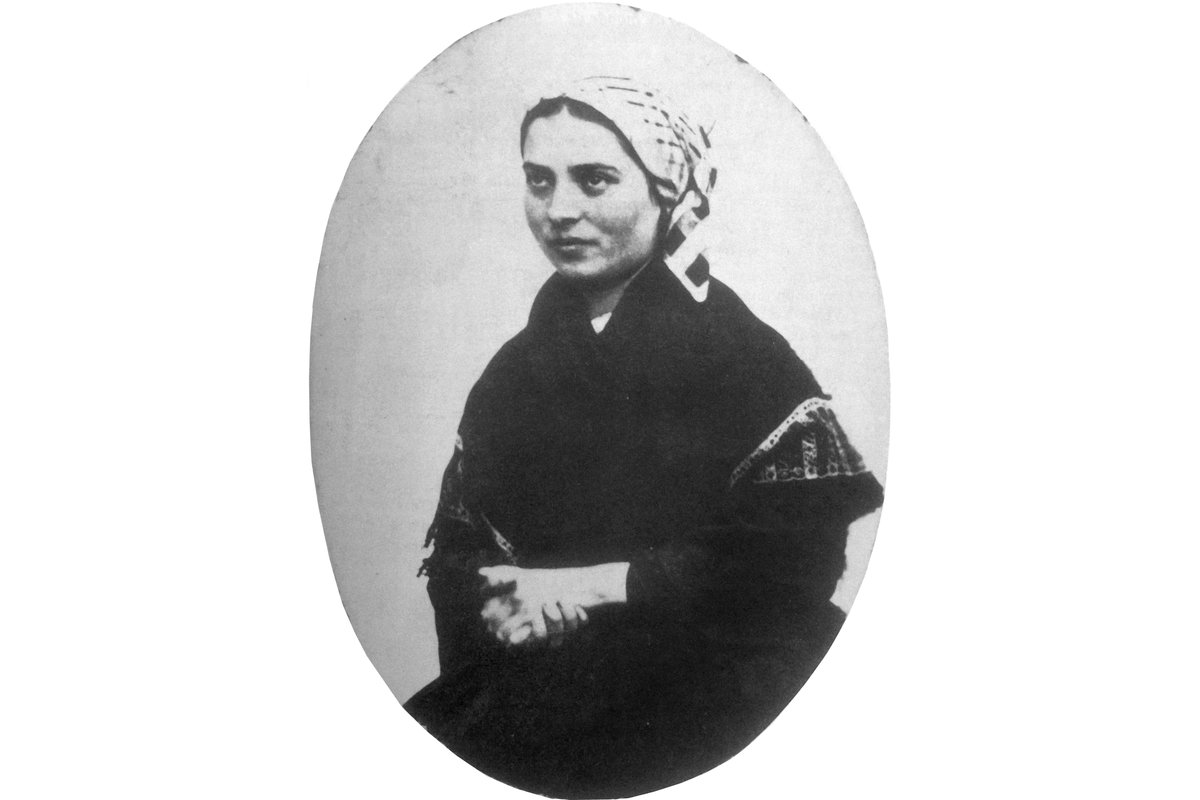
By February 1858, Bernadette Soubirous had already been back to the Massabielle grotto, a dank rock niche by the Gave river on the edge of Lourdes, more times than her family wanted. She'd been seeing something there since February 11 — a figure she described simply as "something white in the shape of a woman" — and the full story of those eighteen apparitions is told at length in this site's article on Saint Bernadette Soubirous. What matters for this article is a single, oddly practical detail from the ninth apparition, on February 25: Bernadette said she was told to go drink from a spring at the grotto and wash in it, even though, by every account from the crowd watching her that day, there was no spring there at all.
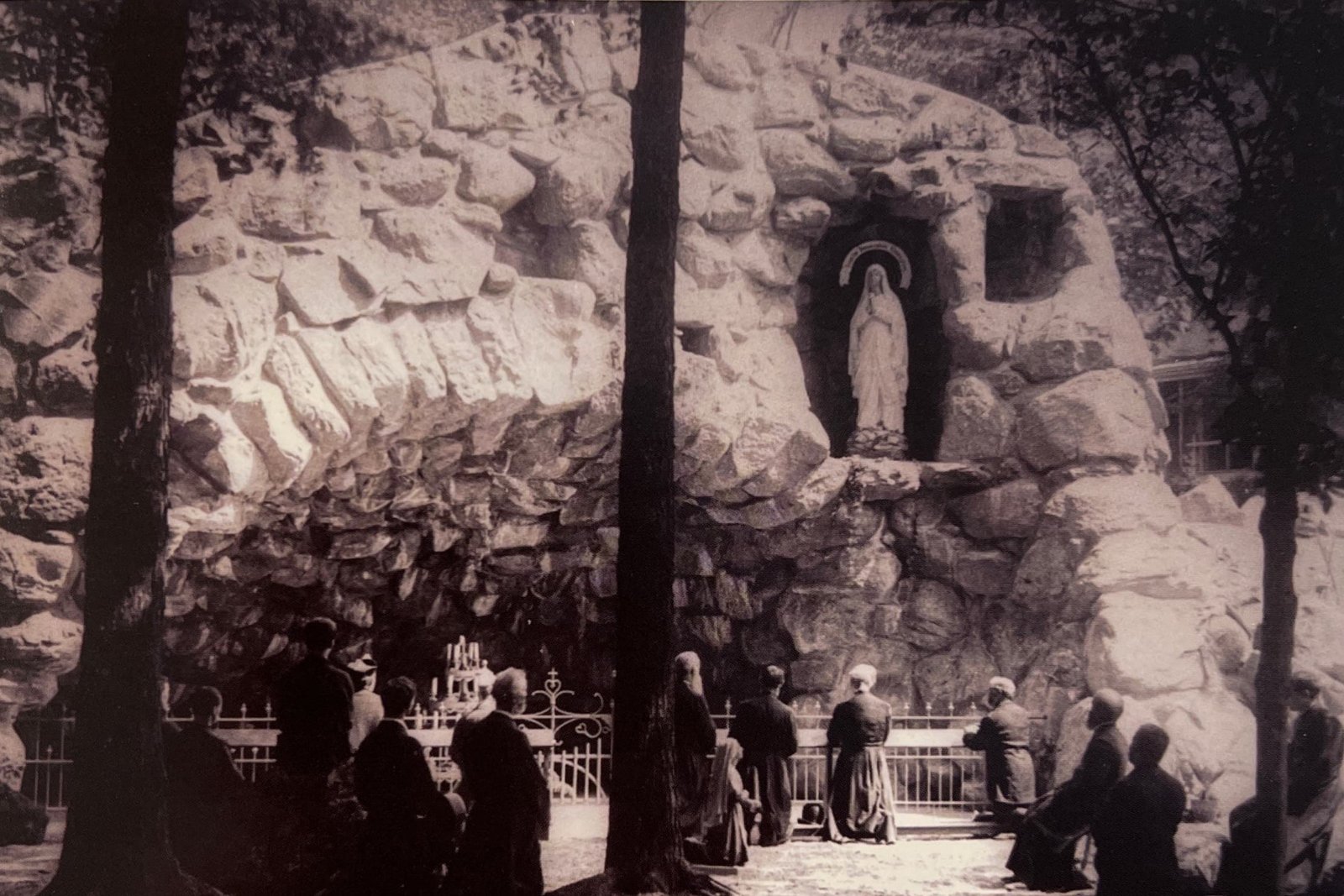
Grotto of Our Lady of Lourdes in 1896, unknown photographer, 1896. Public domain, via Wikimedia Commons.
She knelt anyway, scraped at the muddy ground with her bare hands, and found only a thin, muddy trickle at first — reportedly too foul even to drink without hesitation. By the next morning, witnesses reported, the trickle had become a small but genuine flow of clear water. That spring has run at the site, by the Sanctuary of Our Lady of Lourdes's own account, continuously since 1858, now channeled through taps along the grotto wall where pilgrims fill bottles by the thousands every day the shrine is open.
The Bureau that says no, over and over
What happened next at Lourdes is, in a strange way, the opposite of what skeptics often assume about claimed miracle sites: the Church built an entire standing institution whose job is largely to say no. The Bureau des Constatations Médicales — the Lourdes Medical Bureau, founded in 1883 — exists specifically to investigate claimed cures reported by pilgrims, and its process is neither quick nor forgiving. A claimant's prior medical records have to be produced and reviewed, an initial examination at the Bureau itself has to find no plausible natural explanation, and then years — often many years — of follow-up are required before a case is even forwarded for a bishop's formal declaration back in the person's home diocese.
The numbers tell the real story of how strict that filter is. According to the Sanctuary's own published figures, out of many thousands of healings reported by pilgrims since 1858, only 70 have been officially recognized by the Church as miraculous as of recent decades. That is not a marketing statistic — it's the opposite of one. The Bureau's physicians, who are not required to be Catholic and have included openly skeptical doctors over the institution's history, are tasked with ruling out every known medical explanation before a case can even proceed toward Rome's attention, and the vast majority of claims simply don't survive that scrutiny, whether because the illness might have resolved naturally, the diagnosis was uncertain to begin with, or the recovery, while real and welcome, doesn't meet the bar of being instantaneous, complete, and medically inexplicable by current knowledge.
What the water actually is — and isn't
Here the Church is unusually direct, and it's worth stating plainly rather than letting pious enthusiasm blur the point: Lourdes water has been chemically analyzed repeatedly since the nineteenth century, starting with tests commissioned by authorities who had every incentive to find something scandalous or fraudulent going on, and every analysis has returned the same basic verdict. It's ordinary spring water. No unusual mineral content, no chemical property that could account for a cure on its own terms. The Sanctuary's own materials state this without hedging — the water carries no medicinal power in itself.
What the Church says it does carry is sacramental significance. A sacramental, as the Catechism of the Catholic Church describes in its sections on the subject (1667-1670), is a blessed object or practice — holy water, blessed ashes, blessed medals — that prepares a person to receive grace through faith, distinct from the seven sacraments themselves, which Catholic teaching holds to confer grace directly. Lourdes water sits in that category: not a relic in the strict sense (a physical remain of a saint, or an object that touched one), since it's simply water drawn from the ground at a site associated with reported apparitions, but a sacramental whose use the Church encourages precisely because of what it can point a believer's faith toward, not because of anything intrinsic to the molecules themselves.
How pilgrims actually use it
At the Sanctuary itself, the ritual has a fairly consistent shape across generations of pilgrims. Many bathe in the Lourdes baths, a set of pools fed by the spring and staffed by volunteers who help with the brief, cold immersion, offered to any pilgrim regardless of their reason for coming. Others simply fill a bottle at the taps along the grotto's retaining wall to carry home — small plastic bottles shaped like the Virgin, sold at shops throughout the town, have become almost as iconic a Lourdes souvenir as any image of the grotto itself, for better or worse. The water gets sprinkled on the sick, kept in homes, given to family members, and used in the kind of quiet, repeated domestic devotion that doesn't make headlines but makes up the actual bulk of how the water is used worldwide.
Faith, not formula
The line the Church draws between proper devotion and superstition is worth stating clearly, since it's easy to blur in either direction. Using Lourdes water with faith in God's grace and in the intercession associated with Mary's apparition at the grotto — the Church's own framing for what a sacramental is supposed to do — sits comfortably inside traditional Catholic piety, no different in kind from lighting a candle or carrying a blessed medal. Treating the water as an automatic cure-dispenser, something that works mechanically regardless of faith, intention, or God's own will in a given situation, is the kind of magical thinking the Church has explicitly warned against for as long as sacramentals have existed. The spring Bernadette uncovered with her own hands in 1858 was never presented, by her or by the Church that later investigated her story so carefully, as a substitute for medicine or for God's freedom to answer prayer however he chooses. It was presented as a place to go pray — the water simply being what you carry home afterward.
Trivia
How did the spring at Lourdes first appear?
Does Lourdes water have any scientific healing property?
How many Lourdes healings has the Church officially recognized as miracles?
What exactly is a sacramental, and is Lourdes water a relic?
Is it superstitious to use Lourdes water?
Related Reading