Our Lady of Knock: The Silent Apparition in the Rain

An Ordinary Evening Interrupted
Knock in 1879 was an unremarkable farming village in County Mayo, in a part of Ireland still recovering from the trauma of the Great Famine decades earlier and facing renewed agricultural hardship. The late 1870s brought a fresh wave of failed potato harvests across the west of Ireland, reviving memories of the catastrophic famine of the 1840s and fueling real fear of another mass starvation; 1879 itself is remembered in Irish history as a year of severe agricultural distress that helped ignite the Land War, a period of tenant unrest against landlords across the country. It's against that backdrop of renewed hardship and anxiety that the apparition occurred, which is part of why so many later accounts read the vision as a source of consolation offered to a community bracing for disaster rather than an isolated, unconnected event. On the evening of August 21, Mary McLoughlin, the parish priest's housekeeper, was walking near the church with a friend when she noticed what looked like statues glowing against the south gable wall. She initially assumed the parish priest had installed new religious statues. He hadn't.
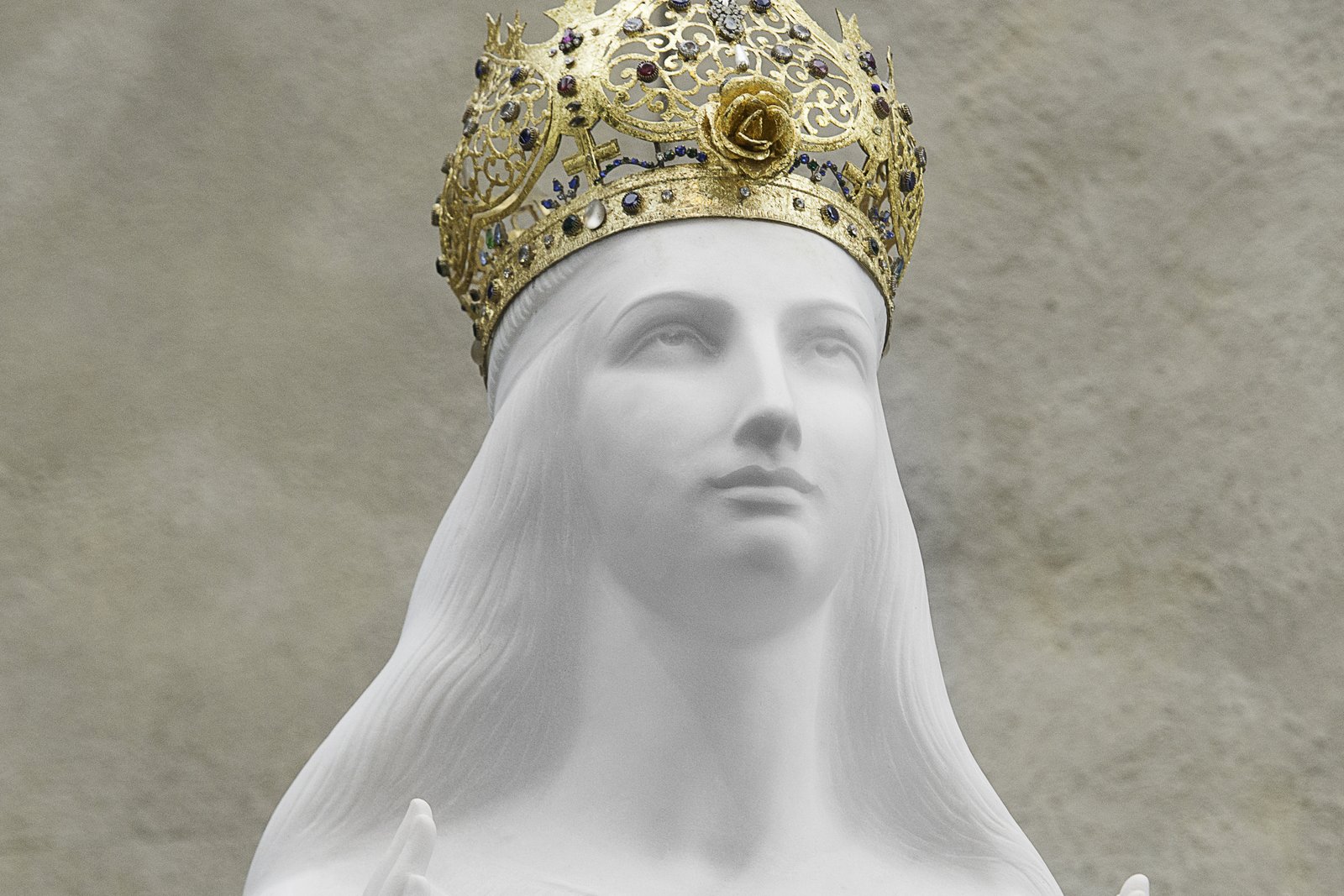
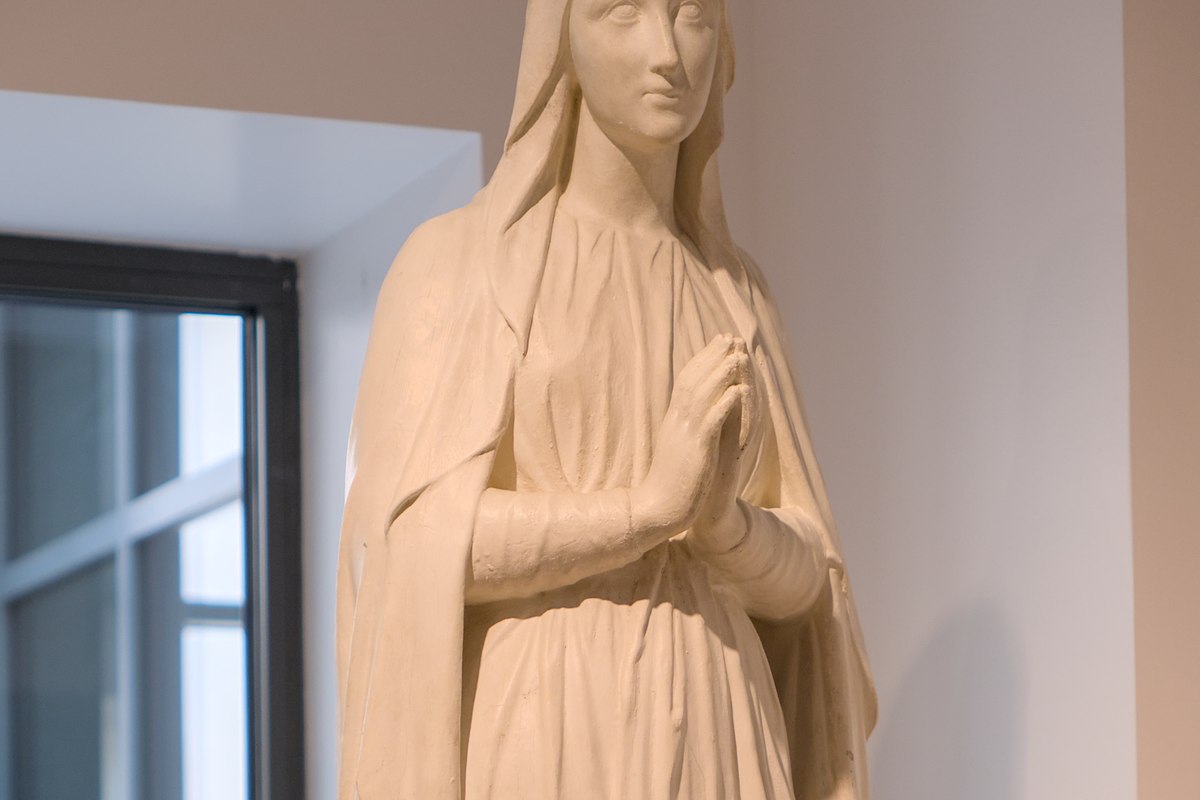
Photo by Michael McLaughlin Photography, Statue of Our Lady, Knock Shrine — CC BY-SA 4.0
Mary McLoughlin's first instinct — that the parish priest, Archdeacon Bartholomew Cavanagh, had simply had new statues installed — makes sense given the setting: the gable wall in question was the outer wall of the parish church itself, a plain stone surface with nothing unusual about it under ordinary daylight.
Word spread quickly, and soon fifteen people from the village and surrounding area — the youngest just five years old, the oldest seventy-four — had gathered to watch. The group included farmers, laborers, and children out on ordinary errands that evening, an unremarkable cross-section of a small rural parish rather than any group predisposed toward visions. What they described was not a moving vision that spoke or beckoned, as at Lourdes or Fatima, but a still, luminous tableau: the Virgin Mary at the center, wearing a large brilliant crown and white garments, her hands raised as if in prayer; Saint Joseph at her right, his head inclined toward her; Saint John the Evangelist at her left, dressed as a bishop and appearing to preach; and beside them an altar bearing a cross and a lamb, surrounded by adoring angels.
Two Hours of Silence in the Rain
Descriptions from the witnesses agree on remarkable detail for an event witnessed at some distance, in the rain, at dusk: Mary's crown was described as brilliant and adorned with what looked like a rose at its center, her hands were raised at shoulder height in what witnesses read as a gesture of prayer, and her eyes were said to be turned upward, away from the small crowd gathered below. None of the figures acknowledged the onlookers directly, adding to the sense that the witnesses were observing a scene rather than participating in a conversation the way visionaries at other apparition sites often described.
What distinguishes Knock most sharply from other well-known Marian apparitions is what didn't happen: no words were spoken, by Mary or by the witnesses. The group simply watched, and many knelt to recite the Rosary, for close to two hours, in pouring rain — the ground beneath them soaked while, witnesses insisted, the wall and the figures themselves remained curiously dry. There was no message to relay, no secret entrusted to a chosen visionary, no call to specific devotional practice. The apparition simply was, and its meaning has been read by the faithful largely through the symbolism of the scene itself: Mary in the company of Joseph and John, standing near the Lamb of God on an altar, an image many see as evoking the heavenly liturgy described in the Book of Revelation and the sacrifice of the Mass.
Two Church Inquiries, Decades Apart
The local archbishop ordered an investigation within weeks. A Commission of Enquiry took sworn testimony from the witnesses in October 1879 and found their accounts consistent and credible. That alone set Knock apart from the many uninvestigated or informally dismissed apparition claims of the era, when local clergy often had little formal process for responding to a reported vision beyond personal skepticism or personal enthusiasm.
Formal Church approval, when it eventually came, was notably restrained in tone. Rather than a sweeping declaration of supernatural certainty, the diocese's position has historically amounted to a judgment that the testimony of the witnesses was trustworthy and that nothing in the event contradicted Catholic faith or morals — the standard, cautious formula the Church uses for private revelation generally, which by definition the faithful are free to accept or not without it affecting the substance of Catholic belief.
The story took an unusual second turn more than half a century later. In 1936, with most of the original witnesses dead, a second commission located and interviewed the last survivor, Mary Byrne (by then Mary Byrne O'Connell), who as an eighteen-year-old had been among the group at the gable wall. Questioned in detail decades after the fact, she gave testimony consistent with her original account, a rare instance of a Marian apparition's core witness being cross-examined again so long after the event. It's worth noting that, as with many apparitions, Knock's continued approval has rested more on the consistency of testimony and the devotional fruit it has produced than on any dramatic new evidence — the Church's posture toward it, while positive, has historically been cautious rather than triumphant.
A Pope's Visit and a Modern Shrine
Knock remained a relatively modest local pilgrimage site for a century, but it gained international attention when Pope John Paul II traveled there on September 30, 1979, for the apparition's centenary. He addressed an enormous crowd, estimated around 450,000 people, prayed at the shrine, and presented it with a golden rose — a papal gift traditionally reserved for churches and shrines of special significance. The visit anchored Knock firmly among Ireland's major pilgrimage destinations and gave international Catholic attention to a vision whose entire content, unlike so many others, had been nothing more than a silent, prayerful scene witnessed by ordinary villagers standing in the rain.
Today Knock Shrine, formally the National Marian Shrine of Ireland, draws over a million visitors annually, including pilgrims seeking healing at its dedicated apparition chapel — a scale of devotion built, remarkably, around an apparition that never uttered a single word. The modern shrine complex includes a large basilica, built in the 1970s to accommodate the crowds John Paul II's visit helped draw, and Knock International Airport, built in the 1980s largely on the initiative of the local parish priest Monsignor James Horan specifically to bring pilgrims and, later, tourists directly into this stretch of rural County Mayo.
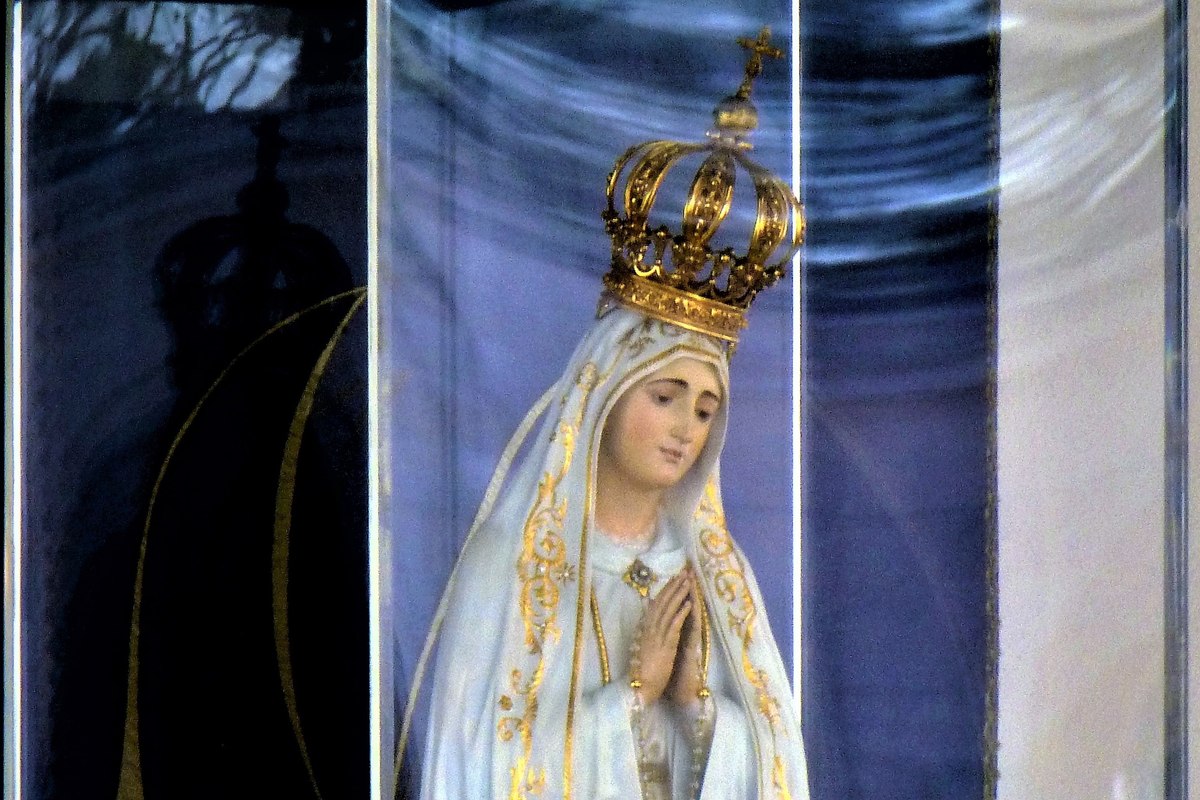
Knock's continued appeal owes something, too, to how ordinary the whole event remains at its core, especially set against the more dramatic apparitions elsewhere in Catholic tradition, such as the visionary encounters and prophetic messages associated with Our Lady of Fatima. There was no chosen visionary singled out for special revelations at Knock, no secret message withheld from the public, and no ongoing series of appearances stretching over months. Fifteen people saw the same still, silent scene once, together, and it was the sheer number of simultaneous witnesses — rather than any spoken content — that gave the event its enduring credibility within the Church's own cautious standards for evaluating private revelation.
Trivia
What happened at Knock in 1879?
Why is Knock called a 'silent' apparition?
Did the Catholic Church investigate the Knock apparition?
Who are the figures believed to appear at Knock?
Did a Pope visit Knock?
You May Also Like
Related Reading