Saint Olaf of Norway: The Viking King Who Became a Saint

A Viking who became a king
Olaf Haraldsson was born around 995 into the tumultuous world of Viking-age Scandinavia, a landscape of competing chieftains, raiding fleets, and shifting alliances rather than unified nations. Like many young Norwegian nobles of his era, he spent his early years raiding and fighting abroad — records place him in England, where he may have fought both for and against English forces during the Danish invasions, and later in France, where accounts describe him receiving Christian baptism, likely in Rouen, sometime around 1013 or 1014.
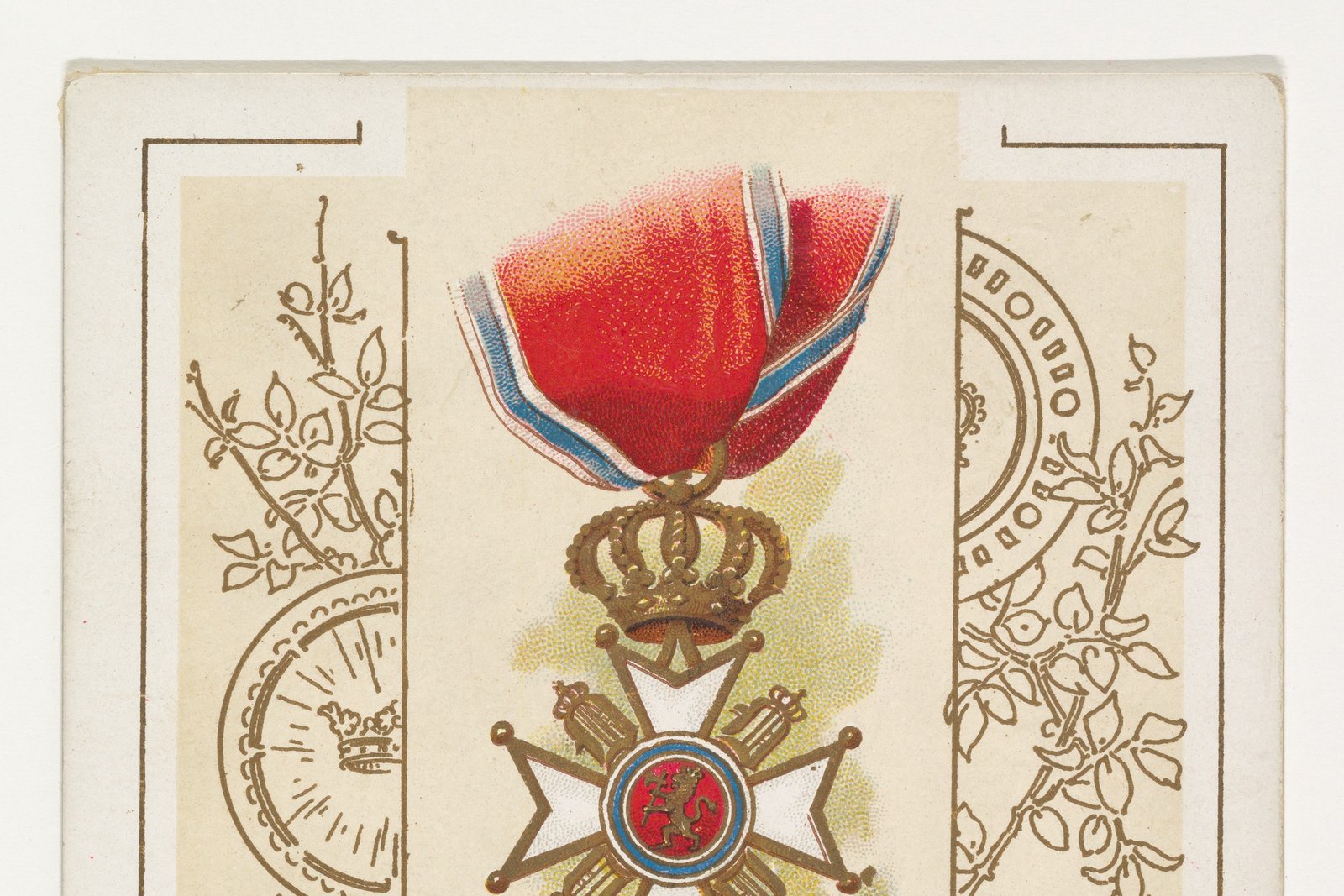
Allen & Ginter, Saint Olaf, Norway, World's Decorations series, 1890 — public domain, The Met
He returned to Norway in 1015 with a Viking's fighting experience and a convert's religious conviction, and within a short time had defeated rival claimants and united a fractured Norway under his rule for the first time in generations — no small feat in a country whose regional chieftains had long resisted centralized royal authority.
Christianizing Norway, by force and by law
Olaf's predecessors, including the earlier king Olaf Tryggvason, had already begun introducing Christianity to Norway, but the conversion remained partial and, in many regions, deeply resented, existing alongside persistent Norse pagan practice. Olaf II pushed the process further and more systematically than his predecessors, working with English and German clergy to establish church structures, promote Christian law codes, and, according to many contemporary and near-contemporary accounts, apply considerable coercive pressure against communities and chieftains who resisted conversion.
It is worth being honest about the mixed nature of this legacy: Olaf's Christianization campaign combined genuine religious conviction with a very medieval willingness to use force and political domination to achieve it, and his methods made him deeply unpopular with a significant portion of Norway's aristocracy, who resented both his religious imposition and his consolidation of royal power at their expense. That combination of resentments — religious and political — is what eventually cost him his throne.
Exile, return, and death at Stiklestad
By 1028, opposition to Olaf's rule, backed by King Cnut of Denmark and England, had grown strong enough to force him into exile in Kievan Rus. Two years later, in 1030, Olaf returned to Norway with a modest force, attempting to reclaim his kingdom. On July 29, 1030, near the village of Stiklestad, his army met a much larger coalition of Norwegian chieftains and nobles opposed to his return. The battle went badly for Olaf; he was killed in the fighting, struck down, according to tradition, by multiple wounds from opponents who included men he had once ruled.
By most conventional measures, Stiklestad was a straightforward military and political defeat — a king killed trying to retake a throne that had rejected him. What happened next, though, is what secured Olaf's place in history far beyond that battlefield loss.
From defeat to sainthood
Within roughly a year of his death, reports of miraculous healings associated with Olaf's burial site at Nidaros (modern Trondheim) began to spread. Bishop Grimkell, acting with notable speed even by the flexible canonization standards of the medieval Church, formally recognized Olaf as a saint in 1031. His remains were enshrined at what became Nidaros Cathedral, which grew into one of medieval Northern Europe's major pilgrimage destinations.
The irony is sharp: the same Norwegian nobility who had risen against Olaf's rule found, in the years after his death, that his cult of sainthood proved far more effective at completing the Christianization he had pursued by force than his living reign had been. Olaf dead became, in a real sense, more successful at converting Norway than Olaf alive — his memory absorbed into Norwegian Christian identity so completely that within a generation, the country's conversion was largely settled. He was given the title Rex Perpetuus Norvegiae, "Eternal King of Norway," reflecting the idea that the Norwegian crown belongs symbolically to Olaf in perpetuity, with subsequent monarchs reigning as his regents — a concept still referenced in Norwegian royal and national symbolism today. That role in spreading the Gospel across a still largely pagan land connects to Christ's own charge to his disciples: "Go, therefore, and make disciples of all nations, baptizing them in the name of the Father, and of the Son, and of the holy Spirit" (NABRE, Matthew 28:19).
An axe that became a national symbol
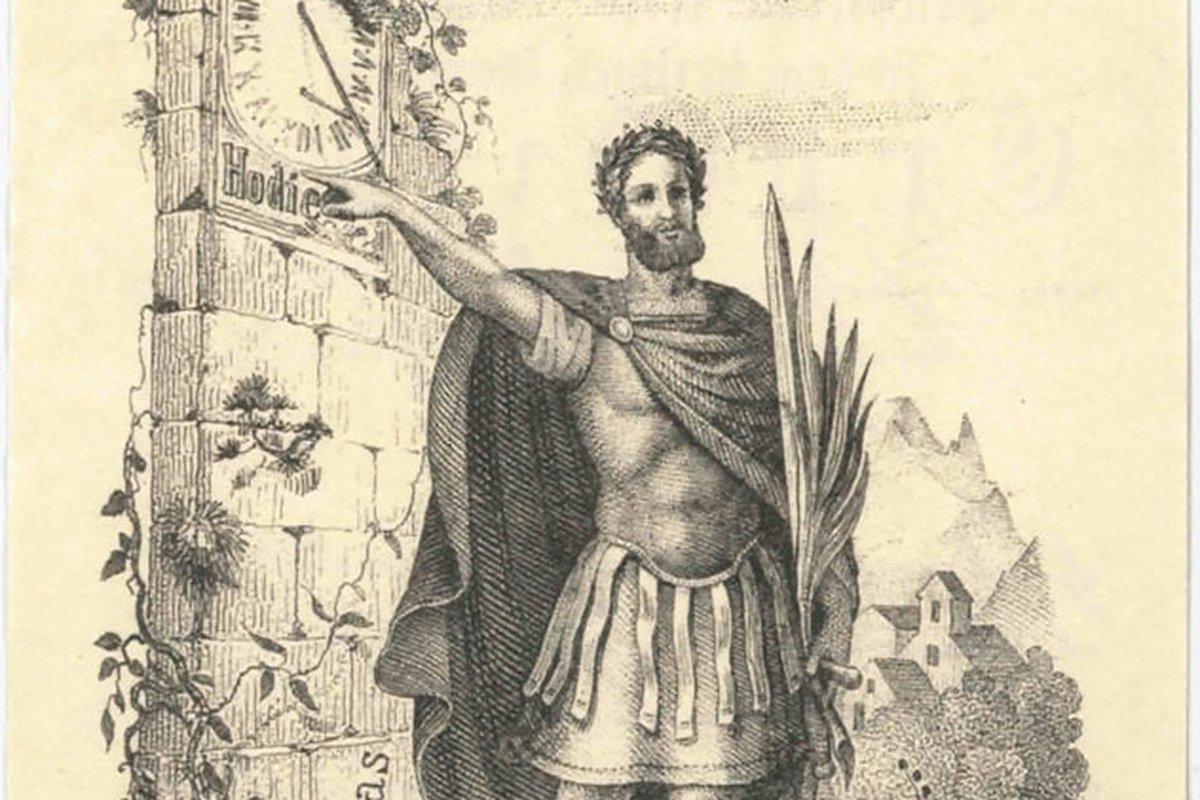
Olaf's traditional attribute in art — the axe he's shown carrying in the illustration above, often paired with an orb representing royal authority — comes from tradition surrounding the weapon believed to have struck him down at Stiklestad, transformed over the centuries from an instrument of his death into an emblem of the kingdom he'd built. That silver axe still appears today on Norway's coat of arms and on the flag of Norway's royal house, making Olaf one of relatively few saints whose personal attribute became, quite literally, a symbol of the modern state itself. Nidaros Cathedral, built over his tomb in Trondheim, remains the traditional site of Norwegian coronations and royal consecrations even now, carrying his memory directly into the ceremonial life of a constitutional monarchy many centuries removed from the Viking-age world he was born into.
A saint's day that is also a national day
Saint Olaf's feast day, July 29, is observed in Norway as Olsok, a commemoration that blends religious observance with national identity in a way relatively few saints' feasts do elsewhere. Nearly a thousand years after Stiklestad, Olaf remains Norway's patron saint — a former Viking raider whose most lasting victory came only after his death on the losing side of a battle.
Trivia
Who was Saint Olaf of Norway?
Why is Olaf called the 'Eternal King of Norway'?
What happened at the Battle of Stiklestad?
How did a king who died in battle come to be venerated as a saint?
What is Saint Olaf the patron saint of?
You May Also Like
Related Reading