Saint Gilbert of Sempringham

An unlikely founder in rural Lincolnshire
Gilbert was born around 1083 in Sempringham, Lincolnshire, the son of a Norman knight and an English mother — a mixed background not unusual in the decades following the Norman Conquest, when Norman and English families increasingly intermarried across the landed classes. Accounts describe him as physically unsuited to knightly training, which pushed him instead toward education and eventually the priesthood; he studied in France before returning to England and taking up a clerical position connected to his family's own lands at Sempringham, where his father held the local lordship.
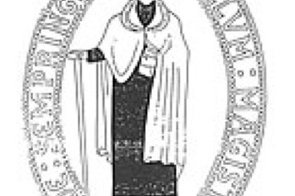
Seal of the Gilbertine priory of Sempringham, 13th century — public domain.
It was in this ordinary parish setting, not in any grand ecclesiastical institution, that Gilbert's actual founding work began. Around 1131, he organized a small group of local women who wished to live a religious life, walling them into an enclosure adjoining the parish church at Sempringham and establishing a rule for their community modeled partly on Cistercian and Augustinian practice — the modest beginning of what would grow, over the following decades, into an entirely new religious order.
Building a structure to support the community
Gilbert's community grew quickly enough that its practical needs soon outstripped what a small group of enclosed women could manage on their own, and his response to that problem became the distinctive, defining feature of the order he was building. Rather than simply adding more nuns, Gilbert incorporated additional groups into the structure: lay sisters to handle domestic labor, lay brothers to manage outdoor and agricultural work, and eventually a community of Augustinian canons to provide the priests and sacramental ministry the nuns' enclosed life required. All of these groups lived and worked within the same institutional structure, physically often within the same double monastery complex, under Gilbert's own overall governance and the rule he had developed and continued to refine.
This combined structure had no direct continental model — it was Gilbert's own practical solution to a specific problem, sustaining a contemplative women's community with the clerical and manual labor support it needed, and it proved durable and successful enough that it expanded well beyond Sempringham itself. By the time of Gilbert's death, the order he had founded numbered around twenty-five houses spread across England, with well over a thousand members across all its different categories of nuns, canons, and lay brothers and sisters combined — a genuinely substantial religious institution built from nothing over the course of one long life.
Trouble from within, late in life
Gilbert's advanced age didn't spare him from real institutional conflict. In the 1160s, when he was already in his eighties, a faction of discontented lay brothers within the order brought grievances against his leadership, alleging harsh treatment and unfair governance; the dispute grew serious enough to involve appeals to King Henry II and, remarkably, a connection to the exiled Archbishop Thomas Becket, whose own conflict with Henry II was reaching its climax during exactly this period. Gilbert successfully defended the order's structure and his own governance of it, and the dispute was ultimately resolved without lasting damage to the Gilbertines, though the episode reveals that the order's demanding, closely regulated structure created genuine internal strain even under its own founder's direct leadership — a reminder that Gilbert's institutional achievement wasn't built without real friction along the way.
An extraordinary lifespan
What makes Gilbert's biography genuinely unusual, beyond the order itself, is simply how long he lived: by most accounts, he reached roughly 106 years of age, an extraordinary lifespan by any medieval standard, and one that meant he personally oversaw the Gilbertine order's growth from a single walled-off group of women beside a parish church into a network of two dozen houses spanning England, across a period of more than five decades. He continued in an active governing role for most of that span, only formally stepping back from direct administration in his final years as advancing age genuinely limited what he could manage.
A rule shaped by decades of practical adjustment
Unlike founders who drafted a complete governing rule at the outset and simply implemented it, Gilbert developed the Gilbertine constitutions gradually, over decades, adjusting the order's structure repeatedly as practical experience revealed what actually worked for a community combining such different groups of members under one roof. He drew consciously on existing Cistercian and Augustinian practice for particular elements while adapting them to the specific, unprecedented problem of governing nuns, canons, and lay brothers and sisters together, a process of ongoing revision that reflects real administrative humility as much as founding vision — Gilbert kept refining his own design well into old age rather than treating his initial arrangement as fixed and finished.
A uniquely English religious order
Gilbert died in 1189 and was canonized remarkably quickly, in 1202, just thirteen years later — a fast process by medieval standards, reflecting both his personal reputation for holiness and the substantial institutional weight the order he had built could bring to bear on his cause. His feast is kept on February 4. The Gilbertine order he founded remained in existence for more than three centuries after his death, until it was suppressed along with England's other monastic institutions during the Reformation under Henry VIII in the 1530s — bringing to an end the only religious order medieval England had ever produced entirely on its own, a genuinely singular achievement for a knight's son who had once been considered physically unsuited for the career his own family expected of him.
Trivia
Who was Saint Gilbert of Sempringham?
What made the Gilbertine order structurally unusual?
What happened when Gilbert was taken to court in his old age?
How long did Gilbert live, and how large did his order grow?
When is Saint Gilbert's feast day?
You May Also Like

Related Reading