Blessed Stanley Rother

An Oklahoma farm boy who struggled to become a priest
Stanley Francis Rother was born on March 27, 1935, in Okarche, Oklahoma, the oldest of four children in a German-American farming family. He grew up doing the ordinary work of a farm — plowing, driving tractors, helping with livestock — and that practical, mechanically capable upbringing would later matter more than anyone expected, in a mission parish thousands of miles from home with no resident handyman but him.
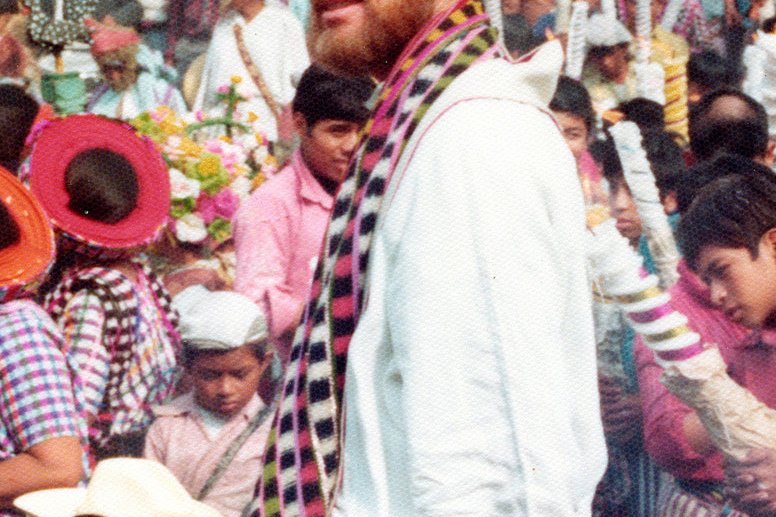
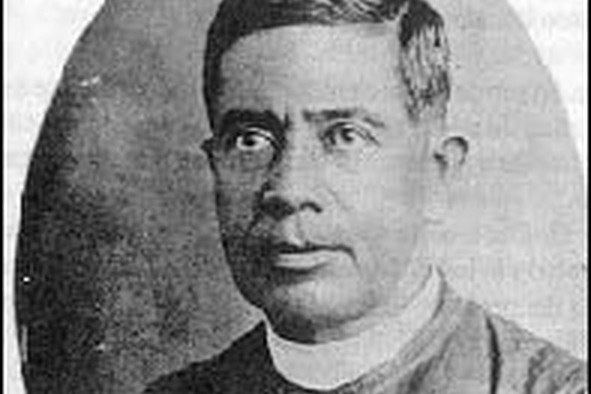
Photograph of Blessed Stanley Rother, 1980 — Julitomenchu, via Wikimedia Commons, CC BY-SA 3.0.
His path to the priesthood was not smooth. After high school he entered seminary studies for the Diocese of Oklahoma City-Tulsa, and by most accounts the trouble was Latin — a subject seminarians of that era needed to master for liturgy and theology coursework, and one Rother simply never got comfortable with. Several biographical accounts describe him being asked to withdraw from his first seminary after years of academic struggle concentrated heavily in that one subject. Rather than end his vocation there, his bishop allowed him to transfer to Mount St. Mary's Seminary in Emmitsburg, Maryland, where he made enough progress to be ordained a priest on May 25, 1963.
A mission with no easy escape routes
In 1968, five years into his priesthood, the Diocese of Oklahoma City-Tulsa sent Rother to its mission parish in Santiago Atitlán, a town on the shore of Lake Atitlán in the Guatemalan highlands, home to a Tz'utujil Maya community. It was the kind of posting that asked a lot of a priest raised on the Oklahoma plains: a different climate, a different culture, and a language — Tz'utujil — that had never before been reduced to a written catechism or liturgy in any serious, sustained way.
Rother, the same man who had once nearly lost his vocation over Latin, turned out to have a real gift for Tz'utujil. He learned to speak it fluently, helped translate the New Testament into the language for the first time, and worked alongside the parish's lay catechists and a visiting medical team to build out services — a farm co-op, a small hospital, a radio station for religious instruction — that went well beyond what a typical mission priest's job description covered. His farm-boy practicality showed up constantly: parishioners and fellow missionaries later recalled him fixing engines, building structures, and generally keeping the mission's physical operation running with his own hands.
Civil war closes in
By the late 1970s, Guatemala's long civil war had turned its worst violence on exactly the kind of community Rother served. The military government and allied paramilitary death squads treated catechists, indigenous community leaders, and rural organizers as suspected sympathizers of leftist insurgency, and clergy who worked closely with the poor — as Rother did — increasingly came under suspicion themselves. Priests and catechists in the highlands were killed, disappeared, or driven into hiding through the early 1980s.
In January 1981, Rother learned his name had appeared on a local death list. On the advice of his bishop and fellow missionaries, he returned to Oklahoma for a period of safety, and by his own account he found the separation from his parish agonizing. In a letter sent home to Oklahoma that December — the specific wording is reported slightly differently across sources, so it's best treated as a paraphrase rather than a verbatim quotation — he explained his decision to go back to Guatemala in essence by saying that a shepherd cannot run at the first sign of danger and leave the flock. Whatever the precise phrasing, the sentiment is well attested: he returned to Santiago Atitlán that spring, fully aware of the risk.
The killing
On July 28, 1981, three masked men broke into the rectory in Santiago Atitlán at night. Rother was shot and killed in the building's bathroom, where he had reportedly tried to take shelter. He was 46 years old. No one was ever prosecuted for the killing, consistent with the broader pattern of impunity surrounding political violence during Guatemala's decades-long civil war.
At the request of the Tz'utujil community he had served for thirteen years, his heart and blood were kept in Santiago Atitlán, where they remain venerated in a side chapel of the parish church, while his body was returned to Oklahoma and buried at Holy Trinity Catholic Church in his hometown of Okarche — a division of his remains between the two communities that loved him, each keeping a part of him close.
Martyr and Blessed
Rother's cause for canonization opened in 2007. In December 2016, Pope Francis formally recognized that he had been killed in hatred of the faith — the specific finding the Church requires to declare a martyr without needing a verified miracle attributed to his intercession. He was beatified on September 23, 2017, at a Mass in Oklahoma City's Cox Convention Center celebrated on behalf of Pope Francis, with thousands more in attendance than the venue's roughly 14,000-seat capacity could hold and still more turned away at the doors. The beatification made him the first person born in the United States to be formally recognized as a martyr and raised to the rank of Blessed, and only the second person ever beatified on American soil.
A legacy carried on two continents
Rother's story has kept drawing attention well past his beatification — a shrine in his honor was later built in Oklahoma City, and his life has been the subject of documentaries and popular biographies examining how an unremarkable, academically struggling farm kid from the Plains ended up giving his life for a Maya community half a world from where he was raised. His feast is kept on July 28, the anniversary of his death.
His story sits alongside a broader modern history of clergy who stayed with their people through political violence rather than flee it — readers may also want to read about Saint Oscar Romero, the Salvadoran archbishop assassinated the year before Rother for similar reasons, or Blessed Miguel Pro, a priest executed decades earlier for continuing his ministry under a hostile government.
Trivia
Who was Blessed Stanley Rother?
Why is Stanley Rother historically significant among American Catholics?
Did Stanley Rother almost fail out of seminary?
Why was Stanley Rother killed?
What happened to Stanley Rother's body after his death?
Related Reading