Saint James the Lesser

Two apostles sharing one name
Among the twelve, two men are named James: James, son of Zebedee, whose prominence and eventual martyrdom under Herod Agrippa earned him the title "the Greater," and James, son of Alphaeus, distinguished from him simply as "the Lesser." The distinction is one of relative age or stature, not significance — a practical label solving an obvious naming problem among a small, closely tracked group of followers, rather than a judgment on his standing among them.
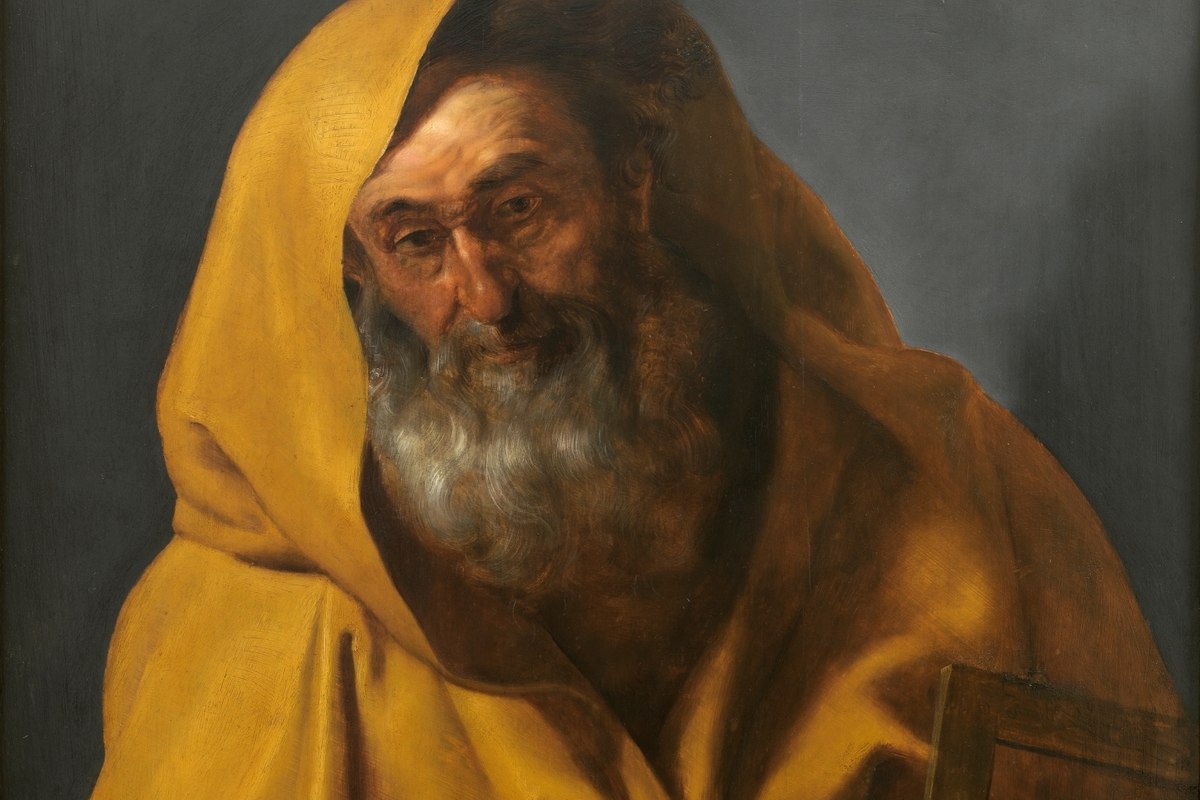
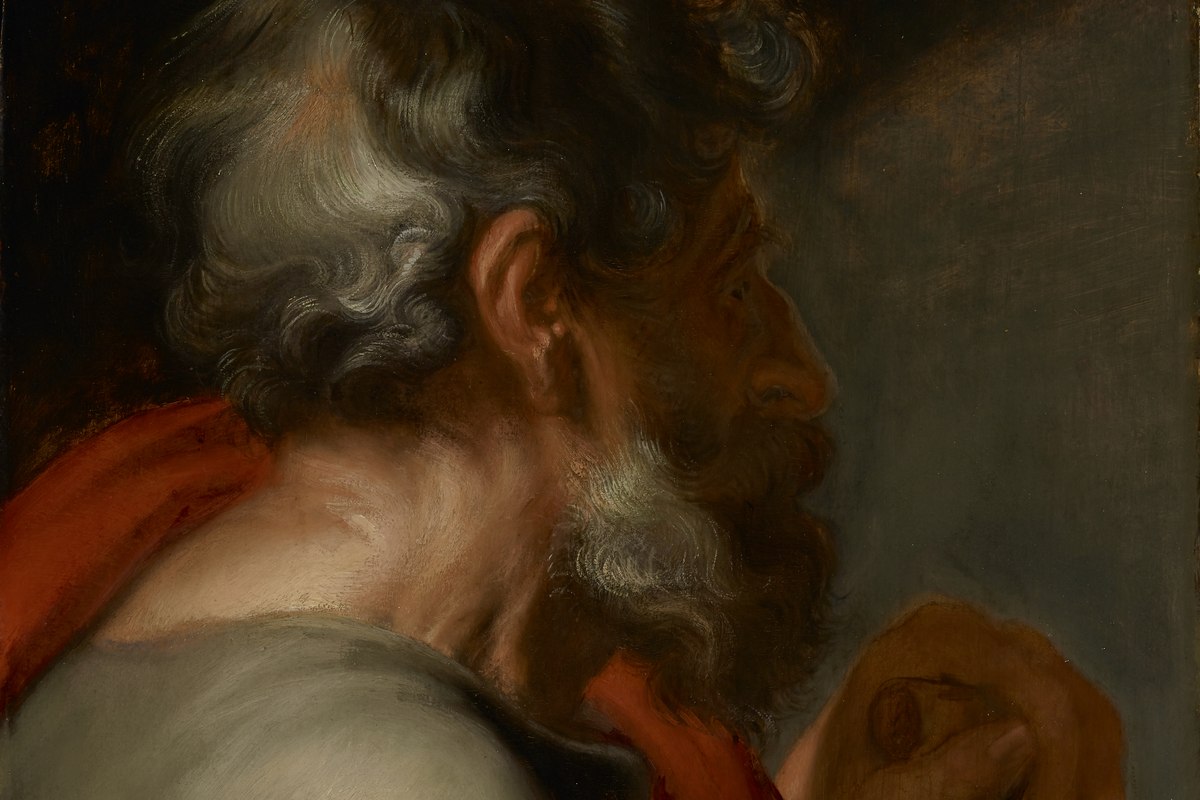
Peter Paul Rubens, "Saint James the Less," c. 1612-1613 — public domain.
A father who may connect him to another apostle
What little background exists comes through his father, Alphaeus. Since the tax collector Matthew is also identified in the Gospels as a son of Alphaeus, some readers have proposed that James the Lesser and Matthew may have been brothers. The connection remains genuinely uncertain — biblical scholars are divided on whether the two Alphaeus references point to the same man — but it's one of the few threads available for piecing together who James might have been connected to beyond the twelve themselves.
Identified through his mother, not his own words
Beyond his name and paternity, James the Lesser appears in the Gospels almost entirely through his mother rather than his own actions. Mark's account of the crucifixion and resurrection refers to "Mary the mother of James the younger" and later simply "Mary the mother of James" among the women present — a recurring identification that, however useful for distinguishing the various Marys mentioned in the Gospels, leaves James himself without a single individual scene, miracle, or saying recorded in his own right anywhere in the New Testament.
A death remembered, if uncertainly
Tradition offers slightly more about his end than about his life. An early account attributed to Hippolytus holds that James was stoned to death while preaching in Jerusalem and buried nearby, beside the Temple —a martyrdom rooted in the same city where he had likely spent much of his ministry. A separate legend placing his death in Persia exists as well, but is widely regarded by historians as unreliable, leaving the Jerusalem stoning as the more credible, if still sparse, account of how one of the least documented apostles met his end.
A third James, often confused with this one
Complicating James the Lesser's already thin record is a persistent question of identity: Scripture and early tradition also mention "James the brother of the Lord," the leader of the Jerusalem church described in Acts and Galatians, traditionally credited as the author of the Epistle of James. Since the early centuries, some Western tradition — including Saint Jerome — identified this James of Jerusalem with James, son of Alphaeus, treating them as the same man and using "brother" in the broader sense of "kinsman" common in the era. Eastern Christian tradition, by contrast, has generally kept the two figures distinct. Records show the ambiguity was never fully resolved even by the early Church Fathers, and it remains one of the genuine open questions in New Testament scholarship — a case where honesty requires admitting a tradition rather than asserting a fact.
An attribute borrowed from his own martyrdom
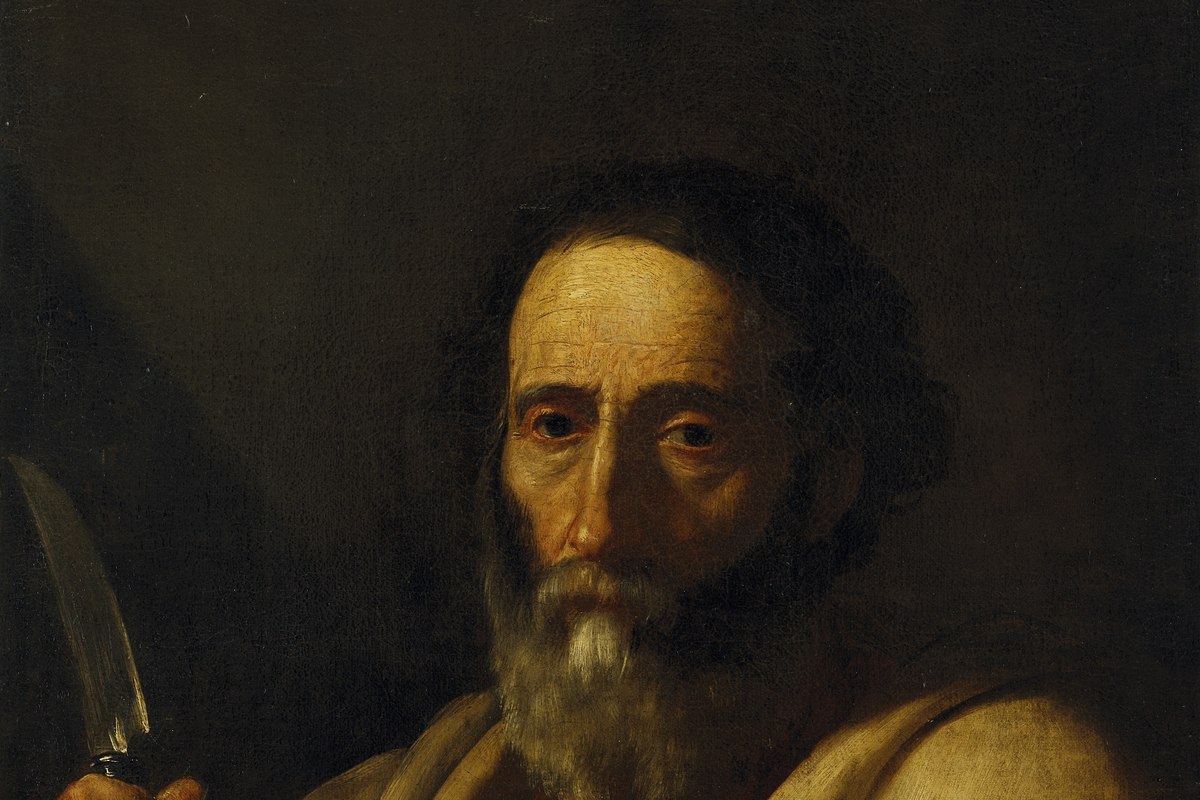
James the Lesser's iconography draws directly on the fuller, gorier strand of his legend rather than the more sober Hippolytus account: alongside the stones of his stoning, artists frequently give him a fuller's club or bat, tied to a later, more embellished tradition (recorded by the historian Josephus's near-contemporary Hegesippus) that after surviving the stoning he was finished off with a blow from a club used by launderers to beat cloth clean. Rubens's portrait used as this article's hero image is comparatively restrained by comparison, showing James simply holding a staff-like object rather than staging the violence of his death directly — a reminder that, as with several of the lesser-documented apostles, the surviving portraits often say more about later artistic convention than about anything historically verifiable.
A feast shared, then separated
For centuries, the Western Church kept James the Lesser's feast paired with that of the apostle Philip on May 1, tied to the joint dedication of a Roman basilica housing relics attributed to both men. The 1969 reform of the General Roman Calendar moved their shared feast to May 3 specifically to avoid clashing with the relatively new civil holiday of May Day, while leaving the pairing with Philip intact — a small illustration of how even long-fixed points in the liturgical calendar have shifted for reasons having nothing to do with theology. Because his own record is so slight, James the Lesser's cult has always leaned on companions — Philip in the West, Matthew and Jude through disputed or traditional kinship — for the visibility his own Gospel appearances never provided on their own; readers curious about those better- documented companions can find them in Saint Matthew the Apostle and Saint Bartholomew the Apostle.
Trivia
Why is he called 'James the Lesser'?
Who was James the Lesser's father?
How much do the Gospels actually say about him individually?
How did James the Lesser die, according to tradition?
Related Reading