Saint Stephen, the First Martyr

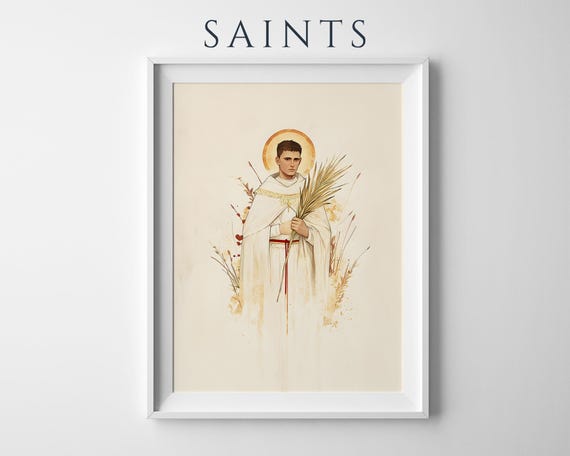
Appointed to serve tables, not to preach
Stephen enters the story of Acts in an almost administrative role: one of seven men chosen as deacons specifically to handle the practical work of distributing food and aid to the Hellenist widows of the Jerusalem church, freeing the apostles to focus on preaching. It's a support position, not a public one — yet Stephen quickly becomes known as something more than a capable administrator, recognized for his particular gifts as an evangelist among the Greek-speaking Jewish communities of the city.
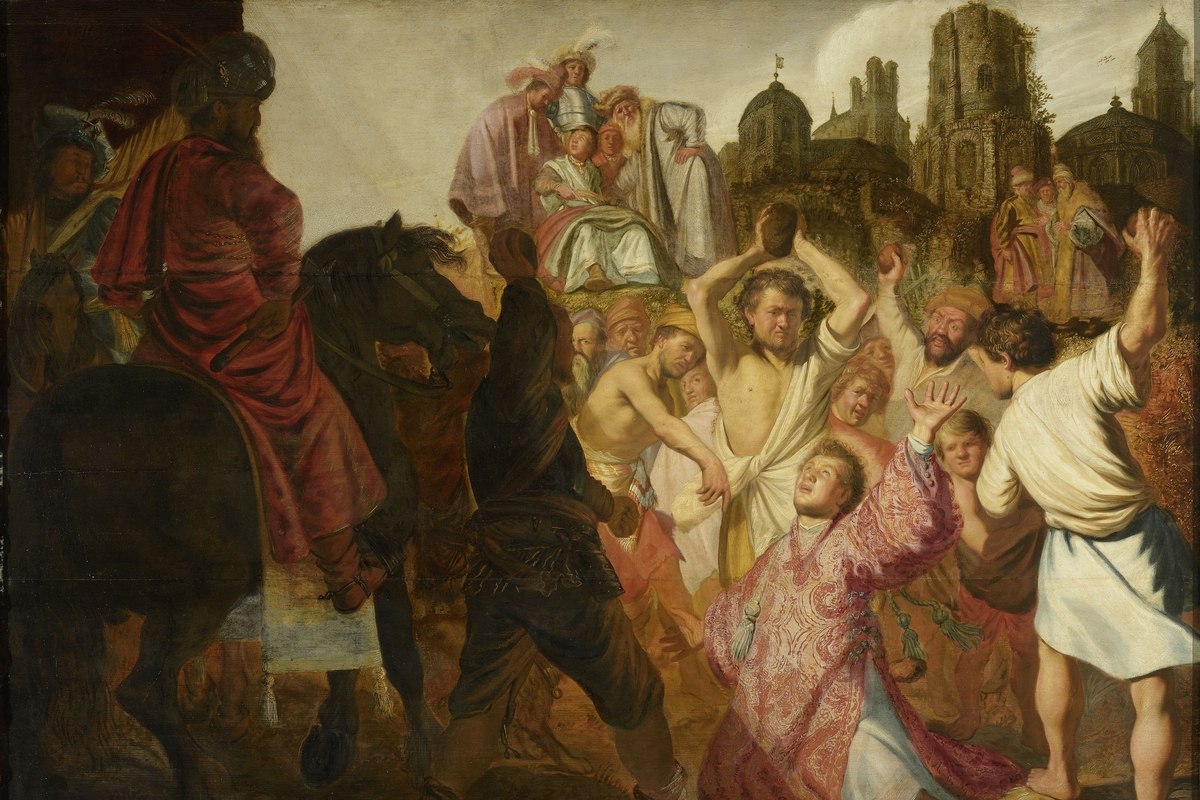
Rembrandt, "The Stoning of Saint Stephen," 1625 — public domain.
The appointment of the seven came about because of a specific, practical grievance: the Hellenist widows — Greek-speaking Jewish Christians, many originally from outside Judea — were being overlooked in the daily distribution of food compared to the Aramaic- speaking, native Jerusalem widows. Rather than let the dispute fester, the apostles asked the wider community to select seven men "Brothers, select from among you seven reputable men, filled with the Spirit and wisdom, whom we shall appoint to this task," (Acts 6:3, RSV-CE) to take over the task, and Stephen is named first among them, described separately as "a man filled with faith and the holy Spirit" (Acts 6:5, NABRE) — a detail that already marks him out, even before his trial, as someone whose role would end up exceeding the practical job he'd been given.
A defense that became an accusation
That visibility eventually brings him before the Sanhedrin, charged with speaking against the Temple and the Jewish law. Given the chance to defend himself, Stephen instead delivers a sweeping account of salvation history — from Abraham through Moses to the prophets — that ends by turning the accusation back on his judges, charging them with rejecting the very message the prophets had pointed toward. It is, by any measure, a defense that makes his situation considerably worse rather than better.
Stephen's speech, recorded at length in Acts chapter 7, is the longest single speech in the entire Book of Acts, and it functions less as a legal defense in the ordinary sense than as a theological argument in its own right. He walks through the story of Abraham leaving his homeland, Joseph sold into slavery by his own brothers, and Moses leading the Exodus, before turning to what he presents as a recurring pattern: Israel's ancestors repeatedly rejecting the very leaders and prophets God had sent them. The climax of the speech is blunt: "You stiff-necked people, uncircumcised in heart and ears, you always oppose the holy Spirit; you are just like your ancestors." (Acts 7:51, RSV-CE) — a direct accusation, delivered to the same council that held the power of life and death over him, that named his own judges as the latest link in a long chain of resistance to God.
Forgiveness spoken while being killed
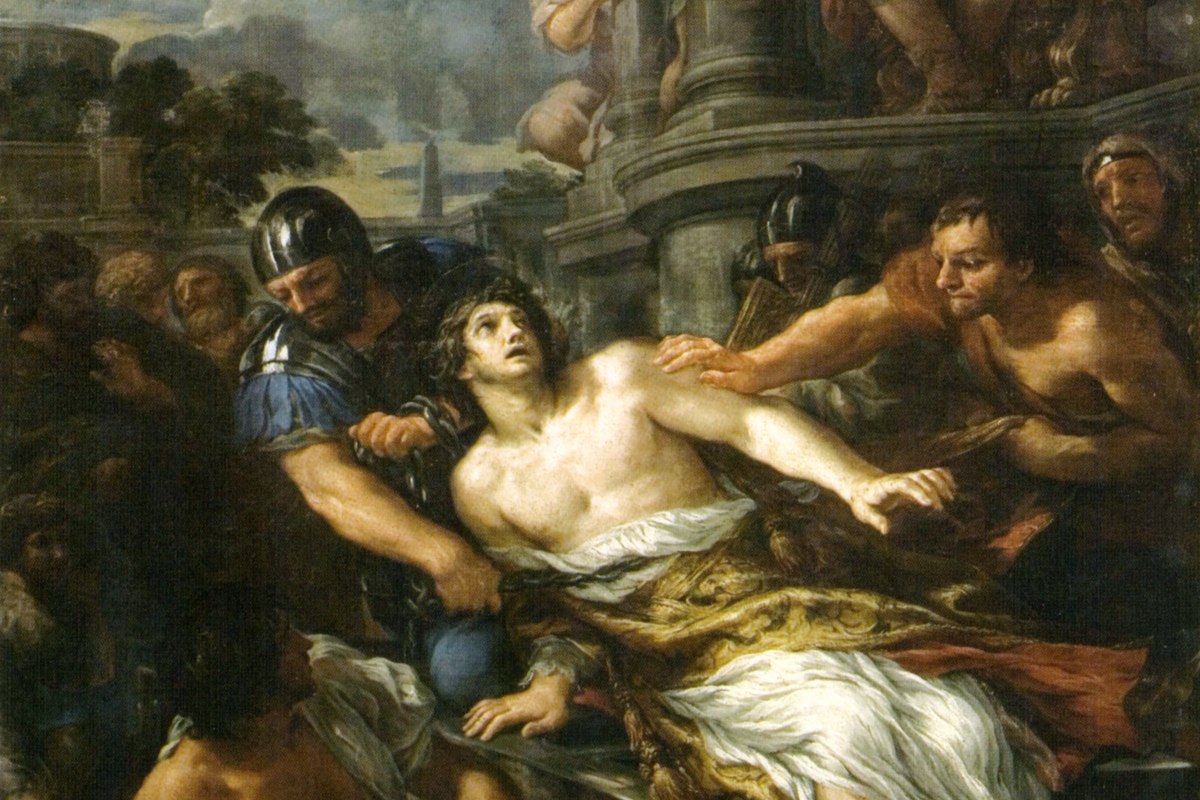
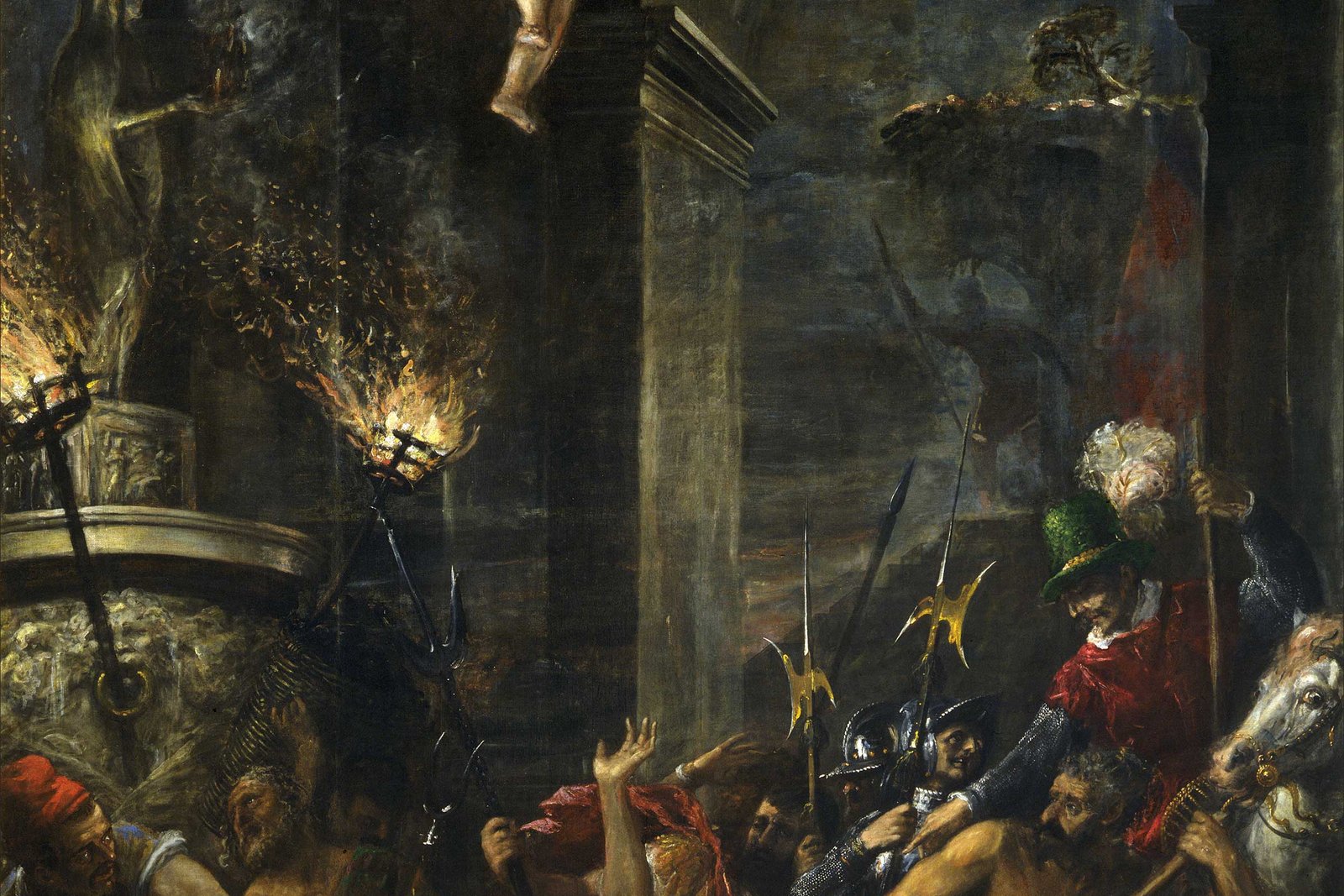
Convicted and dragged outside the city, Stephen is stoned to death — and his final recorded words are not directed at his accusers but past them: "Lord Jesus, receive my spirit," and then, "Lord, do not hold this sin against them" (Acts 7:59-60, RSV-CE). The echo of Jesus's own words on the cross is unmistakable and almost certainly deliberate on Luke's part as the author of Acts — a martyr's death shaped, even in its final seconds, by the pattern of the one he died for.
Just before the stoning begins, Acts records one more striking detail: Stephen, "But he, filled with the holy Spirit, looked up intently to heaven and saw the glory of God and Jesus standing at the right hand of God," (Acts 7:55, RSV-CE) — and when he announces this vision aloud to the council, it's this claim, more than anything else in his speech, that seems to provoke the crowd's final, furious reaction. Stoning under Jewish law of the period typically required the condemned to be taken outside the city, and Acts notes that the witnesses testifying against Stephen laid their cloaks at the feet of a young man watching — a small logistical detail that turns out to matter enormously for what follows.
The witness who would later be transformed
Acts includes one more detail that gives Stephen's death a second life in the story that follows: present at the execution, approving of it, is a young man named Saul of Tarsus — the same Saul who would later become Paul the Apostle, one of Christianity's most influential missionaries. Stephen never lives to see that transformation. But his death, and his prayer for the very crowd killing him, stands as one of the earliest threads connecting the martyrdom of an overlooked deacon to the conversion of the man who watched him die.
The persecution that scattered — and spread — the Church
Stephen's death didn't end the violence against the Jerusalem church; if anything, Acts describes it as the trigger for a much wider persecution that broke out immediately afterward, forcing believers to flee Jerusalem for the surrounding regions of Judea and Samaria. Luke frames this scattering with evident irony: the same violence meant to crush the new movement instead pushed its members out into new territory, where they continued preaching — an early, concrete example of the pattern that would recur throughout Christian history, in which persecution often spreads a faith rather than extinguishing it. Traditionally regarded as the Church's first martyr, Stephen's December 26 feast day, falling immediately after Christmas, has long carried a particular resonance in the liturgical calendar: the day after celebrating Christ's birth, the Church turns immediately to commemorate the first person to die specifically for proclaiming faith in him.
Trivia
What was Stephen's original role in the early Church?
Why was Stephen put on trial?
What did Stephen say as he was being stoned?
Who was present at Stephen's execution?
What is Saint Stephen the patron saint of, and when is his feast day?
Related Reading