Saint Pancras, Martyr

A name older than the details around it
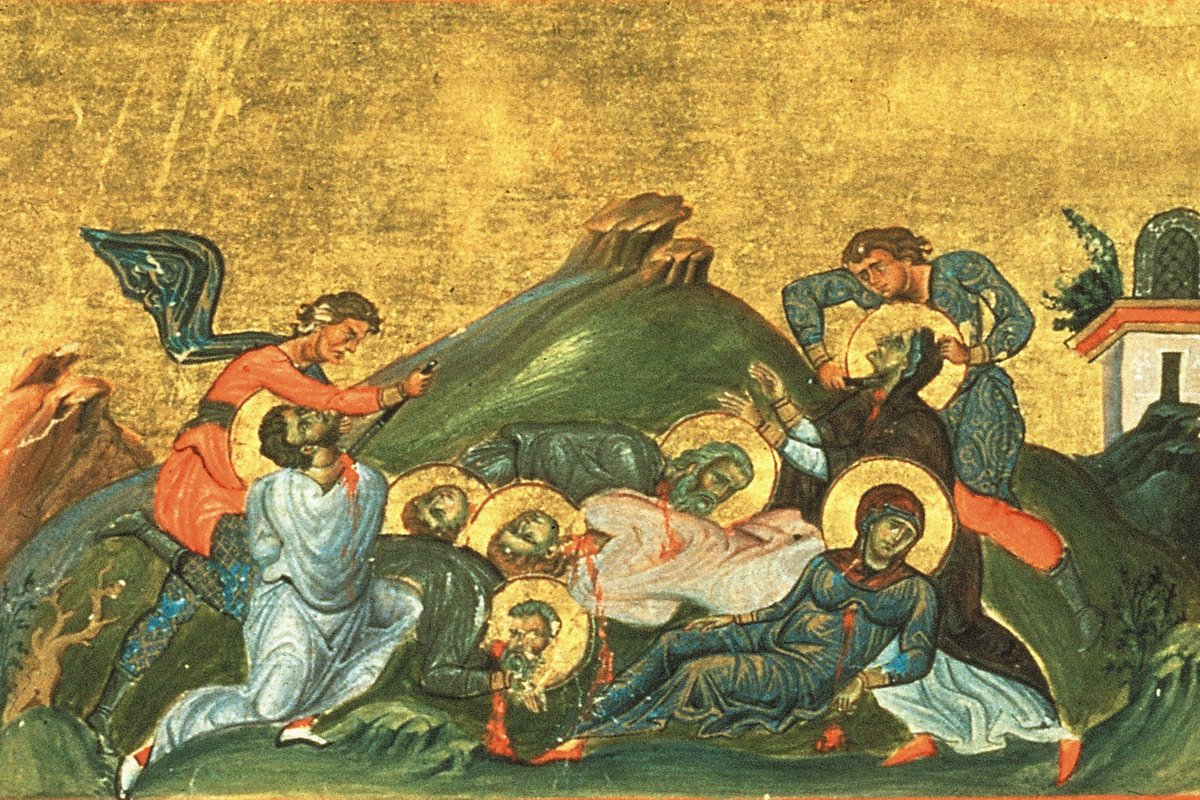
Very little about Pancras survives from sources close to his own lifetime, and that gap is worth naming honestly before saying anything else about him. What the later tradition holds — compiled centuries after his death, drawing on oral memory, local veneration, and the conventions of early Christian hagiography — is that he was born in the Roman province of Phrygia, in what is now central Turkey, and orphaned young. He was brought to Rome by an uncle, Dionysius, who was himself already a Christian, and it was there, as a teenager, that Pancras was swept up in one of the periodic waves of persecution that struck the Roman Church before Christianity's legal status changed in the early fourth century.
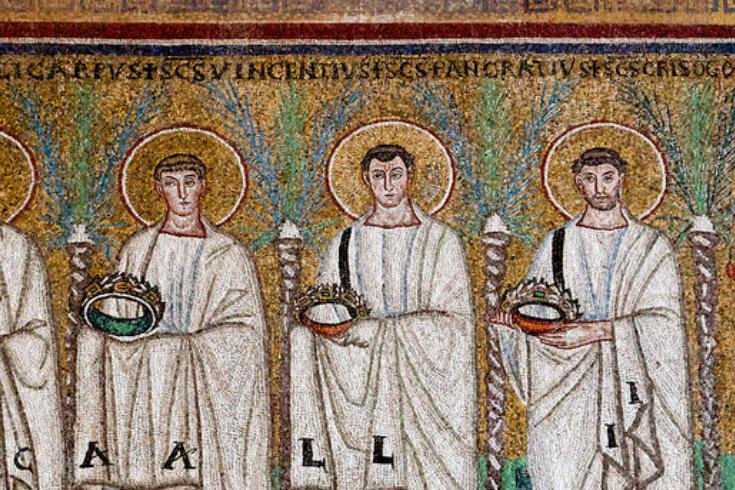
Mosaic of Saints Vincent, Pancras, and Chrysogonus, Basilica of Sant'Apollinare Nuovo, Ravenna, 6th century — public domain
The persecution most often connected to his death is the one launched under Emperor Diocletian beginning in 303, among the harshest and most systematic campaigns against Christians in the empire's history, involving the destruction of churches, confiscation of scriptures, and demands that Christians perform sacrifices to the Roman gods on pain of death. Pancras, tradition says, was arrested, brought before the emperor or his representative, and given the standard offer: sacrifice, and live. He refused, and was beheaded along the Via Aurelia outside Rome, reportedly around the year 304.
What can be said with confidence, and what can't
It's worth being direct about the limits of this story, in keeping with how the Church itself treats early martyr accounts. The core claim — that a Christian named Pancras was executed in Rome during the persecutions of the early fourth century, young, and that his death was remembered as an act of steadfast faith — rests on a strong and ancient tradition of veneration, reflected in early liturgical calendars and the survival of a major Roman basilica bearing his name from at least the sixth century onward. The specific biographical details, his exact age, his uncle's name, the precise circumstances of his arrest, come from later hagiographical accounts, the literary genre devoted to retelling the lives of saints, which often filled gaps in sparse historical records with edifying narrative detail. The Church's official liturgical texts today are notably restrained about the particulars of his life for exactly this reason, honoring him as a genuine martyr while not asserting more historical precision than the sources actually support.
What is solidly attested is the age and endurance of his cult. Pope Symmachus built a basilica over his tomb on Rome's Janiculum Hill in the early sixth century, and Pope Gregory the Great — who later sent missionaries to evangelize England, including Augustine of Canterbury — held Pancras in particular esteem, reportedly requiring converts and officials taking oaths in Rome to swear them at his tomb, a practice that lent the young martyr an unusual reputation across medieval Europe as a swift avenger of perjury and broken oaths.
A martyr who crossed the Channel
Pancras's cult reached England remarkably early, likely carried by the very missionaries Gregory the Great dispatched at the end of the sixth century. Among the churches associated with that mission is one in Canterbury dedicated to Pancras, believed to be among the earliest Christian church sites in Anglo-Saxon England, built near or on the grounds of what had been a Roman-era structure. From Canterbury, devotion to Pancras spread more widely across England during the medieval period, and it's from that spread that the London district takes its name: an ancient parish church dedicated to Saint Pancras stood on ground now surrounded by one of London's great railway termini, which inherited the saint's name when it was built in the nineteenth century. It's an odd kind of survival — a teenage martyr from Roman-era Phrygia, still named daily by millions of commuters who likely know nothing else about him.
Iconography and the "children's martyr"
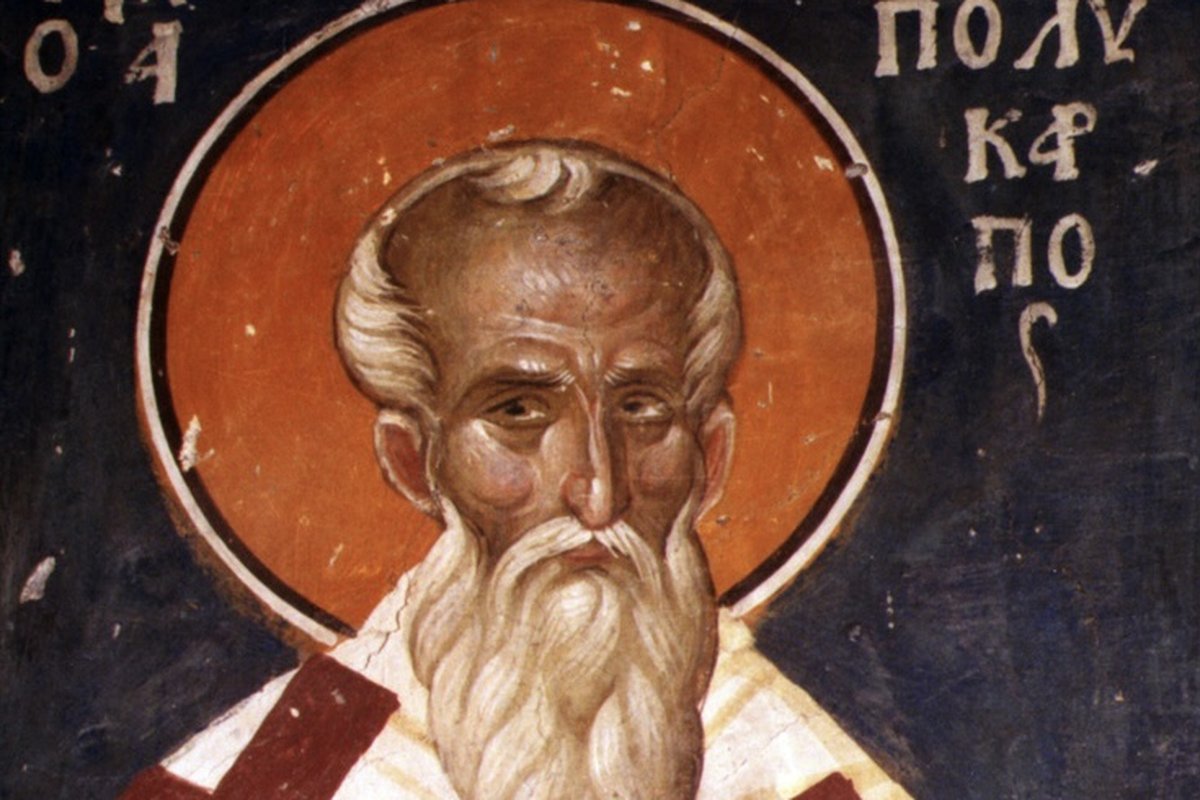
Because tradition remembers him as barely more than a boy at his death, Pancras is often depicted in art holding a palm branch, the standard symbol of martyrdom across early Christian iconography, sometimes alongside a sword to indicate the manner of his death. Some depictions show him in the dress of a Roman youth rather than as an adult martyr, emphasizing the particular pathos of his age. That association with youth is also the basis for his traditional patronage of children and young people, a natural connection given how firmly the tradition insists on his youth as central to the story's power — not an adult calculating the cost of defiance, but someone barely at the edge of adulthood choosing it anyway.
Why his memory endured
Part of what kept Pancras's memory alive across so many centuries and so much geography is precisely the starkness of the story attached to him: a very young convert offered an easy exit and refusing it. Whatever cannot be verified in the particulars, the shape of that choice — faith held to under direct threat of death — is exactly the kind of witness the early Church prized above almost anything else, and exactly why his name, however thin the record beneath it, was carried forward through Roman basilicas, English mission churches, and eventually into the name of a London railway station that most of its passengers have never thought to ask about.
Trivia
How old was Saint Pancras when he was martyred?
Why is Pancras associated with London?
What is Saint Pancras the patron of?
What is Saint Pancras's feast day?
You May Also Like
Related Reading