Saint Mariana de Jesus de Paredes, Lily of Quito

A city built high in the Andes, and a girl who chose to stay home
Quito sits at nearly 2,850 meters above sea level in the Andes, a colonial capital built on the ruins of an Inca city, and by the early seventeenth century it was one of the more important religious and administrative centers in Spanish South America. Mariana de Jesus de Paredes was born there in 1618 into a family of Spanish descent, and orphaned young — she lost both parents while still a child and was raised in the household of her older sister and brother-in-law, where she would remain, by choice, for the rest of her life.
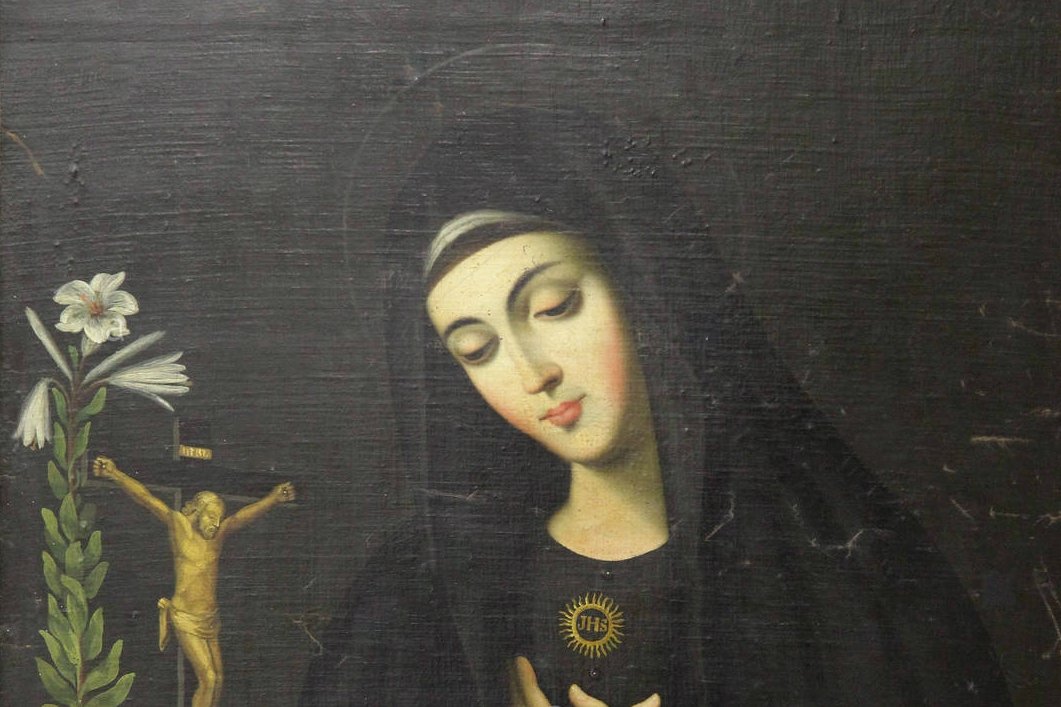
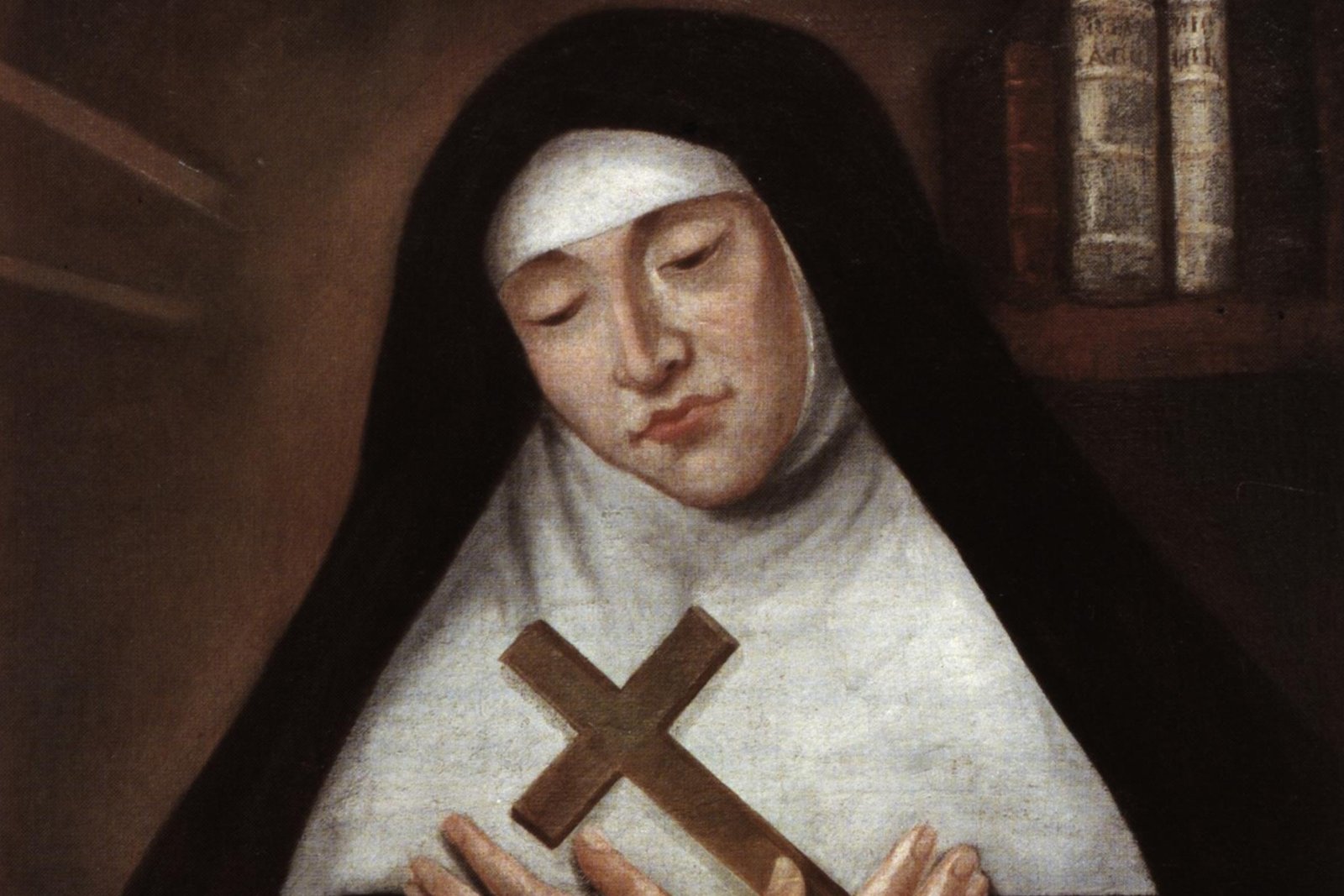
Antonio Salas, Retrato de Mariana de Jesús, 1845 — public domain (Wikimedia Commons)
That choice deserves attention, because it runs against the pattern most readers expect from stories about women mystics of this era. Mariana wanted to enter a convent — several religious communities in Quito would likely have accepted her — but her confessors, and by some accounts her own sense of calling, directed her instead to remain a laywoman within her family's home, living there under a private rule of extraordinary austerity: long fasts, deliberate physical penances, and hours of prayer conducted largely in solitude, all while technically still living as an unmarried young woman inside an ordinary household rather than behind convent walls. It was, in its own way, as demanding a form of religious life as anything practiced in a formal community, and it placed her in continuous, direct contact with the ordinary life of the city around her rather than separating her from it.
Spiritual direction under the Jesuits of colonial Quito
Mariana's inner life was guided for years by Jesuit spiritual directors attached to the Jesuit college in Quito, part of the wider network of Jesuit missionary and educational institutions that shaped much of colonial Spanish America's religious culture in this period. Under their direction, she developed a reputation locally — well before the crisis that made her famous — for visions, spiritual counsel sought out by other residents of the city, and a level of personal asceticism that impressed observers even in an era generally comfortable with dramatic religious penance.
It's worth being clear, in line with how the Church itself treats these accounts, about what belongs to verified biography and what belongs to pious tradition layered on afterward. Her austere lay life, her spiritual direction under named Jesuit confessors, and the basic timeline of her death during the 1645 crisis are documented in testimony gathered for her later canonization process. Some of the more specific supernatural details attributed to her — particular visions, specific miracles reported by individuals who knew her — rest on the kind of eyewitness testimony typical of seventeenth-century canonization records, treated by the Church as credible personal testimony rather than independently verifiable historical fact in the way a date or a document would be.
The earthquake, the epidemic, and an offered life
The event that defines Mariana's story took place in 1645, when Quito was struck first by a serious earthquake and then, in short order, by an outbreak of epidemic disease that began killing residents of the city in significant numbers — a combination of disasters that, in a colonial city with limited medical resources and buildings not engineered for major seismic events, represented a genuine catastrophe for the population. According to the tradition gathered around her life, Mariana, already gravely devoted to a life of self-offering, prayed publicly and privately that her own life be taken in exchange for the city's deliverance from the epidemic.
She fell ill herself shortly afterward and died on May 26, 1645, at not quite twenty-seven years old. Quito's own civic and religious memory has held, from very close to the time of her death onward, that the epidemic subsided in the aftermath — a claimed connection between her death and the city's recovery that cannot be proven in a strict historical sense, but that has shaped how the city has understood her ever since: not simply as a private mystic, but as someone whose death is remembered as a specific act of civic sacrifice.
Ecuador's first canonized saint
Mariana's cause moved forward over the following three centuries, and Pope Pius XII canonized her in 1950, formally recognizing her as the first person born within the territory of present-day Ecuador to become a saint of the Catholic Church. That distinction has given her a significance in Ecuador that extends well past typical devotional practice — she is a genuine national figure, commemorated in the country's civic calendar as well as its religious one, and her relics remain enshrined in the Church of the Society of Jesus (La Compañía de Jesús) in Quito's historic center, one of the most visited religious sites in the city and, since 1978, part of a UNESCO World Heritage-listed old town.
Her story sits at an interesting intersection often underappreciated in popular accounts of the saints: a woman who achieved recognized sanctity entirely as a laywoman inside an ordinary family home, in a colonial city far from Rome, whose act of self-offering during a public disaster gave an entire city a shared story about what devotion under crisis could look like — one Quito has kept telling, in civic as much as religious terms, for nearly four centuries.
Trivia
Who was Saint Mariana de Jesus de Paredes?
Why is she called the 'Lily of Quito'?
What exactly happened in Quito in 1645?
Did Mariana de Jesus de Paredes live as a nun?
When was she canonized and what is her feast day?
You May Also Like
Related Reading