The Chair of Saint Peter, Apostle

A feast about an office, not a piece of furniture
The name throws people off every year. "The Chair of Saint Peter" sounds like the Church has set aside a day to honor carpentry. What it actually honors is the pastoral and teaching authority that Christ entrusted to Peter — the word "chair," from the Latin cathedra, was already a familiar symbol of teaching office in the ancient world before Christianity ever used it. A cathedra was where a teacher or magistrate sat to instruct or to judge; the word survives today in "cathedral," a church that houses a bishop's teaching chair. When the early Church spoke of Peter's "chair," it meant his role as chief shepherd and teacher among the apostles, not a literal seat he was thought to have carried with him.
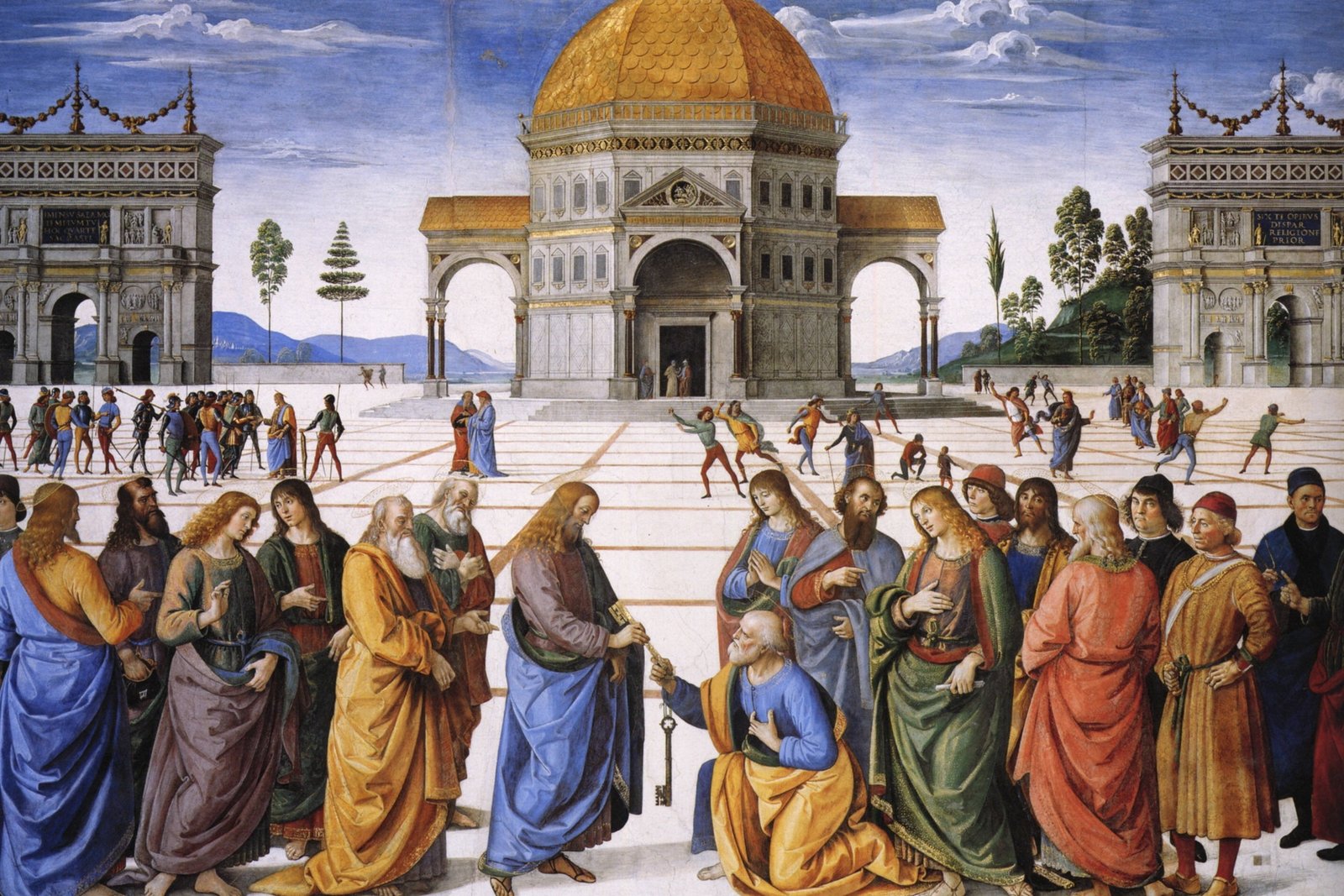
Pietro Perugino, Christ Handing the Keys to Saint Peter, 1481-82, Sistine Chapel, Vatican — public domain
That distinction matters because the feast has occasionally been misunderstood, even mocked, as if Catholics venerated furniture. The Church's own theology has never supported that reading. The chair is a sign pointing to something else: the continuity and unity of apostolic teaching, first given to Peter and, according to Catholic doctrine, carried forward by his successors as bishop of Rome.
Why Peter, specifically
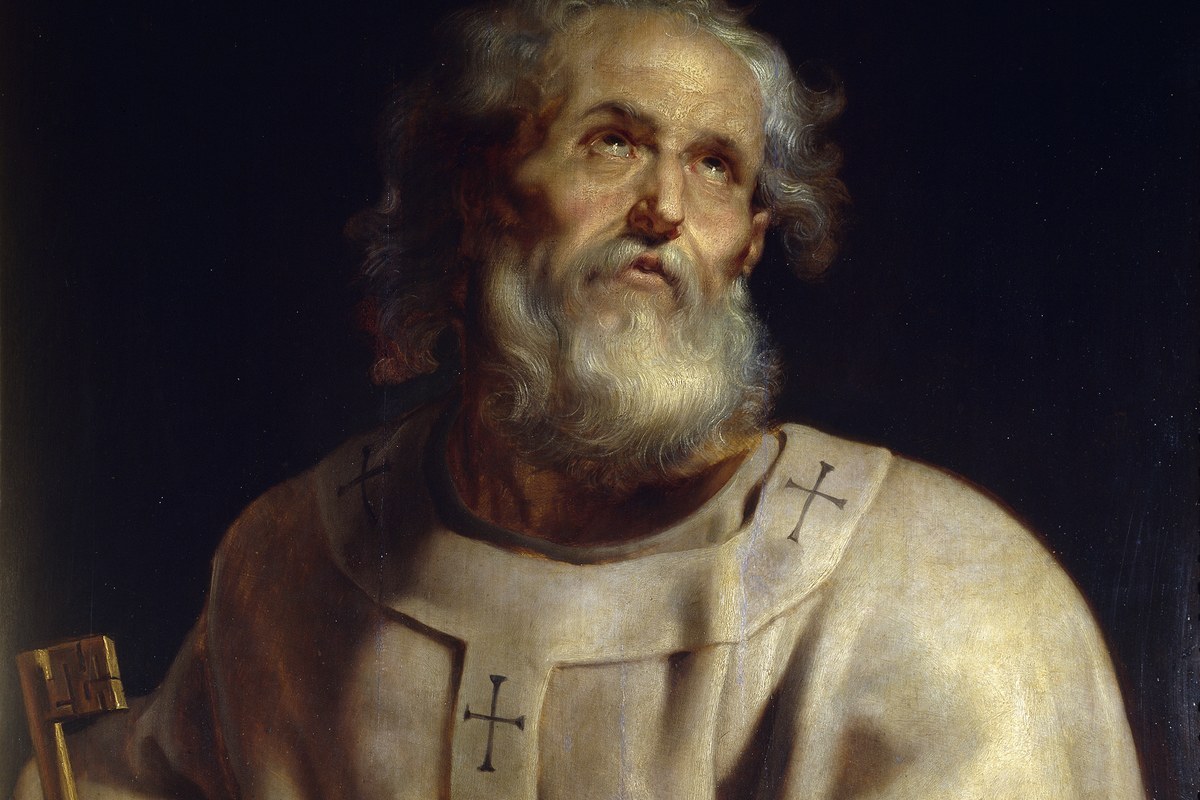
The biblical basis for Peter's unique role comes from a scene in Matthew's Gospel. When Jesus asks the apostles who they believe he is, Peter answers, "You are the Messiah, the Son of the living God." (Matthew 16:16, RSV-CE). Jesus responds by renaming him: "you are Peter, and upon this rock I will build my church, and the gates of the netherworld shall not prevail against it. I will give you the keys to the kingdom of heaven" (Matthew 16:18-19, NABRE). The name change itself is significant — "Peter" comes from the Greek Petros, meaning rock, a name Simon did not choose for himself.
After the Resurrection, John's Gospel records a further, quieter commissioning: Christ asks Peter three times whether he loves him, and three times instructs him, "Feed my sheep" (John 21:15-17, RSV-CE) — a scene traditionally read as restoring Peter after his three denials during the Passion and confirming him as shepherd of the whole flock. The Catechism draws directly on these passages, teaching that the Roman Pontiff, as successor of Peter, is "the perpetual and visible source and foundation of the unity both of the bishops and of the whole company of the faithful" (CCC 882). Catholic tradition holds that this teaching authority — not a chair of wood — is what February 22 actually celebrates.
An old feast, quietly reshaped over the centuries
The feast's roots run deep. A Roman document known as the Chronography of 354, one of the oldest surviving Christian calendars, already lists a commemoration called "Natale Petri de Cathedra" in February — evidence that Roman Christians were marking Peter's teaching office as a distinct feast well over a thousand years before Bernini ever touched bronze. For centuries the Western calendar actually observed two separate feasts: one for the "Chair of Saint Peter at Rome" (January 18) and another for the "Chair of Saint Peter at Antioch" (February 22), reflecting the tradition that Peter had served as bishop first in Antioch before going to Rome. In 1960, the calendar reform under Pope John XXIII combined these into the single February 22 feast now on the Roman calendar — a housekeeping change that didn't touch the feast's underlying meaning, only its scheduling.
The chair inside the bronze
The physical object most people picture when they hear "Chair of Saint Peter" is the enormous bronze sculpture that dominates the apse of St. Peter's Basilica, unveiled in 1666 after roughly six years of work by the sculptor and architect Gian Lorenzo Bernini. It is less a chair on display than a reliquary shrine: gilded bronze rays radiate outward from a stained-glass window depicting a dove — a symbol of the Holy Spirit — while four towering bronze statues of early Church teachers, two from the Greek East (Athanasius and John Chrysostom) and two from the Latin West (Ambrose and Augustine), appear to support the chair from below. The arrangement itself makes a theological point: East and West, together, upholding the teaching office of Peter.
Encased within all that bronze is an older wooden chair, donated to the pope in the ninth century and long venerated as connected to Peter's own ministry. Scientific study conducted in the 1960s, when the monument was opened for inspection, found the wooden chair to be a composite of several different oak pieces, some of them decorated with ivory carvings, dating from various periods rather than a single first-century seat. Rather than undermining the feast, that finding actually clarifies its meaning: the relic was never the point in the way a forensic artifact would be. It has functioned for over a millennium as a physical sign of an unbroken teaching office, regardless of the literal age of every board inside it.
A feast for the whole Church, not only Rome
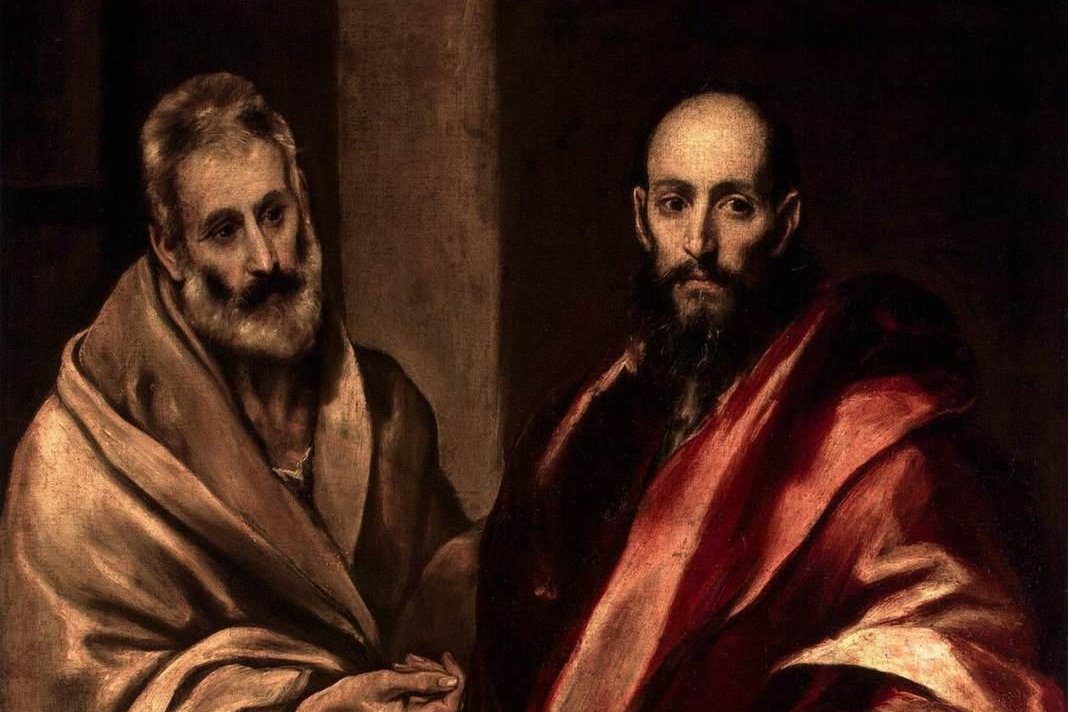
Because the feast is about apostolic teaching authority rather than any single building or object, it carries meaning well beyond St. Peter's Basilica itself. It is traditionally understood as a day to pray in a particular way for the pope and for the unity of the Church under his ministry, and it has often been marked by reflection on what Catholic teaching calls the "Petrine ministry" — the pope's role as a visible focal point of unity among bishops scattered across the world. Readers exploring Peter's broader story, including his calling as a fisherman and his eventual martyrdom in Rome, can find a fuller account in the article on Saints Peter and Paul, Apostles, which covers the two apostles' shared feast day in June and their intertwined roles in the early Church.
The Chair of Saint Peter, in the end, asks something different of the person encountering it than most feasts do. It isn't primarily about a dramatic martyrdom, a miracle, or a memorable saying. It's about continuity — the quiet, centuries-long claim that the teaching Christ gave to one fisherman on a specific afternoon near Caesarea Philippi didn't end with him, but was handed forward, chair to chair, across two thousand years.
Trivia
Is the Feast of the Chair of Saint Peter about worshipping an actual chair?
Is the wooden chair inside Bernini's bronze reliquary really Saint Peter's own chair?
When did the Feast of the Chair of Saint Peter begin?
Why does the Catholic Church tie papal authority to this feast?
What is Bernini's Chair of Saint Peter monument?
Related Reading