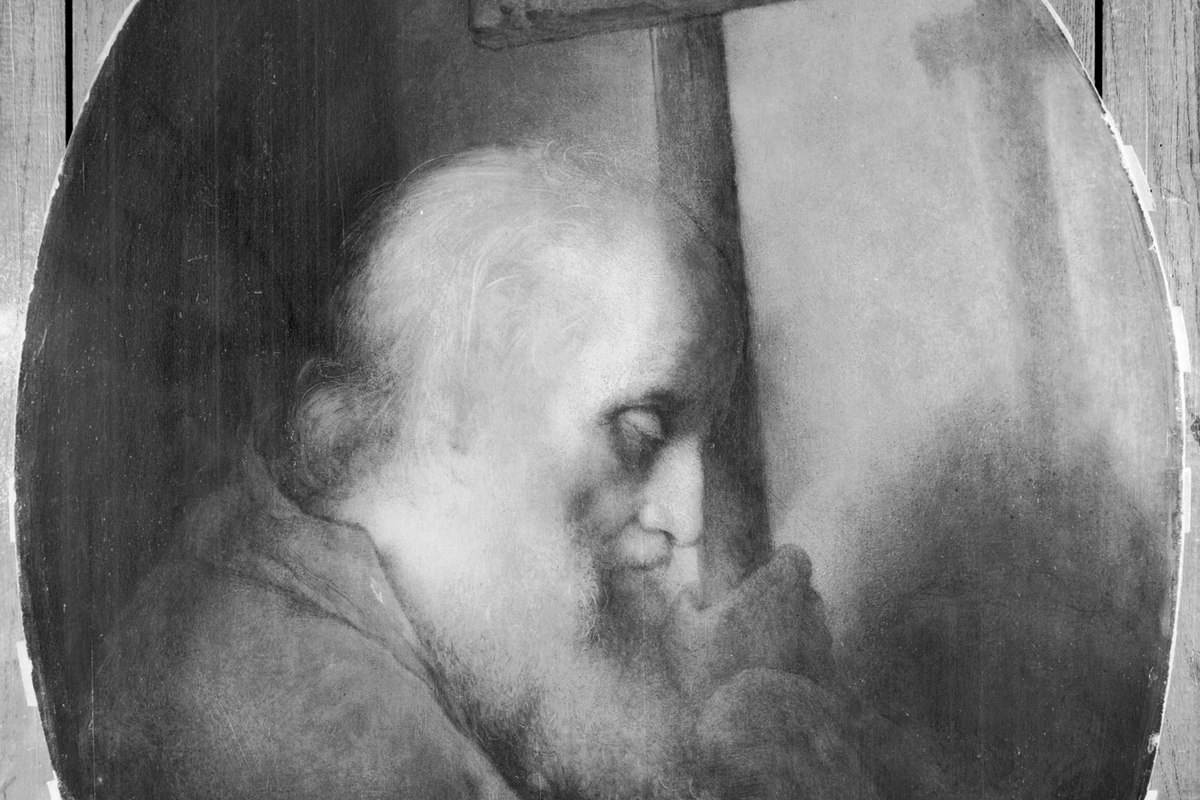
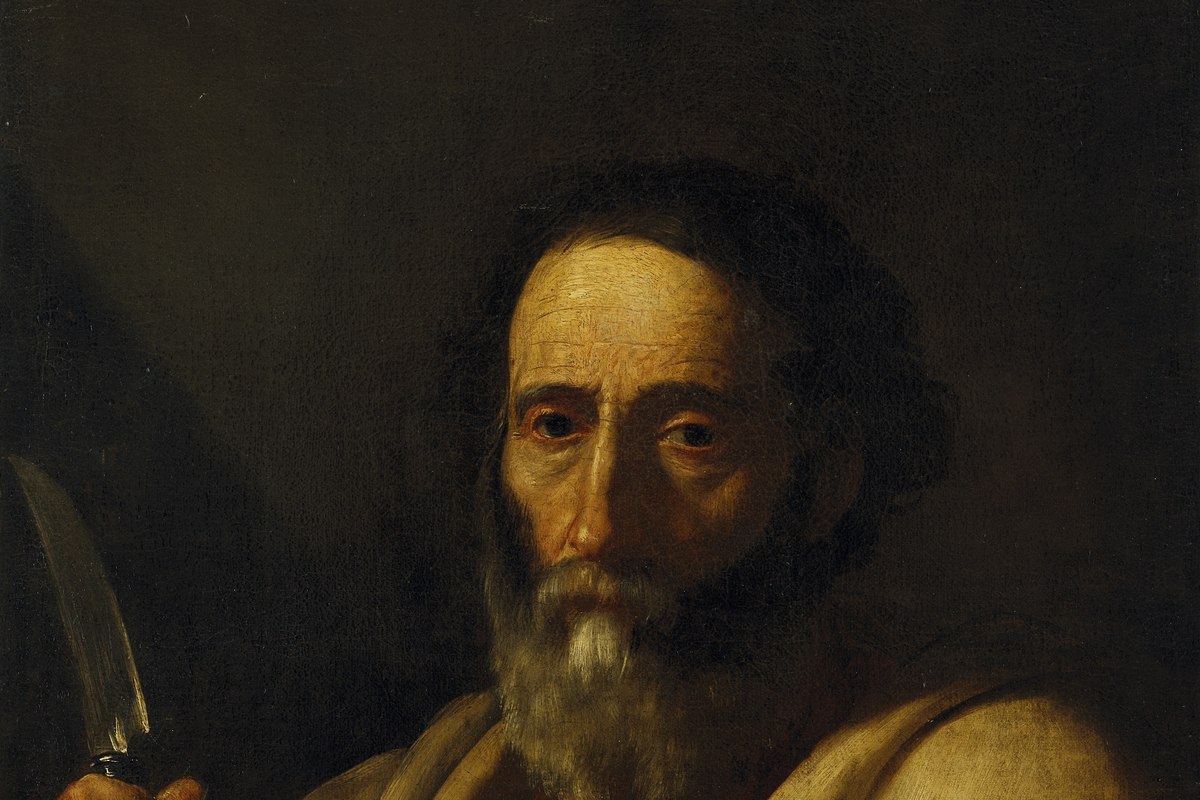
Saints Peter and Paul, Apostles

Two very different callings, one shared feast
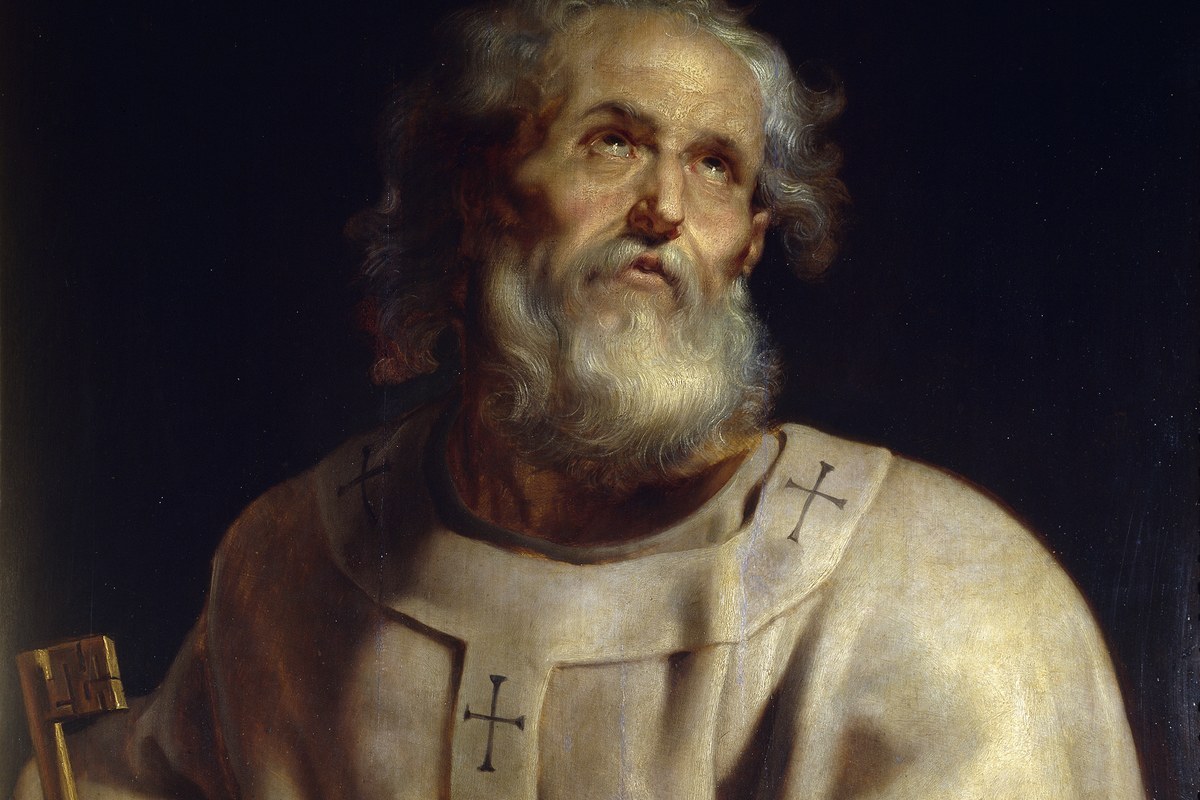
Every June 29, the Church sets aside a single solemnity for two apostles whose lives, on paper, have almost nothing in common. Saint Peter the Apostle was an uneducated Galilean fisherman handpicked by Jesus during his earthly ministry, a man who denied knowing Christ three times before going on to lead the earliest Christian community in Jerusalem and, eventually, in Rome. Saint Paul the Apostle never walked with Jesus during his lifetime at all. He was a zealous Pharisee named Saul who actively persecuted the early Church, until a sudden encounter on the road to Damascus, described in the Acts of the Apostles, turned him into the most tireless missionary and letter-writer the young Church would ever produce.
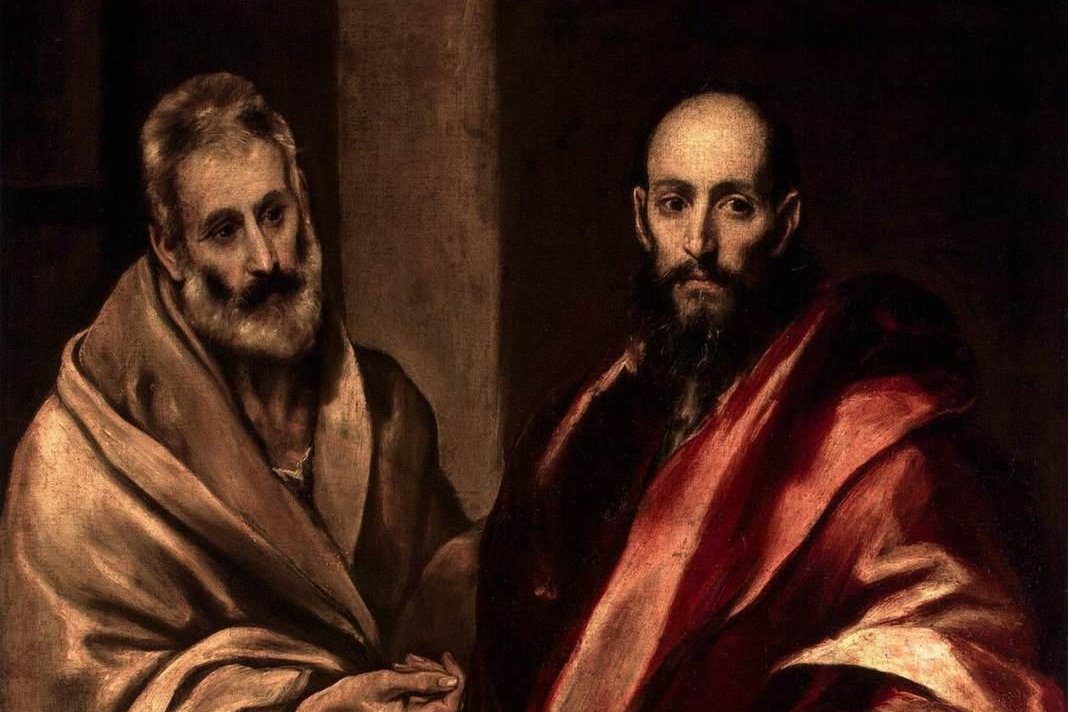
El Greco, Saints Peter and Paul, c. 1587–1592, State Hermitage Museum, Saint Petersburg — public domain.
Scripture does not paper over the friction between them. Paul's letter to the Galatians recounts a public confrontation in Antioch where he "withstood" Peter "to the face" over Peter's inconsistent treatment of Gentile converts, a moment that shows two strong-willed leaders working out, sometimes with real tension, what the new Christian community was actually going to look like. Yet it is precisely this pairing of difference, one apostle rooted in Christ's original inner circle, the other a dramatic and unlikely convert, that the Church has chosen to celebrate together rather than apart.
An ancient pairing, not a modern convenience
The joint feast is not a later administrative decision made for calendar efficiency. Christian writers were already commemorating Peter and Paul together by the third century, and the early Roman Christian community observed a shared feast day for both apostles well before the Church had settled most of its other major liturgical dates. The fourth-century historian Eusebius of Caesarea, drawing on earlier sources, records the tradition that both apostles were put to death in Rome under the emperor Nero, a detail that helped anchor the joint commemoration in the city where both men's ministries converged and ended.
Tradition holds that Peter was crucified, reportedly asking, according to later accounts, to be crucified upside down out of humility, feeling unworthy to die in the same manner as Christ, while Paul, as a Roman citizen, was executed by beheading rather than crucifixion, a distinction Roman law generally observed between citizens and non-citizens. These details come down through pious tradition and later Christian writers rather than a contemporary eyewitness record, and should be understood as the ancient Church's received memory of events rather than documented historical fact in the modern sense. What can be said with more confidence is that both a shared Roman death and a long-standing tradition of joint commemoration were already well established within a few centuries of the apostles' lives.
Nero, the fire, and the setting for both deaths
Both traditions place the apostles' deaths within the reign of Nero, the Roman emperor whose persecution of Christians followed the catastrophic fire that swept through Rome in the year 64. Ancient sources, including the Roman historian Tacitus, describe Nero shifting public blame for the fire onto the city's Christian population, unleashing a wave of executions carried out with particular cruelty. Peter and Paul's traditional martyrdoms are generally located within this broader period of persecution, even though the exact years of their deaths are debated among historians, with some placing them a few years apart rather than on the identical date the shared feast might seem to suggest.
The apostle to the Jews and the apostle to the Gentiles
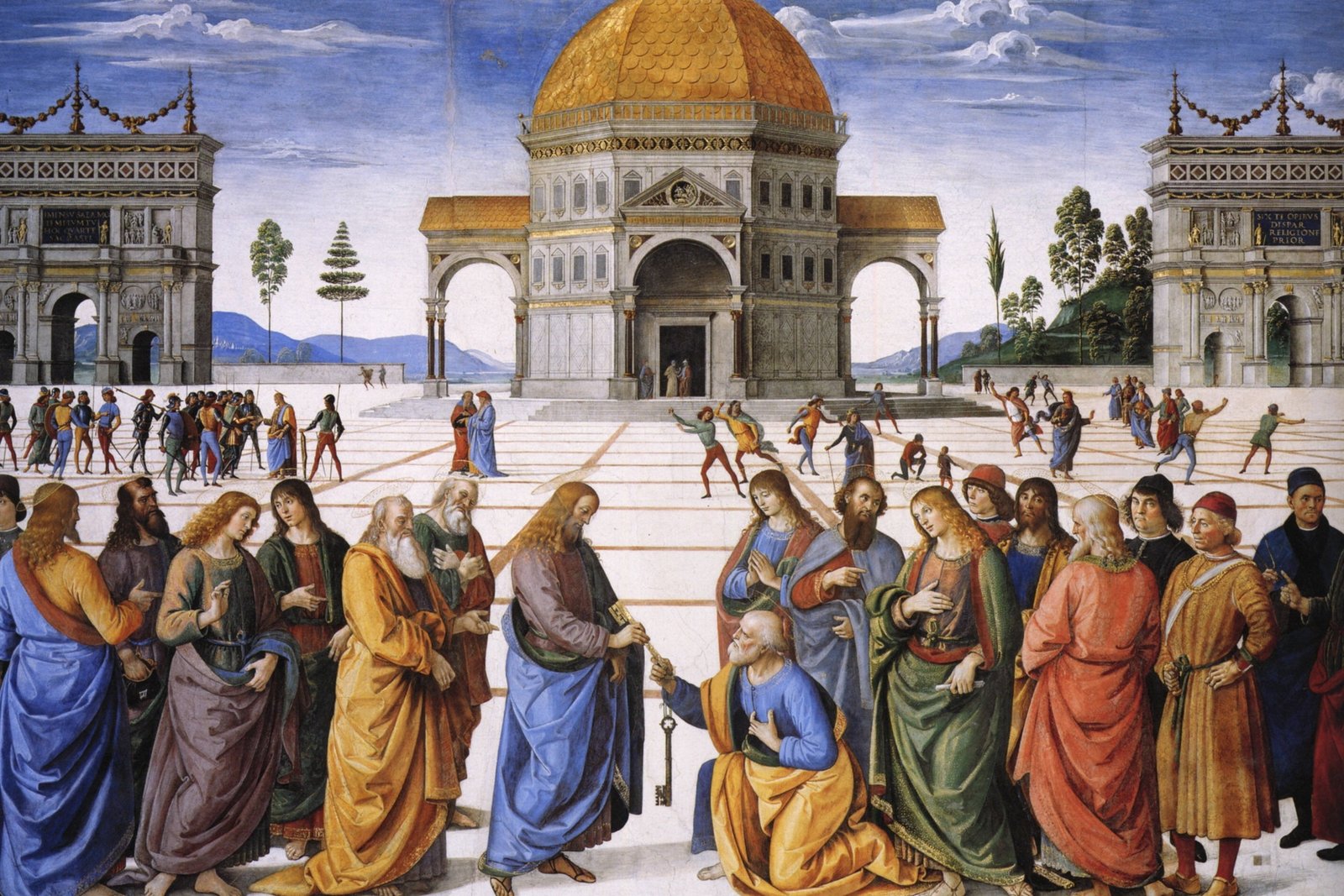
Beyond the shared setting of their deaths, the pairing carries a deeper theological logic that the Church has emphasized for centuries. Peter, chosen by Christ as the leader among the Twelve Apostles and given, in Catholic teaching, a unique pastoral authority over the early Church, is closely associated with the mission to the Jewish people among whom Christianity first took root. Paul, converted after his encounter on the road to Damascus, became the great missionary to the Gentile world, carrying the Christian message across the Mediterranean to Greek and Roman cities that had no prior connection to Judaism.
Read together, their two ministries trace the arc of the early Church's expansion from a movement centered in Jerusalem into a faith that would eventually spread across the entire Roman world. The Church's decision to honor them on a single day is, in effect, a statement about the whole shape of that expansion: one mission is not complete without the other, and the earliest Christian community depended on both the continuity Peter represented with Christ's original circle and the outward reach Paul represented into a wider world.
How the feast is kept today
The solemnity of Saints Peter and Paul remains one of the more prominent dates on the Catholic calendar, particularly in Rome itself, where the pope traditionally blesses the pallium, a woolen vestment given to newly appointed archbishops, in a ceremony connected to the feast. In many parishes, the day's readings draw directly from the Acts of the Apostles and from Paul's own letters, reflecting on themes of calling, conversion, and the cost of leadership within the early Church. The feast stands as a reminder that the Church's foundation rested not on a single uniform model of discipleship but on two remarkably different men, a fisherman and a former persecutor, whose distinct paths converged in the same city and, in the Church's ancient memory, on the very same day of commemoration.
Trivia
Why do Saints Peter and Paul share one feast day instead of two separate ones?
Did Saint Peter and Saint Paul actually die on the same day?
What is the significance of pairing 'the apostle to the Jews' with 'the apostle to the Gentiles'?
Is the feast of Saints Peter and Paul a holy day of obligation?
Related Reading