The Angel at the Threshing Floor of Ornan

A census, and a consequence no one expected
Twice in the Old Testament — once in 2 Samuel, once in 1 Chronicles — Scripture tells the same story of a decision King David made that brought disaster on his own people. He ordered a census of Israel's fighting men, sending his commander Joab out across the whole kingdom to count them. The two accounts don't agree on where the impulse came from: 2 Samuel says "the anger of the Lord flared again against Israel" and that this anger "incited David" to order the count (2 Samuel 24:1, NABRE), while 1 Chronicles instead says "Satan rose up against Israel and enticed David to take a census of Israel" (1 Chronicles 21:1, NABRE). Even Joab, not usually a man given to caution, tries to talk David out of it before finally obeying.
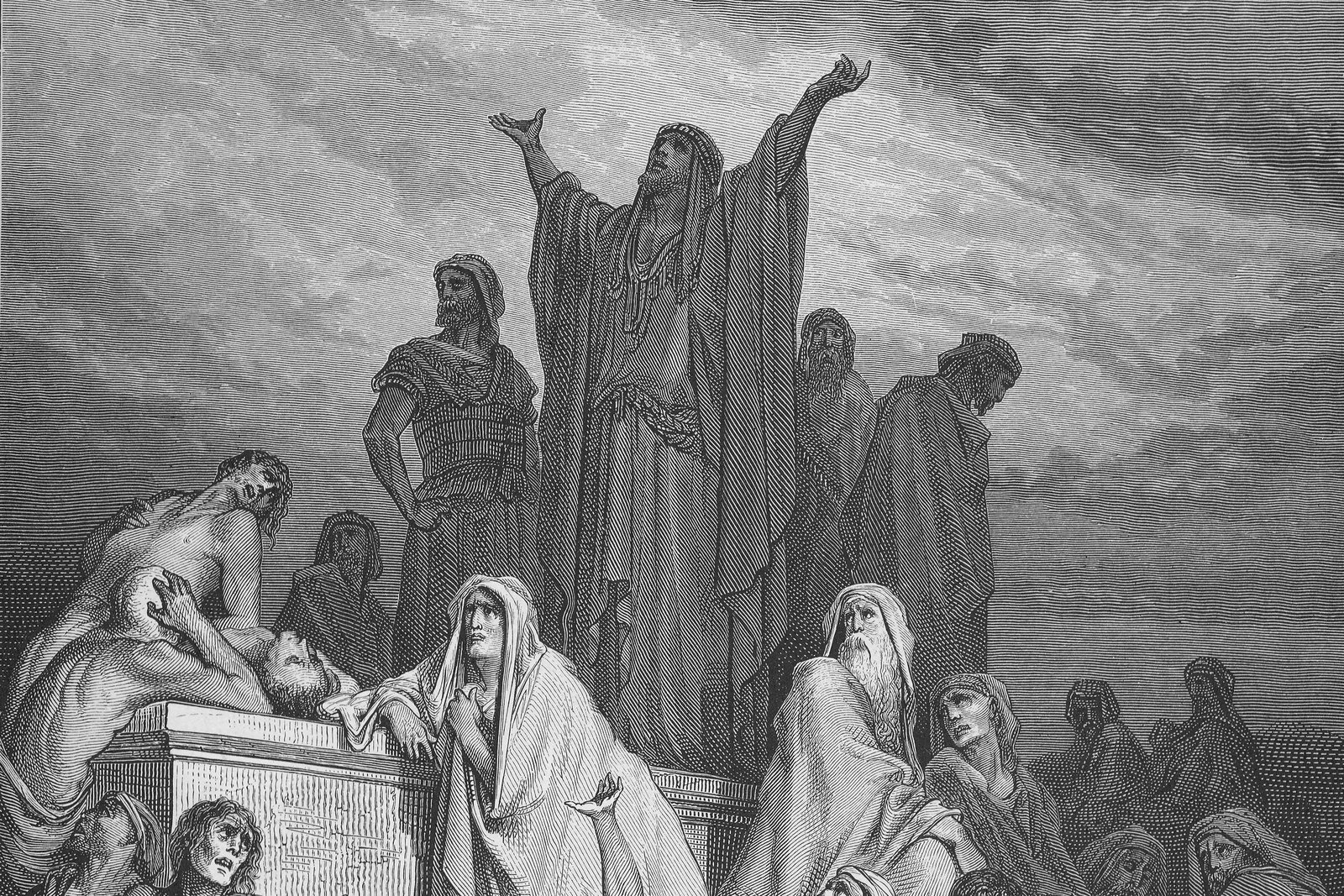
Gustave Doré, "The Plague of Jerusalem," 1866, from La Grande Bible de Tours -- public domain.
Scripture never fully explains why counting the army was itself the sin — commentators across Jewish and Christian tradition have long debated whether the offense lay in pride, in a lack of trust that God alone secured Israel's strength, or in bypassing an older law requiring a ransom payment whenever the people were numbered (Exodus 30:12). What the text is clear about is the consequence: once the count is finished, David is immediately stricken with regret, confessing, "I have sinned grievously in what I have done" (2 Samuel 24:10, NABRE) — but the judgment has already been set in motion.
Three punishments offered, one chosen
Through the prophet Gad, God gives David an unusual choice: three years of famine, three months of defeat before his enemies, or three days of plague across the land. David's answer is telling. "Let us fall by the hand of the Lord, for his mercy is great; but let me not fall by the hand of a man" (2 Samuel 24:14, NABRE) — he chooses the plague, preferring to face divine judgment directly rather than the cruelty of a human enemy or the slow humiliation of famine.
The plague that follows is devastating: seventy thousand people die across Israel in three days, "from Dan to Beer-sheba" (2 Samuel 24:15, NABRE) — a phrase used elsewhere in Scripture to describe the entire span of the kingdom, north to south. It's one of the deadliest single episodes recorded anywhere in the Old Testament, and it falls not on David personally but on the people he governs.
The angel's hand, stretched toward Jerusalem
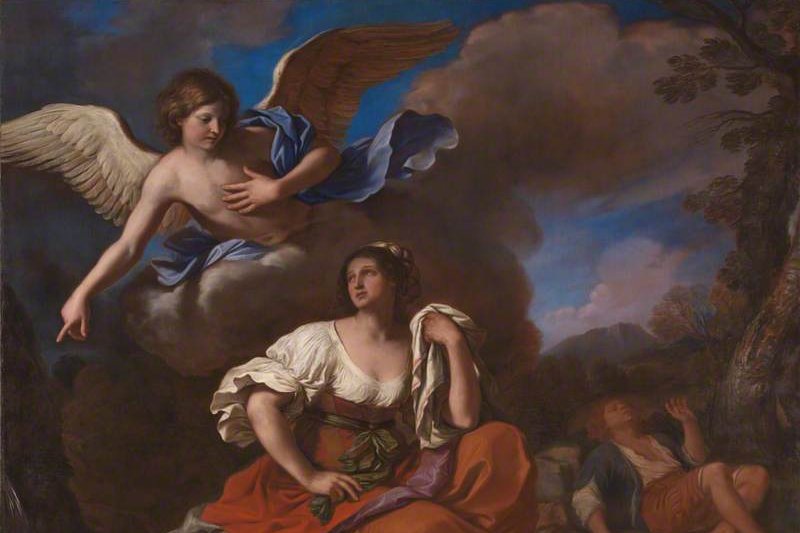
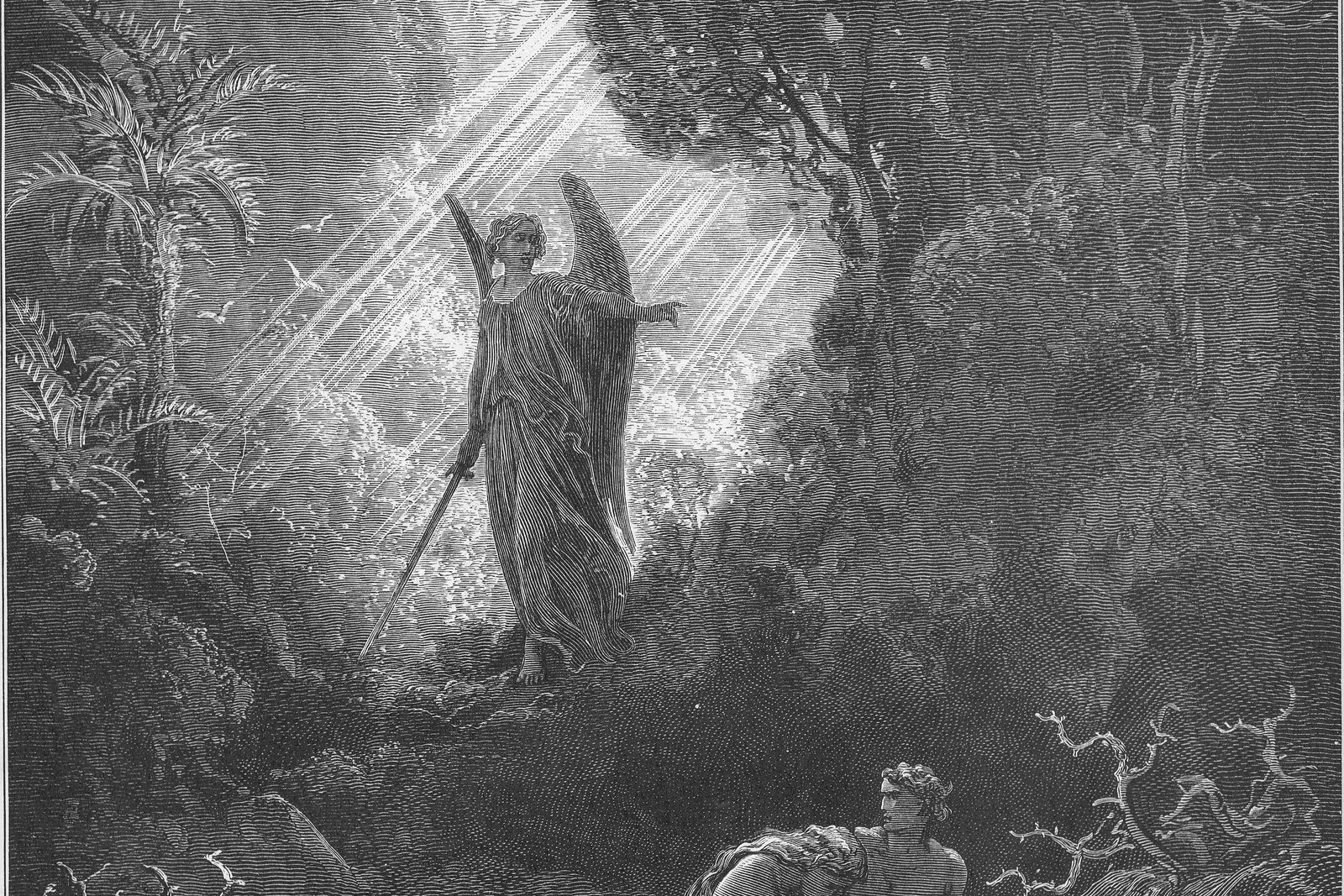
As the plague reaches Jerusalem itself, something shifts. "When the angel stretched forth his hand toward Jerusalem to destroy it, the Lord changed his mind about the calamity, and said to the angel causing the destruction among the people: Enough now! Stay your hand" (2 Samuel 24:16, NABRE). 1 Chronicles renders the same moment with a striking visual detail 2 Samuel doesn't include: David "raised his eyes, and he saw the angel of the Lord standing between earth and heaven, drawn sword in hand stretched out against Jerusalem" (1 Chronicles 21:16, NABRE) — a figure suspended, visibly, between the human city below and the heaven he answers to, sword still drawn even as the order to stop arrives.
David's response, in both accounts, isn't relief for himself but concern for everyone else. "It is I who have sinned; it is I, the shepherd, who have done wrong. But these sheep, what have they done? Strike me and my father's family!" (2 Samuel 24:17, NABRE). He asks to bear the punishment personally rather than see it fall any further on people who had no part in his decision — a moment of genuine accountability from a king not always remembered for it.
Buying a threshing floor at full price
The angel, Scripture says, is left standing at "the threshing floor of Araunah the Jebusite" (2 Samuel 24:16, NABRE) — called Ornan in 1 Chronicles. A threshing floor was ordinary agricultural ground: a flat, open, usually elevated space where grain was separated from chaff by wind and trampling, nothing built or sacred about it on its own. Gad instructs David to build an altar there, and when David arrives, its Jebusite owner — recognizing the king — offers to give him the land outright, along with oxen for sacrifice and wood from the threshing sledges.
David refuses the gift outright: "No, I will buy it from you at the proper price, for I cannot sacrifice to the Lord my God burnt offerings that cost me nothing" (2 Samuel 24:24, NABRE). The two accounts record different sums — fifty shekels of silver for the threshing floor and oxen in 2 Samuel, six hundred shekels of gold in 1 Chronicles — a discrepancy some readers resolve by suggesting the larger figure in Chronicles covers the whole surrounding hilltop rather than the threshing floor alone, since 1 Chronicles 21:22 has David ask specifically for "the site of this threshing floor" before the price is settled. Either way, the principle behind the purchase is the same: an offering meant to cost the giver something.
Where the sword stopped, the Temple later stood
David builds his altar, offers sacrifice, and "the Lord granted relief to the land, and the plague was withdrawn from Israel" (2 Samuel 24:25, NABRE). But the story doesn't end there. In the very next chapter of 1 Chronicles, David looks at the same ground and declares, "Here is the house of the Lord God, and here is the altar for burnt offerings for Israel" (1 Chronicles 22:1, NABRE) — identifying this threshing floor as the future site of the Temple itself, a building David wasn't permitted to construct but whose location he had already marked out. A generation later, 2 Chronicles 3:1 confirms that Solomon built the Temple on exactly this spot, tied by Jewish tradition to the same hilltop associated with the binding of Isaac centuries earlier.
It's a striking turn for a place first marked out by catastrophe: the ground where a destroying angel's sword finally lowered became, within David's own lifetime, the ground he pointed to as holy — and within his son's, the site of Solomon's Temple, the center of Israel's worship for centuries afterward. Among the many places in Scripture where an angel's appearance marks a turning point, few carry consequences that reach as far into the nation's later history as this one.
Trivia
Why did God send a plague on Israel in this story?
Where exactly did the angel stop?
Did David actually see the angel?
What did David do once the plague stopped?
Why does this site matter beyond this one story?
You May Also Like
Related Reading