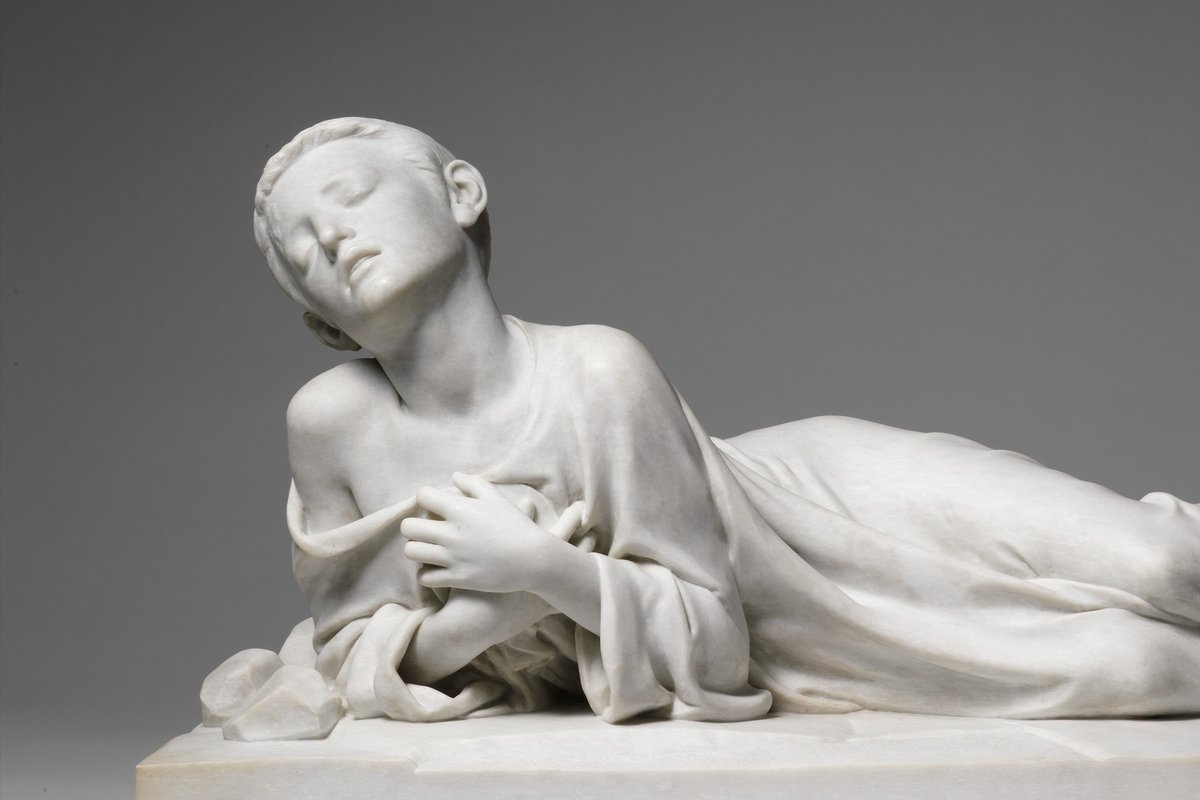
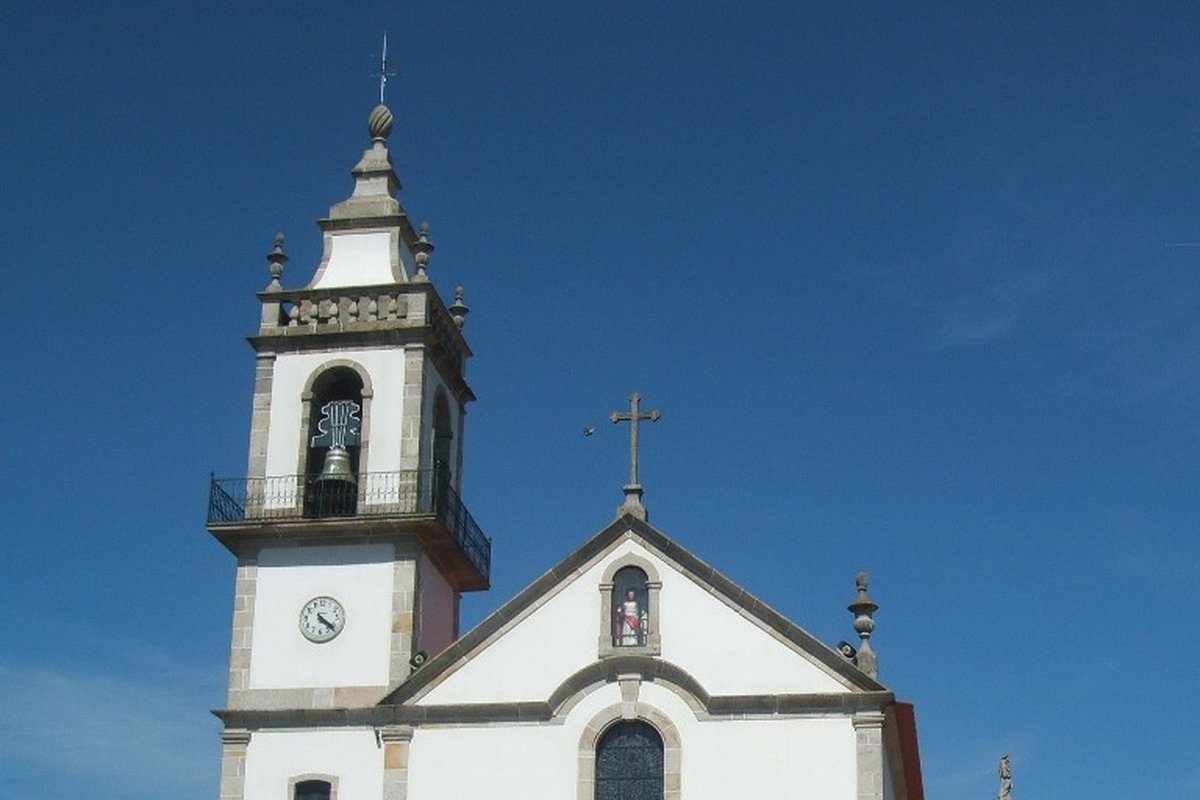
The Angel of Peace at Fátima

Before Fátima was Fátima
Every account of Fátima tends to begin the same way: May 13, 1917, three children in a field called the Cova da Iria, a lady "brighter than the sun." That's the famous part. What's less often told is that Lúcia, Francisco, and Jacinta had already been meeting an extraordinary visitor for a full year before that — and that everything Mary would later ask of them built directly on what an angel had already begun teaching them in 1916.
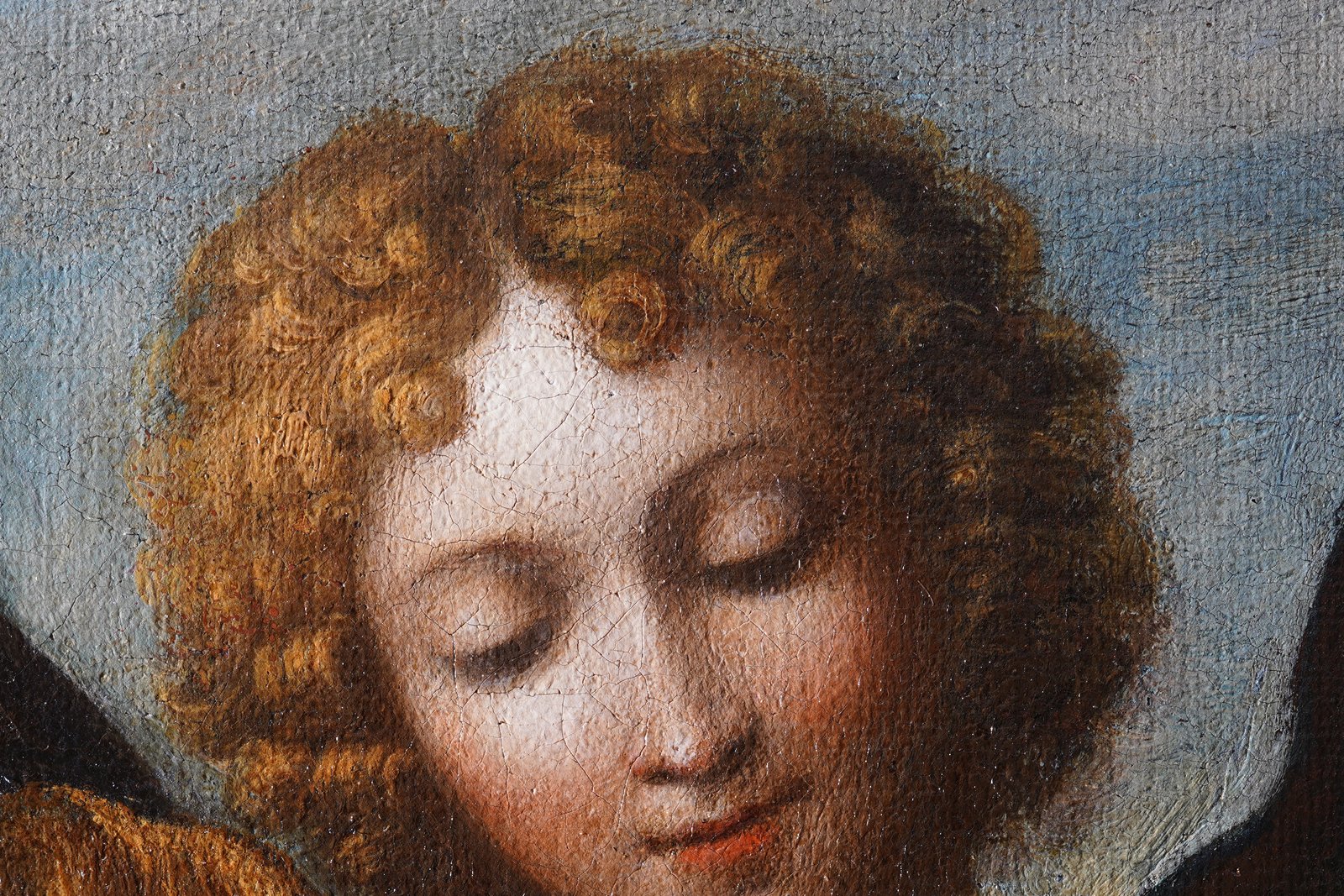
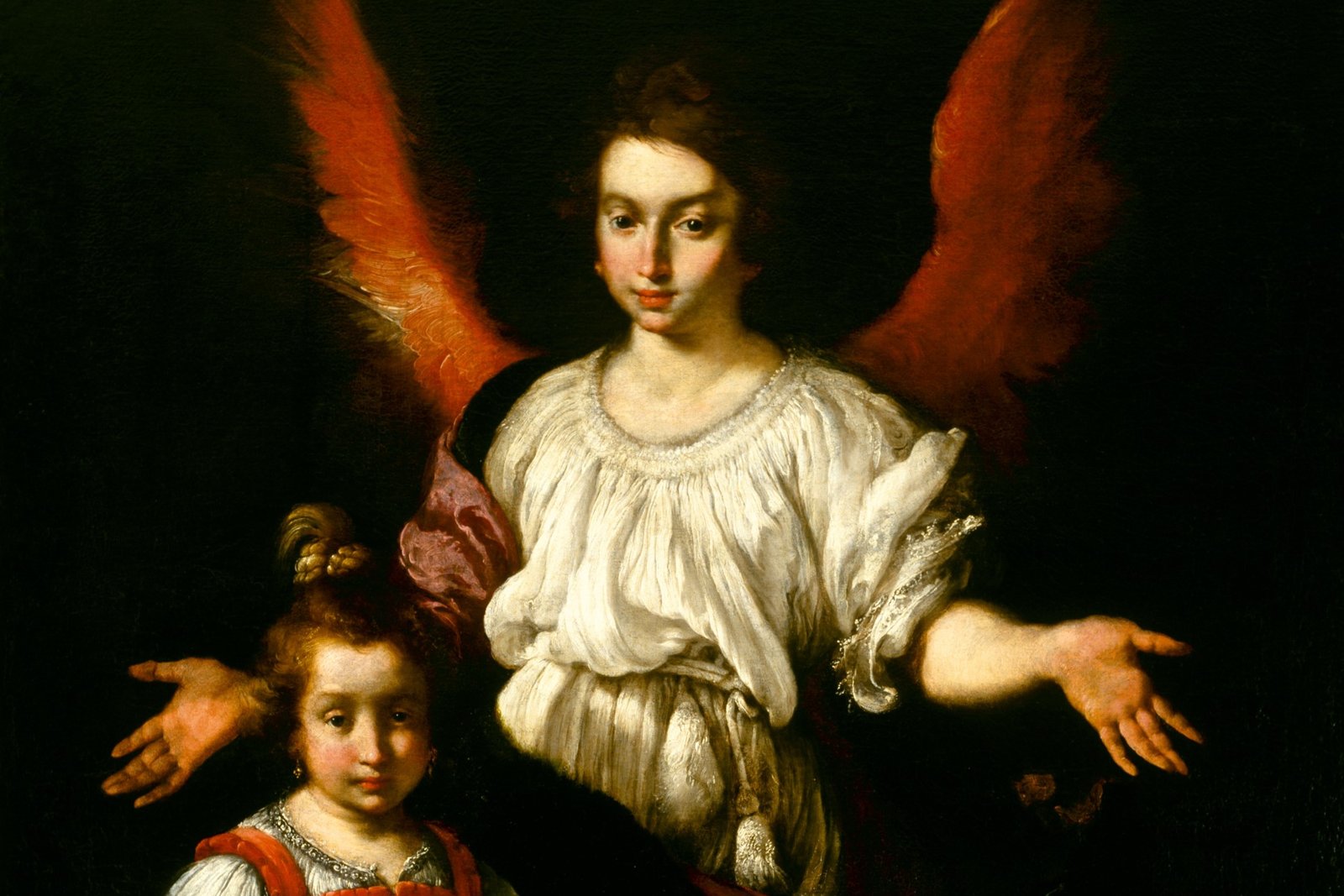
Domenico Zampieri (Domenichino), The Guardian Angel (detail), 1615 — CC0, Wikimedia Commons.
The first apparition: an act of faith
The first encounter came in the spring of 1916, while the three children were sheltering from rain in a spot called the Loca do Cabeço. Lúcia later wrote that a strong wind arose, and through it they saw approaching "a young man, about fourteen or fifteen years old, whiter than snow, transparent as crystal when the sun shines through it, and of great beauty." He identified himself simply: "Do not be afraid. I am the Angel of Peace. Pray with me."
He knelt with the children and taught them a prayer that would become central to the whole Fátima devotion: "My God, I believe, I adore, I hope, and I love You. I ask pardon for those who do not believe, do not adore, do not hope, and do not love You." He repeated it three times, then told them, before vanishing, "Pray thus. The hearts of Jesus and Mary are attentive to the voice of your supplications." Lúcia later recorded that the supernatural character of the visit left a lasting impression on all three children — an absorption in prayer so intense that for some time afterward they barely noticed the world around them.
The second apparition: a call to sacrifice
The second encounter came that summer, while the children were playing near a well at Lúcia's home. The angel appeared again, this time asking directly: "What are you doing? Pray, pray very much. The Most Sacred Hearts of Jesus and Mary have designs of mercy on you. Offer prayers and sacrifices constantly to the Most High."
When Lúcia asked how they should make sacrifices, the angel gave an answer that would shape the entire penitential character of the later Fátima message: "Make of everything you can a sacrifice, and offer it to God as an act of reparation for the sins by which He is offended, and in supplication for the conversion of sinners. In this way you will draw peace upon your country. I am its Angel Guardian, the Angel of Portugal. Above all, accept and bear with submission the sufferings that the Lord will send you." This was the only apparition in which he named himself the Angel of Portugal specifically, tying his mission to the nation rather than only to the three children.
The third apparition: the Eucharist
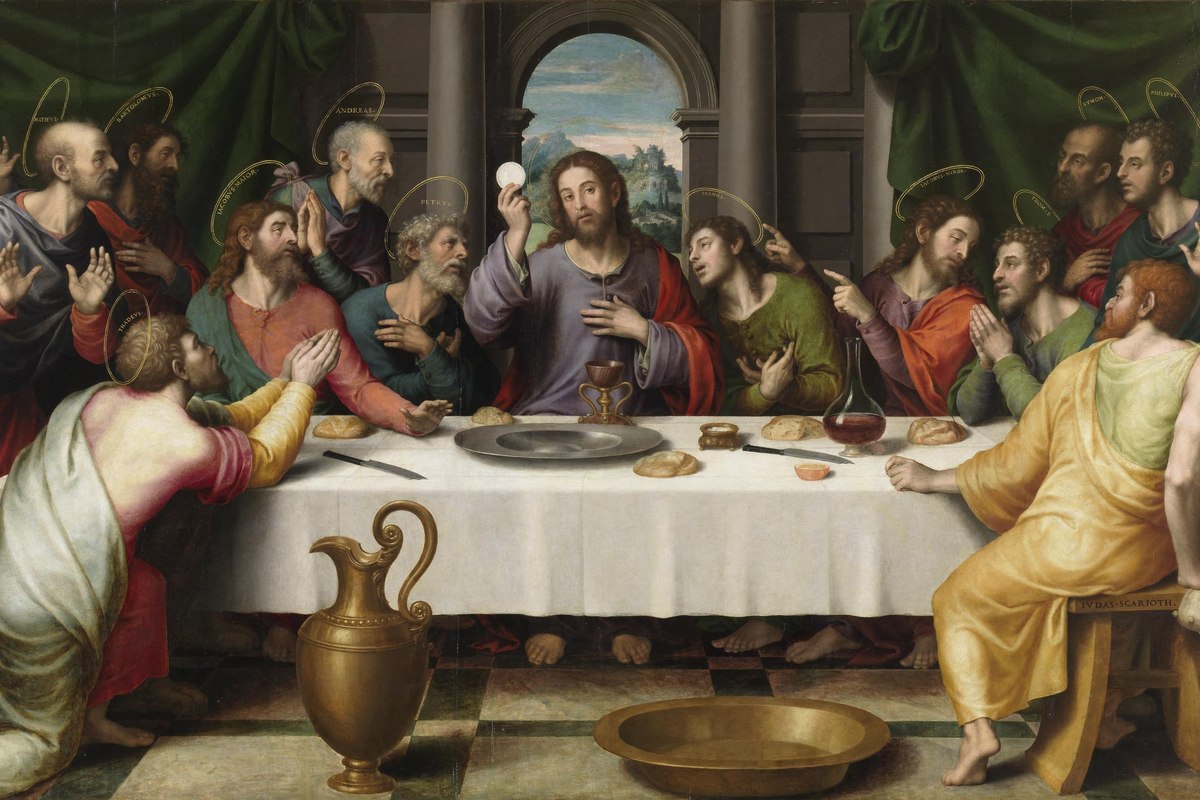
The final and most dramatic encounter came in the autumn of 1916, again at the Loca do Cabeço. Lúcia describes the angel appearing "holding a chalice in his left hand, with the Host suspended above it, from which some drops of blood fell into the chalice." Leaving the chalice and host suspended in the air, the angel prostrated himself on the ground and had the children repeat, three times, a much longer prayer of Eucharistic reparation: "Most Holy Trinity, Father, Son, and Holy Spirit, I adore you profoundly, and I offer you the most precious Body, Blood, Soul, and Divinity of Jesus Christ, present in all the tabernacles of the world, in reparation for the outrages, sacrileges, and indifference by which He is offended. And by the infinite merits of His Most Sacred Heart and the Immaculate Heart of Mary, I beg the conversion of poor sinners."
He then rose, took the host, and gave it to Lúcia, dividing the contents of the chalice between Francisco and Jacinta, saying as he did: "Take and drink the Body and Blood of Jesus Christ, horribly outraged by ungrateful men. Repair their crimes and console your God." He then prostrated himself again and repeated the prayer three more times before disappearing. It was, by Lúcia's account, the most physically overwhelming of the three visits — she wrote that she remained for some time afterward in a state so absorbed she could barely move or speak.
Preparing the way for Our Lady
The Church has never treated the angel's three visits as a curiosity separate from the main story of Our Lady of Fátima. When the local bishop formally investigated and approved the Fátima events in 1930, the inquiry covered the full sequence the children reported, angelic apparitions included, and the Church continues to present 1916 as a deliberate year of preparation — teaching the children prayer, reparation, and Eucharistic devotion before Mary's own visits, starting in May 1917, built directly on that foundation. Visitors to the Sanctuary of Our Lady of Fátima today can still walk to the Loca do Cabeço, the same quiet outcrop of rock where a fourteen-year-old angel first kneeled with three children and taught them to pray.
Unlike the Marian apparitions, the Angel of Peace has never become the center of a separate popular devotion or feast — his three appearances are remembered as a prologue, not a destination in their own right. But it's a prologue the Church takes seriously: the prayers he taught are still recited by pilgrims at Fátima today, largely unchanged from the words Lúcia recorded more than a century ago.
Trivia
Who was the Angel of Peace at Fátima?
Did the Angel of Peace appear before or after Our Lady of Fátima?
What prayers did the angel teach the children?
What happened in the third apparition of the Angel of Peace?
Does the Catholic Church officially recognize the Angel of Peace apparitions?
Related Reading