The Commander of the Lord's Army Appearing to Joshua


A new leader, a wall still standing
By the time Joshua reaches the plains outside Jericho, he has already stepped fully into the role Moses once held. The people have crossed the Jordan, the reproach of their years of slavery has been declared lifted at Gilgal, and the manna that fed Israel through the wilderness has just stopped falling — "No longer was there manna for the Israelites, who that year ate of the yield of the land of Canaan" (Joshua 5:12, NABRE). Israel has arrived. What stands directly in front of them is Jericho, a fortified city with walls substantial enough to have discouraged armies for generations, and Joshua — commanding an army for the first time in his life — has every reason to be studying it carefully.
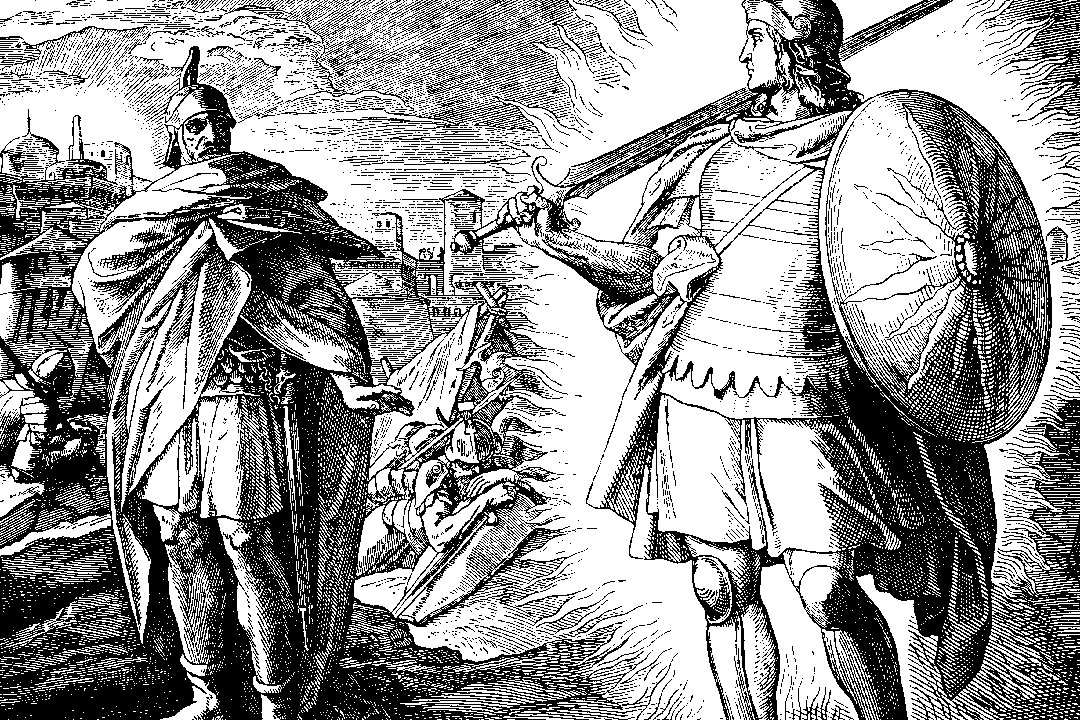
Julius Schnorr von Carolsfeld, woodcut illustrating Joshua 5:13-15 ("the commander of the LORD's army"), Die Bibel in Bildern, 1860 -- public domain.
That's exactly what the text implies he's doing when the encounter begins: sizing up an obstacle, likely alone or nearly so, thinking through how an assault on those walls might actually work.
A stranger with a sword, and the wrong question
What Joshua finds instead of a plan is a person. "While Joshua was near Jericho, he raised his eyes and saw one who stood facing him, drawn sword in hand" (Joshua 5:13, NABRE). There's no description of how this figure appeared — no light, no sudden materialization — only that Joshua looks up and someone armed is simply there, blade already drawn, standing directly in his path.
Joshua's reaction is practical, almost tactical: "Are you one of us or one of our enemies?" (Joshua 5:13, NABRE). It's the obvious question for a commander to ask a stranger holding a weapon near his own camp, and on the surface it reads as entirely reasonable. The answer he receives, though, reframes the entire situation: "Neither. I am the commander of the army of the Lord: now I have come" (Joshua 5:14, NABRE). Not friend, not enemy — an authority standing outside that binary altogether, one who has arrived, not been recruited.
Worship, not negotiation
What Joshua does next is the clearest signal in the passage of exactly who — or what — he understands himself to be facing. He doesn't ask a follow-up question or press for tactical details. "Then Joshua fell down to the ground in worship, and said to him, 'What has my lord to say to his servant?'" (Joshua 5:14, NABRE). The posture shifts instantly from a commander assessing a potential threat to a servant awaiting instruction — a response that makes little sense if this were simply a fellow soldier, however impressive, but makes complete sense if Joshua has recognized something closer to a theophany, a direct appearance of divine authority.
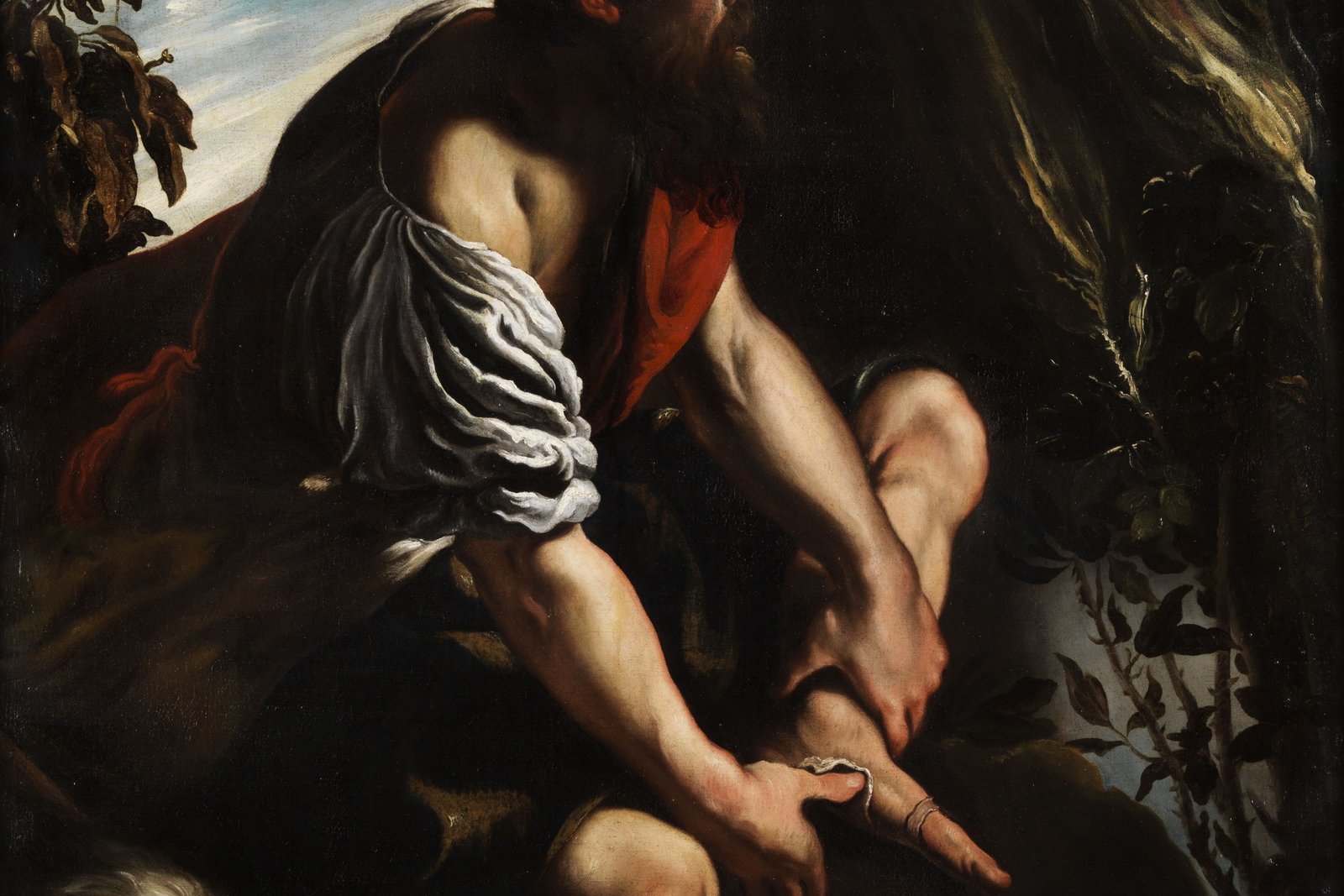
The command that follows confirms it unmistakably: "Remove your sandals from your feet, for the place on which you are standing is holy" (Joshua 5:15, NABRE). Readers of the Pentateuch would recognize the words immediately — they're nearly identical to what God told Moses at the burning bush decades earlier, on the far side of the very wilderness Israel has just finished crossing: "Remove your sandals from your feet, for the place where you stand is holy ground" (Exodus 3:5, NABRE). Scripture is drawing a deliberate line between the two scenes, marking this encounter with the same weight and the same holiness as the one that first commissioned Moses to lead Israel out of Egypt.
Neither ally nor enemy — a corrected question
The refusal to answer Joshua's original question is, in its own way, the entire point of the passage. Joshua had framed the coming conflict in the most natural terms available to a general: which side is this figure on. The commander's answer — "Neither" — rejects the premise itself. Israel's coming victory at Jericho isn't going to be a battle Joshua wins with divine assistance recruited to his side; it's a campaign led by an authority Israel is being asked to submit to, sandals removed, exactly as Moses once had to.
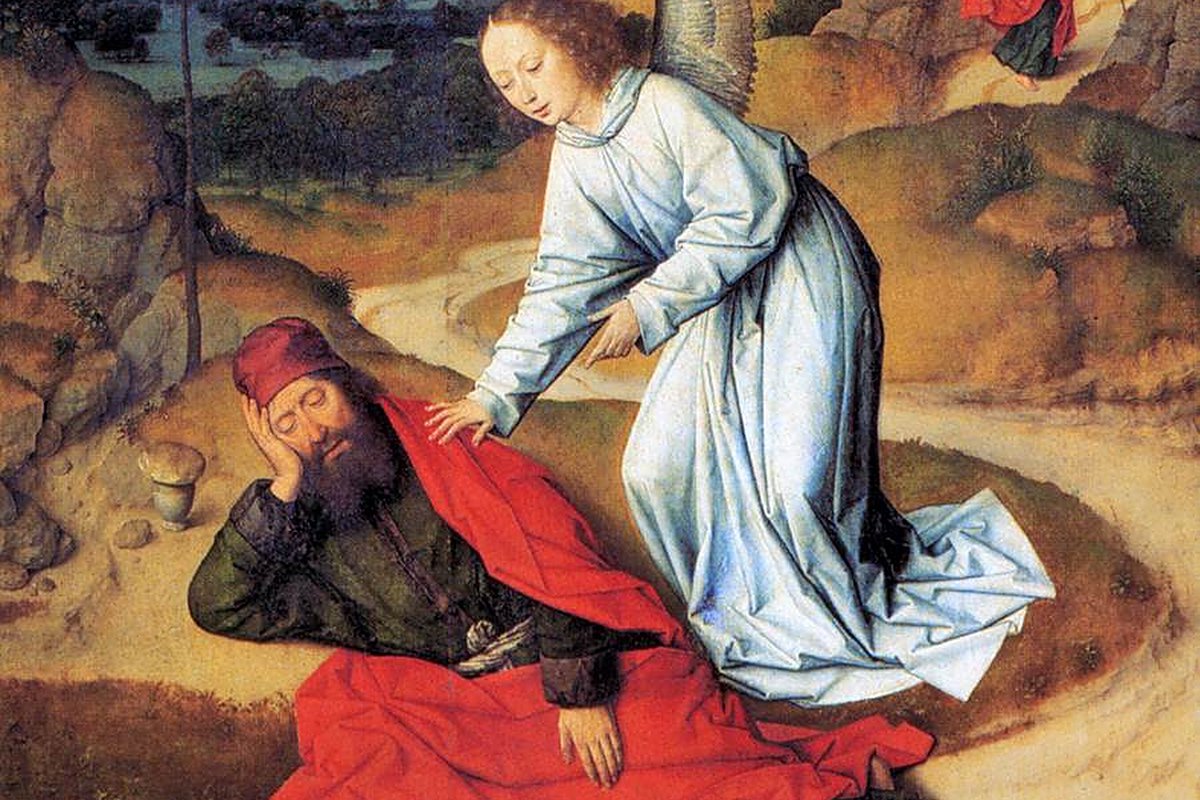
Scripture doesn't say outright whether this "commander of the army of the Lord" is the same recurring figure elsewhere called "the angel of the Lord" across the Old Testament — a question tradition and scholarship have approached differently over the centuries without arriving at one settled answer. What the text does make clear is the figure's authority: commanding, not merely delivering a message, and worthy of an act of worship Joshua offers without hesitation or explanation demanded first.
What comes next
The chapter break that follows the encounter isn't incidental. Joshua 6 opens directly with God's own battle plan for Jericho — the seven days of marching, the priests, the ram's horns, the shout that brings the wall down without a single siege weapon used (Joshua 6:1-5). Scripture places the commander's appearance immediately before this plan arrives, tying the two together: the fall of Jericho isn't presented as a clever strategy Joshua devises with heavenly backing, but as a campaign already under command before it even begins — one Joshua enters not as its architect, but, as he himself put it, as a servant asking what his lord has to say.
Trivia
What happened when Joshua encountered the commander of the Lord's army?
Why is this figure often thought to be an angel and not simply a soldier?
Why did the commander refuse to say he was on Israel's side?
Is the commander of the Lord's army the same figure as 'the angel of the Lord' elsewhere in the Old Testament?
What happened right after this encounter?
Related Reading