The Fall of Jericho

The first city standing between Israel and the Promised Land
By the time the Israelites reach Jericho, they've just crossed the Jordan River into the land God had promised them, and Jericho is the first major obstacle in their path — a fortified city with walls substantial enough that Scripture describes it as "Now Jericho was in a state of siege because of the presence of the Israelites. No one left or entered." (Joshua 6:1), its inhabitants fully aware of the army camped outside. It's worth pausing on how strange the opening command must have sounded to Joshua's men. God tells Joshua, "I have delivered Jericho, its king, and its warriors into your power" (Joshua 6:2, NABRE) — spoken as already accomplished, before a single soldier has approached the wall. The instructions that follow give no indication of conventional warfare at all.
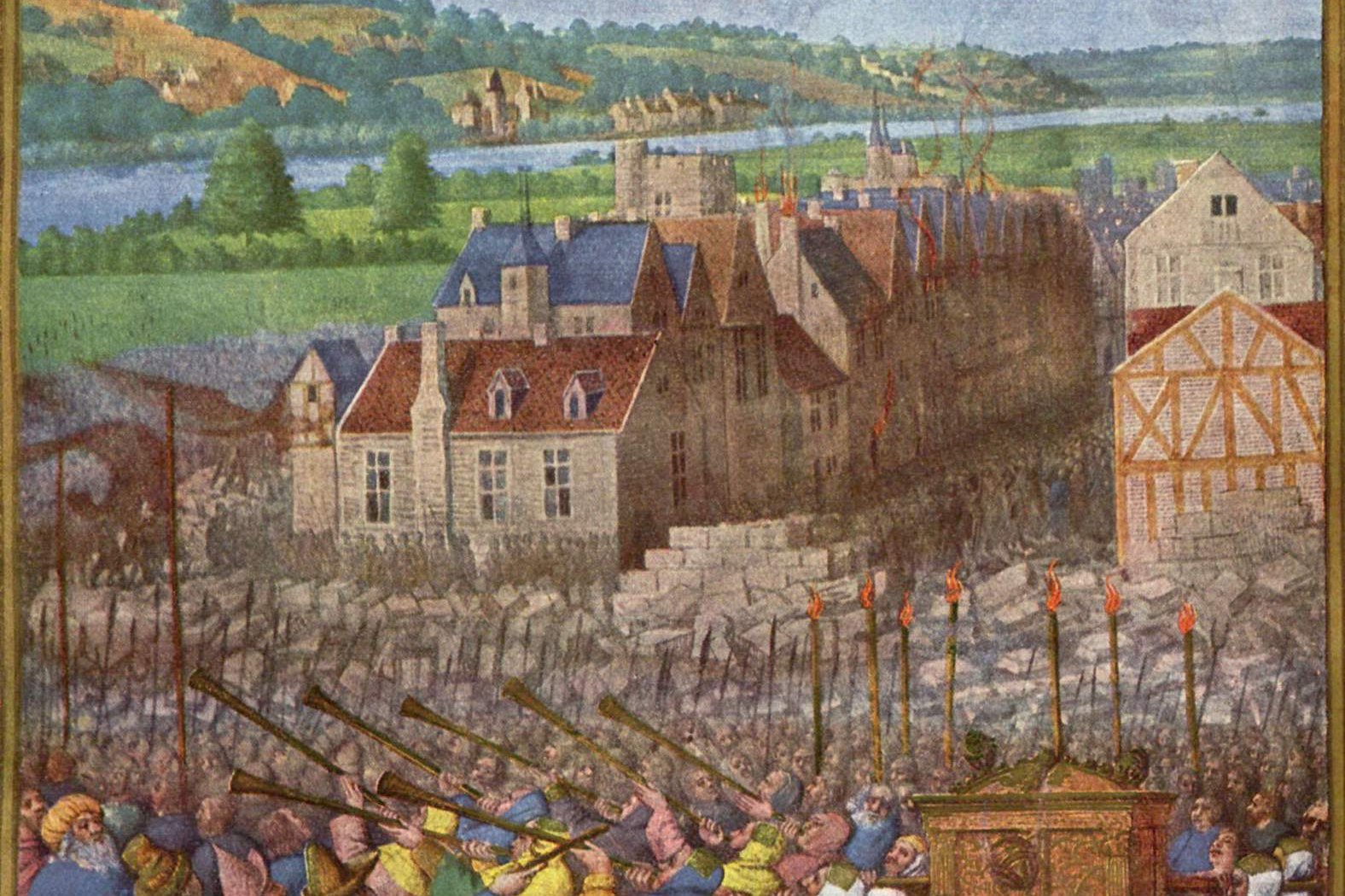
Jean Fouquet, illumination of the Fall of Jericho, c. 1415-1420. Public domain.
A battle plan built entirely out of walking
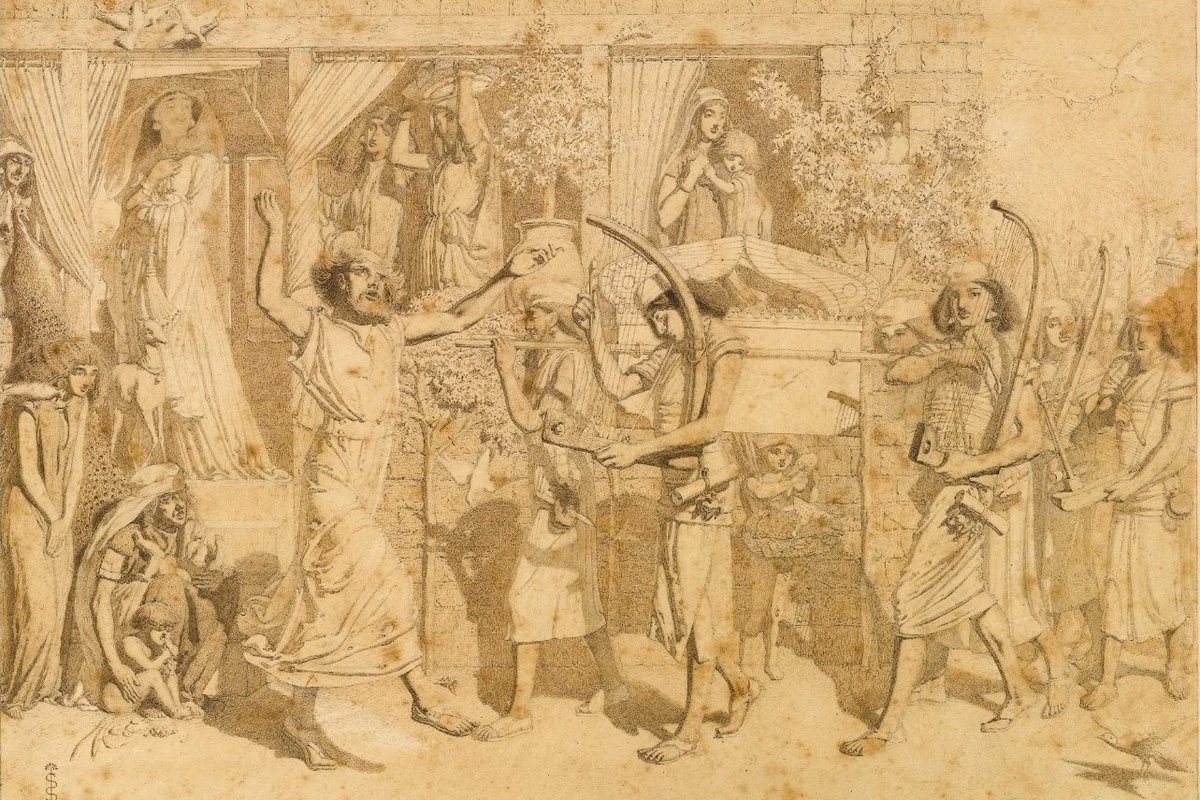
What God commands instead is oddly specific and, on its face, militarily useless: have the army circle the city once a day for six straight days, with seven priests carrying ram's horns marching ahead of the Ark of the Covenant — the gold-covered chest containing the tablets of the Law, understood as the visible sign of God's presence among the Israelites. "Have all the soldiers circle the city, marching once around it. Do this for six days" (Joshua 6:3, NABRE). No assault, no engagement with the defenders on the wall, nothing but a slow, silent procession — Scripture notes elsewhere in the chapter that the people were commanded not to shout or even speak during those first six days, keeping the whole maneuver eerily quiet. To any observer on Jericho's walls, it likely looked less like an invasion and more like a strange religious ritual repeating itself day after day for no visible military purpose.
The seventh day breaks the pattern
Everything changes on the seventh day. Instead of one circuit, the Israelites march around the city seven times in a row — "on that day only did they march around the city seven times" (Joshua 6:15, NABRE). At the end of the seventh circuit, Joshua gives the command the people had been waiting six days to hear: "Now shout, for the Lord has given you the city" (Joshua 6:16). The priests blow their horns, the people raise a shout, and the outcome is immediate and total: "The wall collapsed, and the people attacked the city straight ahead and took it" (Joshua 6:20, NABRE). The text doesn't describe any physical mechanism behind the collapse — no mining, no engines, no gradual weakening of the structure. The wall simply falls, on cue, at the exact moment commanded.
A city devoted, and a household spared
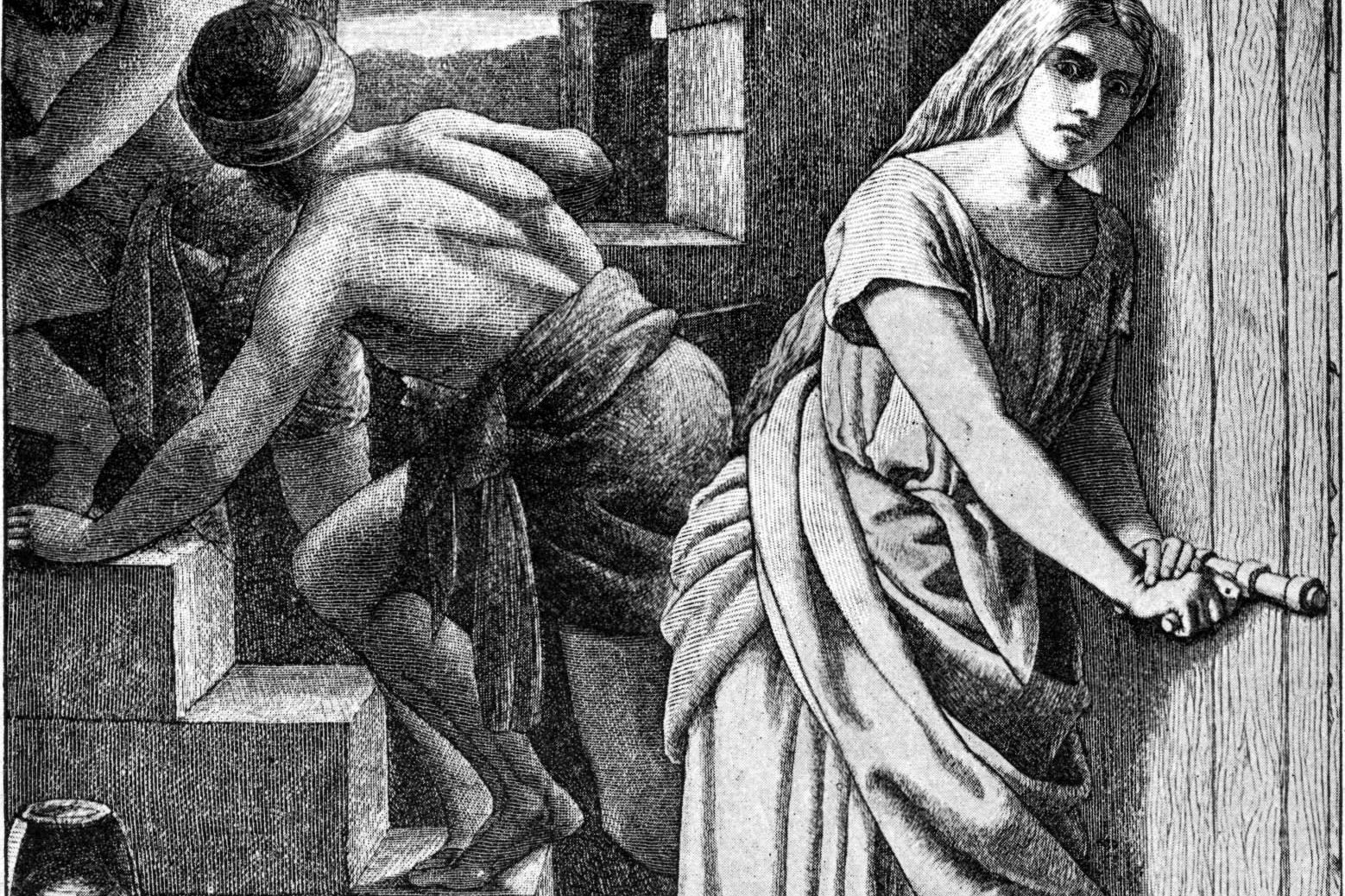
What follows the collapse is one of the more difficult passages in the Book of Joshua, describing the city's destruction as an act of "herem" — a Hebrew term meaning something set apart entirely for God, in this context understood by ancient Israel as total destruction of a conquered city's population and goods rather than treating them as ordinary plunder for the taking. It's a practice specific to this period of Israel's conquest narrative and not one Catholic teaching treats as a model for how war should be conducted; it belongs to the particular historical and theological context of Israel's entry into the Promised Land, not to later moral instruction. Amid that destruction, one household is deliberately spared: Rahab, a woman in Jericho who had hidden two Israelite scouts before the siege began and helped them escape the city, is rescued along with her family exactly as the scouts had promised her — a detail the New Testament later returns to, naming Rahab among the ancestors of Jesus in Matthew's genealogy (Matthew 1:5) and holding her up in the Letter to the Hebrews as an example of faith (Hebrews 11:31).
Why the Ark led the procession
The presence of the Ark of the Covenant at the center of the marching column is not incidental to the story — it's the whole point. The Israelites weren't parading a symbolic object for morale; the Ark represented God's own presence traveling with them into battle, underscoring that the city's fall belonged to God's action, not to Israel's military strength. This theme runs through the entire conquest narrative that begins with Jericho: victory is repeatedly framed less as the result of superior tactics or numbers and more as the fulfillment of promises made generations earlier to Abraham, then to Moses, and now carried out under Joshua's leadership. Readers interested in how this account fits into the larger sweep of Israel's history can find it placed in context in our guide to Old Testament stories every Catholic should know.
A story that has outlasted its walls
Jericho's collapse became, across centuries of Jewish and Christian retelling, a kind of shorthand for obstacles that fall not through force but through obedience and trust sustained over time — six days of walking in circles that must have felt pointless, followed by a single moment where everything gave way at once. The city itself, one of the oldest continuously inhabited sites in the world, has been excavated extensively by archaeologists, and the dating and interpretation of its ancient fortifications remain genuinely debated among scholars — a question this article doesn't attempt to settle. What has endured independently of that debate is the story's place in the biblical narrative: the first major victory of Israel's entry into the Promised Land, won, according to the text, by a shout rather than a weapon.
Trivia
What instructions did God give Joshua for taking Jericho?
Why did the Israelites march around Jericho instead of attacking it directly?
How many times did the Israelites circle Jericho in total?
What actually caused the wall to collapse?
Is there archaeological evidence for the fall of Jericho?
Related Reading