Shadrach, Meshach, and Abednego in the Fiery Furnace

A Statue Ninety Feet Tall
King Nebuchadnezzar of Babylon built a golden statue and set it up on the plain of Dura, then summoned every official in the empire to its dedication. When the music sounded — horn, pipe, zither, lyre, harp — everyone was to fall down and worship the statue immediately. Anyone who refused, the decree specified, "Whoever does not fall down and worship shall be instantly cast into a white-hot furnace." (Daniel 3:6).
Simeon Solomon, The Three Holy Children, 1863 — public domain.
Among the officials standing on that plain were three young Jewish men who had risen to administrative posts in the province of Babylon: Shadrach, Meshach, and Abednego, companions of the prophet Daniel and, like him, exiles from Jerusalem given new names in a foreign court. When the music played, they did not bow.
"We Will Not Serve Your God"
Certain Chaldeans reported them to the king, and Nebuchadnezzar, furious, gave them one more chance — bow now, or be thrown into the furnace immediately, and "who is the God who can deliver you out of my hands?" (Daniel 3:15). Their answer is one of the most direct professions of faith in the Old Testament:
"There is no need for us to defend ourselves before you in this matter. If our God, whom we serve, can save us from the white-hot furnace and from your hands, O king, may he save us! But even if he will not, you should know, O king, that we will not serve your god or worship the golden statue which you set up" (Daniel 3:16-18).
That last line carries the weight of the whole story. Their fidelity is not conditioned on rescue. They will not worship the statue whether or not God intervenes.
Into the Furnace
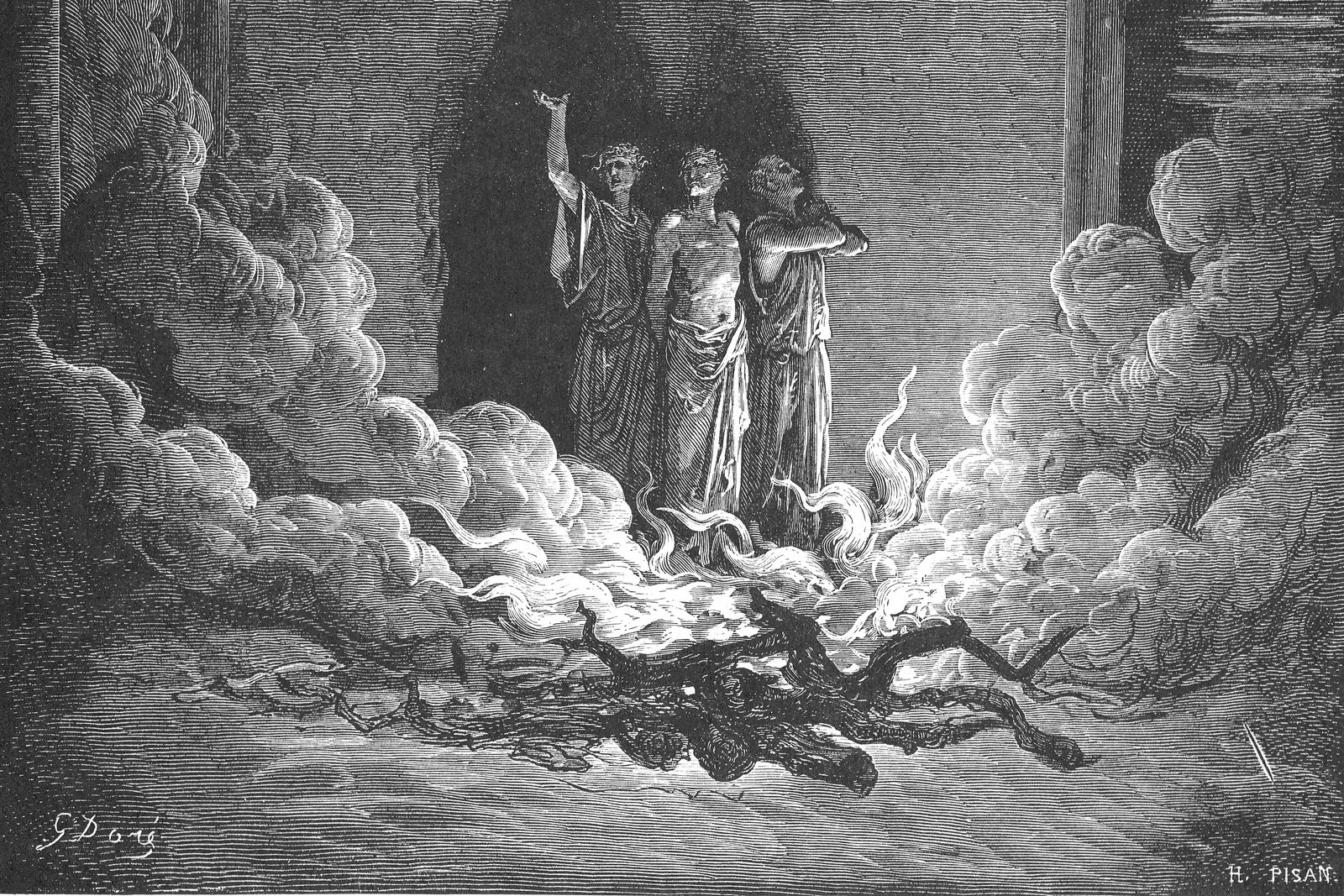
Nebuchadnezzar ordered the furnace heated seven times hotter than usual, and had the three men bound and thrown in fully clothed. The furnace was so hot that the soldiers who carried out the order were killed by the blast of heat on the way to the opening. Inside, according to the fuller version of the text preserved in Catholic Bibles, an angel of the Lord entered the furnace with them and "drove the fiery flames out of the furnace, and made the inside of the furnace as though a dew-laden breeze were blowing through it. The fire in no way touched them or caused them pain or harm" (Daniel 3:49-50). Rather than burning, they walked freely inside the flames, singing and blessing God — Azariah's prayer beginning, "Blessed are you, and praiseworthy, O Lord, the God of our ancestors, and glorious forever is your name" (Daniel 3:26).
Nebuchadnezzar, watching, rose in alarm and asked his counselors a question that changes the whole scene: "Did we not cast three men bound into the fire?... I see four men unbound and unhurt, walking in the fire, and the fourth looks like a son of God" (Daniel 3:91-92). He called them out, and when the court gathered around, they found "the fire had had no power over the bodies of these men; not a hair of their heads had been singed, nor were their garments altered; there was not even a smell of fire about them" (3:94).
The King's Reversal
Nebuchadnezzar, who moments earlier had demanded worship for himself, now blesses the God of the three men and issues a decree protecting them and their God from blasphemy, declaring "there is no other God who can rescue like this" (Daniel 3:95-96). It is one of the sharper ironies in the book of Daniel: a pagan king becomes, however briefly, a witness to the true God, converted not by argument but by watching three men refuse to be afraid of him.
Catholic Reading: Fidelity Without Guarantees
The Catholic canon of Daniel includes material not present in the shorter Hebrew/Protestant text — the Prayer of Azariah and the Song of the Three Young Men, sung from inside the furnace itself before the angel's arrival is even narrated. That canticle, calling on the sun, the frost, the mountains, and every created thing to bless the Lord, is still prayed in the Church's Liturgy of the Hours as a canticle of praise rising from the depths of trial rather than after it.
Theologically, the "fourth man" in the fire has long invited a Christological reading in Christian tradition — not formal Catholic dogma, but a widely held patristic association of the unburned, protective presence in the furnace with the pre-incarnate Word of God, present with his faithful in their suffering rather than removing them from it. The three men's own words to Nebuchadnezzar — willing to die without a guarantee of rescue — have made them, across centuries of Christian preaching, a model held up specifically for martyrs and for anyone facing pressure to compromise conscience under threat.
The story's deeper claim is not that faith prevents suffering. It is that faith does not require the promise of rescue to remain faith at all.
Related reading: see Daniel in the Lions' Den for the companion story of Daniel's own trial under a later king, and The Golden Calf for an earlier Old Testament confrontation over idol worship.
Trivia
Who were Shadrach, Meshach, and Abednego?
Why were they thrown into the furnace?
What happened when they were thrown into the fire?
Did the fire hurt them at all?
How does Catholic tradition read this story?
Related Reading