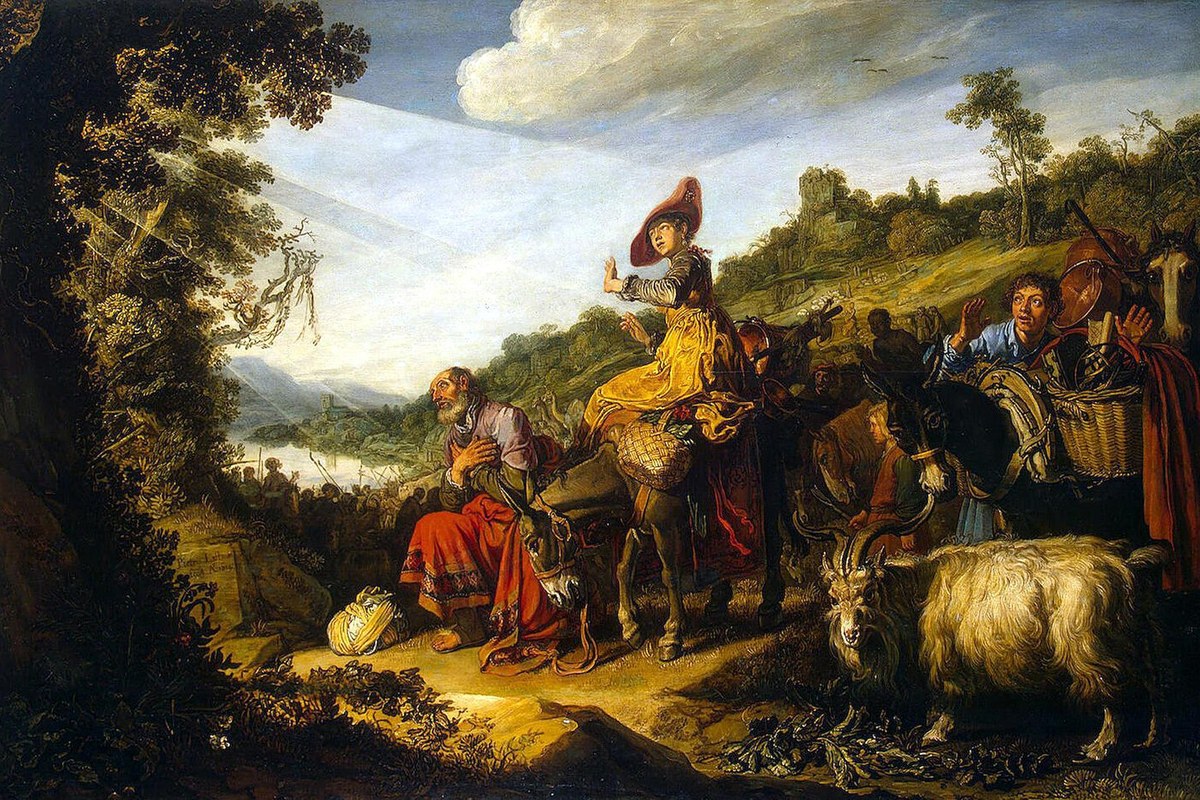
Job and the Whirlwind

A Catastrophe With No Clear Cause
The book of Job opens with a man described, without qualification, as "In the land of Uz there was a blameless and upright man named Job, who feared God and avoided evil." (Job 1:1) — a deliberate framing that removes, from the very first verse, any possibility that what follows can be read as ordinary punishment for wrongdoing. In rapid succession, Job loses his oxen and donkeys to raiders, his sheep to fire, his camels to another raid, and finally all ten of his children when a great wind collapses the house where they were gathered (1:13-19). Later, his own body is struck with a painful affliction "from the soles of his feet to the crown of his head" (2:7).
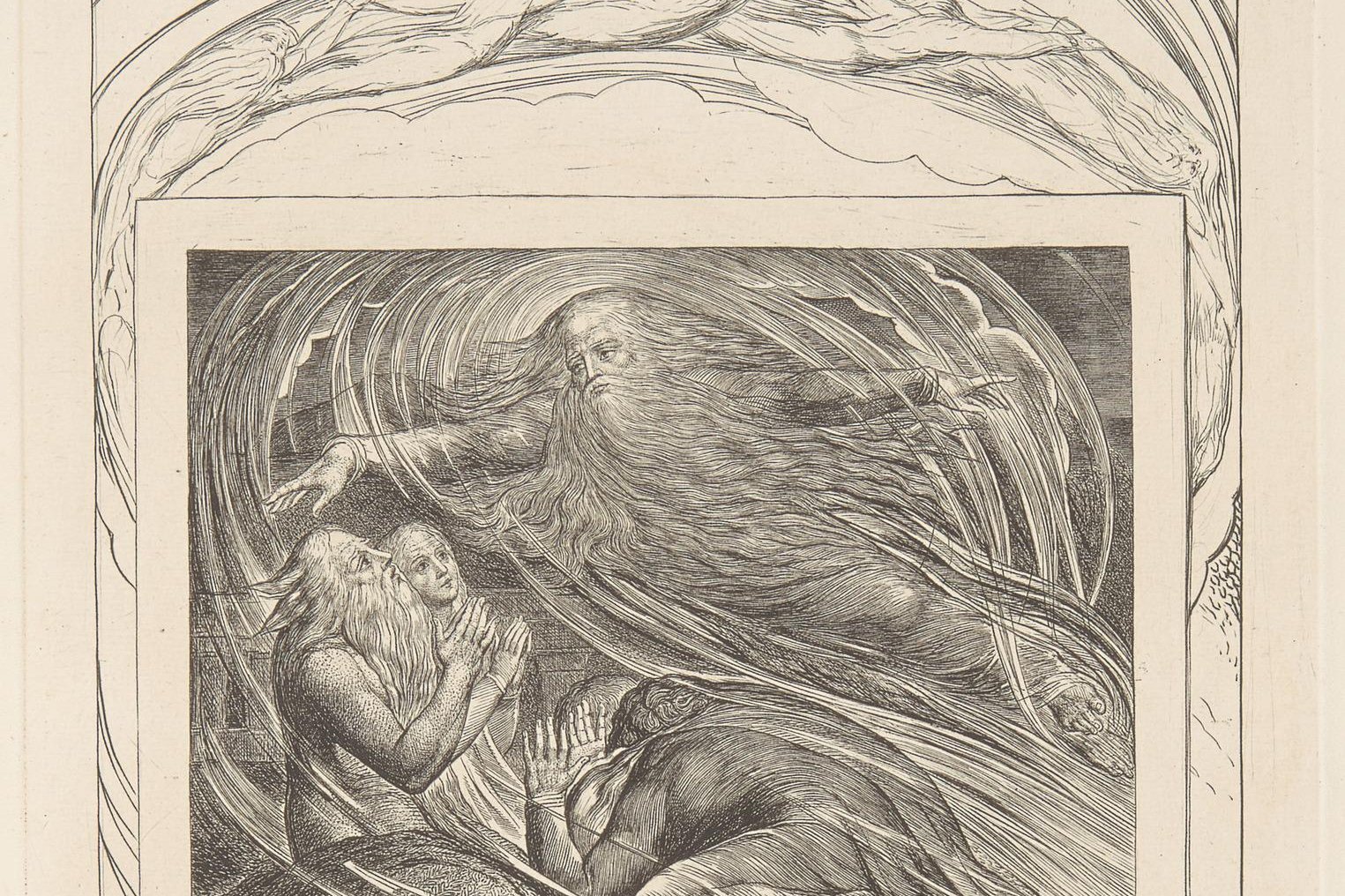
William Blake, Illustrations of the Book of Job, Plate 13: The Lord Answering Job Out of the Whirlwind (1825) - Wikimedia Commons, public domain
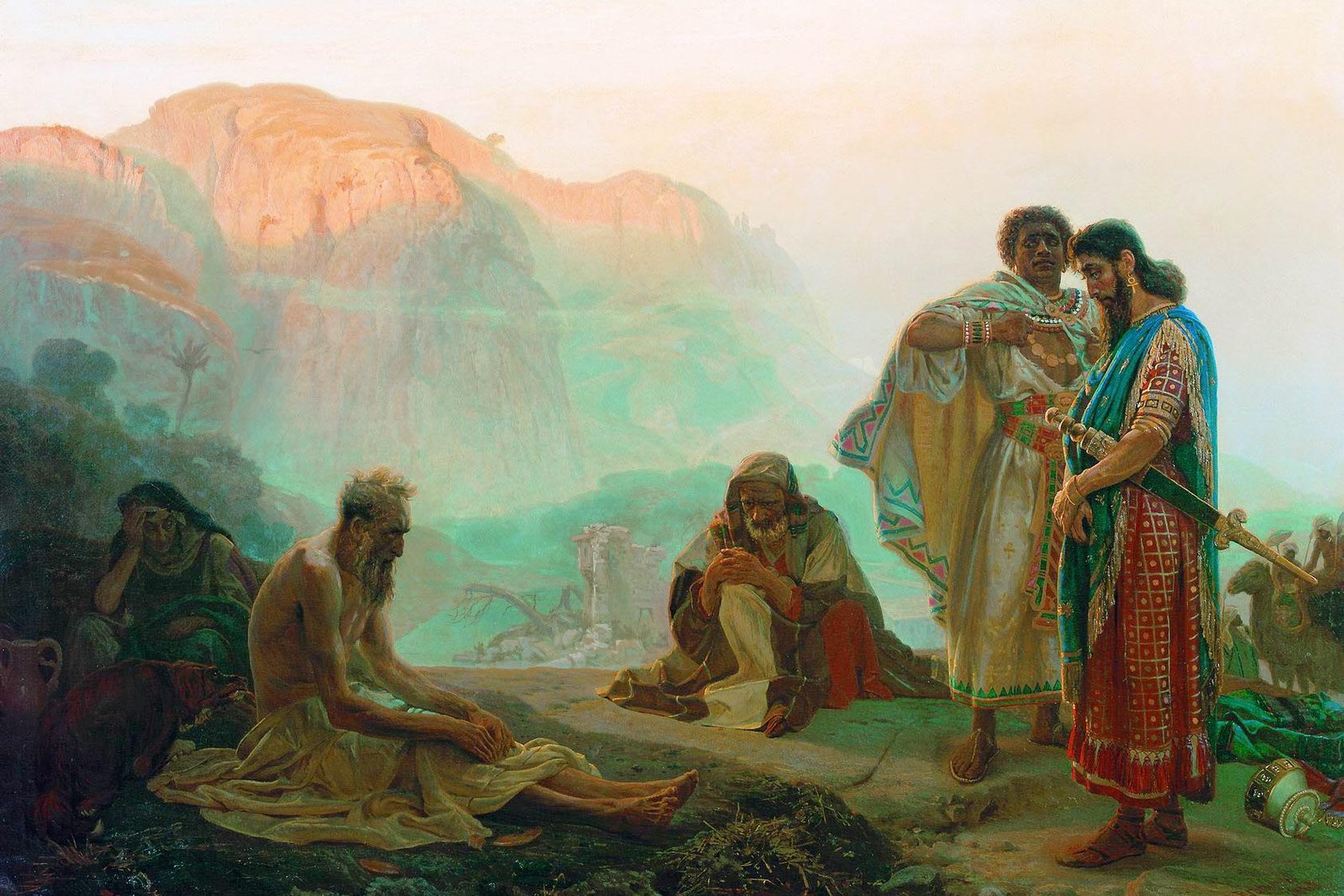
The bulk of the book — some thirty-five chapters — consists of an extended, often heated dialogue between Job and three friends, Eliphaz, Bildad, and Zophar, who arrive to comfort him and instead spend most of their time insisting, in various forms, that suffering of this magnitude must indicate hidden sin on Job's part. Job rejects this explanation repeatedly and forcefully, maintaining his innocence while never denying his own suffering or softening his demand that God explain himself directly. By the book's later chapters, Job has effectively summoned God to court, insisting on his right to a direct hearing and an accounting.
A Voice Out of the Storm
That hearing finally comes, but not in the form Job — or the reader — might expect. "Then the Lord answered Job out of the storm and said" (38:1). The Hebrew term underlying "storm" here is rendered "whirlwind" in the King James and several other traditional translations, describing a violent, swirling desert storm — itself a striking image, since whirlwinds and storms elsewhere in the Old Testament often accompany direct manifestations of God's presence and power, as in Elijah's encounter at Horeb or Ezekiel's opening vision.
What God says once he begins speaking is, on first reading, almost bewildering given everything that has come before. Rather than addressing Job's specific suffering, his lost children, or the question of whether he deserved what happened to him, God opens with a challenge: "Who is this who darkens counsel with words of ignorance? Gird up your loins now, like a man; I will question you, and you tell me the answers! Where were you when I founded the earth? Tell me, if you have understanding" (38:2-4).
A Tour of Creation, Not a Verdict
What follows across four chapters is an extended sequence of questions covering an enormous range of the natural world: the laying of the earth's foundations, the boundaries set for the sea, the source of light and darkness, the storehouses of snow and hail, the birth of mountain goats, the wild strength of the ox, the flight of the hawk, and the terrifying power of creatures named Behemoth and Leviathan. None of these questions offer Job any direct information about why his own children died or why his own body was afflicted. Every single one is, in a sense, unanswerable by a human being — which appears to be precisely God's point.
Catholic and Jewish commentary on this passage generally converge on a similar reading: God's response is not evasion or a refusal to engage with Job's suffering, since God does, notably, actually appear and speak directly to Job — an answer to his demand for a hearing, even if not the answer to his specific question. Instead, the whirlwind speech reframes the entire scale of the conversation. Job had been arguing his case as though he and God were parties of comparable standing in a courtroom, each owed an accounting to the other. God's questions dismantle that framing, not by denying Job's suffering is real or by belittling his grief, but by making vivid, in overwhelming detail, the vast disproportion between human understanding and the scope of a Creator who sustains the movements of constellations and provides for wild animals no human being has ever tamed or fully controlled.
Job's Answer
Job's response, once God finishes speaking, is notably brief compared to his earlier lengthy speeches, and it marks a real shift in posture rather than a defeated capitulation. "I have dealt with great things that I do not understand; things too wonderful for me, which I cannot know" (42:3). He does not retract his earlier claim of innocence, and nothing in the text suggests he now believes his suffering was deserved after all. What changes is something else entirely: "I had heard of you by word of mouth, but now my eye has seen you" (42:5). The direct encounter itself — being spoken to, being seen and addressed by God in the midst of unexplained suffering — appears to accomplish something that no argument, from Job's friends or from Job himself, had managed across the entire preceding dialogue.
A Surprising Verdict on the Friends
The book's conclusion contains a detail easy to overlook but theologically significant: God rebukes Eliphaz, Bildad, and Zophar directly, telling Eliphaz, "my wrath is kindled against you and your two friends; for you have not spoken rightly concerning me, as has my servant Job" (42:7). This is a striking reversal. Throughout the dialogue, the three friends had consistently defended God's justice and Job's presumed guilt, while Job had persistently, sometimes angrily, questioned and challenged God directly. Yet it is Job's honest wrestling, not the friends' confident theological defense of God on Job's behalf, that God affirms as having "spoken rightly."
This detail carries an important pastoral implication that Catholic reflection on the book has long emphasized: honest lament and even angry questioning directed at God, when it flows from real faith and real relationship rather than rejection of God altogether, is treated in Scripture as more acceptable than confident, abstract theological explanations offered at another person's expense and pain.
Restoration, Without Full Explanation
The book closes with Job's fortunes materially restored — "the Lord blessed the last days of Job more than the former days" (42:12), with doubled possessions and a new family of ten children — but this restoration should not be read as retroactively confirming that everything happens for a discoverable, satisfying reason after all. The whirlwind speech never explains why Job specifically suffered, and the book pointedly declines to resolve that question in a tidy way, even at its happy ending. What Job receives instead is a direct encounter with God that reframes, without eliminating, the mystery of unexplained suffering — an answer that satisfies not by explaining, but by the sheer fact of God's presence and attention in the midst of what remains, in important respects, still unexplained.
Readers exploring more of the Old Testament's wisdom literature may also enjoy Old Testament Prophets Every Catholic Should Know and Ezekiel's Vision of the Valley of Dry Bones, another Old Testament encounter with God's power addressing a situation of profound loss.
Trivia
What had happened to Job before God spoke to him from the whirlwind?
Where does the whirlwind appear in the story, and what does God say?
Why does God respond to Job's questions with more questions instead of a direct explanation?
How does Job respond after God finishes speaking?
What happens to Job at the end of the book?
Related Reading