Rahab and the Spies at Jericho

Two spies, sent into a fortified city
Before Israel's forces move against Jericho, Joshua sends two men into the city itself to scout it in advance — a dangerous mission, entering the walled territory of a people who would have every reason to kill discovered spies immediately. The two men lodge at the house of a woman named Rahab, identified in the text as a prostitute living within the city walls. Word reaches the king of Jericho that Israelite spies have entered the city and are staying at her house, and soldiers are sent to Rahab's door demanding she hand the men over.
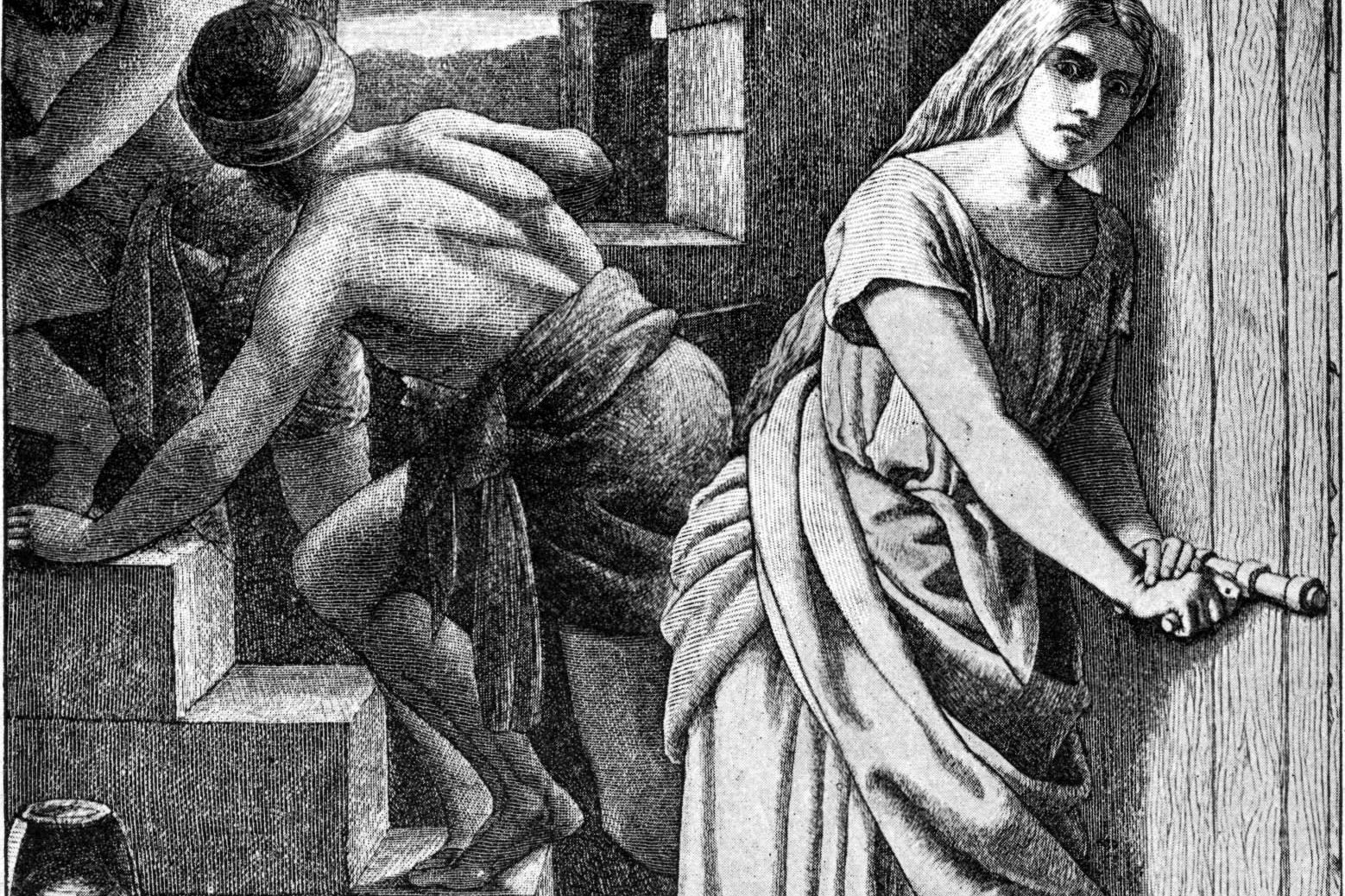
Foster Bible Pictures, Rahab Helping the Two Israelite Spies (1897), public domain via Wikimedia Commons
A city already afraid
What Rahab tells the spies, once she's hidden them and sent the king's soldiers away on a false trail, is striking for how much fear had already spread through Jericho before Israel had launched any attack at all. "I know that the Lord has given you the land, that a dread of you has come upon us, and that all the inhabitants of the land tremble with fear because of you" (Joshua 2:9, NABRE), she tells them, explaining that reports of Israel's earlier victories — crossing the sea, defeating other regional kings — had reached Jericho well ahead of any Israelite soldier. "We heard, and our hearts melted within us," she continues, before reaching a conclusion remarkable coming from someone outside Israel's own covenant entirely: "the Lord, your God, is God in heaven above and on earth below" (Joshua 2:11, NABRE). It's a confession of faith spoken by a Canaanite woman, inside the very city Israel is about to attack, well before the battle has even begun.
A bargain, and a specific sign
Rahab doesn't help the spies purely out of admiration; she names her price directly, asking that her own life and her family's lives be spared when the coming attack happens, in exchange for the protection she's providing now. The spies agree, but attach specific conditions of their own: she is to tie a scarlet cord in the window through which she lowers them to escape the city walls, and she must gather her whole family inside her house, since anyone caught outside its doors during the attack would not be covered by the promise. "Should any of them pass outside the doors of your house, their blood will be on their own heads, and we will be guiltless. But if anyone in your house is harmed, their blood will be on our heads" (Joshua 2:19, NABRE). Rahab accepts the terms without hesitation: "'Let it be as you say,' she replied, and sent them away. When they were gone, she tied the scarlet cord in the window" (Joshua 2:21, NABRE) — acting immediately on the agreement rather than waiting to see whether the spies would keep their side of it first.
A promise kept on both sides
What makes this episode distinct among many negotiated agreements in the Old Testament is that both parties actually follow through. The spies escape the city and report back to Joshua, and when Jericho is eventually conquered, the account describes Rahab and her family being spared exactly as promised — the scarlet cord in her window serving as the marker that protected her household when the rest of the city fell. Her willingness to act decisively on a single conversation with two strangers, tying that cord immediately rather than waiting to see how events unfolded, is presented as the concrete expression of the trust she had already voiced.
Remembered well beyond her own story
Rahab's role doesn't end with Jericho's fall. Later biblical tradition returns to her repeatedly: Matthew's Gospel names her directly in its genealogy of Jesus, an unusual inclusion of a Canaanite woman with her particular background in a lineage otherwise focused on Israel's own patriarchs and kings. The Letter to the Hebrews cites her explicitly as an example of faith, and the Letter of James points to her as someone whose faith was demonstrated through concrete action rather than words alone — her decision to hide the spies and act on the agreement she'd made, rather than any abstract profession of belief, held up centuries later as the proof of what she actually trusted.
An outsider who saw what her own city missed
What gives Rahab's story its lasting weight is the contrast built into it: an entire fortified city, aware of the same reports about Israel's God that Rahab had heard, and yet every other resident of Jericho responds with only fear, never trust. Rahab alone draws the further conclusion — that if this God really is what the reports suggest, the wiser course is to align herself with what he's doing rather than simply dread it. It's a story remembered less for the spies' escape than for what one woman, with far less standing or certainty than Israel's own people, chose to risk everything on.
Trivia
Who was Rahab, and why did the Israelite spies come to her house?
What did Rahab tell the spies about how the people of Jericho felt about Israel?
What deal did Rahab make with the spies?
Did Rahab actually follow through on the agreement?
What happened to Rahab and her family when Jericho eventually fell?
Related Reading