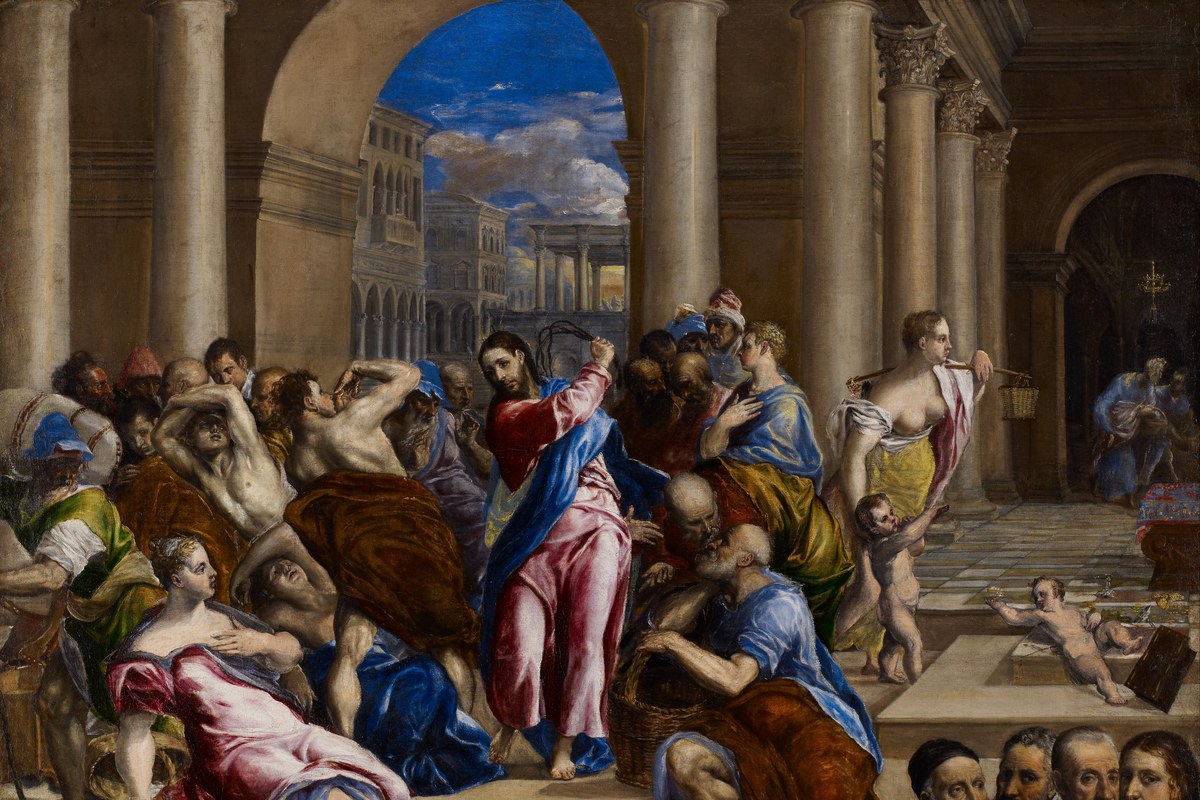
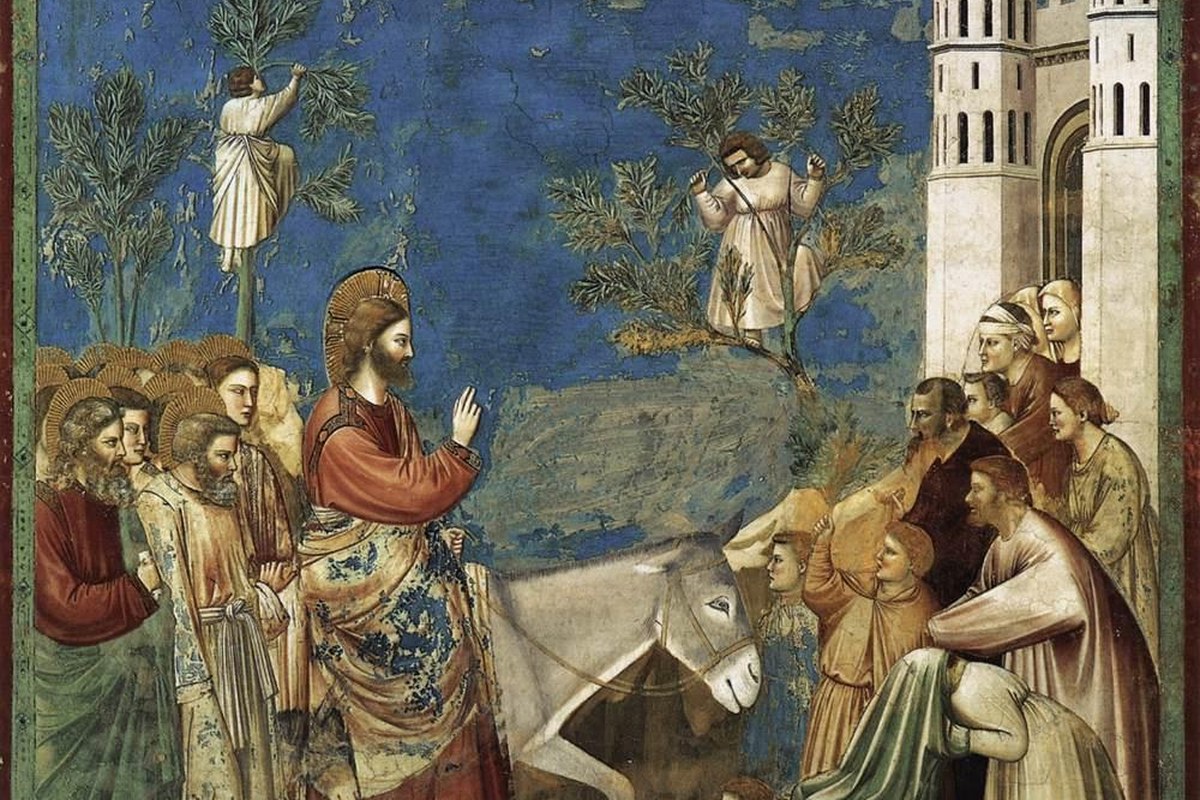
Our Lady Gives the Rosary to Saint Dominic

A preacher running out of arguments
By 1208, Dominic de Guzmán had spent years in southern France trying to win back followers of the Albigensian, or Cathar, heresy — a dualist movement that had taken deep root in the region and proven stubbornly resistant to the Church's usual tools of persuasion. Cathar teachers preached that matter itself was evil, the creation of a lesser and darker power, and that the body and physical world were things to be escaped rather than redeemed — a message that, for complicated reasons of local politics and clerical corruption in the surrounding Catholic establishment, had found a surprisingly receptive audience among the nobility and common people of Languedoc alike.
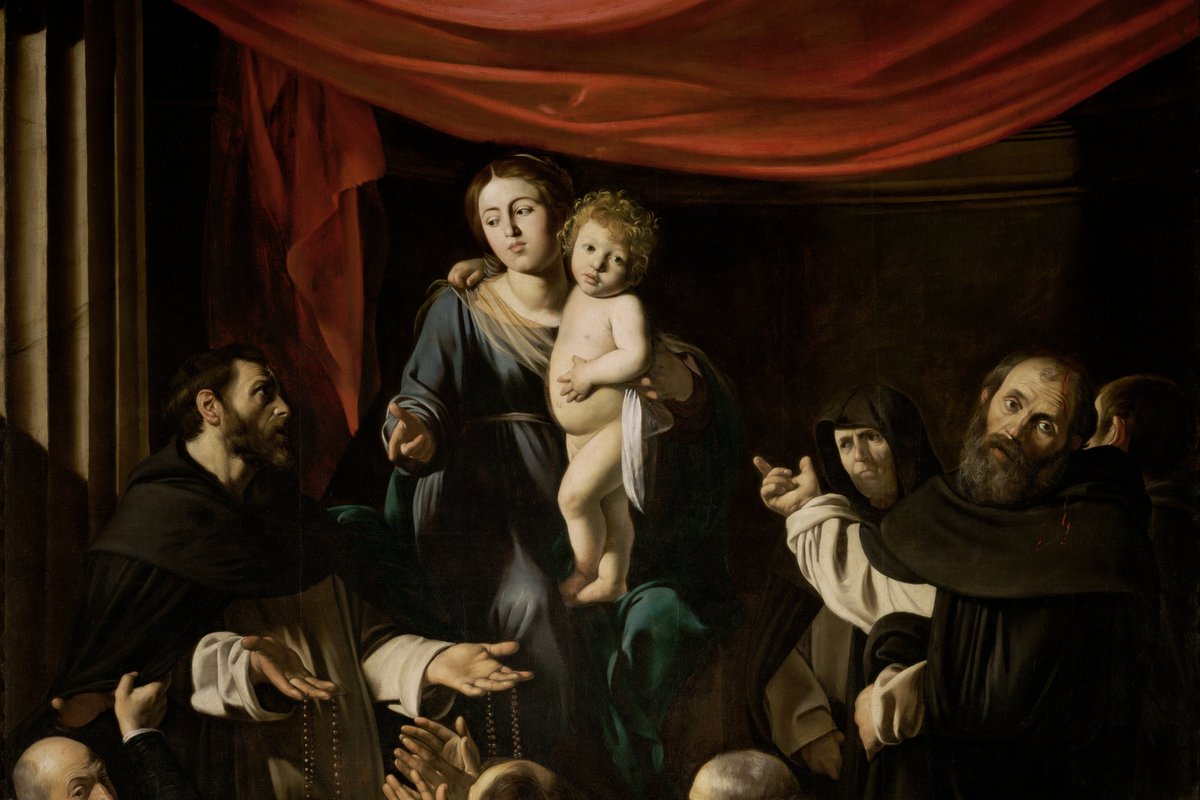
Caravaggio, "Madonna of the Rosary," 1607, Kunsthistorisches Museum, Vienna — public domain.
Dominic's chosen method was debate: public disputations where he tried to out-argue Cathar preachers point by point, matching their asceticism with his own fasting and poverty so that his lifestyle, and not just his logic, would carry weight. Tradition describes him exhausted by the scale of the task, his careful theological arguments landing with little visible effect. It's into that specific moment of frustration that the traditional story places Mary's appearance to him at the small church in Prouille, where he had already established a community for women converted from the heresy — an early seed of what would eventually grow into the Dominican order's contemplative branch.
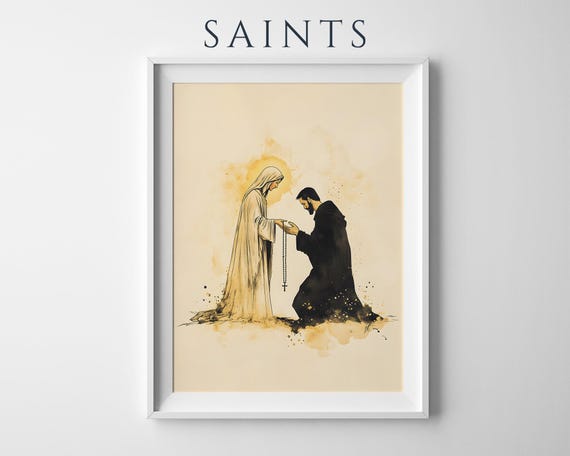
According to the legend, Mary appeared to Dominic, gave him a string of beads, and instructed him to preach the rosary as a remedy — both for the specific heresy he was fighting and, more broadly, for sin. The tradition holds that his preaching changed almost immediately afterward, drawing far larger and more responsive crowds than his arguments alone ever had. It's a compact, dramatic story, the kind that travels well across centuries of retelling — and that's worth noting up front, because how a story travels is not the same question as whether it happened exactly as told.
Legend, not doctrine
This is the point where a careful reader has to slow down, because the popular version of this story often gets presented with more certainty than the Church itself claims for it. The apparition at Prouille appears nowhere in Scripture, and the Catholic Church has never formally defined it as a historical fact the way it has defined certain dogmas. The version most familiar today owes a great deal to a fifteenth-century Dominican preacher, Alan de la Roche, who promoted the story energetically as part of his own campaign to spread rosary devotion — meaning the account as commonly told developed and was elaborated over roughly two and a half centuries after Dominic's death in 1221, not recorded at the time by any contemporary witness.
None of that makes the tradition worthless or dishonest — pious legends have always played a real role in how devotions take shape and spread, and the Church has consistently permitted and even encouraged rosary devotion regardless of the precise historical status of its founding story. But it does mean the honest way to describe this scene is as cherished Dominican tradition, not verified biography, in the same way this blog's article on Saint Dominic de Guzman treats the Prouille vision as attributed tradition rather than settled fact.
It's also worth noting how popes themselves have handled this ambiguity over the centuries: rather than ruling on whether the apparition happened exactly as described, successive pontiffs simply praised and promoted the rosary as a devotion, sidestepping the historical question in favor of endorsing the prayer's spiritual fruit. That's a pattern the Church follows with a number of pious traditions — approving and encouraging the devotion that grew from a story without formally certifying the story's every historical detail.
A prayer form older than the legend around it
There's a second layer of historical correction worth making here. The rosary as a prayer practice — repeated recitations of the Hail Mary, often counted on strings of beads, sometimes called a "paternoster" cord when used for the Our Father — already existed in simpler forms in Western Christian devotional life before Dominic's lifetime. What Dominican tradition actually credits the order with is not inventing this practice out of nothing, but taking a scattered, informal devotion and giving it the structure, promotion, and sustained institutional backing that turned it into one of the most widespread and recognizable forms of Catholic prayer in the world. The Dominicans' own self-understanding as guardians and promoters of the rosary long predates any specific claim about the exact moment it was handed to their founder.
Why the scene endures in Catholic art
Despite — or perhaps because of — its legendary status, the moment of Mary presenting the rosary to Dominic became one of the most frequently painted scenes in Catholic devotional art, particularly from the Counter-Reformation period onward, when the rosary was actively promoted as a spiritual weapon against the era's religious controversies. Caravaggio's own 1607 treatment of the subject, held today in Vienna, shows Mary enthroned above a crowd of ordinary supplicants, Dominic among them, distributing rosaries with a gesture that reads less like a private mystical vision and more like a public commissioning — Mary handing out a tool for an entire Church, not a secret given to one man alone.
Artists often included Saint Catherine of Siena kneeling alongside Dominic in these compositions, even though she lived more than a hundred years after his death — a clear sign that the scene was never meant to function as strict historical portraiture. It operates instead as a symbol: of the Dominican order's Marian identity, of the rosary's power as claimed by centuries of devotional experience, and of a founder whose greatest legacy, by tradition's own account, arrived not through argument but through prayer.
A feast day born from a battle
The story's staying power owes something, too, to a later and much better documented event: the 1571 naval Battle of Lepanto, where a Christian fleet faced the Ottoman navy in the Mediterranean. Pope Pius V, himself a Dominican, had called on Christians across Europe to pray the rosary for victory, and when news of the unexpected Christian win reached Rome, he attributed the outcome to that prayer campaign and instituted a feast in Mary's honor under the title of Our Lady of Victory — later renamed Our Lady of the Rosary. That feast, still kept every October 7th, is historically well attested in a way the Prouille apparition itself is not, and it shows how thoroughly the rosary had become bound up, in the Catholic imagination, with Mary's protective intercession — the very theme the Dominic legend was always meant to illustrate.
Trivia
Is the story of Mary giving the rosary to Saint Dominic found in the Bible or an official Church document?
What does the traditional story actually describe?
Did the rosary as a prayer form exist before Dominic?
What does the Catholic Church officially teach about the origin of the rosary?
How is this scene usually depicted in Catholic art?
Related Reading