The Beheading of John the Baptist

A prophet imprisoned for telling the truth
John the Baptist's imprisonment begins with a direct confrontation. Herod had married Herodias, his own brother Philip's wife, and John publicly named the arrangement for what it was: "It is not lawful for you to have your brother's wife" (Mark 6:18, NABRE). It's a dangerous thing to say to a ruler with the power to imprison or kill for far less, and Herodias responds exactly as that danger would predict — she "harbored a grudge against him and wanted to kill him but was unable to do so" (Mark 6:19, NABRE), blocked, evidently, by something in Herod himself.
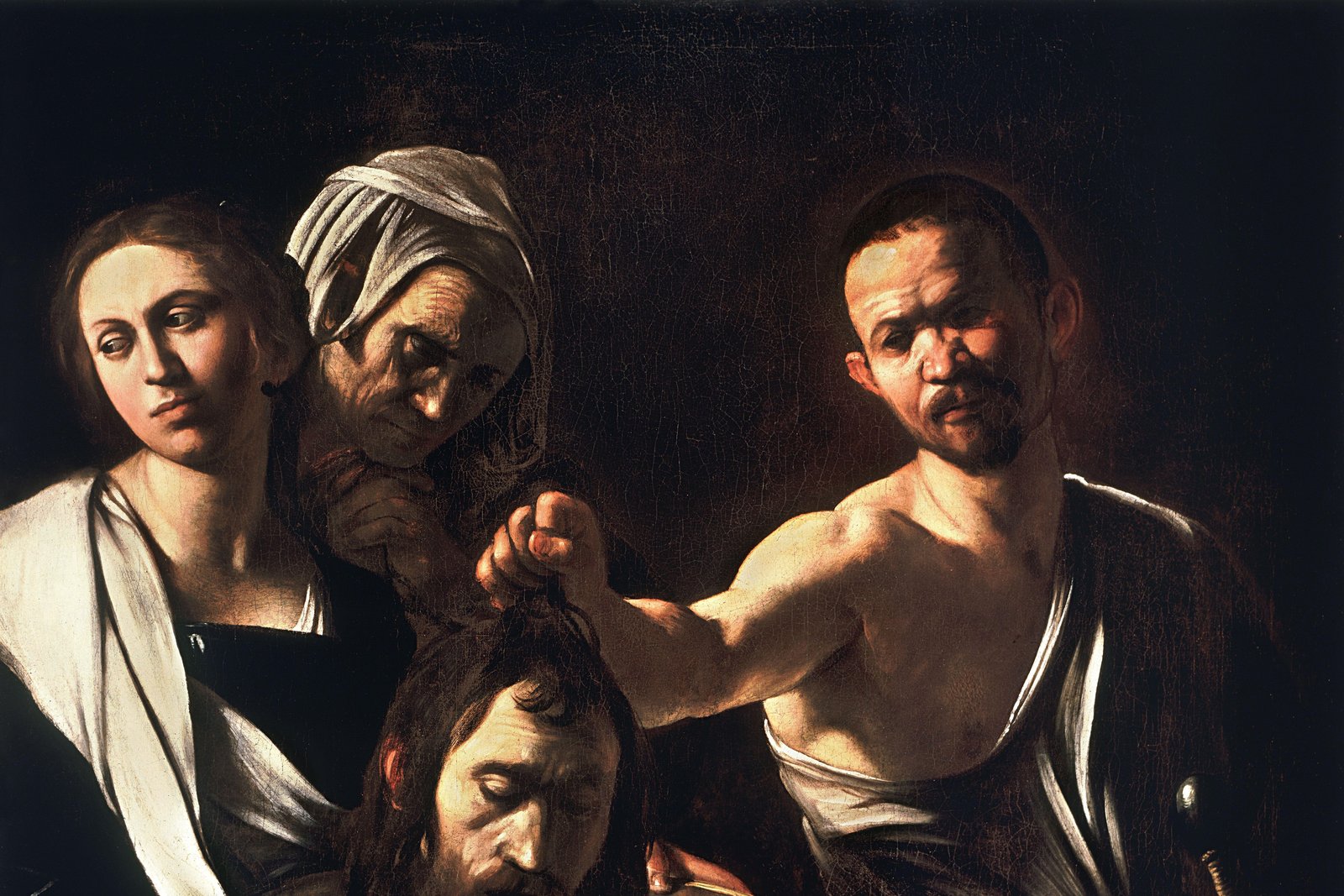
Caravaggio, Salome with the Head of John the Baptist (1610), public domain via Wikimedia Commons
An unexpected fondness beneath the fear
What Mark records about Herod's own attitude toward his prisoner is more complicated than simple hostility. "Herod feared John, knowing him to be a righteous and holy man, and kept him in custody. When he heard him speak he was very much perplexed, yet he liked to listen to him" (Mark 6:20, NABRE). It's a striking detail — Herod isn't described as hating John or dismissing him; he's genuinely unsettled by him, drawn to hear him speak even while imprisoning him, caught between recognizing something real in John's holiness and being unwilling to act on the challenge that holiness posed to his own life. That unstable balance protects John's life, at least for a time.
A dance, and a promise made too quickly
The balance collapses at a birthday banquet Herod holds for his own court and high officials. Herodias's daughter performs a dance that delights Herod and his guests enough that he makes an extravagant, public offer: "Ask of me whatever you wish and I will grant it to you." He goes further still, swearing an oath in front of the assembled crowd: "I will grant you whatever you ask of me, even to half of my kingdom" (Mark 6:22-23, NABRE). It's an impulsive promise, made in a moment of public pleasure and made publicly enough that walking it back would cost Herod something significant in front of the very guests he was trying to impress.
A mother's answer, delivered without hesitation
Rather than choosing a gift for herself, the girl turns to her mother for guidance: "What shall I ask for?" Herodias's answer comes immediately, with no apparent deliberation: "The head of John the Baptist" (Mark 6:24, NABRE) — the grudge she had carried, unable to act on directly, finding its opening at last through her own daughter's unexpected reward. The girl carries the request back to Herod with equal directness, adding a detail of her own that makes the moment even starker: "I want you to give me at once on a platter the head of John the Baptist" (Mark 6:25, NABRE).
A king trapped by his own word
Herod's reaction reveals exactly the tension Mark had already established between his fear of John and his fondness for hearing him: "The king was deeply distressed, but because of his oaths and the guests he did not wish to break his word to her" (Mark 6:26, NABRE). It's not indifference that leads to John's death — it's Herod's unwillingness to be publicly embarrassed among his own guests by breaking an oath he'd made rashly, a concern for appearance and status outweighing the genuine reluctance Mark records him feeling. He gives the order anyway: "he promptly dispatched an executioner with orders to bring back his head. He went off and beheaded him in the prison" (Mark 6:27, NABRE), and the head is delivered exactly as requested — "on a platter," handed to the girl, and then from her to her mother (Mark 6:28, NABRE), the grudge Herodias had carried finally satisfied.
Herod, haunted by his own decision
Mark circles back to Herod's guilty conscience earlier in the same chapter, in a detail placed, in the Gospel's own structure, right before the full banquet story is told. When reports of Jesus's growing fame reach Herod, his reaction is immediate and specific: "It is John whom I beheaded. He has been raised up" (Mark 6:16, NABRE), even as others around him floated different explanations — that Jesus was Elijah, or simply one more prophet among many (Mark 6:14-15, NABRE). Herod alone jumps straight to John, unprompted, which suggests the execution he'd ordered to avoid looking weak in front of his guests never actually left him. The man he claimed to have feared and admired in life apparently troubled him just as much once dead.
A quiet burial, after a brutal end
Mark closes the episode with a short, understated detail easy to miss after the drama of the banquet itself: "When his disciples heard about it, they came and took his body and laid it in a tomb" (Mark 6:29, NABRE). There's no confrontation with Herod, no public outcry recorded in the text — simply John's own followers claiming his body and giving him a burial, a final act of loyalty to a teacher executed for saying plainly what a king didn't want said. The Catholic Church keeps a distinct feast day, the Passion of Saint John the Baptist, on August 29, specifically to mark this martyrdom — separate from his birth, which the Church celebrates on June 24, one of the few people in the liturgical calendar whose birth is commemorated at all.
A death caused by pride, not conviction
What makes this episode distinct is how little the actual killing has to do with anything Herod believed about John. He wasn't convinced by an argument or driven by hatred in the moment — he acted to protect his own public image, unwilling to look weak or dishonest in front of a room full of guests over a promise made carelessly in a moment of pleasure. John, the man Herod had genuinely liked listening to and recognized as righteous, dies not because Herod changed his mind about him, but because Herod cared more about not breaking a careless oath in public than about the life of the man he privately respected.
Trivia
Why had Herod imprisoned John the Baptist in the first place?
What happened at Herod's birthday banquet?
What did the girl ask for, and where did the request come from?
Did Herod want to grant the request?
How was John the Baptist actually killed?
You May Also Like

Related Reading