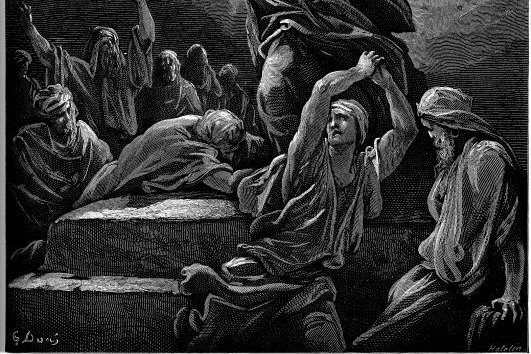
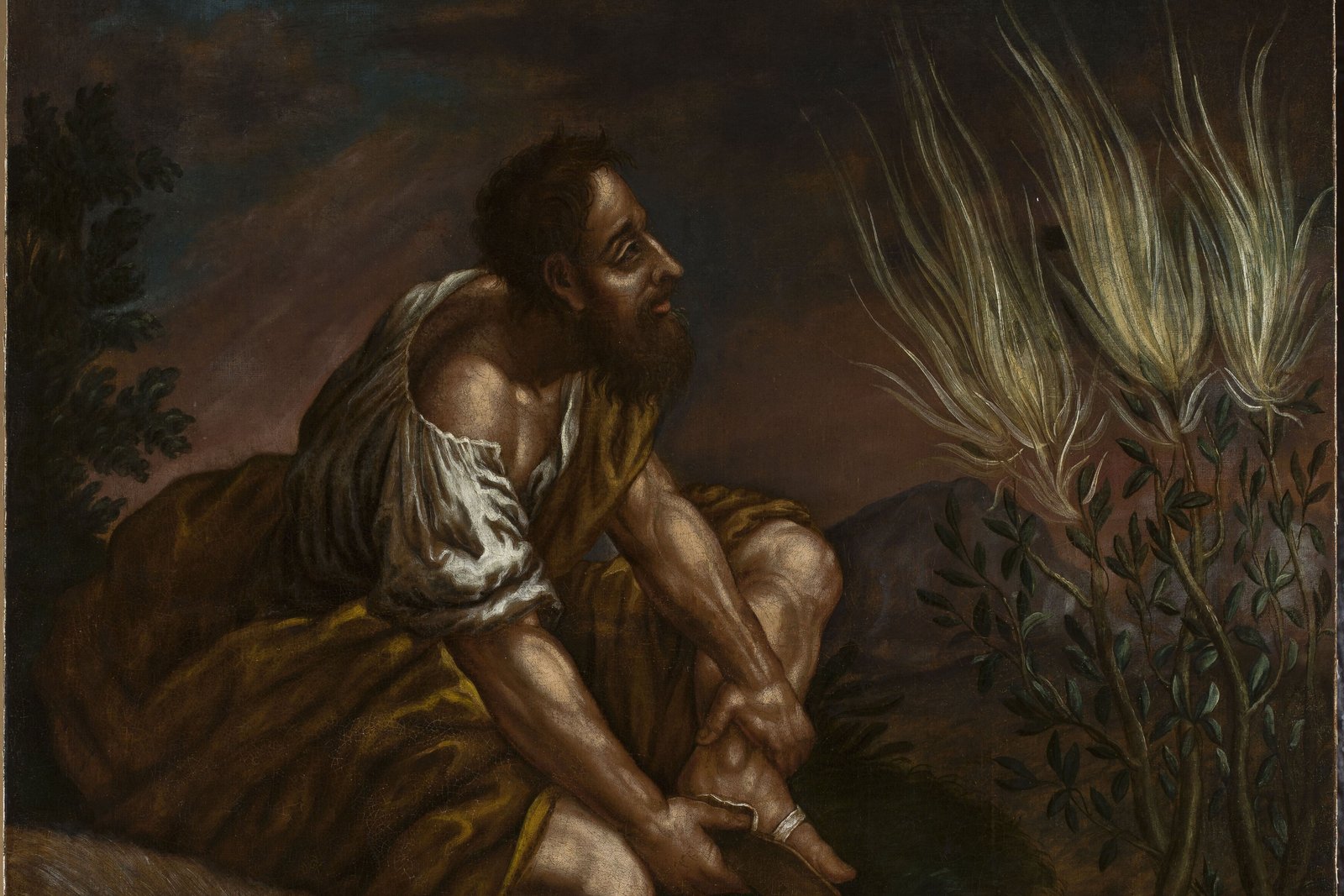
The Bronze Serpent in the Wilderness

Complaining in the Wilderness, Again
By the time the episode in Numbers 21 takes place, the Israelites had been wandering for decades, and their patience — never abundant to begin with — had worn through completely. Forced to detour around the territory of Edom rather than pass through it, the people turned on Moses and, by extension, on God: "Why have you brought us up from Egypt to die in the wilderness, where there is no food or water? We are disgusted with this wretched food!" (Numbers 21:5). It was not the first such complaint in the Exodus story, and earlier ones about food and water had been answered with manna, quail, and water from a rock. This time, the response was different, and far harsher.
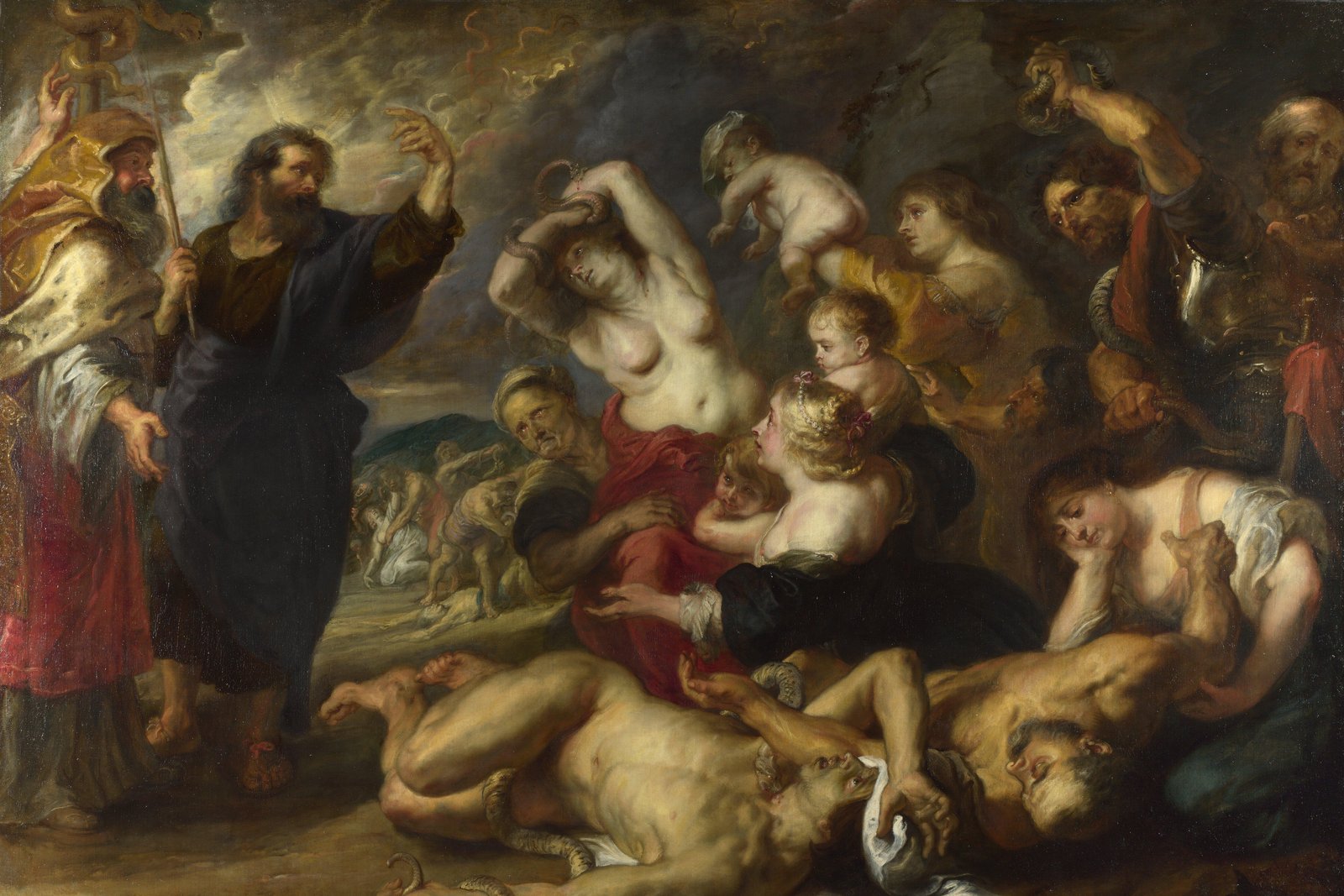
Peter Paul Rubens, The Brazen Serpent (c. 1635-1640) - Wikimedia Commons, public domain
"The Lord sent among the people seraph serpents, which bit the people so that many of the Israelites died" (21:6). The Hebrew word rendered "seraph" here is the same root later used for the fiery seraphim of Isaiah's vision — a term suggesting a burning, searing quality to the bite itself, not merely an ordinary desert snake. Scholars generally read this as describing a real, and reportedly severe, outbreak of venomous snakebites moving through the camp, understood by the text as a direct consequence of the people's rebellion against God.
Moses Intercedes, Again
What follows is a pattern familiar from earlier in Exodus and Numbers: the people, faced with real suffering, come to Moses in genuine repentance. "We have sinned in complaining against the Lord and you. Pray to the Lord to take the serpents from us" (21:7). And, as he had done before on their behalf even when he had every reason to be frustrated with them, "Moses prayed for the people."
God's answer, though, does not remove the serpents from the camp. That is worth pausing on, because it is the strangest part of the story. God does not eliminate the danger. Instead, "the Lord said to Moses: Make a seraph and mount it on a pole, and everyone who has been bitten will look at it and recover" (21:8). Moses cast the image in bronze — a seraph, or fiery serpent, matching the very creatures still moving through the camp — and raised it up on a standard where the whole community could see it. "Accordingly Moses made a bronze serpent and mounted it on a pole, and whenever the serpent bit someone, the person looked at the bronze serpent and recovered" (21:9).
A Cure Shaped Like the Wound
Why an image of the affliction itself, rather than some other sign entirely — a staff, a light, a word? The text does not spell this out, but it is precisely the strangeness of the remedy that has made this episode resonate through both Jewish and Christian reflection for millennia. The serpent had come to represent Israel's sin and its consequence, and the bronze image, lifted where all could see it, became a public, visible confrontation with exactly what had gone wrong — not hidden or explained away, but held up openly. Healing required an act of trust: turning to look, deliberately, at the thing that had caused the wound, on the strength of God's word alone that doing so would bring life rather than more harm.
This is consistent with a broader pattern across the Old Testament, in which physical objects — the ark, the tabernacle veil, the manna — function as visible points of contact between a God who cannot be seen and a people who need something tangible to focus their faith on. The bronze serpent belongs to that family of signs, though it is unusual in drawing its shape directly from the source of suffering rather than from an image of blessing.
When the Sign Became an Idol
The bronze serpent did not vanish after the wilderness generation passed into the promised land. It was apparently kept as a relic, and by the time of King Hezekiah's reign — centuries later, in the eighth century B.C. — it had become an object of worship in its own right. 2 Kings 18:4 records, among Hezekiah's religious reforms, that he "broke up the bronze serpent Moses had made, because up to that time the Israelites were burning incense to it"; the text even gives it a proper name, Nehushtan, treating it as an established cult object rather than a museum piece.
This later chapter of the bronze serpent's history carries its own theological weight, distinct from the original healing narrative. A sign given by God, intended to point beyond itself toward divine mercy, had — over generations of drift — become confused with the God it was meant to represent. Hezekiah's destruction of it is remembered in Scripture as an act of faithful reform, not vandalism against something holy: the object itself held no power once separated from the obedience and faith it was originally meant to serve.
Christ's Own Reading of the Story
The bronze serpent's most significant afterlife in Christian tradition comes directly from Jesus's own words. In his conversation with Nicodemus, recorded in John's Gospel, Jesus draws an explicit parallel between the wilderness sign and his own coming death: "just as Moses lifted up the serpent in the desert, so must the Son of Man be lifted up, so that everyone who believes in him may have eternal life" (John 3:14-15). The connection Jesus makes is precise on both points of comparison — being physically lifted up for all to see, and healing granted through an act of looking in faith rather than through any other action or merit.
This reading, sometimes called typology in Catholic biblical scholarship — the interpretive practice of finding Old Testament persons or events that foreshadow, without directly predicting, realities fulfilled in Christ — treats the bronze serpent as one of the clearer examples in the Old Testament of this pattern. The crucifixion itself, in which Christ takes on the visible form of humanity's affliction (sin and death) and is lifted up so that all might look to him and live, becomes the fulfillment toward which the wilderness sign was always pointing, even though the Israelites who first looked at the bronze serpent could not have known that.
A Story Still Worth Telling
The bronze serpent occupies an unusual place among Old Testament episodes: brief, strange on its own terms, later condemned as an idol by one of Israel's own reforming kings, and yet ultimately reclaimed by Christ himself as a picture of salvation. It resists the neat category of either "purely a legend" or "simple moral lesson" — it is a real, specific act of divine mercy in response to real suffering, whose deeper meaning only became fully visible centuries later.
For readers today, the story offers something less tidy than a straightforward parable, but perhaps more honest: mercy that does not erase the danger a person is in, but meets them in the middle of it, asking only that they turn and look. Readers exploring more of Israel's desert wanderings might also enjoy Moses and the Burning Bush and The Ten Commandments at Sinai, two other episodes from the same long journey out of Egypt.
Trivia
Where in the Bible does the story of the bronze serpent appear?
Why did God tell Moses to make an image of the very thing that was harming people?
What happened to the bronze serpent later in Israel's history?
How does the New Testament interpret the bronze serpent?
Is this the same serpent symbol used in modern medicine?
Related Reading