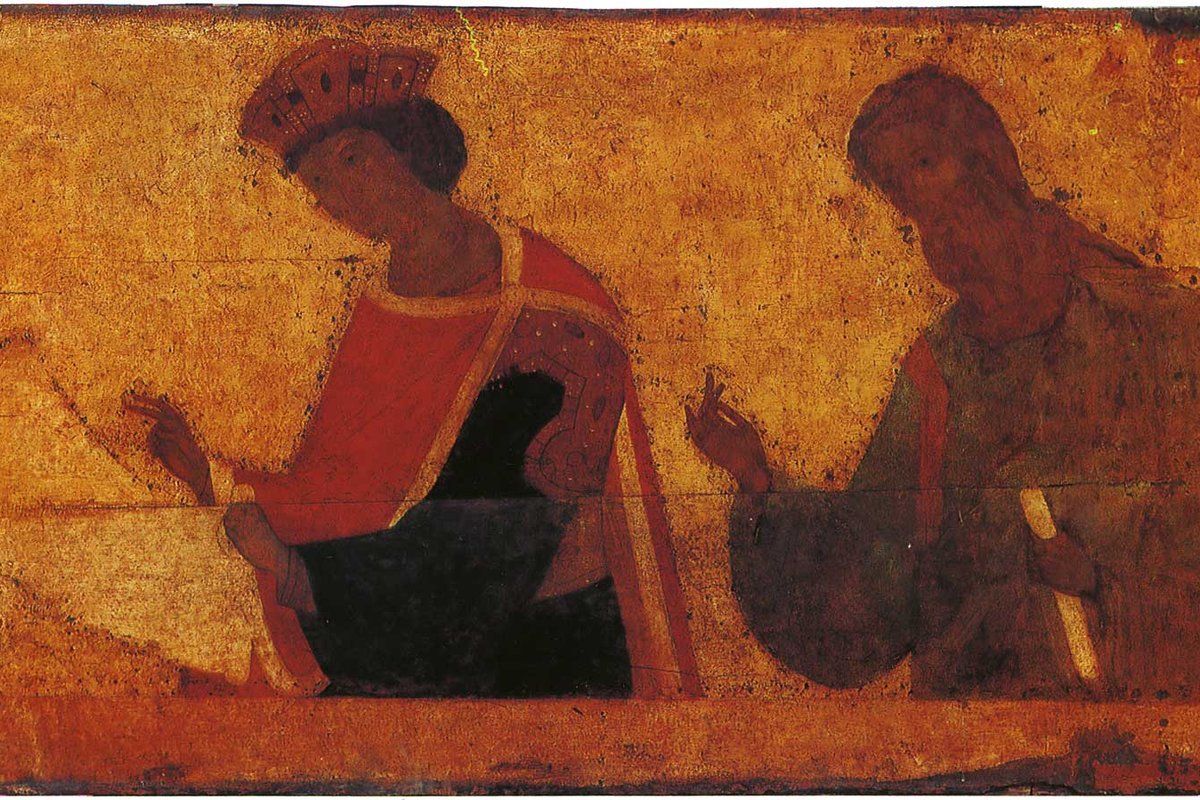
Elijah and the Chariot of Fire

A prophet who kept trying to walk alone
By the time 2 Kings 2 opens, Elijah had already confronted kings, called down fire on Mount Carmel, and outrun a chariot on foot in a rainstorm. Now, the text says plainly, "the Lord was about to take Elijah up to heaven in a whirlwind" (2 Kings 2:1) — and Elijah, oddly, seems to want to face whatever's coming without an audience. Three separate times, traveling from Gilgal toward Bethel, then Jericho, then the Jordan River, Elijah tells his attendant and prophetic successor, Elisha, to stay behind.
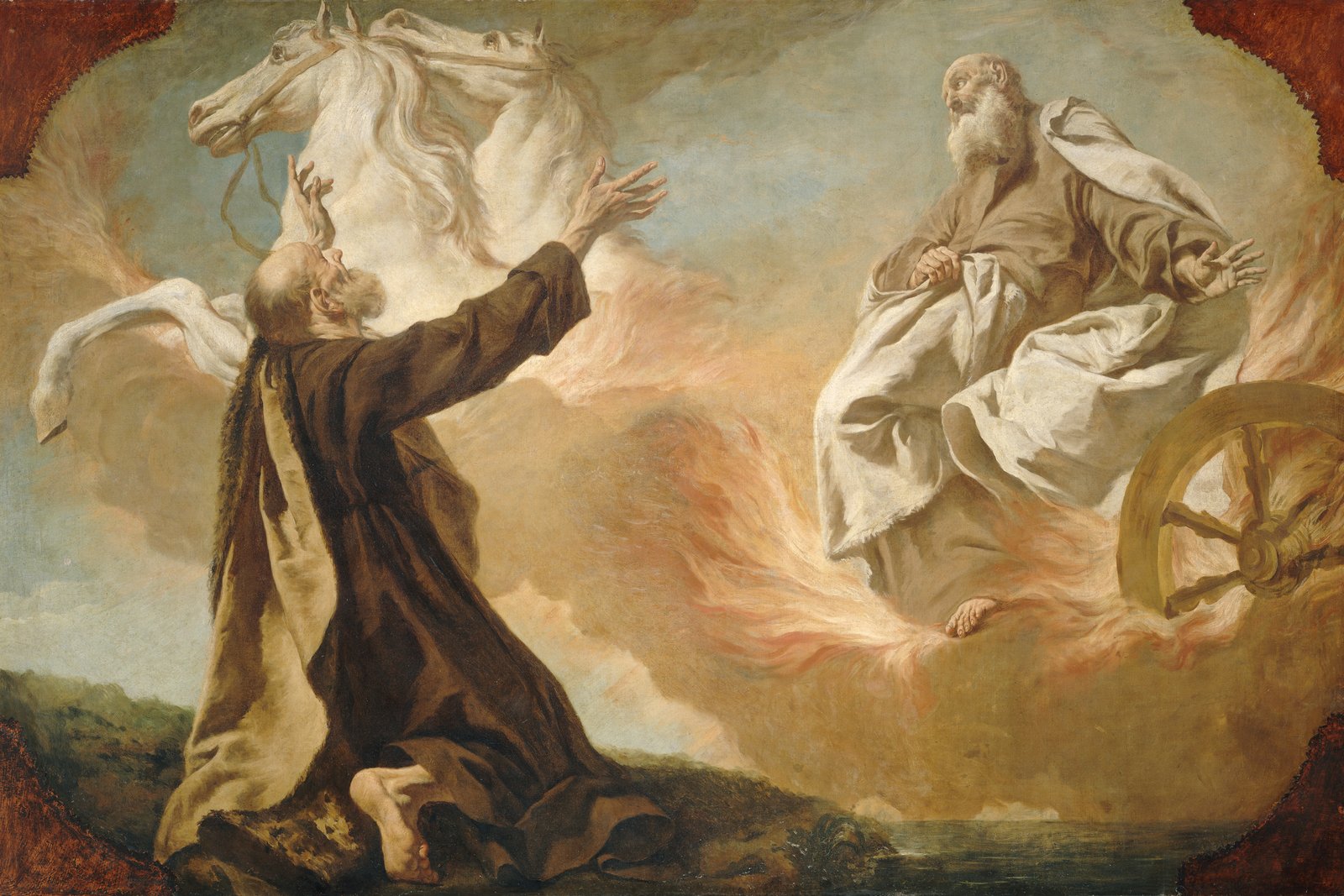
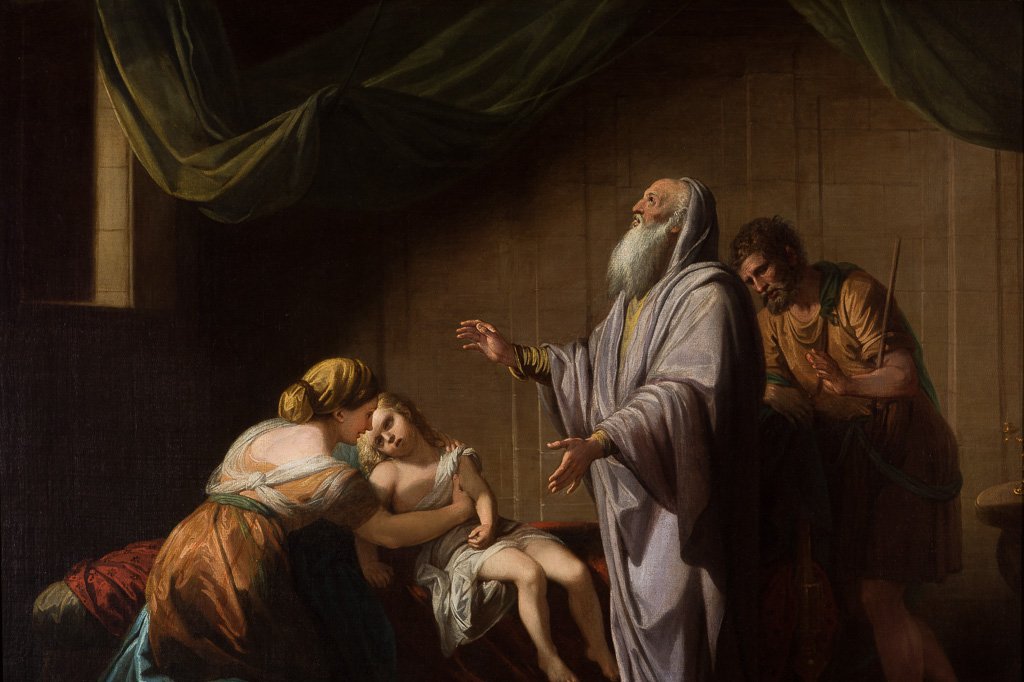
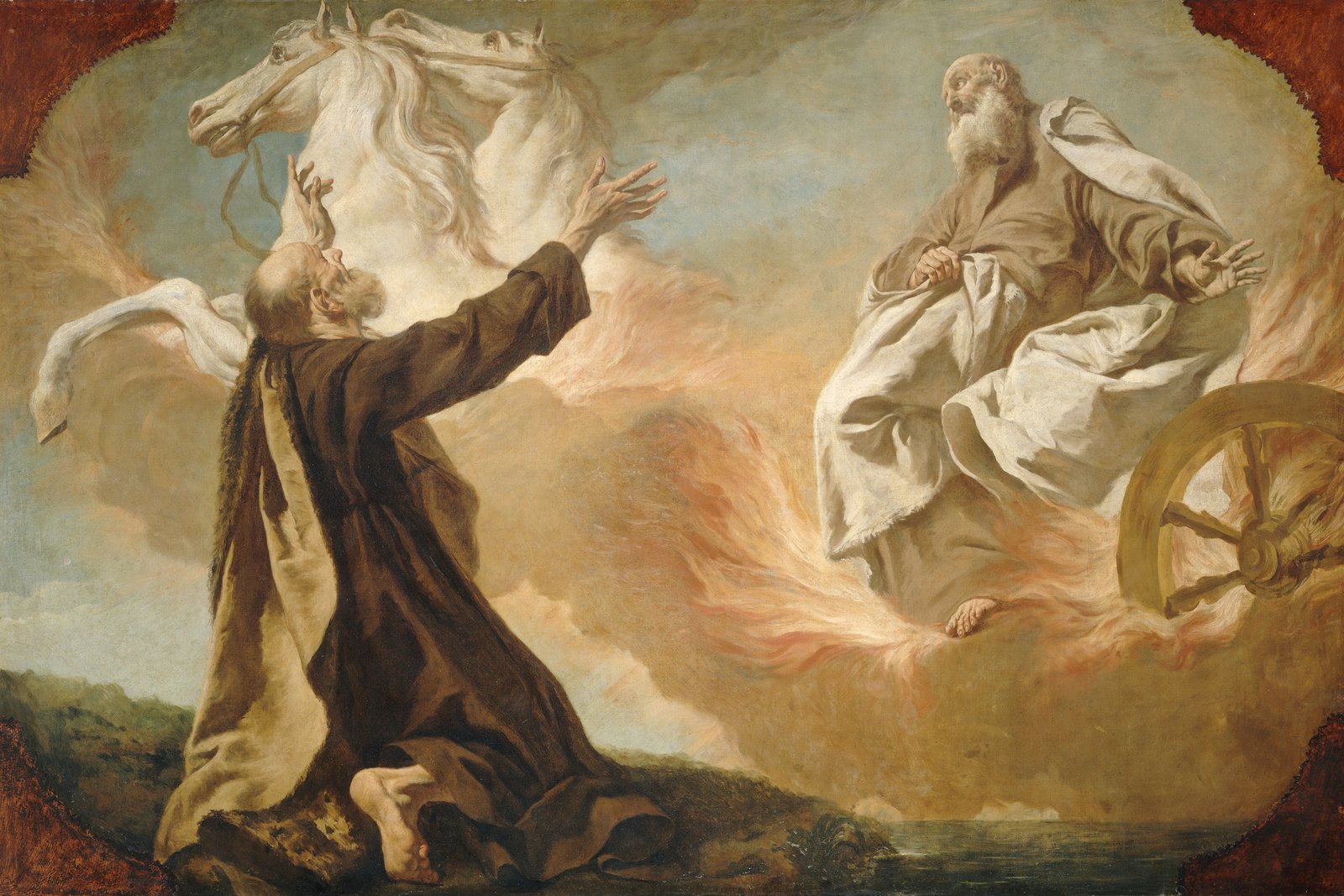
Giuseppe Angeli, Elijah Taken Up in a Chariot of Fire, c. 1740-55. CC0, National Gallery of Art.
Elisha refuses every time, using nearly identical words each time: "As the Lord lives, and as you yourself live, I will not leave you" (2 Kings 2:2, 4, 6). Along the way, groups of "guild prophets" — communities of prophets stationed in Bethel and Jericho — separately approach Elisha and ask if he knows his master is about to be taken from him that day. Each time, Elisha's answer is nearly the same: "Yes, I know that. Be still" (2 Kings 2:3, 5). It's a strange, almost liturgical rhythm — repeated warnings, repeated refusals to be sent away, the whole company of prophets aware that something is ending.
Crossing the Jordan on dry ground
When Elijah and Elisha finally reach the Jordan River, with fifty of the guild prophets watching from a distance, Elijah rolls up his mantle and strikes the water with it. "It divided, and the two of them crossed over on dry ground" (2 Kings 2:8) — a deliberate echo of Moses parting the Red Sea and Joshua later crossing the Jordan on dry land, tying Elijah's final act to Israel's founding acts of deliverance.
On the far side, Elijah finally asks Elisha directly what he wants before he's taken away. Elisha's answer — "May I receive a double portion of your spirit" (2 Kings 2:9) — isn't a request for supernatural superiority over his teacher. In Israelite inheritance law, the firstborn son received a double share of the family estate; Elisha is asking, in effect, to be recognized and confirmed as Elijah's true prophetic heir, the one who carries his mission forward. Elijah's answer is conditional and honest about its own uncertainty: "You have asked something that is not easy. Still, if you see me taken up from you, your wish will be granted; otherwise not" (2 Kings 2:10).
Fire, horses, and a whirlwind
They kept walking and talking, and then, without warning: "a fiery chariot and fiery horses came between the two of them, and Elijah went up to heaven in a whirlwind" (2 Kings 2:11). Elisha saw it happen — the condition for his request was met — and cried out, "My father! my father! Israel's chariot and steeds!" (2 Kings 2:12), a title that framed Elijah's prophetic protection of Israel as more valuable to the nation than any army's chariots and horsemen. Then Elijah was simply gone.
Elisha tore his own clothes in grief, picked up the mantle Elijah had let fall, and returned to the Jordan. He struck the water the same way he'd just watched Elijah do it, asking, "The Lord, the God of Elijah—where is he now?" The river parted again, and the watching prophets in Jericho drew their own conclusion: "The spirit of Elijah rests on Elisha," and bowed before him (2 Kings 2:14-15).
The prophet who never had a funeral
Elijah is unique in the Old Testament for having no recorded death or burial — he simply leaves, alive, in a whirlwind. That detail alone gave his story enormous staying power in later Jewish and Christian tradition. The prophet Malachi closes the entire collection of Old Testament prophetic books with a promise that God would send Elijah back before "the day of the Lord" arrives (Malachi 3:23-24), a text that shaped centuries of expectation about Elijah's return.
The New Testament picks that thread up directly. Elijah appears — bodily, speaking — alongside Moses at the Transfiguration of Jesus, witnessed by Peter, James, and John (Matthew 17:1-3). And when the disciples later ask Jesus about the prophecy that Elijah must come first, Jesus tells them Elijah has already come, in the person of John the Baptist, though the crowds didn't recognize him (Matthew 17:10-13). Catholic tradition doesn't treat this as John the Baptist literally being Elijah reincarnated, but as John fulfilling the role and spirit Malachi's prophecy pointed toward — a distinction the Gospels themselves are careful to draw. Elijah's fiery departure from the Jordan valley became, in this way, not an ending but a promise that kept echoing through the rest of salvation history.
A prophet claimed by three faiths
Elijah's ascension left him in an unusual category among biblical figures: someone scripture treats as still, in some sense, present and active rather than resting in the grave. Jewish tradition developed this most fully, setting an empty chair for Elijah at every Passover seder and a cup of wine poured but left untouched, on the belief that Elijah might appear to announce the coming of the Messiah. That expectation is the same one lying behind the crowd's questions in the Gospels about whether Jesus himself might be Elijah returned (Mark 6:15, Luke 9:8).
Christian monastic tradition claims Elijah too, though on more legendary footing than scriptural fact — the Carmelite order traces its own roots symbolically to hermits living on Mount Carmel, the same mountain where Elijah confronted the prophets of Baal, and honors him as a kind of spiritual father of contemplative life lived in solitude before God. None of this is dogma; it's devotional memory layered onto a story scripture already left open-ended. What holds the whole tradition together, across Jewish, Christian, and even Islamic reverence for Elijah, is the same detail 2 Kings 2 insists on: he was seen going, in fire, and no one ever saw him come back down to be buried.
Trivia
How did Elijah die according to the Bible?
Why did Elisha refuse to leave Elijah's side?
What did Elisha ask for before Elijah was taken up?
How did Elisha know his request had been granted?
Does Elijah appear elsewhere in the Bible after his ascension?
Related Reading