Catholic Social Teaching Explained

A response to an industrial crisis
By the late 19th century, the Industrial Revolution had transformed the working lives of millions of Europeans, moving them from farms and small workshops into factories, often under brutal conditions — long hours, dangerous machinery, wages that barely sustained a family, and children laboring alongside adults. Workers' movements and early socialist parties were organizing in response, sometimes proposing the abolition of private property altogether as the solution.
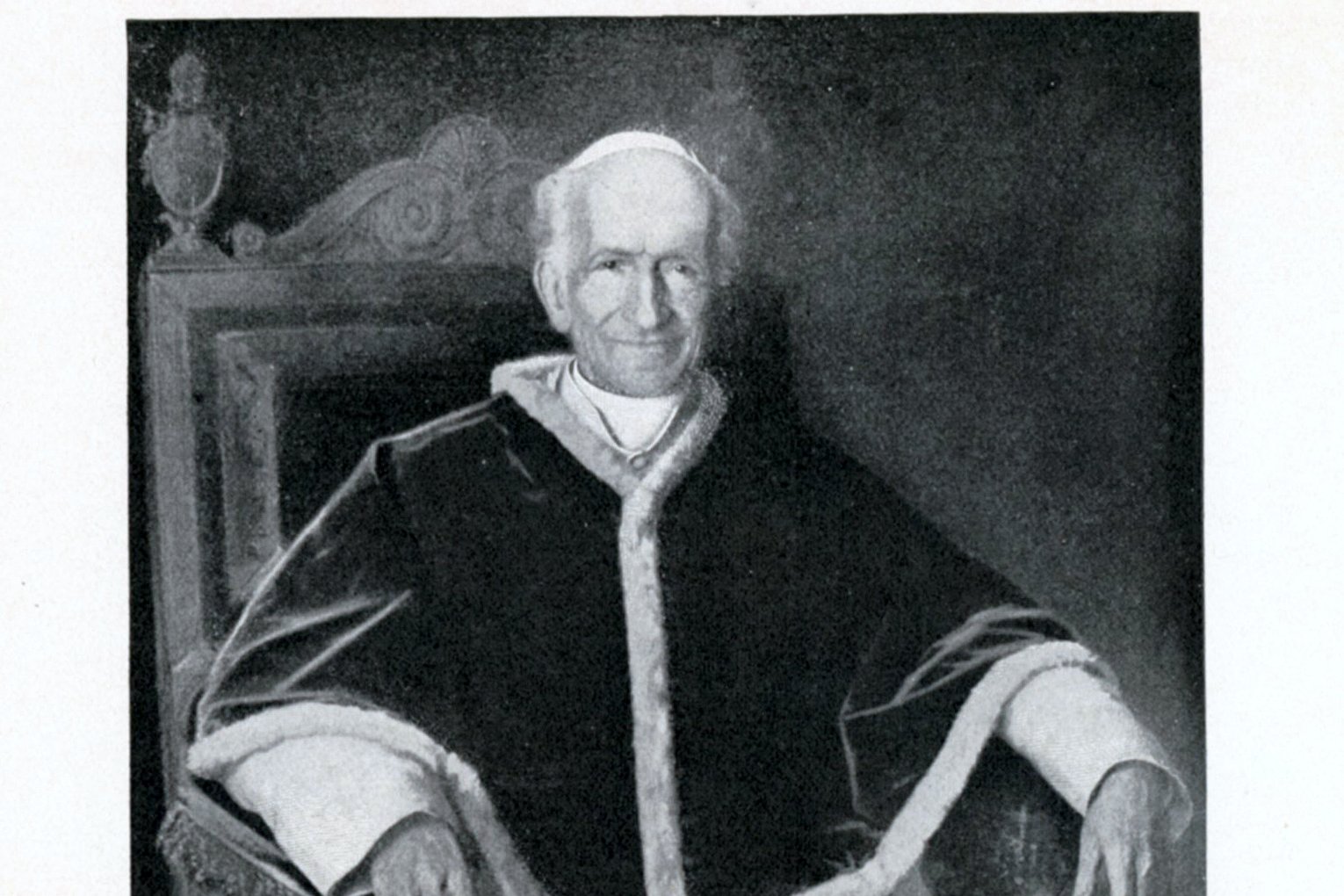
Portrait of Pope Leo XIII, 1898 — public domain.
Pope Leo XIII's 1891 encyclical Rerum Novarum ("Of New Things") entered directly into that argument, and its approach set the pattern the tradition has followed ever since: it refused to simply endorse either side. Leo defended workers' right to organize, to a living wage, and to safe conditions, describing the exploitation many faced in strikingly direct terms for a papal document of the era. At the same time, he firmly defended the right to private property against socialist proposals to abolish it, insisting that ownership was a natural right rooted in human dignity and industry, not merely a tool of oppression to be eliminated. The result was neither a capitalist manifesto nor a socialist one, but something genuinely its own — a framework that has come to be called Catholic social teaching.
A tradition built through successive documents
Catholic social teaching isn't contained in one single text or one tidy catechism-style list; it has developed the way common law develops, through a succession of papal encyclicals and other Church documents, each responding to the particular economic and social questions of its own moment while building on principles established before it. Notable milestones include Pope Pius XI's Quadragesimo Anno (1931), issued forty years after Rerum Novarum amid the Great Depression; Pope John XXIII's Mater et Magistra (1961) and Pacem in Terris (1963), addressing global economic interdependence and human rights; Pope Paul VI's Populorum Progressio (1967), on international development; Pope John Paul II's Centesimus Annus (1991), marking the centenary of Leo's original letter and reflecting on the fall of Soviet communism; and Pope Francis's Laudato Si' (2015), extending the tradition's concerns explicitly to environmental stewardship and what he called an "integral ecology."
The core themes that recur
While no single official list exists, the United States Conference of Catholic Bishops has articulated seven themes that consistently appear across this body of teaching, and they offer a useful map of the tradition's concerns:
Life and dignity of the human person stands as the foundational principle underneath all the others — the conviction that every human being, in every circumstance, possesses an inherent dignity that no economic system or social structure may violate.
Call to family and community reflects the teaching that the human person is inherently social, achieving fulfillment not in isolation but through family, community, and the wider fabric of social relationships.
Rights and responsibilities holds that human dignity is protected only when both basic rights — to life, food, shelter, work, and more — and corresponding responsibilities to one another and to society are honored together.
Option for the poor and vulnerable calls for particular attention to the needs of those most at risk when evaluating social and economic decisions, a principle that gained particular prominence from the mid-20th century onward.
Dignity of work and the rights of workers carries Rerum Novarum's original concern directly into the present, insisting that the economy exists to serve people, not the reverse, and defending workers' rights to fair wages, safe conditions, and organization.
Solidarity describes the recognition that, in an interconnected world, all people are bound together — "we are one human family," as the USCCB summary puts it — regardless of national, racial, economic, or ideological differences.
Care for God's creation extends the tradition's moral concern to the environment, framing responsible stewardship of the natural world as a genuine moral obligation, a theme given particularly sustained treatment in Pope Francis's Laudato Si'.
Why it's called the Church's "best-kept secret"
Despite more than a century of consistent papal teaching, surveys and pastoral experience have repeatedly found that many Catholics are only vaguely aware this body of teaching exists at all — a gap that led Church leaders, including several U.S. bishops, to describe it, somewhat ruefully, as Catholic social teaching's "best-kept secret." Part of the reason may be that its content resists tidy political categorization: it has criticized excesses of unregulated capitalism and the failures of state socialism alike, defended private property and insisted on its social obligations in the same breath, which makes it difficult for any single political movement to claim as fully its own.
That resistance to easy categorization is, in a sense, the whole point. Catholic social teaching asks a question prior to any specific policy debate — what does human dignity actually require? — and insists that answer has to shape how economies, governments, and communities are organized, not just how individuals pray or worship, but how they build the shared world everyone actually has to live in.
Trivia
What is Catholic social teaching?
What document is considered the founding text of Catholic social teaching?
What are the core themes of Catholic social teaching?
What does 'preferential option for the poor' mean?
Is Catholic social teaching the same as being politically liberal or conservative?
Related Reading