What Is the Magisterium?

A teaching office, not a single person
It's a common mistake to picture the Magisterium as one man in Rome issuing rulings from a desk. In reality, the word describes an office exercised collectively — the pope together with the world's bishops, understood by Catholic teaching as the successors of the apostles, entrusted with authentically interpreting God's revealed Word. It's less a job title than a function the whole college of bishops carries out, individually and together, across every generation since the apostolic age.
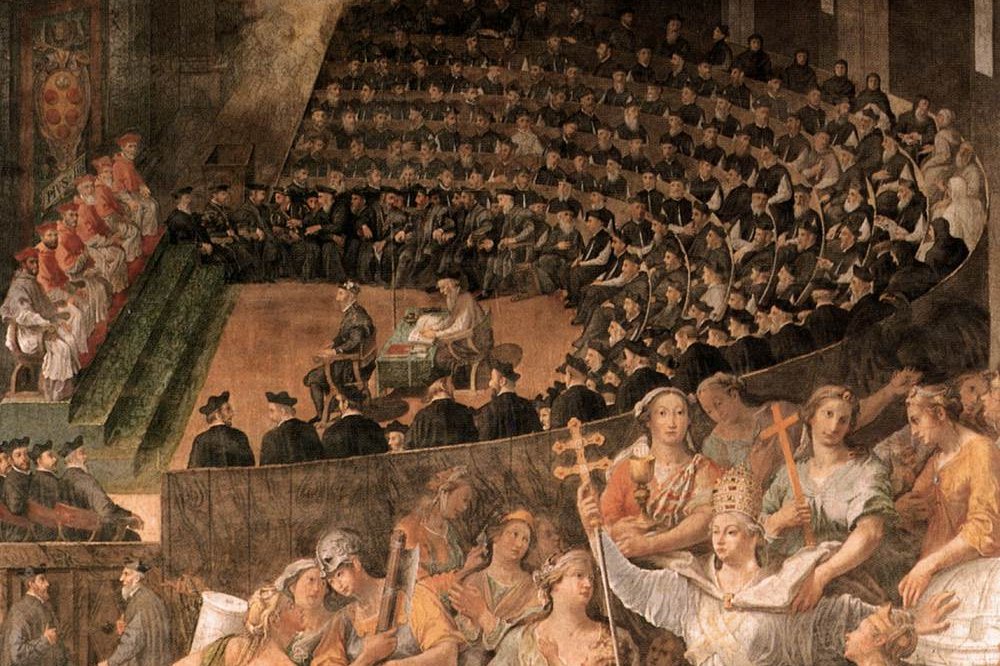
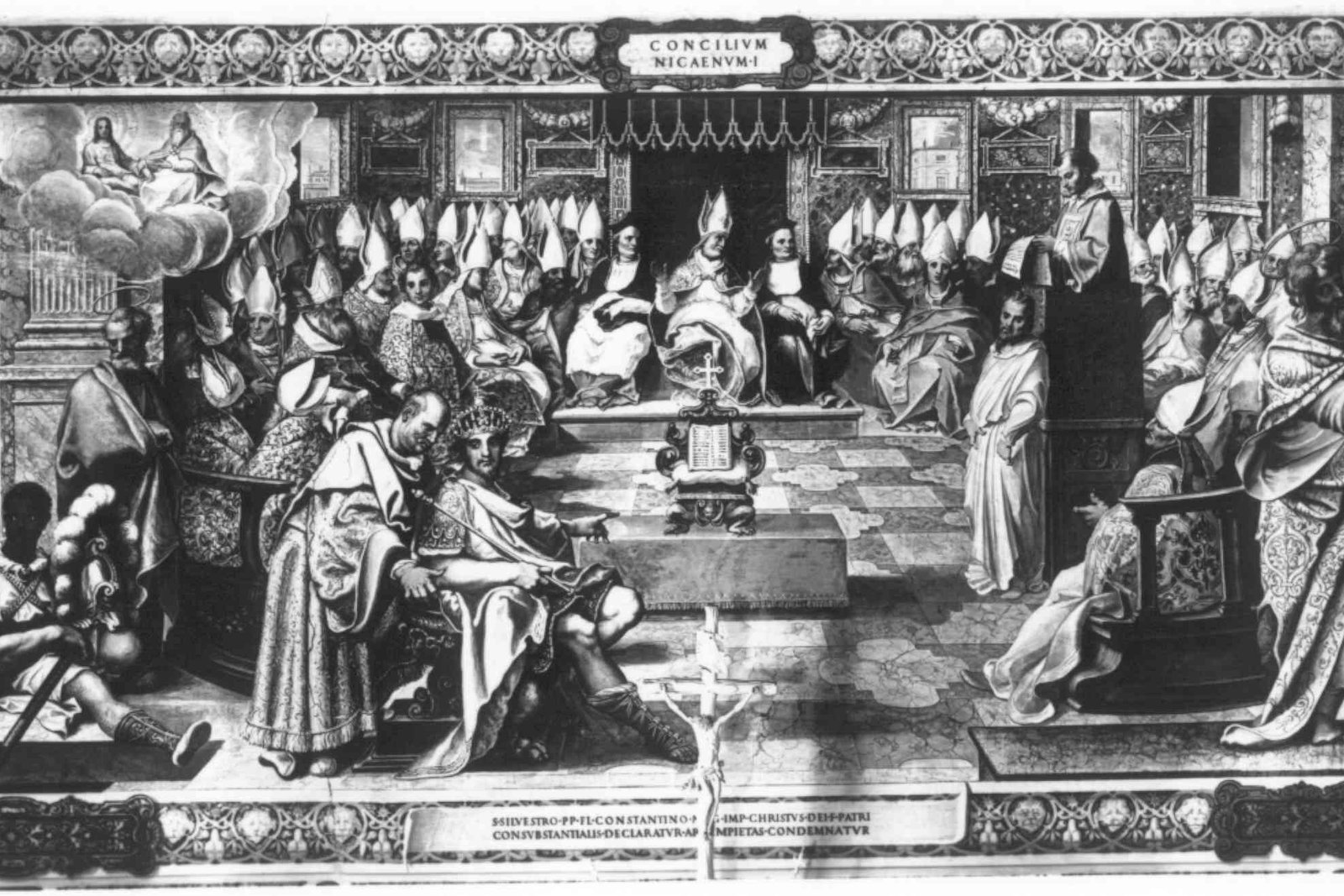
Pasquale Cati da Iesi, The Council of Trent, 1588, Santa Maria in Trastevere, Rome — public domain.
The underlying logic goes back to a specific theological claim: that Christ did not leave behind only a written text to be interpreted however each reader saw fit, but a living community with a structure of authority built in from the start, meant to safeguard and transmit what had been revealed without distortion over time. Catholic teaching holds that this authority to teach authentically was given first to the apostles and has continued unbroken through the bishops who succeeded them — a principle known as apostolic succession.
What the Magisterium actually interprets
The Second Vatican Council's document Dei Verbum describes the relationship in careful, almost architectural terms: Sacred Scripture and Sacred Tradition together form a single "deposit of the Word of God," and the Magisterium's task is not to stand above that deposit but to serve it — teaching only what has been handed down, listening to it devoutly, guarding it scrupulously, and explaining it faithfully (Dei Verbum, §10). The Catechism puts it even more directly: this teaching office "is not superior to the Word of God, but is its servant" (Catechism, 86).
That distinction matters because it answers the most common objection to the whole concept — that the Magisterium simply makes things up as it goes. Catholic teaching explicitly denies this. The Magisterium's authority is understood as interpretive and protective, not creative: safeguarding an inheritance rather than generating new revelation from scratch.
Ordinary teaching versus the rare, solemn declarations
Not every papal statement or bishop's homily carries the same theological weight, and the Church distinguishes between two broad modes of exercising this authority.
The ordinary Magisterium covers the routine, day-to-day teaching that popes and bishops carry out constantly — encyclicals, pastoral letters, homilies, catechetical instruction. This teaching is authoritative and calls for real respect and, depending on its content, varying degrees of assent from the faithful, but it doesn't automatically carry the guarantee of infallibility.
The extraordinary Magisterium covers the rare, solemn occasions when the Church's teaching authority is exercised at its highest level: when a pope formally and deliberately defines a doctrine on faith or morals as binding on the whole Church (what's traditionally called speaking ex cathedra, "from the chair"), or when the bishops of the world, gathered in an ecumenical council in union with the pope, definitively teach that a doctrine belongs to the deposit of faith. Only these narrowly defined circumstances carry what the Church calls the charism of infallibility — and even then, the claim is specifically that the Church is preserved from teaching error in matters of faith and morals under these precise conditions, not that every word a pope or council utters is beyond question.
This is a frequently misunderstood point: papal infallibility has been formally invoked only a small handful of times in the Church's history, most famously for the 1854 declaration of the Immaculate Conception and the 1950 declaration of the Assumption of Mary. The overwhelming majority of papal and episcopal teaching operates under the ordinary Magisterium, not the extraordinary.
Why it matters practically
For most Catholics, the Magisterium shows up less as an abstract theological category and more as the reason a parish's teaching, a diocese's guidance, and the pope's encyclicals are understood as connected pieces of one continuous voice rather than isolated, competing opinions. It's also the underlying reason Catholic teaching treats doctrine as something received rather than individually invented — a claim that stands in real, acknowledged tension with traditions that locate final interpretive authority in the individual reader of Scripture alone, a difference at the heart of many historical disputes within Western Christianity.
Understanding the Magisterium doesn't require resolving every one of those disputes. It just requires seeing what the Church itself claims the office is for: not innovation, but continuity — a living structure meant to carry a fixed inheritance forward, generation after generation, without losing what was handed down at the start.
How Catholics are asked to respond to it
The Church also distinguishes between different degrees of assent owed to different levels of teaching, a nuance that often gets lost in popular discussion. Definitive, infallible teaching calls for what the Church describes as the assent of faith — the same kind of assent given to revealed truth itself. Non-infallible but authoritative teaching from the ordinary Magisterium, such as most papal encyclicals, calls for what the Catechism describes as "religious submission of mind and will," a genuine, good-faith openness to the teaching rather than either automatic rejection or a demand for the same absolute certainty owed to infallible doctrine (Catechism, 892). This layered structure is part of why Catholic theologians distinguish carefully between dogma — solemnly defined, infallible teaching — and other levels of Church teaching that, while authoritative, remain open to further theological development and clarification over time.
A structure meant to serve unity
One further point worth understanding is why the Church considers this structure necessary at all. Catholic teaching holds that without some living authority responsible for authentic interpretation, the same scriptural and traditional inheritance would inevitably fracture into competing readings, each claiming equal validity. The Magisterium exists, in this view, precisely to prevent that fracture — not by silencing theological inquiry or debate, both of which have flourished throughout Church history, but by providing a final point of reference when questions of authentic Catholic teaching are genuinely at stake. It's the same structural logic behind why a single diocese has one bishop rather than several competing ones, extended to the universal Church as a whole.
Trivia
What does the word Magisterium actually mean?
Who exactly holds the Magisterium?
Is everything the Magisterium teaches infallible?
What is the difference between the ordinary and extraordinary Magisterium?
Does the Magisterium create new doctrine or interpret existing doctrine?
Related Reading