What Are a Nihil Obstat and Imprimatur?

Two words, one narrow purpose
It's easy to look at these two Latin terms and assume they represent some sweeping stamp of papal approval — official Vatican certification that a book is theologically excellent, spiritually enriching, or even simply good. That's not what they claim to do. Both terms describe a specific, limited step in a formal review process defined in the Church's own canon law: confirming that a text contains nothing contrary to Catholic doctrine on faith and morals. Nothing more, nothing less.
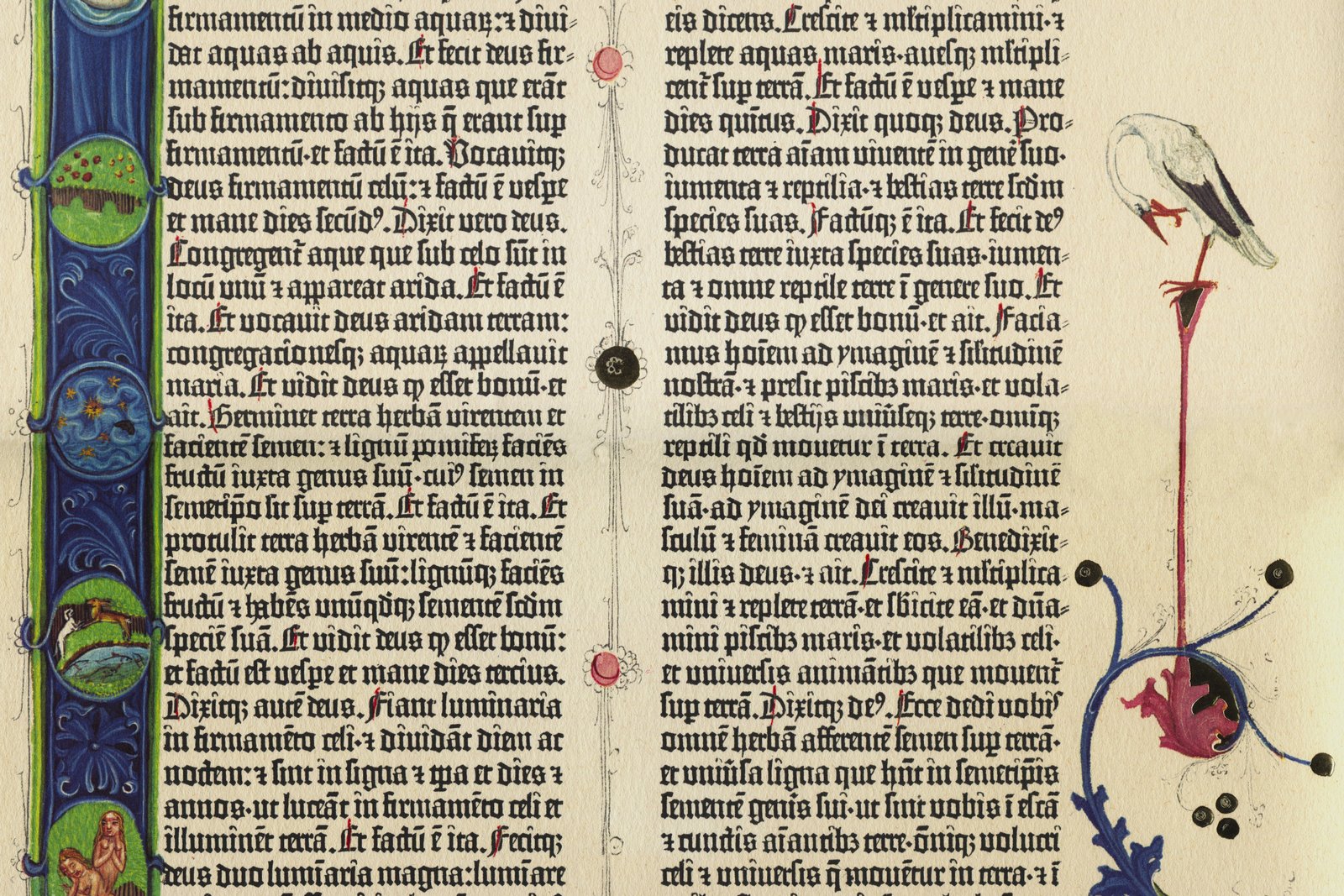
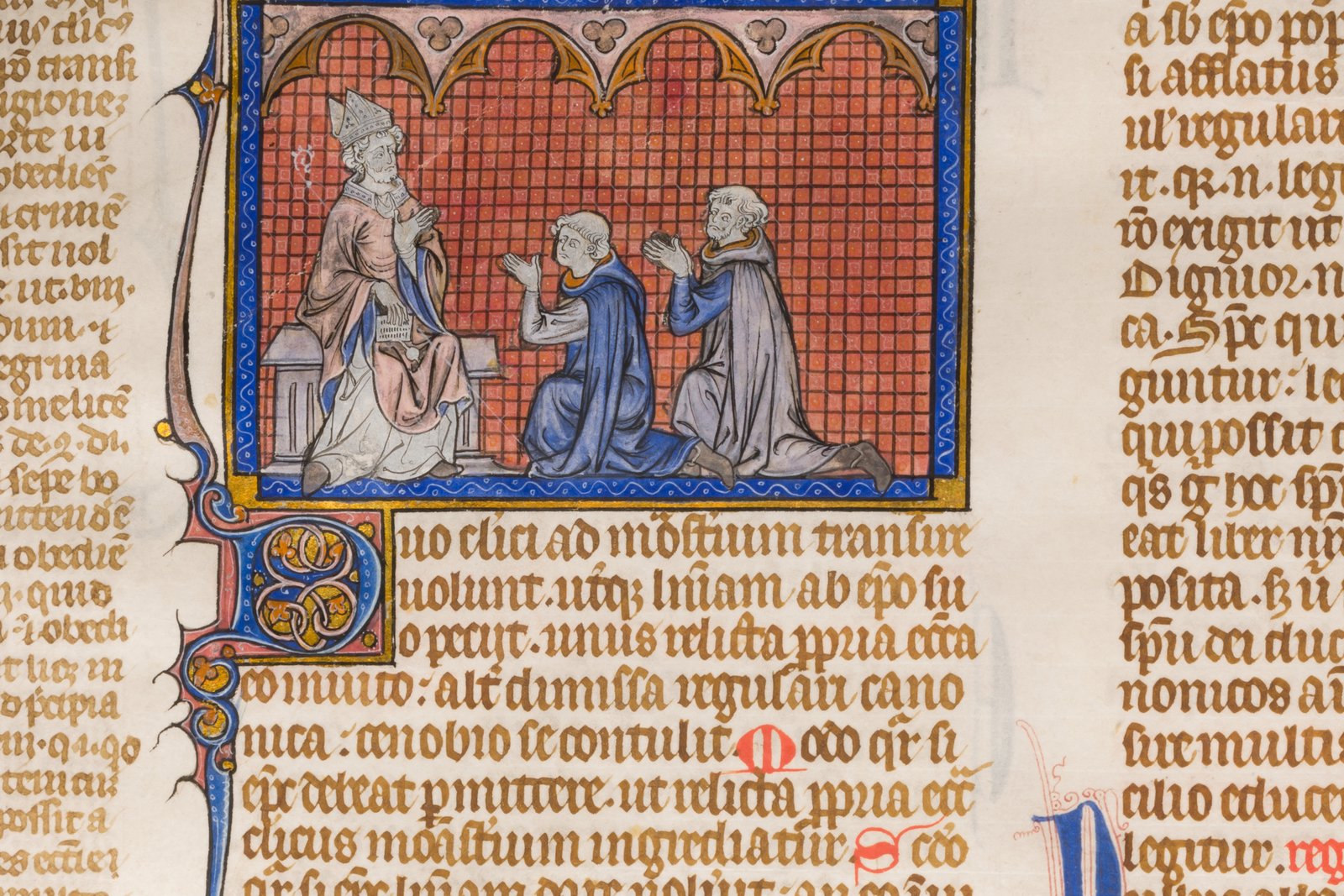
Page from the Gutenberg Bible, c. 1455 — public domain.
The distinction matters because the two words aren't interchangeable — they mark two separate stages of the same approval process, carried out by two different people.
The censor's job: Nihil Obstat
Nihil Obstat is Latin for "nothing hinders" or "nothing stands in the way." It's issued by a person called a censor — typically a priest or theologian with recognized expertise, appointed by the local bishop specifically to review manuscripts falling under this requirement. The censor's task, according to canon law, is narrow by design: read the text and determine whether it contains anything that contradicts established Catholic teaching on faith and morals (Canon 830). If the censor finds nothing objectionable on those specific grounds, they issue the Nihil Obstat — a green light, but only on that one narrow question.
Crucially, the censor isn't grading the book's writing quality, checking its historical accuracy on matters outside doctrine, or evaluating whether its arguments are persuasive. A theologically sound book that happens to be poorly written, or that makes debatable historical claims unrelated to doctrine, can still receive a Nihil Obstat, because that's simply not what the censor is checking for.
The bishop's job: Imprimatur
Once a censor grants the Nihil Obstat, the manuscript goes to the local bishop (or, for certain categories of text, a bishop with jurisdiction over the publisher), who can then grant the Imprimatur — Latin for "let it be printed." This is the actual formal permission to publish the work under this canonical review process. Canon law is specific that a bishop shouldn't grant an Imprimatur without first having received a Nihil Obstat, and that the whole process exists to protect the faithful from doctrinally unsound material circulating under a false appearance of Church approval, particularly in catechisms, Scripture translations meant for liturgical or catechetical use, and theology textbooks (Canon 827).
Some publications carry a third mark alongside these two — a formal note stating that the Nihil Obstat and Imprimatur are official declarations that a book is considered free of doctrinal error, but do not imply agreement with every opinion or statement expressed. That note isn't boilerplate legal caution; it's a direct, deliberate statement of exactly how narrow this approval really is.
What actually requires this process
This is the point most casual readers miss entirely: the Nihil Obstat and Imprimatur requirement, as laid out in canon law, applies to a specific, fairly narrow category of publications — books of Sacred Scripture, catechisms and other catechetical texts, liturgical books, and works on theology, canon law, Church history, and related religious or moral subject matter specifically intended for use as school or catechetical textbooks (Canons 826-827). It was never meant to apply to the enormous body of general Catholic publishing — devotional books, Catholic fiction, spiritual memoirs, and the like — which is why the vast majority of books written by Catholic authors, including many excellent and theologically careful ones, simply don't carry either designation, and were never expected to.
Why the process exists at all
The underlying concern goes back to the Church's long-standing interest in making sure that material presented as authoritative Catholic teaching — especially in the hands of students, catechists, or anyone approaching the faith through an official-looking text — actually reflects that teaching accurately. It's a quality-control mechanism aimed at a specific risk: a catechism or Bible edition that looks official but quietly distorts doctrine. The Nihil Obstat and Imprimatur exist to close that particular gap, not to serve as a general seal of literary or spiritual excellence — a distinction worth keeping in mind the next time you spot those two quiet Latin phrases on a copyright page.
A practice with deep roots
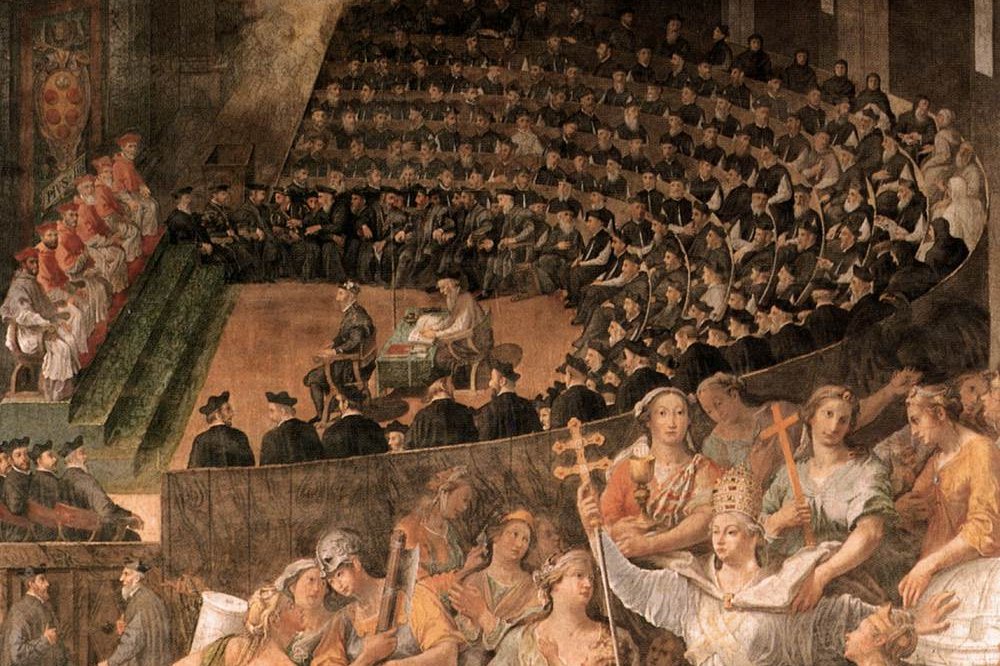
The Church's interest in reviewing texts before they circulate widely is far older than the specific Latin formula in use today. Ecclesiastical review of writings goes back centuries, tightening considerably after the invention of the printing press made it possible, for the first time, for a single faulty manuscript to reach thousands of readers almost instantly rather than being copied slowly and locally by hand. The Council of Trent, meeting in the mid-16th century amid the upheavals of the Reformation, addressed the question of book review directly, and the modern form of the Nihil Obstat and Imprimatur process took shape in the centuries that followed, eventually finding its current legal expression in the 1983 Code of Canon Law.
A distinction some readers still miss
It's worth adding one further clarification, since even careful readers sometimes conflate the two: an Imprimatur is not the same as an Imprimi Potest, a related but distinct permission specifically granted by the major superior of a religious order for a member of that order to publish, prior to the diocesan bishop's own review. Some books carry both notations because both approvals were required — the religious superior's permission to write and publish at all, and the local bishop's confirmation, following the censor's Nihil Obstat, that the finished text contains nothing contrary to Catholic doctrine.
Trivia
What does Nihil Obstat mean?
What does Imprimatur mean, and how is it different from Nihil Obstat?
Does a Nihil Obstat and Imprimatur mean the Church officially endorses everything in the book?
What kinds of books require a Nihil Obstat and Imprimatur?
What happens if a Catholic book doesn't have a Nihil Obstat or Imprimatur?
Related Reading